2.74 OPTIMAL PRODUCT DESIGN
ASSIGNMENT 4. MANUFACTURING COST MODELING
Objective
Complete a cost model that is comprehensive of the scope of the parts.
Deliverable
A single report for your whole group. This should include:
- A labeled Bill of Materials.
- A manufacturing cost analysis using the Boothroyd and Dewhurst DFA for an assembly
analysis, and Galorath's SEER-DFM or Boothroyd and Dewhurst's DFM suite for piece part
cost analysis. SEER runs on all of the machines in the lab, Bothroyd and Dewhurst
DFMA is node locked and so only runs on one machine - balsa.mit.edu. The end result
should be a cost per unit, and a hierarchical breakdown of that cost by assemblies.
Work Required
As a part of this, I would expect you to:
- Tear apart only one of your products purchased, and do so carefully so the product can
be reassembled and re-used. Measure and record inputs for the DFMA input fields. Estimate
small masses as best you can.
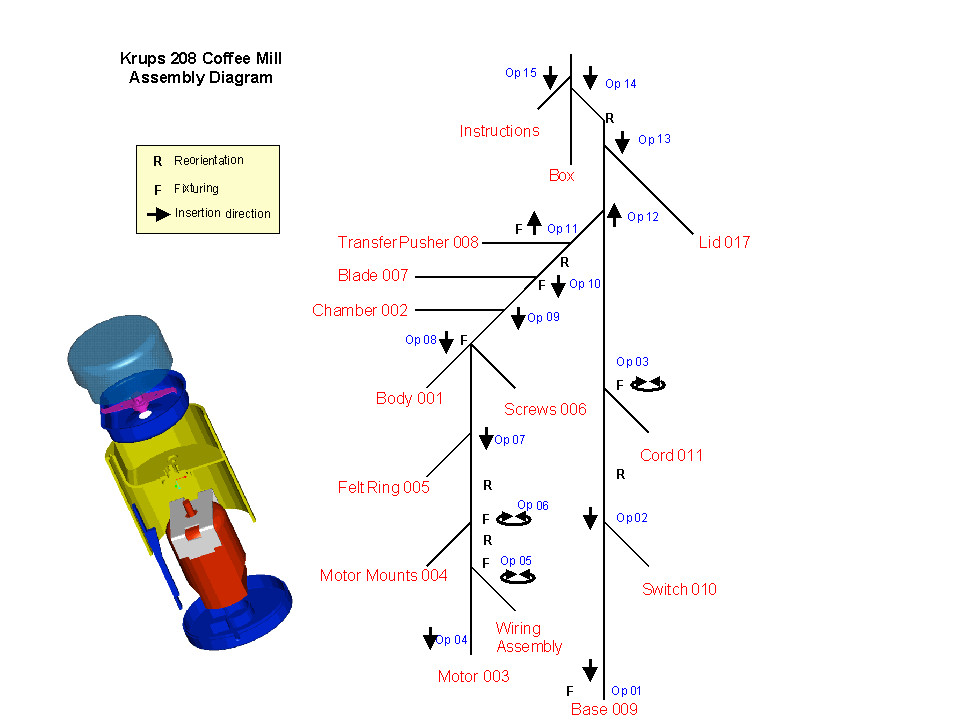
- Complete an assembly diagram. An example for the Krups Coffee
Mill.
- Complete a cost analysis using the B&D and the SEER DFMA software tools in the
prototyping lab. Explain the estimates behind numbers used as inputs.
- An example of a B&D DFA analysis for the Krups Coffee
Mill. To launch B&D, double click on the "DFA 8.0" icon on the desktop
of the corner NT machine in the lab.
- An example of a SEER DFM analysis for the Krups Coffee
Mill. Expand this zip archive into a subdirectory. To launch SEER, double
click on the "SEER DFM" icon on the desktop of any NT machine in the lab.
- An example of a summary document for the Krups Toaster.
HTML version. This can be generated by
exporting to text the B&D DFA analysis summary, and then adding in the part costs from
a SEER or B&D DFM cost analysis of each part. The data fields in the exported
text file are simple numbers, not Excel formulas. You need overwrite the cells with
their formulas if you want to understand how parametric changes to the analysis impact the
results (Not required for this assignment). In the example, formula cells are
highlighted blue, data cells are highlighted red.
- Turn in the cost analysis summary by email as an Excel workbook.
- Turn in the hardcopy of the cost analysis summary and the exploded view as a sketch.
Due: Tuesday October 12, 1999 at the start of class. 
Return to 2.74 Optimal Product Redesign.
Return to the Mechanical Engineering Department.
knotto@mit.edu