Skip over navigation Accesskey=1
MIT Chemistry
HomeMain Menu
Directory Contact Us Search Site Map
  Faculty and Research


Moungi G. Bawendi

Sidebar Graphic


bawendi pic

Moungi G. Bawendi
Lester Wolfe Professor in Chemistry


Room 6-221
(617) 253-9796
Fax: (617) 253-7030
mgb@mit.edu
Admin. Assistant: Li Miao
Tel: (617) 452-2243

Bawendi Research Group

A.B. Harvard University 1982
A.M. Harvard University 1983
Ph.D. University of Chicago 1988

Research Summary

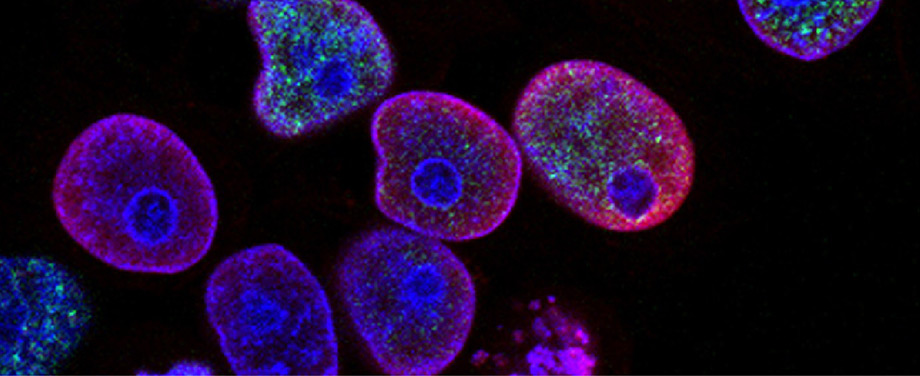
Our laboratory focuses on the science and applications of nanocrystals, especially semiconductor nanocrystal (aka  quantum dots). Our research ranges from the very fundamental to applications in electro-optics and biology. There is an ongoing synthetic effort underlying all of this to address the challenges of making new compositions and morphologies of nanocrystals and nanocrystal heterostructures, and new ligands so that the nanocrystals can be incorporated into hybrid organic/inorganic devices, or biological systems. The fundamental spectroscopic focus is largely at the single dot level, were we are currently developing methods for probing the dynamical properties of the electronic structure of dots at time scales between 100 psec and 1 msec. We are also investigating the physics of multiexcitons in various quantum dots using both ensemble time resolved methods, as well as single quantum dot correlation spectroscopies. We are studying the charge transport properties of films of dots or dot/organic hybrids, within our group and with collaborators. These fundamental transport properties are critical for designing devices like electrically quantum dot based driven light emittiers, lasers, photodetectors and photovoltaics. We are studying these three classes of devices, also within our group and with collaborators. On the biology and biomedical side, we are collaborating with a number of biology and medical groups to design nanocrystal probes that meet specific challenges. These include nanocrystals that selectively bind to single receptors on cell surfaces for tracking applications, creating “smart” nanocrystals that sense analytes to report back on concentrations of species, including for example pH, which is important for following endocytotic pathways and tumor microenvironments, and systematic characterizations of the effect of size, morphology, charge, and other surface compositions, on the uptake (or clearance) of nanocrystals. This last information is critical for the design of nanocrystal probes as molecular imaging agents in vivo.


MIT Logo      
 
About the Department
News and Events
Faculty and Research
Academic Programs
Life at MIT
After MIT and Career Resources
Environmental Health and Safety
Chemistry Outreach Program
Useful Links and Resources