


STS

Program in Science, Technology, and Society

TOP > Faculty > Bios and Information
Click on a name to see a faculty member's information and projects

Faculty


Durant, John

MIT Museum Director and Adjunct Professor in the Science, Technology & Society Program


Room
N52-201 (MIT Museum)
Phone
617-253-5653
Email
jdurant@mit.edu
website
http://web.mit.edu/museum/


John Durant received his BA in Natural Sciences from Queens' College, Cambridge in 1972 and went on to take a PhD in History and Philosophy of Science, also at Cambridge , in 1977. After more than a decade in University Continuing Education (first, at the University of Swansea in Wales, and then at the University of Oxford), in 1989 he was appointed Assistant Director and Head of Science Communication at the Science Museum, London and Professor of Public Understanding of Science at Imperial College, London. In 2000, he was appointed Chief Executive of At-Bristol, a new independent science centre in the West of England. He came to MIT in July 2005, to take up a joint appointment as an Adjunct Professor in the STS Program and Director of the MIT Museum .


His earlier research was in the history of evolutionary and behavioral biology, with special reference to debates about animal nature and human nature in the late-19th and 20th centuries. More recently, however, he has undertaken sociological research on the public dimensions of science and technology. He is especially interested in public perceptions of the life sciences and biotechnology, in the role of public consultation in science and technology policy-making, and in the role of informal media (especially museums) in facilitating public engagement with science and technology. He is the founder editor of the quarterly peer review journal, Public Understanding of Science, and the author and editor of numerous books, essay collections and scholarly articles in the history and the public understanding of science.


Fischer, Michael MJ

Andrew W. Mellon Professor of Humanities

Professor of Anthropology and Science and Technology Studies (Anthropology and STS)


Room
E51-296B
Phone
617-253-2564
Email
mfischer@mit.edu
website
http://www.mit.edu/~21fms/faculty/Fischer.html


Michael Fischer received his B.A. from the Johns Hopkins University (Liberal Arts/Geography, 1967) and his Ph.D. from the University of Chicago (Anthropology, 1973). He taught at the University of Chicago (1972-73), Harvard University (1973-1981) and Rice University (1981-1992). At Rice he served as Director of the Center for Cultural Studies (1986-1992). From 1996 to 2000 he was the Director of the MIT STS Program. He has been a Fulbright Lecturer in Brazil (1982), a Council for International Exchange of Scholars Fellow in India (1985), a Senior Fellow at the Smithsonian Institution (1990), and a Carnegie Fellow (2005).  Professor Fischer was recently awarded the Andrew W. Mellon Professorship in the Humanities.

He is the author of Iran: From Religious Dispute to Revolution (1980; 2nd edition 2003; Anthropology as Cultural Critique: An Experimental Moment in the Human Sciences (with George Marcus, 1986, 2nd edition 1999); Debating Muslims: Cultural Dialogues in Postmodernity and Tradition (with Mehdi Abedi , 1990); Emergent Forms of Life and the Anthropological Voice (2003); and Mute Dreams, Blind Owls, and Dispersed Knowledges: Persian Poesis in the Transnational Circuitry (2004).  He teaches courses on social theory, ethnography, ethnographic/narrative film, social and ethical issues in bioscience and biotechnology, and law and ethics on the electronic frontier.

updated 7/26/2007

Fitzgerald, Deborah

Professor of the History of Technology (STS)
Kenan Sahin Dean of the School of Humanities, Arts, and Social Sciences (SHASS)

Room
E51-255
Phone
617-253-7752
Email
dkfitz@mit.edu
website
http://web.mit.edu/shass/


Deborah Fitzgerald received her B.A. from Iowa State University (History and English, 1978) and her Ph.D. from the University of Pennsylvania (History and Sociology of Science, 1985). Prior to joining the MIT faculty in 1988, she was an Assistant Professor in the Department of the History of Science at Harvard University. She received the Provost's Fund Grant from MIT (1989), the Old Dominion Fellowship (1990-1991), Mellon Foundation grant, and National Science Foundation Fellowships for 1991 and 1996. Fitzgerald served as the Director of Graduate Studies for the Doctoral Program in History, Anthropology, and Science, Technology, and Society (HASTS) from 1996-2001. She served as associate dean of the School of Humanities, Arts, and Social Sciences (SHASS) from April 2005 until July 2006, when she was appointed interim dean. In January 2007, Deborah Fitzgerald was named Kenan Sahin Dean of SHASS.

Professor Fitzgerald's research focuses on the industrialization of agriculture, particularly in 20th century America. She is co-organizer (with Harriet Ritvo) of the MIT Seminar in Environmental and Agricultural History (formerly the Modern Times/Rural Places Seminar). She is the author of The Business of Breeding: Hybrid Corn in Illinois, 1890-1920 (Cornell, 1990), and Every Farm a Factory: The Industrial Ideal in American Agriculture (Yale University Press, 2003). She is very active in the Society for the History of Technology and is immediate past president of the Agricultural History Society. That organization honored her in 2003 with the Theodore Saloutos Prize for best book of the year.

Jones, David S.

Leo Marx Career Development Associate Professor of the History and Culture of Science and Technology (STS)


Room
E51-290
Phone
617-258-6255
Email
dsjones@mit.edu
website
http://web.mit.edu/csd/CSD/Homepage.html


David Jones completed his A.B. at Harvard College in 1993 (History and Science), and then pursued both a Ph.D. in History of Science at Harvard University and an M.D. at Harvard Medical School, receiving both in 2001. After an internship in pediatrics at Children’s Hospital, Boston, he trained as a psychiatrist at Massachusetts General Hospital and McLean Hospital. He joined the MIT faculty in 2005. He also works as a staff psychiatrist in the Psychiatric Emergency Service at Cambridge Hospital, and as a lecturer in the Department of Social Medicine at Harvard Medical School.

His initial research focused on epidemics among American Indians, resulting in a book (Rationalizing Epidemics: Meanings and Uses of American Indian Mortality since 1600, published by Harvard University Press in 2004) and several articles. Jones has also examined human subjects research, Cold War medicine, HIV and other sexually transmitted infections, and the history of cardiac surgery. His current research explores the history of decision making in cardiac therapeutics, attempting to understand how cardiologists and cardiac surgeons implement new technologies of cardiac revascularization. Professor Jones also directs the Center for the Study of Diversity in Science, Technology, and Medicine at MIT.


updated 06/25/2007

Kaiser, David

Associate Professor (STS), and Lecturer (Department of Physics)

Please note: Professor Kaiser is on leave fall 2007 and spring 2008.


Room
E51-296G
Phone
617-452-3173
Email
dikaiser@mit.edu
website
http://web.mit.edu/dikaiser/www


David Kaiser is an associate professor in MIT's Program in Science, Technology, and Society, and a lecturer in MIT's Department of Physics.  He received his A.B. in physics at Dartmouth College in 1993, completed a Ph.D. in physics at Harvard University in 1997, and a Ph.D. in the history of science at Harvard in 2000.  His physics research focuses on early-universe cosmology, working at the interface of particle physics and gravitation.  His historical research focuses on the development of physics during the twentieth century.  He is the author of Drawing Theories Apart: The Dispersion of Feynman Diagrams in Postwar Physics (University of Chicago Press, 2005), which traces how Richard Feynman's idiosyncratic approach to quantum physics entered the mainstream.  He has also edited several books on the history of modern physical sciences, including, most recently, Pedagogy and the Practice of Science:  Historical and Contemporary Perspectives (MIT Press, 2005).  His work has been featured in Science, Scientific American, Science News, and American Scientist, as well as on National Public Radio and NOVA television programs, in addition to dozens of specialist articles in physics and history. His research has been supported by the National Science Foundation, the Spencer Foundation, and the U.S. Department of Energy, and has been honored with awards from the American Physical Society, the History of Science Society, the British Society for the History of Science, and MIT.


Updated 06/26/07


Lépinay, Vincent

Assistant Professor (STS)

Room
E51-296F
Phone
617-253-7679
Email
lepinay@mit.edu
website


Vincent-Antonin Lépinay graduated from Ecole Normale Superieure in Paris, Ecole des Mines de Paris and Columbia University. After a dual training in economics and philosophy, he completed a PhD in anthropology of science on the diffusion of mathematics on financial markets. He is currently working on banking issues in the current stem cell controversy and on a comparison of personal bankruptcy regulations in the US and France. For his doctoral research, he became qualified as a trader in a major French bank that was developing a new line of business, the capital guarantee product. Lépinay is developing exciting new courses on scientific controversies and on the social aspects of economics and finance.

Manning, Kenneth

Thomas Meloy Professor of Rhetoric (Program in Writing and Humanistic Studies and STS)

Room
16-236
Phone
617-253-4805
Email
manning@mit.edu
website


Kenneth Manning received his B.A., M.A., and Ph.D. from Harvard University (History of Science; 1970, 1971, and 1974). He joined the MIT faculty in 1974. His first major work was a study of nineteenth-century mathematics. This was followed by Black Apollo of Science: The Life of Ernest Everett Just (1983), which won the Pfizer Award and the Lucy Hampton Bostick Award, and was a finalist for the Pulitzer Prize, the Kennedy Book Award, and the National Book Critics Circle Award. He is currently studying the role of blacks in American medicine, and has authored a number of scholarly articles on blacks in science and medicine.

Mindell, David A

Frances and David Dibner Professor of the History of Engineering and Manufacturing (STS),
Professor of Engineering Systems (ESD),
Director of the Program in Science, Technology, and Society


Room
E51-185
Phone
617-253-0221
Email
mindell@mit.edu
website
http://web.mit.edu/mindell/www/index.html


David Mindell received his B.S. (Electrical Engineering, 1988) and his B.A. (Literature, 1988) from Yale University and his Ph.D. from MIT (History of Technology, 1996). He was a National Science Foundation Graduate Fellow and a fellow at the Dibner Institute for the History of Science and Technology. Before coming to MIT he worked as a staff engineer in the Deep Submergence Laboratory of the Woods Hole Oceanographic Institution, where he is currently a visiting investigator. Professor Mindell is an adjunct researcher at the Institute for Exploration in Mystic, CT, and a visiting scientist at the Deep Submergence Laboratory of the Woods Hole Oceanographic Institution. He heads MIT's "DeepArch" research group in Deep Sea archaeology. In 2001, Professor Mindell was selected as an MIT Margaret MacVicar Faculty Fellow for excellence in undergraduate teaching, a distinction he will hold until 2011. In 2006, he became Director of MIT's Program in Science, Technology, and Society.

His research interests include the history of automation in the military, the history of electronics and computing, theories of engineering systems, deep ocean robotic archaeology, and the history of space exploration. He is the author of War, Technology and Experience Aboard the USS Monitor (John Hopkins University Press, 2000) (Awarded Sally Hacker Prize for best popular book in the history of technology, Society for the History of Technology), Between Human and Machine: Feedback, Control, and Computing before Cybernetics (Johns Hopkins University Press, 2002), and Digital Apollo: Human and Machine in the First Six Lunar Landings (forthcoming MIT Press, Spring 2008). Professor Mindell is also co-leading a 10-year collaborative project with the Woods Hole Oceanographic Institutional and the Greek Ministry of Culture to explore the deep Aegean sea for ancient and bronze-age shipwrecks using autonomous underwater vehicles. At MIT, Mindell teaches courses that combine engineering and the history of technology, including a doctoral seminar in engineering systems. He teaches "Engineering Apollo: The Moon Project as a Complex System," which integrates technical, political, and operational perspectives on the history of space exploration.


Updated 07/26/07

Postol, Theodore

Professor of Science, Technology and International Security (STS)
Science, Technology and Global Security Working Group


Room
E51-163
Phone
617-253-8077
Email
postol@mit.edu
website
http://web.mit.edu/stgs/


Theodore Postol is Professor of Science, Technology and National Security Policy in the Program in Science, Technology, and Society at MIT. He did his undergraduate work in physics and his graduate work in nuclear engineering at the Massachusetts Institute of Technology. After receiving his Ph.D., Dr. Postol joined the staff of Argonne National Laboratory, where he studied the microscopic dynamics and structure of liquids and disordered solids using neutron, x-ray and light scattering, along with computer molecular dynamics techniques. Subsequently he went to the Congressional Office of Technology Assessment to study methods of basing the MX Missile, and later worked as a scientific adviser to the Chief of Naval Operations. After leaving the Pentagon, Dr. Postol helped to build a program at Stanford University to train mid-career scientists to study developments in weapons technology of relevance to defense and arms control policy. In 1990 Dr. Postol was awarded the Leo Szilard Prize from the American Physical Society. In 1995 he received the Hilliard Roderick Prize from the American Association for the Advancement of Science and in 2001 he received the Norbert Wiener Award from Computer Professionals for Social Responsibility for uncovering numerous and important false claims about missile defenses.

Schüll, Natasha

Assistant Professor (STS)

Room
E51-296D
Phone
617-253-9651
Email
nds@mit.edu
website
http://scripts.mit.edu/~schull/nds/


Natasha Dow Schüll is a cultural anthropologist and documentary filmmaker. She joined MIT's Program in Science, Technology, and Society in the Fall of 2007.  Her book, Machine Life: Control and Compulsion in Las Vegas, is based on extended research among compulsive gamblers and the engineers who design the slot machines they play (to be published by Princeton University Press in 2008).  Her documentary film, BUFFET: All You Can Eat Las Vegas, has appeared in numerous film festivals and will screen on PBS in 2008 (www.buffetmovie.com).  Schüll's current research, supported by the National Science Foundation, explores the social dimensions of emerging knowledge in Neuroscience, focusing on neuroeconomics, neuromarketing, and addiction pharmacology.  At MIT, she offers courses on Technology and Experience, Bioethics, and Neuroscience and Society.


updated 01/28/08


Smith, Merritt Roe

Leverett Howell and William King Cutten Professor of the History of Technology (STS and History)

Room
E51-194B
Phone
617-253-4008
Email
roesmith@mit.edu
website

Merritt Roe Smith


Merritt Roe Smith received his B.A. from Georgetown University (History, 1963) and his M.A. and Ph.D. from Pennsylvania State University (History, 1971). Before coming to MIT in 1978, he taught at Ohio State University and the University of Pennsylvania. His book on the Harpers Ferry Armory received the 1977 Frederick Jackson Turner Award, the 1978 Pfizer Award, and nomination for the Pulitzer Prize in History. He has received numerous fellowships and recognition, including a Regents Fellowship from the Smithsonian Institution, a Guggenheim Fellowship, a Senior Fulbright Scholarship in Sweden, a Thomas Newcomen Fellowship at the Harvard Business School, and the Leonardo da Vinci medal from the Society for the History of Technology. Professor Smith is a member of the American Academy of Arts and Sciences, a Fellow of the American Association for the Advancement of Science and currently serves on the boards of the American Museum of Textile History, the Thomas Edison Papers Project at Rutgers University, and the public television series, "The American Experience."

Professor Smith is co-author of Inventing America: A History of the United States (2nd ed., 2006).  He co-authored “The Automobile in America: A Retrospective Technology Assessment” for the PoET Working Papers series (2007) and continues as co-principal investigator for the PoET NSF/IGERT grant at MIT.  He also edits The Johns Hopkins Studies in the History of Technology series at The Johns Hopkins University Press and serves on the advisory boards of the American Precision Museum, the Museum of American Textile History, and the acclaimed television series, “The American Experience.”  He is currently working on a book about technology and technological change during the Civil War era.  Smith and his wife, Bronwyn, are housemasters of Burton-Conner, an undergraduate residence on Memorial Drive.


updated 06/25/07


Turkle, Sherry

Room
E51-296C
Phone
617-253-4068
Email
sturkle@mit.edu
website
http://web.mit.edu/~sturkle/www/


Abby Rockefeller Mauze Professor of the Social Studies of Science and Technology (STS) Director, MIT Initiative on Technology and Self


Sherry Turkle is Abby Rockefeller Mauzé Professor of the Social Studies of Science and Technology in the Program in Science, Technology, and Society at MIT and the founder (2001) and current director of the MIT Initiative on Technology and Self, a center of research and reflection on the evolving connections between people and artifacts. Professor Turkle received a joint doctorate in sociology and personality psychology from Harvard University and is a licensed clinical psychologist.

Professor Turkle is the author of Psychoanalytic Politics: Jacques Lacan and Freud's French Revolution (Basic Books, 1978; MIT Press paper, 1981; second revised edition, Guilford Press, 1992); The Second Self: Computers and the Human Spirit (Simon and Schuster, 1984; Touchstone paper, 1985; second revised edition, MIT Press, 2005); and Life on the Screen: Identity in the Age of the Internet (Simon and Schuster, November 1995; Touchstone paperback, 1997). Seminars at the Initiative on Technology and Self led Professor Turkle to edit three collections, all to be published by the MIT Press, on the relationships between things and thinking. The first volume, Evocative Objects: Things We Think With, will be published in June 2007. The second and third volumes, Falling For Science: Objects in Mind and The Inner History of Devices, will follow in 2008. Professor Turkle is currently completing a book on robots and the human spirit based on the Initiative's 10-year research program on relational artifacts. Funded by a grant from the Intel Corporation, she is investigation the emotional and social impacts of cell technology.


Professor Turkle has written numerous articles on psychoanalysis and culture and on the "subjective side" of people's relationships with technology, especially computers. Profiles of Professor Turkle have appeared in such publications as The New York Times, Scientific American , and Wired Magazine . She is a featured media commentator on the effects of technology for CNN, NBC, ABC, and NPR, including appearances on such programs as Nightline, The CBS Evening News, and 20/20.


updated 5/15/2007


Williams, Rosalind

Room E51-278
Phone 617-253-2847
Email rhwill@mit.edu
website  http://web.mit.edu/~rhwill/www/

Rosalind Williams attended Wellesley College and received degrees from Harvard University (B.A., History and Literature), the University of California at Berkeley (M.A., Modern European History) and the University of Massachusetts at Amherst (Ph.D., History). A cultural historian of technology, she explores the emergence of a predominantly built world as the environment of human life, often using imaginative literature as a register of and source of insight into this transition.  She has written studies of Lewis Mumford, Jules Romains, Enlightenment thinkers, and technological determinism, among other topics.


Her book Dream Worlds: Mass Consumption in Late Nineteenth-Century France (University of California, 1982) is among the first studies of  the history of technology with an emphasis on consumption rather than production. Williams’ second book, Notes on the Underground: An Essay on Technology, Society, and the Imagination (MIT Press, 1990), shows how both actual and imaginary underworlds encouraged the emergence of a new kind of environmental consciousness, one based on the perception of living beneath the surface of the earth. A second edition on Notes, to appear in 2008, will emphasize the relevance of subterranean consciousness to current understanding of the implications of climate change. In Retooling: A Historian Confronts Technological Change (MIT Press, 2002), she draws upon her experiences as a historian and MIT dean to comment upon our "technological age."


Williams’ current  project examines the convergence of massive environmental changes in the late nineteenth century Europe (urbanization, globalization, the second industrial revolution, the agricultural crisis), showing how together they fundamentally changed the relationship between human beings and the earth.  She draws upon the life experiences and writings of four writers of that time and place (Jules Verne, Emile Verhaeren, William Morris, and Robert Louis Stevenson) to demonstrate the depth and breadth of this change and also to demonstrate the irreplaceable role of literary texts in recording and probing its implications for human life.


Professor Williams came to MIT in 1980 as a research fellow in the Program in Science, Technology, and Society. In 1982 she joined the Writing Program (now the Program in Writing and Humanistic Studies) as a lecturer. In 1990 she was named Class of 1922 Career Development Professor, and in 1995 became the Robert M. Metcalfe Professor of Writing. From 1991 to 1993 she served as Associate Chair of the MIT Faculty, and from 1995 to 2000 as Dean of Students and Undergraduate Education. In 2001-02 she served as Director of Graduate Studies in the Program in Science, Technology, and Society, and from 2002-06 as head of the Program in Science, Technology, and Society. In 2006 she was named the Bern Dibner Professor of the History of Science and Technology. From 2004 to 2006 she served as president of the Society for the History of Technology


updated 11/5/07


Emeritus Faculty

Bucciarelli, Louis L.

Emeritus Professor of Engineering and Technology Studies (STS)
llbjr@mit.edu


Louis Bucciarelli received his B.S. from Cornell University (Mechanical Engineering, 1959) and his Ph.D. from MIT (Aeronautics and Astronautics, 1966). He was Director of MIT's Technology Studies Program, and has been a Curator of Science and Technology at the Smithsonian, Visiting Fellow at the University of Sussex, and Visiting Scientist at the Centre de Sociologie de l'Innovation (Ecole des Mines, Paris). Bucciarelli received the Baker Award for Excellence in Undergraduate Teaching, has consulted for a wide range of industries, and has helped lead a coalition of engineering schools (ECSEL) in the renovation of undergraduate education.

In engineering, Professor Bucciarelli works on the development of alternative energy and residential energy instrumentation systems. In STS he has moved from studies of 19th century physical science to ethnographic studies of the engineering design process. He is the author of Designing Engineers (1995).

Graham, Loren

Professor of the History of Science (STS)

lrg@mit.edu


Professor of the History of Science (STS) Loren Graham received his B.S. from Purdue University (Chemical Engineering, 1955) and his Ph.D. from Columbia University (History, 1964). He was Professor of History at Columbia University from 1972 to 1978, when he became Professor of the History of Science at MIT. He has received Woodrow Wilson, Danforth, Guggenheim, and Rockefeller Fellowships.

Professor Graham is a member of the American Philosophical Society, the American Academy of Arts and Sciences, and the Executive Committee of the Davis Center for Russian and Central Eurasian Studies at Harvard University. He is also a foreign member of the Russian Academy of Natural Science. Graham's research focuses on the history of science in Russia and the Soviet Union in the 19th and 20th centuries.

He is the author of numerous books, including Science in Russia and the Soviet Union (1993), The Ghost of the Executed Engineer: Technology and the Fall of the Soviet Union (1993), What We Have Learned About Science and Technology from the Russian Experience (1998), A Face in the Rock: The Tale of a Grand Island Chippewa (1998), a historical novel currently being made into a film, and Moscow Stories (2006).

Kaysen, Carl

Skinner Professor of Political Economy, Emeritus (STS)

Carl Kaysen received his B.A. from the University of Pennsylvania (1940) and his Ph.D. from Harvard University (Economics, 1954). Before joining the MIT faculty in 1976, he was on the faculty of the Economics Department at Harvard; from 1964 to 1966, he was Deputy Special Assistant for National Security Affairs to President Kennedy; and he served as Director of the Institute for Advanced Study from 1966 to 1976. Kaysen has been a Junior Fellow at Harvard University and a Guggenheim Fellow, and is a member of the American Academy of Arts and Sciences and the American Philosophical Society. He was Vice Chairman and Director of Research for the Sloan Commission on Higher Education from 1978 to 1980.

Professor Kaysen's scholarly work has ranged widely in the areas where economics, sociology, politics and law overlap. His current research centers on arms control and international politics. He is a co-author (with George Rathjens) of Peace Operations by the United Nations: The Case for a Volunteer Military Force (1996) and co-editor (with Michael Scharf and Sarah Sewall) of The United States and the Fundamental Criminal Court: National Security and International Law (2000). He is also editor of and contributor to a volume of essays, The American Corporation Today (1996).

Keller, Evelyn Fox

Professor of the History and Philosophy of Science, Emeritus (STS)


Photo of Evelyn Keller


Room
E51-171
Phone
617-253-8722
Email
efkeller@mit.edu


Evelyn Fox Keller received her B.A. from Brandeis University (Physics, 1957) and her Ph.D. from Harvard University (Physics, 1963). She came to MIT from the University of California, Berkeley, where she was Professor in the Departments of Rhetoric, History, and Women's Studies (1988-1992). Professor Keller has taught at Northeastern University, S.U.N.Y. at Purchase, and New York University. She has been awarded numerous academic and professional honors, including most recently the Blaise Pascal Research Chair by the Préfecture de la Région D'Ile-de-France for 2005–07, which she spent in Paris, and elected membership in the American Philosophical Society and the American Academy of Arts and Science. In addition, Professor Keller serves on the editorial boards of various journals including the Journal of the History of Biology and Biology and Philosophy.


Keller's research focuses on the history and philosophy of modern biology and on gender and science. She is the author of several books, including A Feeling for the Organism: The Life and Work of Barbara McClintock (1983), Reflections on Gender and Science (1985), The Century of the Gene (2000), and Making Sense of Life: Explaining Biological Development with Models, Metaphors and Machines (2002).


updated 08/21/07


Keniston, Kenneth

Andrew W. Mellon Professor of Human Development, Emeritus (STS)

kken@mit.edu

Kenneth Keniston received his B.A. from Harvard College (Government, 1951) and a D.Phil. from Oxford University where he was a Rhodes Scholar (Social Studies, 1956). After being a Junior Fellow at Harvard University, he taught at Harvard University and at Yale University, where he was Professor of Psychology in the Department of Psychiatry. From 1972 to 1977 he was Chairman and Director of the Carnegie Council on Children. Keniston moved to MIT in 1977 and served as Director of MIT's Program in Science, Technology, and Society from 1987-1992. He has been a visiting scholar at the Centre de Sociologie de l'Innovation (Ecoles des Mines, Paris) and at the University of Paris V (Sorbonne). His research has been supported by the National Institute of Mental Health, the Ford Foundation and NEC. Professor Keniston has been a Guggenheim Fellow and is a member of the American Academy of Arts and Sciences and the Council on Foreign Relations. He served as Director of the MIT-India Program.

Professor Keniston's research focuses on issues of equity, diversity, and information technology, especially in India. He is the author of The Uncommitted: Alienated Youth in American Society (1965), Youth and Dissent: The Rise of a New Opposition (1972), and All Our Children: The American Family Under Pressure (1977). With Jill Ker Conway and Leo Marx he published Earth, Air, Fire, Water: Humanistic Studies of the Environment in 2000. With Deepak Kumar, he edited It Experience in India: Bridging the Digital Divide (2004). With R.K. Bagga and Rohit Raj Mathur, he edited The State, IT and Development (2005).

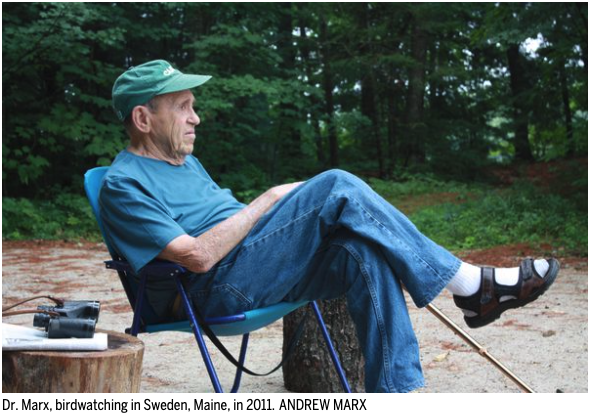
Marx, Leo

Senior Lecturer, Kenan Professor of American Cultural History, Emeritus (STS)
leomarx@mit.edu


Leo Marx received his B.A. (History and Literature, 1941) and his Ph.D. (History of American Civilization, 1950) from Harvard University. He taught at the University of Minnesota and Amherst College before coming to MIT in 1976. Professor Marx has three times been a Fulbright Lecturer in Europe, twice a Guggenheim Fellow, and a Rockefeller Fellow. He is a member of the American Academy of Arts and Sciences, and has been president of the American Studies Association, and chair of the American Literature Section of the Modern Language Association.

His work examines the relationship between technology and culture in 19th and 20th century America. He is the author of The Machine in the Garden: Technology and the Pastoral Ideal in America (1964), The Pilot and the Passenger: Essays on Literature, Technology, and Culture in America (1988), and editor, with Merritt Roe Smith, of Does Technology Drive History?: The Dilemma of Technological Determinism (1994).

Skolnikoff, Eugene

Professor of Political Science, Emeritus (Political Science)

ebskol@mit.edu

Eugene Skolnikoff received his S.B. and S.M. in Electrical Engineering at MIT (1950); B.A. and M.A. degrees in Politics, Philosophy and Economics from Oxford University (1952) on a Rhodes Scholarship; and his Ph.D. in Political Science from MIT (1965). His research and teaching have been focused in the field of science and public policy, especially the interaction of science and technology with international affairs. Among his publications is The Elusive Transformation: Science, Technology and the Evolution of International Politics (1993). Professor Skolnikoff was Director of the Center for International Studies at MIT from 1972 to 1987 and has held posts in the White House Science Office in several administrations.

Trilling, Leon

Professor of Aeronautics and Astronautics and STS, Emeritus

(Aeronautics and Astronautics and STS)

trilling@mit.edu

Leon Trilling received his B.S. and Ph.D. from the California Institute of Technology (Mechanical Engineering, 1944 and Aeronautics, 1948). He taught at the California Institute of Technology and was a Fulbright Scholar in Paris before coming to MIT in 1951. Professor Trilling joined the STS faculty in 1978. He founded the Integrated Studies Program at MIT and co-directed the New Liberal Arts Program. He is a senior staff member of The Institute for Learning and Teaching (TILT) at MIT. His research centers on the development of jet propelled airliners and the role of science and mathematics curriculum in the middle school.

Weiner, Charles

Professor of History of Science and Technology, Emeritus (STS)
cweiner@mit.edu


Charles Weiner was educated at Case Institute of Technology (B.S., Metallurgy, 1960; Ph.D., History of Science and Technology, 1965). He was Director of the Center for History of Physics at the American Institute of Physics from 1965 to 1974, when he joined the MIT faculty. He has been a Guggenheim Fellow and is a Fellow of the American Association for the Advancement of Science.


His research and writing focus on the political, social and ethical dimensions of contemporary science and the responses of scientists to public controversies arising from their work. His publications have dealt with the history of controversies over academic patenting of biomedical research, the environmental, safety and ethical aspects of genetic engineering and biotechnology, and the social context of the development and applications of nuclear physics. He is the editor of four volumes in the history of science including Robert Oppenheimer: Letters and Recollections (with Alice Kimball Smith).


He is currently completing a book on the history of social responsibility in science from the atomic bomb to contemporary genetic engineering. It uses archival and oral history materials to document scientists' complicity in and resistance to nuclear and biological weapons,  connections with citizens' groups affected by environmental toxins and by fallout from nuclear testing, and anticipatory concerns about ethical limits to human genetic manipulation.


updated 08/20/07