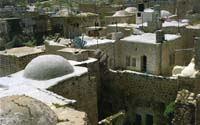
Hebron, a West Bank city approximately 25 miles southwest of Jerusalem, is one of the oldest cities in the world. Its Tomb of the Patriarchs (Haram al-Khalil) is reputed to be the grave of Adam and Eve and holds the grave of the prophet Abraham, and as such the city has long been an important religious center.[1] Accordingly, its politics have long been contested, perhaps never more so than in the current century. The present restoration work in Hebron Old City participates in this struggle.
Excepting a brief period of Christian rule during the crusades of the 12th and 13th centuries, Hebron had been under more or less continuous Muslim control since the 7th century. Following World War I and the dissolution of the Ottoman Empire, however, the situation changed, The brief periods of British and Jordanian control in the early and mid-20th century concluded with the Six Day War of 1967, in which Israel forcefully took over the area.
Recent negotiations have concerned the restoration of political control of Muslim-dominated Hebron to the Palestinian Authority. Israeli resistance to this, however, has been strong. As in other areas contested by Israel and the Palestinian nationalist movement, the presence and official recognition of Jewish settlers has exacerbated tensions and precipitated violence. In early 1994, for example, a Jewish settler shot and killed 29 Muslims at worship in the Mosque of Abraham, adjacent to the Tomb of the Patriarchs.
While particularly excessive, this incident was not atypical. Urban violence in modern Hebron, as elsewhere in Israeli-occupied territory, is simply head-to-head Palestinian and Israeli terrorism. It dates at least to 1929, when Arab riots in the city killed 67 Jews. Always the historical minority, the Jews were almost completely expelled during the following decade. Following the 1967 war, however, and the introduction of Israeli military occupation and settlement programs to the area, the opposite began to happen. The Muslim population of the old town, which had been about 10,000 in the 1960s, had by the 1980s dropped below 2000.
The reasons for this minor exodus have mainly to do with the gradual deterioration of security and quality of life in the old city under Israeli control. Palestinian sources cite as aggressive the increased circumscription of activity by military authorities (including numerous curfews often lasting for days or longer), the reconstruction of the Jewish quarter of the city (which had been largely destroyed earlier in the riots and shortly afterward), and the proximity of protected Israeli settlements. Because of these situations, and because of the difficulty of maintaining clean buildings and neighborhoods in this hostile environment, many Palestinians moved from the old city.
As a result, the old city of Hebron had by the late 1980s begun to become an abandoned slum. Its historic architectural fabric deteriorated quickly, clearly to the advantage of Israeli nationalists eager to destroy and replace it with new settlements. [2-3] However, despite the demolition of a few buildings, the vast majority of the area remained intact during this period of conflict and desertion. Thus, while no particularly urgent architectural need for preservation existed, the Palestinian resistance began to see the preservation of Hebron as essential to their continued territorial control over Hebron. In essence, the restoration project turned Israeli settlement techniques to Palestinian advantage, additionally preserving an historically significant part of the city's cultural heritage. The project's objectives were therefore political as much as architectural, and demonstrate the links between the two concerns.
The Hebron University Graduates Union, a local Islamic charitable organization, initiated the project in 1988 and funded its early research and documentation phases. It also advocated for the creation of a more permanent and official body to oversee the actual project, succeeding when Yasser Arafat (head of the PA), approved creation of the Hebron Rehabilitation Committee (HRC). An administrative board of 13 members from the PA as well as several major non-governemental organizations, the HRC was designed to oversee, advise, and arrange financing for the ongoing project. Its 30-person engineering office, staffed primarily by engineers but also by a few architects, planned and exexcuted the actual restoration. One of its most important acts was to create the General Policy for restoration, which outlined the procedures and rules to follow during documentation and restoration of the area.
Because of political and funding issues, the project began as a series of studies and pilot restoration projects. The studies included numerous phases, such as architectural surveys of selected buildings (to produce measured drawings); contextual, infrastructural, and historical studies (to produce reports and guidelines for action); and assessments of local labor and material availability. [4]
Because some years had passed since the area had begun to be vacated, building ownerships were often difficult to determine, and for this reason the HRC distributed a set of detailed questionnaires. The decision of whether or not to restore a building often hinged on whether or not its owners could be found and convinced to approve the project. This was complicated by the condition of multiple ownership of many buildings, as well as by the fact that many owners were no longer in residence.
Further studies were undertaken on the relationship of the project area to the greater area of the old town to determine the likelihood of successfully repopulating the restored buildings and their neighbors. In this, the age and tightness of the fabric caused major complications. Attractive amenities such as parks and other public facilities are scarce and in some cases nonexistent, which will in the long run make it difficult for old town housing to compete for residents with less congested areas elsewhere.The narrowness of roads, which in many cases prohibits the convenience of vehicular traffic, could hardly be rectified without damaging many buildings, and was thus accepted as a given condition. Furthermore, the homes themselves are smaller - estimates indicate that living space within the old city are roughly half the size or smaller than spaces elsewhere.
As in major urban restoration projects elsewhere, infrastructure has become a major focus in Hebron. The preexisting sewage systems, which were approximately 150 years, will clearly be insufficient in years to come, particularly if the project reaches its goal of restoring neighborhood occupation to near capacity. Recent individual building projects have been connected to the old system, but the plan calls ultimately for its complete reconstruction - the removal from roadways of embedded but obsolete pipes and wires, and the installation of new sewage, paving, and subgrade drainage facilities. These operations are of course costly, and their completion awaits funding.
Thus far, the project has focused more on local typologies than on more complex contextual and infrastructural issues, and as such its successes have been at a small scale. Generally of stone bearing masonry, individual buildings in Hebron's old city typically date to the 18th century. Because of the bearing stone construction, the spaces are generally vaulted, the techniques of which (barrel, cross, star, or dome) vary with the size of spaces. [5, 6] The spaces themselves collectively comprise what is historically known as a hosh, or extended-family compound, in which historically resided one extended family. Such buildings were traditionally distributed over two or three vertical stories, around a multi-level courtyard. [7] As well as cooling the interior during the warmer Mediterranean months, the courtyards functioned as a playground and as a private area for women to gather, socialize, and do the work of the household.
Historical sources indicate that in Hebron much of the Muslim community gathered at the Mosque of Abraham to eat, and as such many of the homes lacked kitchens. Where kitchens did exist, there was generally only one, which the entire extended family shared. Thus, a common component of individual restoration projects was the provision of new kitchen spaces, which were installed or altered depending on the projected future use of the restored building.
Besides the lack of necessary kitchen space, other common problems included the lack of proper or well-sealed plumbing (which often resulted in unwanted dampness in spots), and outtdated sewage systems. Most of the buildings restored received new water tanks on their roofs and had water and sewage piping run up their exterior walls. Thus, the new systems interfered minimally with structures and simplified both access and future removal. Floors ruined by time, use, and poor maintenance were often replaced with stone, terrazzo or cement, although varying heights from one room to the next were generally not altered. Crumbling wall plaster was typically replaced with new stucco, in which new electrical wires were embedded.
Windows and doors had become broken and unusable on most of the restored buildings, and were typically replaced with new metal versions. These often included bars where lower-level openings lay on the street, as security problems were one of the main fears of owners and potential tenants. The cost, longevity, and expected low maintenance of the metal windows were regarded as adequate compensation for their low thermal efficiency, particularly in light of the region's mild climate. None of the new housing units created were equipped with central heating systems - those in need of sources in excess of kitchen or other fireplaces are expected to rely in the future on portable electric devices.
Aside from the provision of windows and doors and the placement of pipes and tanks, the only other exterior building changes were to the building walls themselves. This generally meant only adding mortar and repointing, but in situations where walls had become structurally unstable they were completely rebuilt. This was done by removing the old stone wall and replacing it with either block or poured concrete, then re-covering with the original stone to harmonize with the surrounding fabric. [8] In cases where floors had begun to separate from structural walls, metal tie rods were used to pull the two back together. [9] Their star-shaped heads can now be seen on the exterior walls of many buildings. Existing domes and vaults were typically not rebuilt but just strengthened with concrete. [10]
Most of the materials (stone, lime, clay, pottery) and labor were local, but the project has been critiqued for its excessive use of concrete. While a cheap, quick and easy material, the concrete may in the long run have difficulty with water damage, and thus the current renovations may have to be revisited before too long. Aside from this, however, most other interventions were not intrusive and may be easily reversed if necessary. Architectural interventions existing prior to the HRC project were generally not removed.
Labor costs were roughly $35/day for skilled workers and $25/day for unskilled ones, and project costs have generally been in the range of $150-$200/m2. This is roughly equal to the cost of new construction, but may be expected to improve since the workers generally learned building reconstruction techniques on the job under political hardships that have since somewhat abated. As of 1998, over 120 shops and dwellings had been restored and work was ongoing on over 90 more, but the project goal is ultimately to create at least 1000 new housing units by 2002.
Original financing was provided by the University Graduates Union, but as the project grew (by 1998 its total cost was about $24 million US) funding was sought from other sources. The Saudi-based Islamic Development Bank and the Arab Fund for Social and Economic Development, supported in part by the government of Kuwait, provided the bulk of this additional money, though the government of Spain has provided some as well. None of the projects required any funds at all from building owners, a fact which must have generally simplified the acquisition of permissions. Details on the actual grant and funding process are not clear, but it appears clear that the Graduates Union made good its initial intention to use low-budget pilot projects in the late 1980s and early 1990s to encourage snowballing funds from outside the Hebron community.
More local economic issues have been handled directly by the financial administration of the HRC, which required that the overall ratio of owners to renting tenants in restored areas be at least 2:1. This requirement, which has been followed, provided the incentive for project managers to locate building owners before starting work, and has meant that the majority of new residents of the area are actually returnees. The owners themselves were allowed to decide whether or not to rent areas, although their choice of tenants was strictly circumscribed by the restoration policy. New apartments were reserved strictly for Muslim workers and other low-income groups (including the homeless), and will be subsidized for the first five years of tenancy. After this period they will revert to market rates.
Preliminary reports indicate that in the wake of restoration and partial repopulation, the local business climate has picked up, and that the local souks are coming back. Part of this is doubtless due to the infusion of cash resulting directly from the construction activity itself, but the HRC authorities seem optimistic that a critical mass of area residents will sustain the new activity. This is essential if the area is to become an actually functioning community rather than merely a tourist stop, which seems necessary if the project is to achieve its political ends. Reports and post-occupancy studies indicate further that the new and returned residents of the old city are happy there, that the area feels comfortable, safe, familiar, and proud.
The restoration, while not an easy process at any time, has begun to smooth out. At times whole areas of the old city were cordoned off by the Israeli Army, and workers were forced with their families to move into the project houses in order to continue working. The Israeli army made some 400 arrests at project worksites in 1996-1997, but the recent shift (15,000 Israeli troops pulled out of Hebron following the 1997 treaty giving the PA 80% control over the city) is sure to relax the situation over time. Recently, there have been fewer confrontations.
The restoration of Hebron Old Town has been and continues to be accomplished in the face of considerable political odds. That it was initiated not by a group of concerned citizens and went on to receive the official sanction and international funding necessary for success is remarkable, and is one of the reasons behind its winning a 1998 Aga Khan Award for Architecture. It was achieved largely without the help of conservation experts or institutions (such as UNESCO and the OWHC) and in the absence of a preexisting national conservation context or policy.
The restoration of Hebron Old Town may thus be a pivotal project in the history of urban conservation in the Palestinian region. While the HRC has neither the time nor the funds to restore the entire old city, its work may inspire nearby property owners to bring their own buildings up to the new standard. By allowing only privately restored buildings to charge market rents over the next five years, the HRC tenant policy may well make this a viable option. In addition, as the Hebron project raises the profile of conservation in the area generally, both as a political tactic to forestall Israeli settlement and as a way to maintain Palestinian cultural heritage, it may spread to other nearby areas.
Regardless of its political implications, the cultural effects of the Hebron restoration may be of great consequence for the future of Palestine. As Ihsan Fethi has written, "the absence of a national inventory of architectural heritage in Palestine is a serious defect which must be addressed." Particularly in the absence of the national wealth that might make conservation an ordinary concern, such an organization is indeed necessary, and the HRC might serve as a useful and effective precedent.
While it runs the risk of exacerbating local tensions, the project for the restoration of Hebron gives the Muslim majority a foothold in a political struggle in which it has long been on the defensive, and may be an important first step in the conservation of the Palestinian architectural heritage. Additionally, it provides an exciting and inspiring example of good conservation work in the face of hostility, poverty, and inexperience. Its cleverness of financing and organization and its economy of means provide a useful example for conservation groups both in the Palestinian region and elsewhere.
Bibliography
Al-Dwaik, Ghassan J. M. "Architectural Heritage in the Town of Hebron, and the Restoration Project of the Historical Centre."
Ecole d'Architecture de Paris-Belleville: Paris, 1997 (thanks to Bill O'Reilly)
Amiry, Suad and Tamari, Vera. "The Palestinian Village Home." British Museum: London, 1989.
Davidson, Cynthia C., ed. "Legacies for the Future: Contemporary Architecture in Islamic Societies" Thames and Hudson: London, 1998.
Digges, Diana. "The Politics of Preservation," in The Christian Science Monitor. July 29, 1999
Fethi, Ihsan. "The Role of Architectural Heritage and Urban Reconstruction in Palestine." Pp 392-404 in Zahlan, A.B., ed. "The Reconstruction of Palestine: Urban and Rural Development." Kegan Paul: London, 1997
Hamdi, Nabeel. "Housing Alternatives and Options for Conservation and Renewal," pp 363-372 in Zahlan. Yavuz, Aysil Tukel "Report to the Aga Khan Awards Committee on the Reconstruction of Hebron Old Town," Geneva, 1998. (Thanks to Bill O'Reilly)
Hebron, Palestine
RESTORING HEBRON OLD TOWN
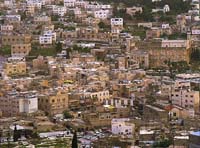
Fig 1. An aerial view of Hebron Old City shows the complex heterogeneity which characterizes it both physically and historically. Political complexities made the project difficult as well.
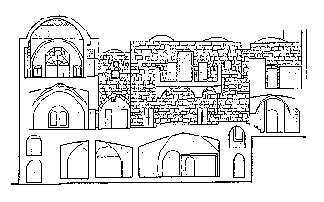
Fig. 4. A typical house in Hebron Old City.
Fig 2-3. A comparison of before and after photos from Hebron shows the dramatic improvements that cleaning and repointing made to the condition of old masonry structures.
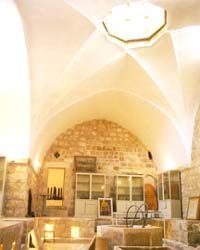
fig. 5 New, more modern, and more comfortable interior living spaces were a necessity if the project was to reach its goal of substantially repopulating the old city.
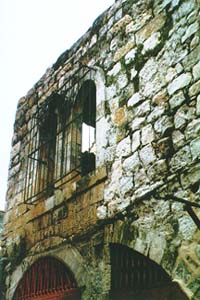

fig. 6. Re-inhabiting old buildings often required reconfiguring their original plans to accommodate renting tenants or smaller owning families.

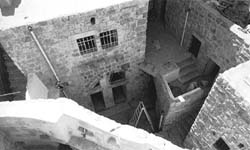
fig. 7. Stairways provided access to the social and chore space of interior courtyards. They were commonly rebuilt during the restoration and, in cases where new building layouts demanded, they were substantially reconfigured.

fig.8. Pouring of new, reinforced walls to strengthen or replace ones that were crumbling was typically the most major building alteration during the reconstruction of Hebron Old City. Replacement walls of new concrete were often faced with the original stone.

fig.9. Sagging over time, the walls of many buildings in Hebron Old City had to be re-attached to the floors via the insertion of metal ties. Their star-shaped heads can now be seen on the buildings' exteriors.
fig.10. Once decrepit and crumbling, the rooftops of Hebron Old City have been restored to be more durable as well as more useful to the people who live beneath them.