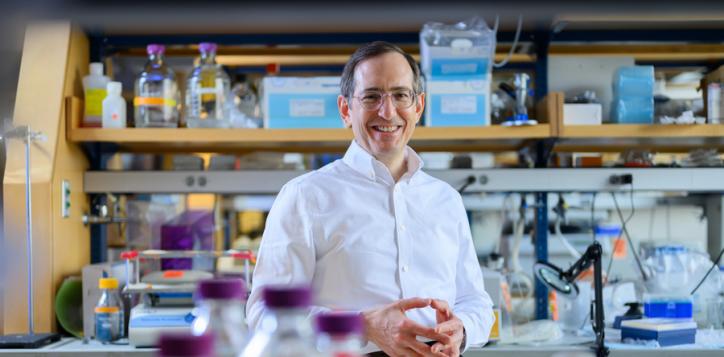
Drew Endy, Ph.D.
Assistant Professor, Department of Biological Engineering

Research group web site

Email: endy@mit.edu
Office: 68-580a
Lab: 68-564d
Phone: 617-258-5152
Administrative Assistant: Isadora Deese (68-580)

Scientific America Feature Article May 2004 issue
Synthetic Life: Biologists are crafting libraries of interchangeable DNA parts and assembling them inside microbes to create programmable, living machines. By W. Wayt Gibbs

Overview

Biological Systems Analysis, Design and Synthesis: We are learning how to construct, experimentally validate, and apply molecular mechanism-based models of specific biological systems such that a user of the model could predict the future behavior of the system (both as the system exists, and in response to specific perturbations). In parallel, we are applying the understanding derived from the modeling of natural biological systems to create a technical foundation and infrastructure that supports the engineering of many-component synthetic biological systems.

Current Research

Modeling Yeast Pheromone Signal Transduction: How do biological systems respond to information in their environment, and how can we best characterize and represent such a process sufficient to allow prediction of future system behavior in response to specific perturbations? Can we compose useful models of complex biological systems from validated models of smaller systems? To approach these questions, we are studying a relatively well-characterized eukaryotic regulatory system, the G-protein receptor-coupled signal transduction pathway that governs the response of haploid MATa Saccharomyces cerevisiae (Baker's yeast) to the mating pheromone, alpha factor. This work consists of combined experimental and computational work and methods development, and is part of an interdisciplinary multi-investigator research project.

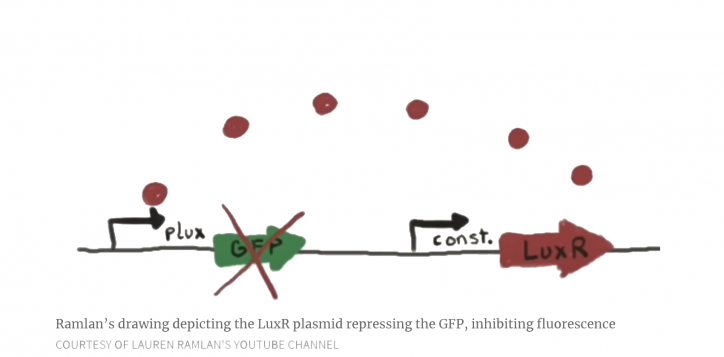
Standard Parts List for Synthetic Biology: At this time engineers and physicists have created, in the laboratory, a ring oscillator, a toggle switch, and a matched inverter regulating a cell-to-cell signaling system. These systems were constructed by combining already well-defined genetic elements. In each case, the process of system construction was long, somewhat arbitrary, and unique. Were still other synthetic systems specified, the process of their construction would be similarly tedious and stand-alone, and not reflect the practice of a modern engineering discipline. Thus, we are working to specify, organize, characterize, document, and freely provide a standard parts list of well-defined biological components that current and future synthetic biologists and engineers can use to compose ever more complex systems. This involves the collection and characterization of existing genetic and protein regulatory elements, the engineering of new functional proteins, the development of a better understanding of component crosstalk, and so on. As we learn to better and more systematically construct synthetic biological systems, we will likely also recognize important new biology.

Informatic and Software Tools for Synthetic Biology: Almost all existing software tools that support the analysis and manipulation of oligonucleotide sequences are based on the premise that the oligonucleotide already exists. While obviously useful, such software is not designed to support the fabrication of synthetic biological systems, and the integration of system design and validation with the process of system construction (e.g., oligonucleotide synthesis and assembly). We are working to adapt and integrate existing software and informatic tools, as well as write new ones, in order to ultimately create an integrated environment for designing biological systems in response to performance specification.

BioAnalog - Exploring possible links between biological and analog circuits: We are participating in a multi-investigator project to consider, at a very basic level, how the practice of analog circuit design and our understanding of natural biological circuits can inform and impact each other.

Relevant Publications

Click here for a complete list of publications.

Endy, D, Brent, R. Modelling Cellular Behavior. Nature 2001 Jan 18; 409(6818):391-5.

Endy D, You, L, Yin J, Molineux IJ. Computation, prediction, and experimental tests of fitness for bacteriophage T7 mutants with permuted genomes. Proc Natl Acad Sci U S A. 2000 May 9; 97(10):5375-80.

Endy D, Yin J. Toward antiviral strategies that resist viral escape. Antimicrob Agents Chemother. 2000 Apr; 44(4):1097-9.

Endy D, Kong D, Yin J. Intracellular kinetics of a growing virus: A genetically structured simulation for bacteriophage T7. Biotech Bioeng. 1997; 55(2):375-89.

top

Copyright 2003 MIT Biological Engineering. All Rights Reserved.
Site designed by Academic Web Pages.