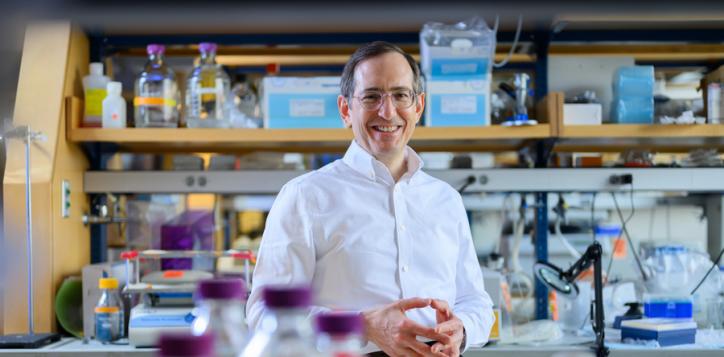
Peter K. Sorger, Ph.D.
Professor of Biology, and Biological Engineering
Lab web site
E-mail: psorger@mit.edu
Office: 68-371
Phone: (617) 252-1648
Fax: (617) 253-8550
Administrative Assistant: Christopher Bird
Courses: 20.481
Research Focus
Systems Biology of Tumor Progression and Treatment
Our laboratory applies experimental and computational methods to the analysis of mechanical and regulatory processes controlling eucaryotic cell division. We focus on the microtubule-based machines that segregate chromosomes during mitosis and on the signal transduction networks that regulate apoptosis-proliferation decisions in mammals. Although primarily undertaken in isolated cells and transgenic mice, our research has the potential to advance understanding of the origins, progression and treatment of cancer in humans. Defects in the pathways we study are known to predispose cells to oncogenic transformation and our recent work on small molecule chemotherapeutics emphasizes a perspective on disease and therapy in which pharmacology is interpreted via quantitative systems models.
Research on cell division and mitosis in our lab is performed in budding yeast, tissue culture cells and mice. In all three cases we attempt to link systems-wide models of cellular function with detailed mechanistic information on the activities of individual proteins. Our approaches to modeling span physico-chemical simulation and statistical data mining. In all cases however, models are data-driven and subject to extensive experimental verification. Systematic data collection poses its own practical and theoretical challenges, explaining our interest in data ontologies and databases. For example, the Open Microscopy Environment (OME) co-founded by our laboratory, is an international effort to develop database-driven software for systematic analysis of multi-dimensional biological images.
The approximately 25 students, postdocs and research scientists in the Sorger Lab are actively involved in a wide variety of biochemical and genetic experiments, with particular emphasis on the use of advanced optical imaging techniques to study living cells. Several members of the lab work on computational modeling and software development and, as part of a multi-investigator NIH center of excellence in systems biology (the Center for Cell Decision Processes; P. Sorger PI) we also assist in the development and evaluation of microfabricated devices for high-throughput data analysis. In the analysis of chromosome segregation we maintain close collaborations with the Harrison lab at Harvard Medical School and the Danuser lab at Scripps; in the area of image informatics with the Swedlow lab at the Welcome Centre in Dundee, Scotland; in computational modeling and systematic experimentation with the Lauffenburger and Yaffe labs at MIT; and in microsystems with the Manalis and Jensen labs, also at MIT. Five former postdocs in the laboratory now run their own academic groups, and three former members are involved in biotech startups.
Structural and functional analysis of kinetochores
Kinetochores are multi-protein complexes that assemble on centromeric DNA and mediate the attachment of chromosomes to microtubules (MTs). Kinetochores have the remarkably ability to couple the energy of MT depolymerization into the forces required for chromosome movement. It is essential that each sister chromatid attach to MTs at one and only one site, and kinetochore formation is therefore tightly controlled. When assembly proceeds correctly, pairs of sister chromatids carry two kinetochores, each of which captures MTs emanating from a different pole. This generates a state of bipolar attachment and sets the stage for accurate chromosome disjunction at anaphase. The establishment of bipolar links between paired sister chromatids and spindle MTs is monitored by the spindle assembly checkpoint, comprised of a highly conserved set of Mad and Bub proteins. Checkpoint proteins associate with kinetochores early in mitosis, and are displaced only when correct MT binding is achieved. In an as-yet poorly understood process, kinetochore-bound checkpoint proteins generate a signal that inhibits the anaphase promoting complex, thereby delaying the onset of anaphase and increasing the time available for MT capture by kinetochores.
Kinetochore structure and assembly. Our laboratory studies kinetochores in yeast and human cells to address the following fundamental questions: (i) How is kinetochore assembly regulated to satisfy the one and only one-kinetochore per chromatid rule? (ii) What is the overall architecture of the kinetochore and what are the functions of individual proteins? (iii) How is force generated and chromosome movement regulated? Over the past few years, we have made considerable progress in identifying kinetochore proteins in budding yeast by using a combination of protein purification, mass-spectrometry and high resolution imaging. We have established that yeast kinetochores contain upwards of 70 protein subunits, which form at least 14 distinct multi-protein complexes prior to assembly on centromeric DNA. In budding yeast, kinetochore assembly resembles that of transcriptional enhancers: sequence specific DNA binding by protein complexes recruit additional complexes in successive "layers" that eventually create a fully functional multi-component structure. In human cells however, centromere location is specified by a specialized chromatin domain whose assembly does not involve sequence-specific DNA binding. Nonetheless, we have recently found that the core structure of kinetochores is conserved from yeast to man. To better understand this structure we are subjecting selected kinetochore proteins to EM and high resolution crystallographic analysis (in collaboration with the Harrison Lab). An early success with this structural work has been the discovery that the MT-associated DASH complex forms rings encircling MTs, perhaps explaining DASH’s role in establishing stable kinetochore-MT attachments.
Functional analysis of kinetochore proteins in yeast is challenging due to the complex and interconnected mechanics of the mitotic spindle and the small size of the yeast nucleus. However, live cell imaging combined with sophisticated machine-vision algorithms (developed by our collaborators in the Danuser lab) can track the movement of kinetochores in wild-type and mutant yeast with a precision approaching 20 nm. Information on chromosome trajectories derived from tracking then can then be used to construct numerical models in which kinetochore-generated forces are isolated for study. By combining these in vivo studies with biochemical reconstitution, we hope to develop a detailed mechanistic picture of chromosome biorientation and movement. Similar tracking and simulation methods are now being applied to chromosome segregation in mammalian cells.
Selected Publications
He, X., Asthana, S., Sorger, P.K. (2000) "Transient Sister Chromatid Separation and Elastic Deformation of Chromosomes During Mitosis in Budding Yeast," Cell 101, 763-775
He, X., Rines, D.R., Espelin, C.W, and Sorger, P.K. (2001) "Molecular analysis of kinetochore-microtubule attachment in budding yeast" Cell 106,195-206.
DeWulf, P.D., McAinsh, A., and Sorger, P.K. (2003) "Hierarchical assembly of the budding yeast kinetochore from multiple subcomplexes" Genes Dev., 23, 2902-2921.
Miranda J.J., De Wulf. P, Sorger, P.K. and Harrison. S.C "The yeast DASH complex forms closed rings on microtubules," (2005). Nature Struc. Biol. 12, 138-43.
Dorn, J.F. Jaqaman, K. Rines D.R. Jelson, G.S. Sorger, P.K and Danuser G. (2005) "Interphase kinetochore microtubule dynamics in yeast analyzed by super-resolution microscopy" Biophys. Journal. Biophys J. 89:2835-54.
Meraldi, P , McAinsh, D, Rheinbay, E. and Sorger, P.K. (2005) "Phylogenetic and structural analysis of centromeric DNA and kinetochore proteins," submitted to Genome Biology.
Checkpoint controls in animal cells
Accurate chromosome segregation at mitosis requires the operation of a spindle assembly checkpoint that monitors chromosome-MT attachment. Our research seeks to answer the following questions: (i) how is bivalent attachment sensed (ii) what goes wrong in tumor cells to cause chromosome instability? To address these questions, RNAi-mediated gene inactivation and live cell microscopy are being combined in human cells. In mice, both conventional and conditional knockouts are being employed to study the effects on checkpoint inactivation on chromosome segregation and tumor promotion.
Recent experiments in tissue culture cells show that the spindle assembly checkpoint plays a role not only in detecting the presence of unaligned chromosomes, but also in controlling the overall timing of mitosis. This timing function requires the Mad2 and BubR1 checkpoint proteins, but, unlike the unaligned chromosome checkpoint, does not require functional kinetochores. The dramatic acceleration in mitosis that accompanies Mad2 deletion helps to explain why Mad2 is an essential gene in higher eukaryotes. However, we have recently discovered that the lethality of a mouse Mad2 deletion can be suppressed by the simultaneous elimination of the p53 tumor suppresser gene. Mad2-p53 double knockout murine cells are viable (although animals are not) and exhibit a very high degree of genomic instability. Moreover, the partial inactivation of the spindle checkpoint in T-cells (using conditional gene disruptions), in a p53 +/- background generates fast growing tumors that kill animals within a few months of birth. These data suggest an important role for p53-mediated apoptosis in the death of animal cells lacking a spindle checkpoint and represent a first step in linking checkpoint defects to chromosome instability (CIN) and cancer.
Selected Publications
Dobles, M., Liberal, V., Scott, M.L., Benezra, R. and Sorger, P.K. (2000) "Apoptosis and Chromosome Mis-segregation in Mice Lacking the Mitotic Checkpoint Protein Mad2," Cell 101, 635-645.
Meraldi, P., Draviam, V. and Sorger, P.K. (2004) "Timing and checkpoints in the regulation of mitotic progression," Dev. Cell 7, 45-60.
Gillete, E.S., Espelin, C.E. and Sorger, P.K. (2004) "Spindle checkpoint proteins and chromosome-microtubule attachment in budding yeast"J.Cell Biol, 16, 535-46.
Burds, A. A. Shultze-Lutum, A and Sorger, P.K. (2005) "Generating chromosome instability through the simultaneous deletion of Mad2 and p53," Proc. Natl Acad Sci, 102, 11296–11301.
Draviam,V., Shapiro, I., Aldridge, B., and Sorger, P.K. (2005) "Misorientation and reduced stretching of aligned sister chromatids promotes chromosome missegregation in EB1 and APC-depleted cells," EMBO J, in press.
Systems Biology of Cell Decision Processes
Precise control of cell proliferation and fate by extracellular growth factors is essential for tissue development and homeostasis. Extra-cellular cues drive cell proliferation and programmed cell death via complex signal transduction circuits comprised of receptors, kinases, phosphatases, transcription factors etc. Not surprisingly, many components of these signal transduction circuits are oncogenes or tumor suppressors, underlining the importance of understanding signaling in normal tissues and of targeting aberrant signaling in disease.
Molecular genetics has been extremely successful in identifying the components of signal transduction circuits and in uncovering important interactions among signaling proteins. Understanding the functions of signaling proteins in normal physiology and disease has been elusive however, and most biological regulation can be ascribed not to the actions of a single proteins but to networks of proteins interacting in a complex, time-dependent fashion. In the past few years our laboratory has become interested in the physiological responses of cells to extracellular cues, and particularly to combinations of ligands that induce conflicting proliferation-apoptosis signals. We employ a systems biology approach that seeks to build models combining network behavior and precise mechanistic information about individual proteins. These models are numerical, but they are formulated on the basis of extensive empirical data and subjected to rigorous experimental verification.
Our current work focuses on the responses of human cells to epidermal growth factor (EGF and related growth factors), tumor necrosis factor (TNF and other trimeric cell death factors) and insulin (and insulin-like growth factors; IGFs) individually or in combination. Early successes include the collection of an ~10,000 measurement data compendium that quantifies time-varying activities of signaling proteins downstream of TNF and ErbB (the four-member EGFR family) receptors. The application of classifier-based regression to this data has revealed that, in epithelial cells, TNF provokes a multi-step autocrine cascade that plays out over a period of at least 24 hr. Immediately after TNF addition, activated TNFR provokes pro-apoptotic signals and also leads to the release of pre-synthesized TGF a , which binds to the EGF receptor and acts in an anti-apoptotic fashion. Several hours later, the combined actions of TNF and autocrine TGF a lead to IL1 a release, activating the IL1 receptor and adding a pro-apoptotic stimulus. In a final twist, release of IL1 receptor antagonist (IL1ra) is induced, terminating IL1R signaling. The overall effect of this three-part autocrine cascade is to add sequential layers of pro and anti-apoptotic signaling that set the level of cell death in a self-limiting fashion. We propose that time-dependent crosstalk among synergistic and antagonistic autrocrine circuits may be a general mechanism of biological control, particularly in complex tissues
Although large-scale modeling of the type described above is useful for constructing course-grained physiological models, we are ultimately interested in explaining cell behavior in terms of molecular mechanism. Working closely with the Lauffenburger lab, we have devoted considerable effort to the construction and training of physico-chemical models of ErbB and TNF receptor networks. These models are being used to explore the basis of cell-type specific variation in responses to EGF and TNF and in exploring the mechanisms of action of receptor-targeting therapeutics. In the case of ErbB receptors, we are attempting to develop predictive models of Erbitux (anti-ErbB1) and Herceptin (anti-ErbB2) efficacy, and to understand how ErbB1 receptor mutations sensitize cells to small molecules such as Gefitinib (Iressa) and lapatinib (CI1033). While sensitivity is closely associated with mutation, over-expression of wild type receptor also causes sensitivity. Moreover, sensitivity cannot be transferred by moving ErbB1 mutant genes into resistant cells, nor by gene replacement in the mouse. This strongly suggests that sensitivity is a property both of the ErbB1 mutation and of the network in which ErbB1 is embedded in tumor cells. Preliminary simulation and experimental data suggest that alterations in receptor trafficking are key aspects of this sensitizing environment.
Selected Publications
Swedlow JR, Goldberg I, Brauner E, Sorger PK. (2003), Informatics and quantitative analysis in biological imaging." Science, 300, 100-102.
Sorger, P.K (2004) "A Reductionist’s Systems Biology," Curr Opin Cell Biol 17, 9-11.
Gaudet, S., Janes, K.A., Albeck,J, Pace, E.A., Lauffenburger, D.A. and Sorger, P.K. (2005)"A compendium of signals and responses triggered by prodeath and prosurvival cytokines" Mol Cell Proteomics, 10, 1569-1590
Janes. K.A., Gaudet, S., Albeck, J.G., Nielsen, U.B., Lauffenburger, D.A. and Sorger, P.K. "The response of human epithelial cells to TNF involves an inducible autocrine cascade" (2005), Cell, under revision.
Janes. K.A., Albeck, J.G., Gaudet, S., Sorger, P.K. Lauffenburger, D.A, Yaffe M.B. "A Systems Model of Signaling Identifies a Molecular Basis Setthat Predicts Cytokine-Induced Apoptosis," Science, under revision.
|