Books
Living in a Strange World
Under contract with Oxford University Press
This is a book about whether big theories in physics, cosmology and metaphysics have a bearing on what we ought to believe about ordinary, common-or-garden things, and on what we ought to do in ordinary, common-or-garden contexts. I say they do.
The Limits of Kindness
Oxford University Press, 2013
My most recently published book. Its aim is to derive a substantial theory of normative ethics from some very spare, uncontroversial assumptions about rationality, benevolence and essence.

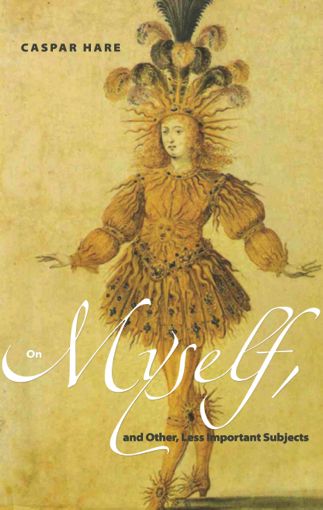
On Myself, And Other, Less Important Subjects
Princeton University Press, 2009
My book about the metaphysics of the self, ethical egoism and identity through time.
Papers In Progress
'The Great Spectrum Paradox'
This paper offers a solution to a paradox that has, in various forms and guises, haunted ethics for the past thirty five years. I will welcome comments on it (just email me).
'The Paradox of Infinite Distrust'
This is an in-progress paper on epistemology in an infinite world. I will welcome comments on it (just email me).
Published Papers
'Consequentialism and Indeterminacy'
Forthcoming in The Oxford Handbook of Consequentialism (Portmore ed.)
This is about whether and how act-consequentialists can deal with the fact that, often, the consequences of acts are indeterminate.
'Risk and Radical Uncertainty in HIV Research'
Journal of Medical Ethics 103117, 2017
This is a paper I wrote for a conference on HIV research ethics. It has to do with how much risk we should expose our research subjects to, when the evidence on which we base our assessments of risk is fragmentary, conflicting or sparse.
'Should We Wish Well to All?'
The Philosophical Review 124, no. 4, 2016
Yes we should. This paper is about decomposable acts and beneficence.
'Self-Reinforcing and Self-Frustrating Decisions'
Noûs 50, no. 3, 2016
This paper, co-authored with Brian Hedden, is about (really against) theories that say that sometimes what you ought to do depends on what you believe you will do.
'Torture: Does Timing Matter?'
Journal of Moral Philosophy 11, no. 4, 2014
This is a paper based on comments I gave on Francis Kamm's 2011 book Ethics for Enemies: Torture, Terror and War?. It is about when, if ever, it is okay to torture.
'Time: The Emotional Asymmetry'
in A Companion to the Philosophy of Time, Bardon, Dyke eds., Wiley Blackwell 2013
This is a survey-style paper on future-bias. Ought we to want good things to be in the past, bad things to be in the future? I look at arguments either way.
'Obligations to Merely Statistical People'
Journal of Philosophy 109, no. 5/6, 2012
This is about whether, when we don't give to charity, we can take consolation in the thought that no person is worse off for our not giving.
'Obligation and Regret When There is No Fact of the Matter About What Would have Happened If You Had Not Done What You Did'
Noûs 45, no. 1, 2011
This is about conditional under-specification and the objective ought. Moral: sometimes there is a difference between what there is most reason for you to do and what a fully informed, benevolent observer would want you to do.
'Take the Sugar'
Analysis 70, no. 2, 2010
I raise a problem about you ought to behave, when you have sweetening-insensitive negative preferences (when you lack preferences between items, and still lack preferences if one item is mildy improved). For decision theorists, this problem gives rise to a fork in the road. I present two ways to extend standard decision theory so as to accomodate two different solutions to the problem.
'Realism About Tense and Perspective'
Philosophy Compass 5 (9): 760-769, 2010
This paper may serve as an introduction to some of the ideas in my 2009 book.
'Perfectly Balanced Interests'
Philosophical Perspectives 23.1, 2009
This is about cases in which people's interests conflict. I argue that how we think about some important such cases depends on how we think about a very general problem about you ought to behave, when you have sweetening-insensitive negative preferences (when you lack preferences between items, and still lack preferences if one item is mildly improved). I discuss the significance of this problem for decision theory in 'Take the Sugar', above.
'The Ethics of Morphing'
Philosophical Studies 145, no. 1, July 2009
This is a more general paper about inter-personal aggregation -- trading off costs and benefits when the people who suffer the costs are not the same as the people who reap the benefits. Loosely the idea is that, because the space of all metaphysically possible states of affairs is exceedingly rich in detail, and because identity across possible states of affairs is a slippery thing, pure benevolence (wanting things to be better for particular people) commits us to aggregating inter-personally.
'A Puzzle About Other-Directed Time Bias'
Australasian Journal of Philosophy 86, no. 2, June 2008
I want my pains to be behind me and my pleasures ahead of me. Should I want the same for other people? Yes, in spite of prevalent intuitions to the contrary.
'Rationality and the Distant Needy'
Philosophy & Public Affairs 35, no. 2, Spring 2007
This is my argument for the claim that morality and rationality, together, are very demanding indeed. It is much harder than you think to be morally decent and rational.
'Voices From Another World: Must We Respect the Interests of People Who Do Not, and Will Never, Exist?'
Ethics 117, no. 3, April 2007
This is about the rights and wrongs of bringing people into existence. In a nutshell: sometimes what matters is not what would have happened to you, but what would have happened to the person who would have been in your position, even if that person never actually exists.
'Self-Bias, Time-Bias, and the Metaphysics of Self and Time'
Journal of Philosophy 104, no. 7, July 2007
This paper turned into the first section of my 2009 book.