|
|
Approximately two-thirds of the chemistry majors at MIT proceed to carry out graduate work leading to a Ph.D. in chemistry. The decision to apply to graduate school is ultimately a personal one, requiring a thorough evaluation of your career goals and interests. Since graduate work requires a serious commitment of 4-5 years of study, the reasons for entering an advanced degree program should be considered carefully. MIT chemistry majors have the benefit of access to faculty, students, and laboratory staff in one of the premier graduate programs in the world. We encourage majors to learn about graduate work and life through formal and informal interactions with these excellent resources in classes, labs, advising sessions, and departmental events.
Should I pursue a graduate degree in chemistry?
Most MIT Chemistry majors interested in careers in chemistry research are not content with a BS degree and decide to go on to graduate school immediately after graduation. Many students are influenced by the fact that in the chemical industry, the more advanced your degree, the more independence and responsibility you will have in guiding the direction of your research. Chemists with only a bachelors degree tend to work under the close supervision of senior scientists, and this tends to be the case with MS level chemists as well. Note that most graduate programs in chemistry do not have a Masters degree option, and MS degrees are often only awarded to students who are required to leave a PhD program because of unsatisfactory performance.
Whether or not graduate work is the right course for you ultimately comes
down to what you enjoy doing and your career
goals. If after
participating in UROP projects or summer internships you find that research
(practical or theoretical) holds no interest for you, then you should
not be thinking about graduate study in chemistry! On the order of 60
hours (or more) of research for 4 or 5 years is typically involved in
a Ph.D.
program in chemistry. This is not a commitment that should be undertaken
by someone who does not enjoy the research enterprise, and not knowing what
you want to do after MIT is not a good reason to opt for graduate school.
Getting into Graduate School Seminar
Every September, the Chemistry Education Office sponsors an evening "Getting
into Graduate School" seminar
for chemistry majors. At this seminar, Chemistry Department faculty
provide students with an overview of the graduate experience, outline
the application process, and then answer specific student questions. Faculty
also provide advice and comments on specific graduate programs in each
area of chemistry. All Chemistry majors are strongly encouraged to attend
this seminar, starting in their sophomore year. Sophomore students will
benefit by learning what is involved in the application process and what
kind of experience and performance is needed to be admitted to different
graduate programs.
What is graduate school like?
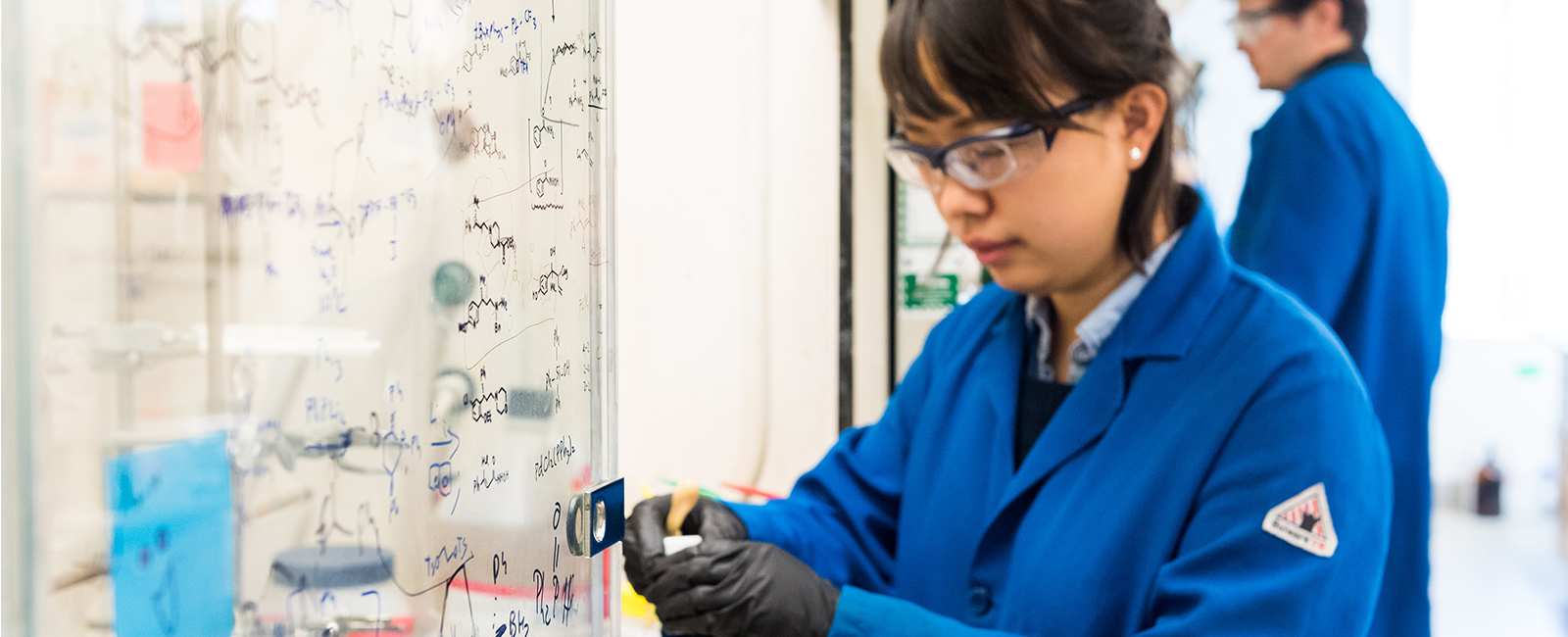
The core of the graduate experience in chemistry is being trained to employ the scientific method to solve real problems at the frontier of our understanding of matter. Most of your time as a PhD student will involve carrying out research within the research group of a faculty member, who will serve as your mentor and research supervisor. Of course, research entails more than just carrying out experiments, and your time will be also be spent studying the chemical literature, interpreting results and planning experiments, and communicating chemistry with colleagues informally as well as formally through departmental seminars and professional conferences.
During the first year of graduate school you will be required to take classes to build your knowledge base in the field. Once you have been accepted into a research group (usually in the middle of your first year), you will begin to conduct research on an original problem, and by the summer at the end of your first year you will be responsible for working on your research project full-time.
You should keep in mind that doctoral programs in chemistry usually fully support their students, either through fellowships, research assistantships, or teaching assistantships. In addition to this stipend, which will be sufficient to cover your living expenses, your tuition will also be covered by the graduate program or your research advisor.
Take a look at the MIT graduate degree requirements for an idea of how one program structures its doctoral program.
What do graduate admissions committees look for in an application?
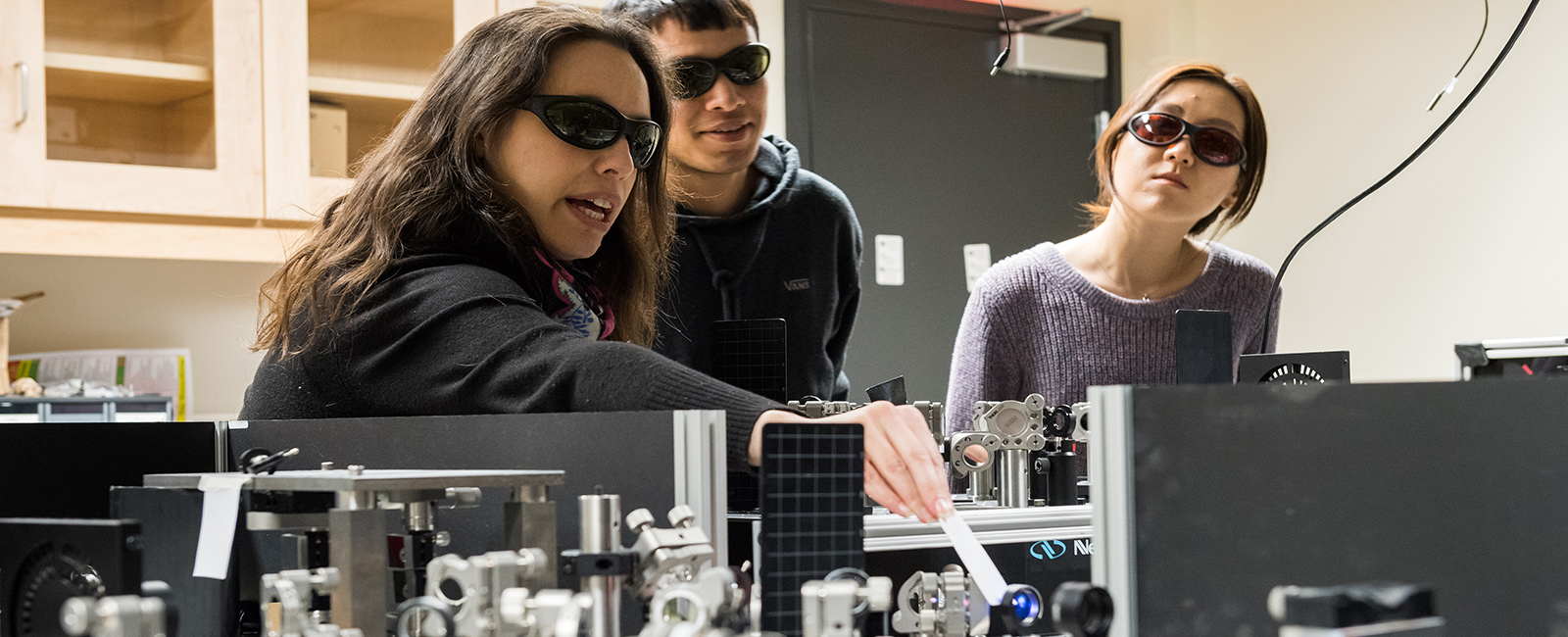
It is important to keep in mind that the evaluation of applications to graduate programs in chemistry is carried out by faculty in the department you are applying to rather than in a central admissions office of the university. Although the criteria that faculty use in making their admission decisions varies, one generalization can be made: faculty evaluate your application from the perspective of whether you are someone they would want to include in their research group. Undergraduate research experience is therefore of particular importance. It is not essential for this research to be in exactly the same area as that you are interested in for your graduate work; what is important is that you have a track record of excelling at research and that you have demonstrated that you appreciate what graduate thesis research will entail. For this reason it is important to maintain a good relationship with your undergraduate research supervisor, as he or she will be providing the most important reference to the admissions committee. In many cases your supervisor will personally know the faculty who will be reading your application at a particular school. Outstanding undergraduate research performance sometimes means much more than grades and GRE performance in determining admissions decisions. MIT undergraduates should speak with their faculty advisor about arranging UROP projects
and for information about summer research programs at other institutions.
Information is also available in the Chemistry Education Office (2-204).
Timetable for applying to graduate school
Outlined below is a timetable for preparing for graduate school immediately after graduation from MIT. Note, however, that some students take one or more years off to work in industry before applying to graduate school. In general, this does not affect your chances of getting into top graduate programs, and may of great benefit in helping you to focus your interests.
Sophomore Year
- Begin to evaluate the areas of chemistry you are interested in for potential UROP projects and summer research internships.
- Begin talking to your faculty advisor, other chemistry majors, and graduate students about graduate school, careers in chemistry, and chemical problems that are of current interest.
- Begin UROP project as time allows.
- Attend the Getting Into Graduate School seminar in September.
Junior Year
- Begin/Continue UROP project as time allows. Do not be afraid to switch projects if you decide that there are topics that are of more interest in other research groups.
- Attend the Getting Into Graduate School seminar in September.
- Attend department seminars to hear about research being conducted at other schools. Chat with the seminar speakers about their school's graduate program.
- Begin to read
about graduate programs with a focus in the chemical area
you are interested in. Visit websites of chemistry departments you
have interest in. Consult U.S.
News and World Report rankings of graduate programs.
- Speak with faculty advisors and other faculty about specific departments and programs.
Senior Year
(Based on Council of Graduate Schools Timeline)
- Summer
- Write a draft of your personal statement.
- Continue researching chemistry departments and potential advisors and request application materials from programs you are interested in.
- September
- Attend the Getting Into Graduate School seminar.
- Meet with your faculty and/or research advisor to discuss your personal statement and programs you are considering.
- Request letters of recommendation.
- Sign up for any required standardized tests.
- Begin to collect information about national and school-based fellowship programs, and their required application materials.
- Develop your personal timeline for applying, based on the requirements of specific programs. KNOW THE DEADLINES.
- October
- Take standardized tests.
- Complete your personal statement and customize it as needed for the requirements of each program.
- Order transcripts and other required documents.
- Provide any required information or documents to those writing your recommendations. Make sure your recommenders know when the letters need to be sent to each school.
- December/January
- Mail applications even if deadlines are later. Get applications in as early as possible.
- February
- Arrange to visit each department you have been admitted to. Most major departments invite admitted students to visit their school in March and early April (sometimes for specific dates or weekends), and most provide considerable travel support.
- April-May
- Inform those programs you have been accepted to whether you will attend or not.
U.S. News and World Report Rankings:
|