| ||||||||||||||||||||
|
|
||||||||||
|
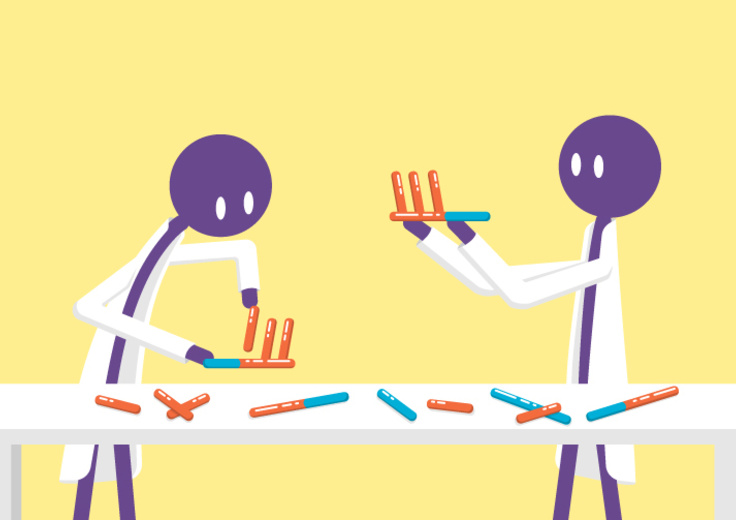
Several of the reactions under investigation can be classified as "multi-component coupling" processes, in which catalysts of various types promote the assembly of three (or more) molecules in a selective fashion. Another aim of these projects is that the starting materials and reagents be easily prepared (or purchased) and that the products be useful "building blocks" or important carbocyclic or heterocyclic ring systems. Examples of these methods include enantioselective synthesis of allylic alcohols and allylic amines from alkynes, aldehydes (or imines, respectively), and organoboron reagents, catalyzed by Ni(0)-phosphine complexes, as well as catalytic three-component assembly of tetrahydrofurans. In order to test the utility of these methods in specific contexts, we are employing them in the synthesis of several natural products that had originally suggested their development. In addition to terpestacin, acutiphycin, absinthin, waihoensene, and several amphidinolides, significant effort in the group is also directed toward the efficient synthesis of "ladder" polyether natural products, such as yessotoxin.
Patel, S. J.; Jamison, T. F. “Catalytic Three-Component Coupling of Alkynes, Imines, and Organoboron Reagents," Angew. Chem. Int. Ed. 2003, 42, in press. Colby, E. A.; Jamison, T. F. “P-Chiral, Monodentate Ferrocenyl Phosphines, Novel Ligands for Asymmetric Catalysis.” J. Org. Chem. 2003, 68, 156-166. Skaggs, A. J.; Lin, E. Y.; Jamison, T. F. "Cobalt Cluster-Containing Carbonyl Ylides for Catalytic, Three-Component Assembly of Oxygen Heterocycles," Org. Lett. 2002, 4, 2277-2280. Huang, W.-S.; Chan, J.; Jamison, T. F. "Highly Selective Catalytic Intermolecular Reductive Coupling of Alkynes and Aldehydes," Org. Lett. 2000, 2, 4221-4223. |
|||||||||||