The purpose of the trip
will be to teach students
basic earth science from
the nature and causes
of volcanic eruptions,
to microbial life in
hot springs, to what
we can tell about past
climates from the fossil
record. The trip will
involve flying from Boston
on August 19th to Bozeman
Montana. In Bozeman,
we will load into rental
vans and begin our trip,
which will involve camping
and touring in Yellowstone
National Park and the
surrounding region. We
will return to Bozeman
on the night of the August
25th and fly back to
Boston on August 26th.
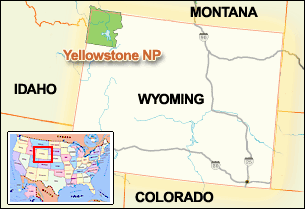 Yellowstone National
Park is roughly the
size
of the state of Connecticut.
Most of the park is located
in the northwestern corner
of Wyoming, but small
portions occur within
Montana and Idaho. The
park comprises
primarily high, forested,
volcanic
plateaus that have been
eroded over the
millennia by glaciation
and stream flow.
Yellowstone National
Park is roughly the
size
of the state of Connecticut.
Most of the park is located
in the northwestern corner
of Wyoming, but small
portions occur within
Montana and Idaho. The
park comprises
primarily high, forested,
volcanic
plateaus that have been
eroded over the
millennia by glaciation
and stream flow.
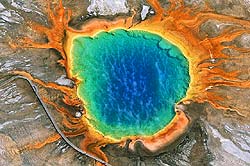 With
half of the earth’s
geothermal features,
Yellowstone holds the
planet’s
most diverse collection
of geysers, hot springs,
mudpots, and
fumaroles. Its more than
300 geysers make up two
thirds of all those found
on earth. In all there
are more than 10,000
thermal features, including
hot springs,
bubbling mudpots, and
steaming fumaroles,
within the park.
With
half of the earth’s
geothermal features,
Yellowstone holds the
planet’s
most diverse collection
of geysers, hot springs,
mudpots, and
fumaroles. Its more than
300 geysers make up two
thirds of all those found
on earth. In all there
are more than 10,000
thermal features, including
hot springs,
bubbling mudpots, and
steaming fumaroles,
within the park.
The various geothermal
features owe their origin
to cataclysmic
volcanic eruptions over
the past 2 million years
which have left hot rock
and magma beneath the
area. You can learn a lot more about the various stops and can see photographs
from last year's trip here. To learn more
about the overall geology of Yellowstone try this United States Geological
Survey
web site.
 What Will We Do?
- Travel to Montana
- Camp in Yellowstone Natl. Park
- Informal lectures with faculty
- Learn about life in extreme environments
- Explore Yellowstone's geology
- See evidence of earthquakes and volcanoes
- See geysers and hot springs
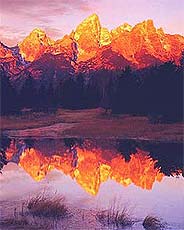
- Visit Grand Teton Natl. Park
- Dates: Saturday, August 19th through Saturday, August 26th. All students must arrive on Friday, August 18th and will depart to Montana as a group. No exceptions will be made.
- Place: Montana, Yellowstone and Grand Teton national parks
- Supplies: All students are asked to bring a day pack, tent and/or sleeping bag. Gear will be provided for those that do not have it.
- Available Spaces: 20
- Cost: $150. The Department of Earth, Atmospheric, and Planetary Sciences will be covering all other costs.
- Contact: Sam Bowring