An appropriate quality assurance and quality control program should be implemented to determine the accuracy and precision of all analytical results associated with the problem of metal-affected drinking water in Bangladesh. This program should include the routine and blind analysis of independently prepared standards, sample matrix spikes, field duplicates, laboratory duplicates, field blanks, and laboratory blanks. The ICDDR,B laboratory generated an excellent quality of results during this study; this is especially impressive because the metal analyses were completed without the benefit of an atomic absorption spectrophotometer or similar modern instrumentation (see Table 1).
The other three laboratories evaluated in this study would presumably benefit from a more rigorous quality assurance and quality control program (see Table 2).
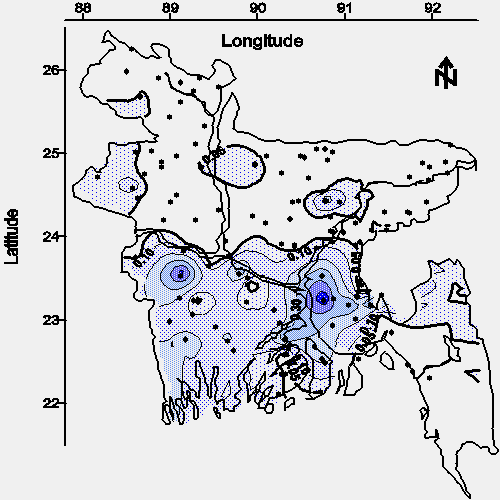
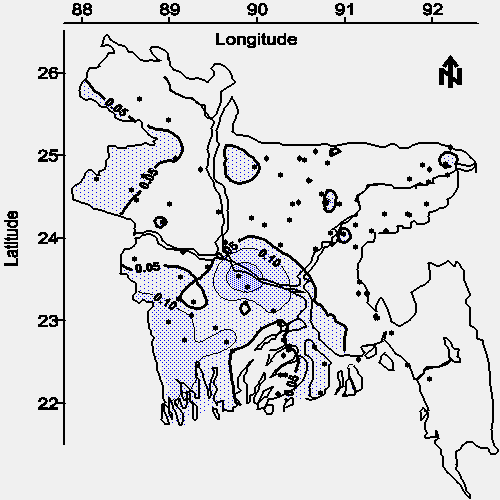
The groundwater used for drinking in Bangladesh should be routinely tested for arsenic and other toxic compounds. Approximately 50% of the aerial extent of Bangladesh contains groundwater from shallow tubewells (< 30.5 m or < 100 feet bgs) with an average arsenic concentration greater than the 0.05 mg/L national drinking water standard (see Figure 2). Approximately 32% of the aerial extent of Bangladesh contains groundwater from deep tubewells (> 30.5 m or > 100 feet bgs) with an average arsenic concentration greater than the 0.05 mg/L national standard (see Figure 3).
|
|
A major source of this arsenic in the groundwater of Bangladesh is potentially a phosphate mineral or minerals deposited in an estuarine environment. The source appears to be hundreds of feet thick in some areas. The analytical interference for the determination of iron by the 1,10- phenanthroline method (see Table 1) coupled with the results shown on Figure 10 suggests that one or more of the following potentially toxic metals are also widely distributed in groundwater throughout Bangladesh: chromium, zinc, cobalt, nickel, bismuth, cadmium, mercury, and/or silver (5). The effect of these one or more non- arsenic metals on groundwater quality and human health in Bangladesh is unknown.
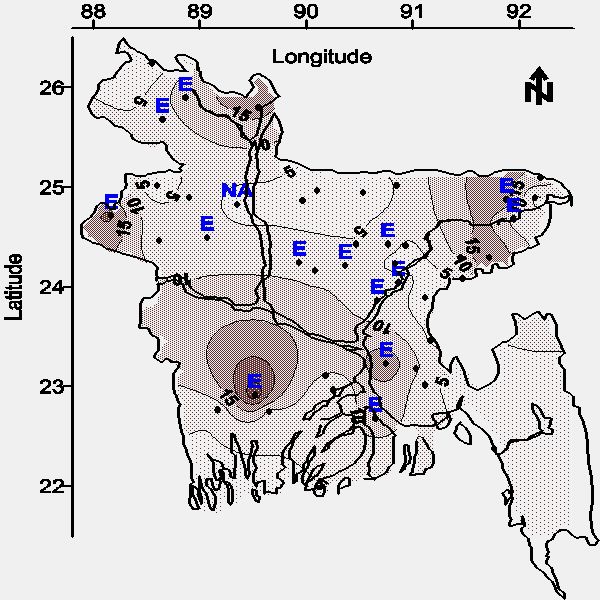 |
| Figure 10. Map of the average total iron concentration (mg/L) in water from tubewells less than 30.5 m (100 feet) bgs. The distribution of analytical interference for the determination of iron is located on the map with the letter "E". |
The groundwater used for drinking in West Bengal, India (immediately west of Bangladesh) and Tripura, India (immediately east of Bangladesh) should also be tested for arsenic and other toxic compounds. The contour maps of average arsenic concentration in groundwater suggest that contamination extends beyond the western and eastern borders of Bangladesh (see Figures 2 and 3). Arsenic has been identified in groundwater from West Bengal (14); however, the authors are unaware of any systematic survey of other toxic compounds in groundwater from West Bengal. The authors are also unaware of any systematic survey of tubewell water quality in Tripura, India.
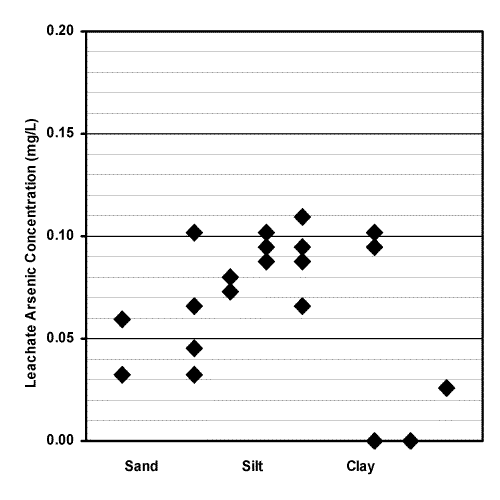
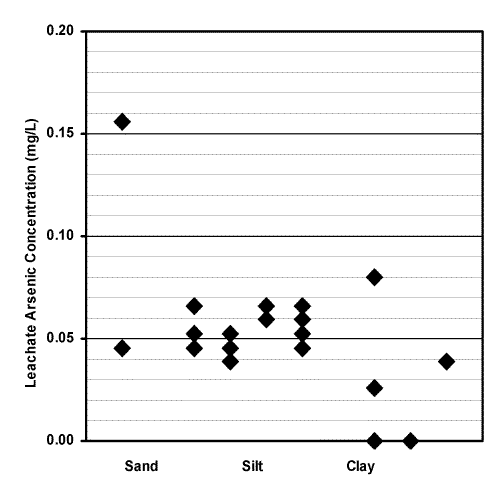
Food crops should also be tested for arsenic and other toxic compounds. Arsenic readily leaches from many Bangladesh surface soils (see Figures 11 and 12) and can be uptaken by crops (18). Arsenic exposure from the ingestion of rice and other domestically produced food crops should be evaluated as a potential human exposure pathway.
 |
 |
An intensive groundwater monitoring program identifying suitable drinking water wells within each village should begin immediately since this strategy will rapidly and inexpensively eliminate the need for arsenic treatment for approximately 85% of this 120,000,000 person country. The remaining 15% of the aerial extent of Bangladesh contains groundwater with a minimum arsenic concentration greater than the 0.05 mg/L national standard (see Figure 13); therefore, it is hypothesized this is the smallest area of Bangladesh that will require an alternative drinking water source, or groundwater treatment for arsenic removal prior to drinking.
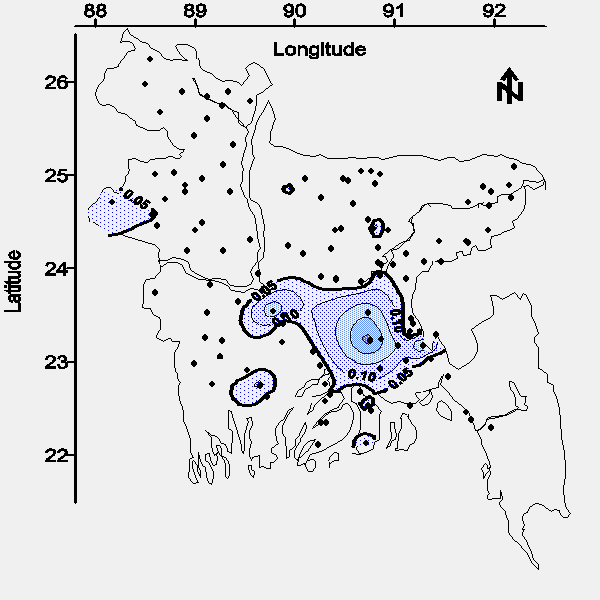 |
| Figure 13. Map of the minimum arsenic concentration (mg/L) in water from all tubewells regardless of depth. |
The presently considered policy of drilling deeper tubewells to provide an alternative drinking water source should likely be restricted to the estimated 15% of Bangladesh that cannot find drinking water with arsenic concentrations less than the 0.05 mg/L national standard from existing tubewells within their villages. The success of drilling deeper tubewells will probably be limited because the drinking water it provides will often have arsenic concentrations greater than the 0.05 mg/L national standard (see Figure 5). Therefore, drilling deeper tubewells will likely complement groundwater treatment to provide safe drinking water within this 15% of Bangladesh.
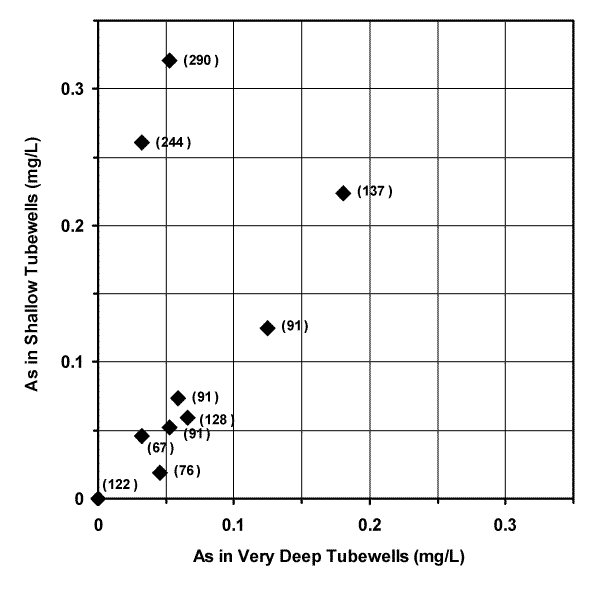 |
| Figure 5. The vertical distribution of arsenic in groundwater based on adjacent pairs (< 100 m or < 328 feet apart) of "very deep" (67.1 to 290 m bgs or 220 to 950 feet bgs) and shallow (< 30.5 m or < 100 feet bgs) tubewells. The depth of each "very deep" tubewell in meters is shown next to the corresponding data point. |
Appropriate treatment systems for toxin removal should be developed for areas without access to safe drinking water. Ideally these systems should be effective, inexpensive, and easily operated by an illiterate person. Such a system for arsenic removal will likely require an oxidant to convert soluble As(III) to difficultly soluble As(V), and a process to allow the settling, filtration, or sorption of arsenic from solution. This system might use atmospheric oxygen as the oxidant and ambient iron as the coagulant (see Table 5); therefore, the long- term expense of purchasing water treatment chemicals would be avoided.