The MIT School of Engineering’s mission is to educate the next generation of engineering leaders, to create new knowledge, and to serve society.

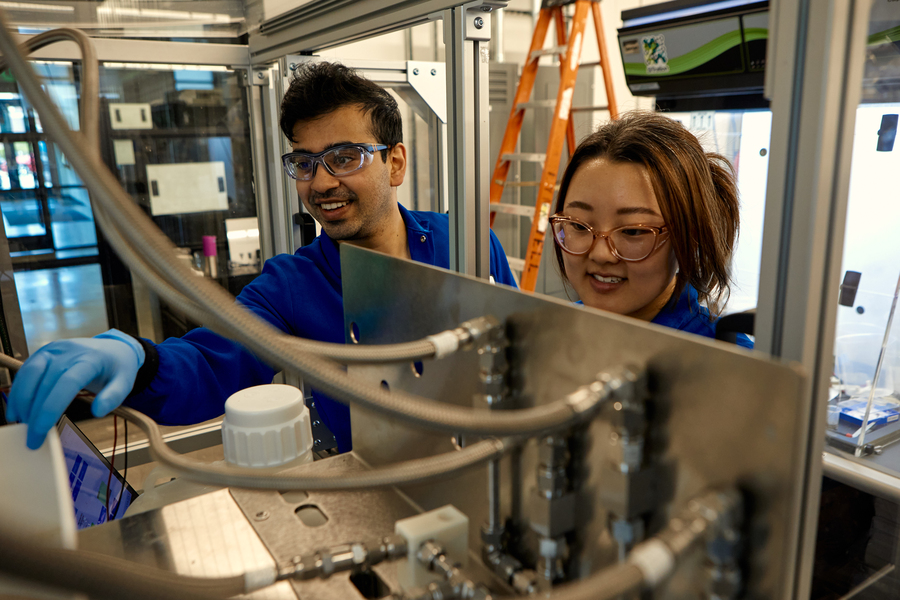
Developing materials for stellar performance in fusion power plants
When Zoe Fisher was in fourth grade, her art teacher asked her to draw her vision of a dream job on paper. At the time, those goals changed like the flavor of the week in an ice cream shop — “zookeeper” featured prominently for a while — but Zoe immediately kne ...

Collaborating to advance research and innovation on essential chips for AI
The following is a joint announcement from the MIT Microsystems Technology Laboratories and GlobalFoundries. MIT and GlobalFoundries (GF), a leading manufacturer of essential semiconductors, have announced a new research agreement to jointly pursue advancemen ...
- MIT’s McGovern Institute is shaping brain science and improving human lives on a global scale
- Equipping living cells with logic gates to fight cancer
- Making AI-generated code more accurate in any language
- Student spotlight: YongYan (Crystal) Liang
- Workshop explores new advanced materials for a growing world
Video Spotlight
MIT Faculty Founders Initiative Supports Biotech Entrepreneurs
Twelve researchers participated in the 2023-24 MIT-Royalty Pharma Prize Competition, designed to support female biotech pioneers. The competition is part of the MIT Faculty Founder Initiative, which was launched in 2020 by the MIT School of Engineering and the Martin Trust Center for MIT Entrepreneurship.
Engineering In Action
-
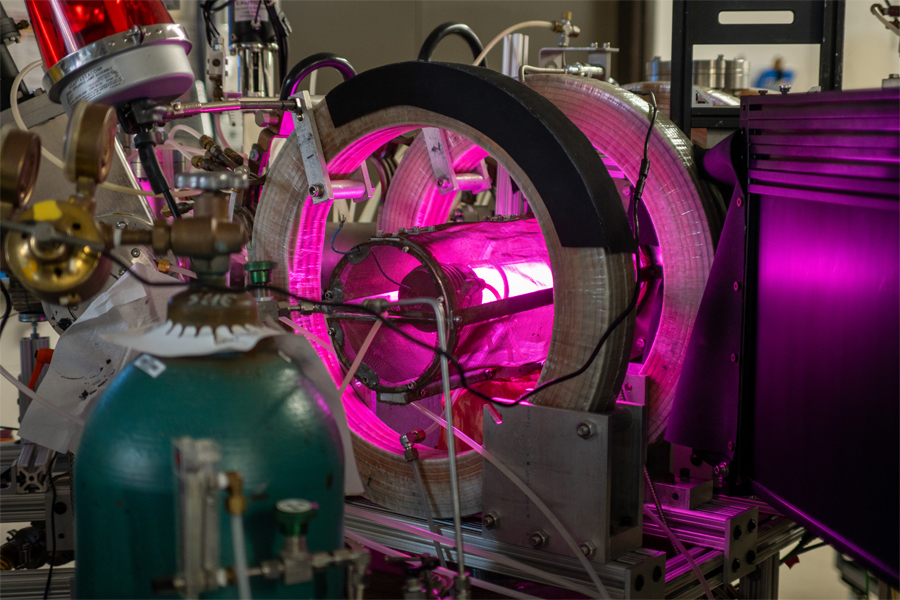
School of Engineering funds $1.2 million for tools and research equipment
In the fall of 2024, the School of Engineering Dean’s Office, with support from the Engineering Council, funded $1.2 million for a new Research Tool and Equipment Support Seed Grant. In the program’s pilot year, sixteen proposals were awarded up to $100K in support of physical research equipment. The funds covered (but were not limited […]