Thermal Control of Precision Machine Tools/
Platform Thermal Deflection Errors in Precision Machine Tools

Platform Thermal Deflection Errors in Precision Machine Tools
Hydrostatic Bearings
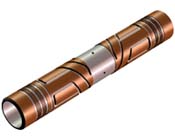
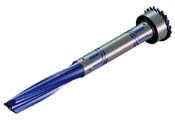
This work investigates the frictional and thermal characteristics of radial and linear dydrostatic bearings used in precision machine tool applications. The bearings considered are lubricated with water, rather than more viscous oils, leading to lower rotational friction and raising the lubricant heat capacity rate. Numerical and analytical models for bearing power consumption and temperature rise have been developed. Prototype bearings with highly optimized pockets have been tested; these bearings show less than 3 degrees C. temperature rise at speeds exceeding 10,000 rpm.
John H. Lienhard, and
Alex Slocum Principal Investigators
conditions and from heat loads produced while operating the tool. We are developing
thermal control strategies for cubic-meter scale tool bases, in an effort to predict
and control the platform deflection contribution to the machining error budget.
Finite-element simulations are being coupled to holographic displacement measurements in
order to understand this error source, and field data are being collected
from precision machine shops. Evaporative cooling effects associated with bearing lubricants
are also being studied.
Machine Tool Structures
Temperature shifts in machine tool structures can result from variations in ambientconditions and from heat loads produced while operating the tool. We are developing
thermal control strategies for cubic-meter scale tool bases, in an effort to predict
and control the platform deflection contribution to the machining error budget.
Finite-element simulations are being coupled to holographic displacement measurements in
order to understand this error source, and field data are being collected
from precision machine shops. Evaporative cooling effects associated with bearing lubricants
are also being studied.
Return to The Heat and Mass Transfer Lab Home Page