Kristin J. Forbes
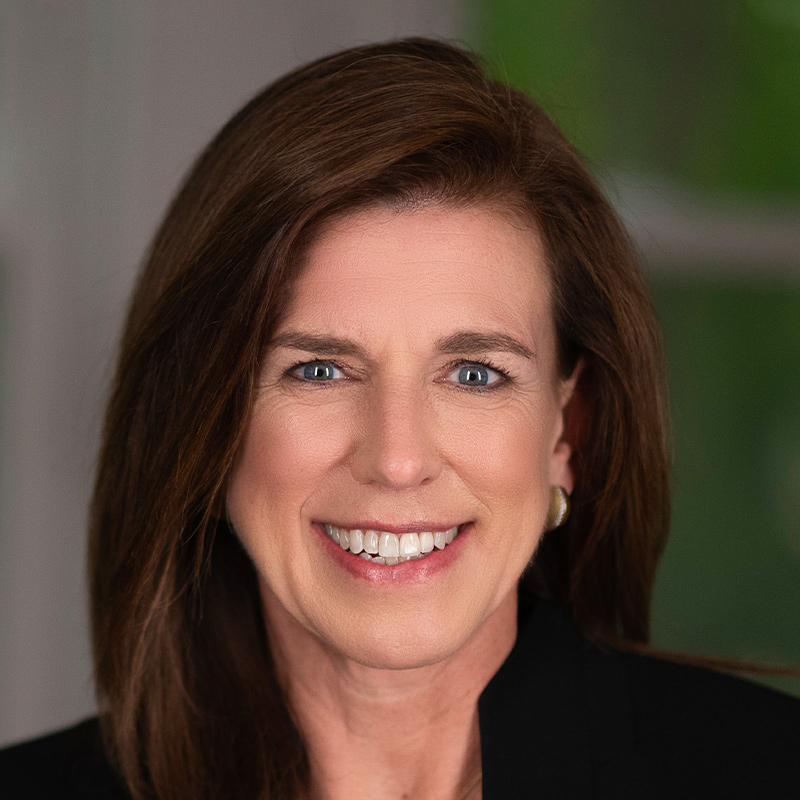
Kristin J. Forbes
Biography
Kristin Forbes is the Jerome and Dorothy Lemelson Professor of Management and Global Economics at MIT’s Sloan School of Management.
She has regularly rotated between academia and senior policy positions. From 2014-2017 she was an external member of the Monetary Policy Committee for the Bank of England. From 2003 to 2005 Forbes served as a member of the White House’s Council of Economic Advisers and from 2001-2002 she was a deputy assistant secretary in the U.S. Treasury Department. She also was a member of the Governor’s Council of Economic Advisers for the state of Massachusetts from 2009-2014.
In 2019, Forbes was named an Honorary Commander of the Order of the British Empire (CBE) by Her Majesty Queen Elizabeth II. She is currently the convener of the Bellagio Group, a research associate at the NBER and CEPR, and a member of the Aspen Economic Strategy Group and Council on Foreign Relations. She also serves in a number of advisory positions, such as the Monetary Policy Advisory Panel of the New York Federal Reserve Bank, the Advisory Panel for the Bank for International Settlements, and on the External Advisory Group of the Managing Director for the International Monetary Fund. Forbes’ academic research addresses policy-related questions in international macroeconomics, including monetary policy, macroprudential tools, capital flows, exchange rates, inflation, and contagion. She has won numerous teaching awards and teaches one of the most popular classes at MIT's Sloan School. Before joining MIT, Forbes worked at the World Bank and Morgan Stanley.
She received her PhD in Economics from MIT and graduated summa cum laude with highest honors from Williams College.
Media Highlights
- Finance & Development (career overview, 2017)
- Bloomberg (at end of BoE role, 2017)
- TheEditorial (career overview, 2015)
- Evening Standard (at start of BoE role, 2014)
- MIT-Sloan Alumni Magazine (career overview, 2014)
- Bloomberg (contagion work, 2013)
- MIT Spectrum (Deworming work, 2011)
- NBER Reporter (summary of research on contagion, capital controls and capital flows, 2006)
- Financial Times (career overview, 2006)
- USA Today (at White House, 2004)
Awards
- MIT Teaching with Technology, 2021.
- Honorary Commander of the Most Excellent Order of the British Empire (CBE), from Her Majesty Queen Elizabeth II for services to British economic policy, 2019.
- Bicentennial Medal, from Williams College to members of the community for “outstanding achievement in any field of endeavor,” 2015.
- “1000 Most Influential Londoners”, in the Evening Standard, 2014.
- Generation Next, named as one of the 25 leading economists under 45 who are “shaping how we think about the global economy,” in Finance & Development: 2014.
- Excellence in Teaching Award: Sloan School of Management at MIT, 2009-10.
- Teacher of the Year Award: Sloan School of Management at MIT, 2008-2009.
- Michael Brennan Award: Runner up for best paper published in the Review of Financial Studies (joint with Mihir Desai and C. Fritz Foley), 2009.
- Jamieson Prize for History of Excellence in Teaching at MIT: awarded in 2008.
- Excellence in Teaching Award: Sloan School of Management at MIT, 2006-07.
- Named a “Young Global Leader” at World Economic Forum at Davos, 2005-present.
- Excellence in Teaching Award: Sloan School of Management at MIT, 2005-06.
- Named 1 of 100 “Global Leaders for Tomorrow” at World Economic Forum at Davos, 2003-4.
- Teacher of the Year Award: Sloan School of Management at MIT, 2000-2001.
- Milken Prize: Distinguished economic research, 2000.
- Solow Prize: Excellence in research and teaching at MIT, 1998.
- David Wells Prize in Economics: Best economics thesis at Williams College, 1992.
- Captain of New England Championship Tennis Team: Williams College, 1992.
- Most Valuable Player of nationally-ranked (top-ten) Squash Team: Williams College, 1992.
- Phi Beta Kappa: First election at Williams College, 1991.
- Volvo-Academic All-American: In tennis, 1991 and 1992.
- Presidential Scholar: 1988.
- National Merit Scholar: 1988.
Books and Symposia
Monetary Policy Responses to the Post-Pandemic Inflation (2024) with Bill English and Ángel Ubide.
- Click here for the full CEPR book, including the overview chapter
- Click here for a VoxEU article with highlights
Monetary Policy and Central Banking in the Covid Era (2021) with Bill English and Ángel Ubide.
- Click here for the full CEPR ebook, including the overview chapter
- Click here for a link to a Vox-EU article of highlights
The Global Financial Crisis (2012) with Charles Engel and Jeffrey Frankel
- Click here for a summary of the research
- Click here for the symposia of papers published in the Journal of International Economics (Vol. 88(2), Nov., 2012)
- Click here for a link to the conference papers, attendees, datasets and additional information from the conference held in Bretton Woods, NH on June 3-4, 2011
Global Linkages (2004) with Robin Brooks and Ashoka Mody
- Click here for a link to the symposia of papers published in the Review of Economics and Statistics (Vol. 86 (3), Aug., 2004)
- Click here for a summary of some papers (with Robin Brooks, Jean Imbs and Ashoka Mody) from the conference held at the IMF in Washington, DC on Jan 30-31, 2003
International Financial Contagion (2001) with Stijn Claessens
- Click here for a link to the book with the collection of papers. Kluwer Academic Publishers, New York, NY
- Click here for the introductory chapter summarizing the series of papers presented at the conference held at the IMF in Washington, DC