Lindenplatz, Gummersbach, Germany
 |
| Image from New Waterscapes: planning, building, and designing with water. |
Project Background
Gummersbach is a small town located in the state of North Rhine-Westphalia, Germany, approximately 50 km east of Cologne. During the 1960s, Lindenplatz succumbed to urban renewal, when massive concrete buildings replaced the quaint medieval timber-frame buildings that had previously lined the square. By the early 1990s, the once bustling square had become cold and lifeless. In response, the town began to focus on improving the pedestrian areas in an effort to bring social life back to the town’s public spaces. Through a series of town meetings, the town decided to install an Atelier Dreiseitl waterscape for the square.
Vision
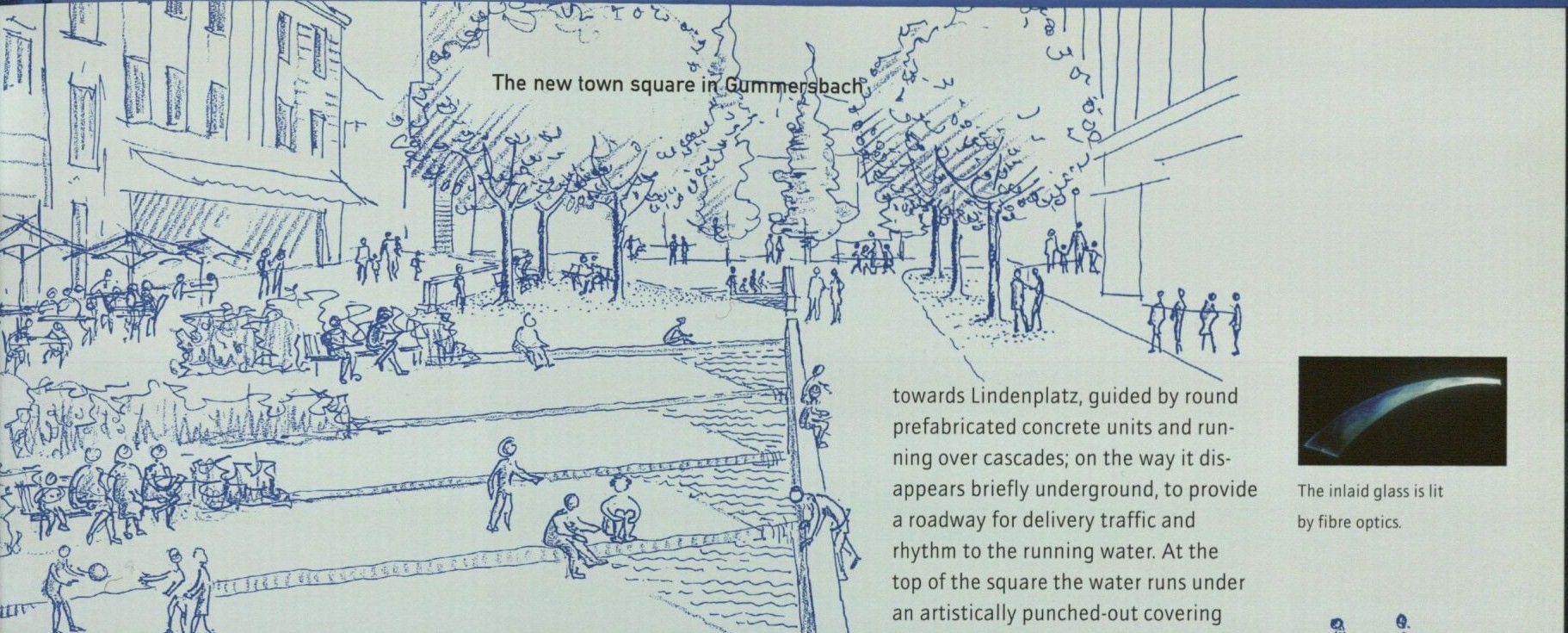
In 1997, Atelier Dreiseitl created a design for Lindenplatz that used artistic water features to bring activity back to the square. Because Gummersbach wanted the space to encourage public use and social gathering, Atelier Dreiseitl’s design featured spaces that encouraged participation and active engagement. The design encouraged use by creating opportunities for interesting personal and social experiences based upon unique water features. Thus, the driving themes behind the design were interaction and participation.
 |
| Image from New Waterscapes: planning, building, and designing with water. |
Design
Like many Atelier Dreiseitl projects, the water in the square follows a continuous watercourse, which allows the water to interact with artistic features in ways that bring different qualities of water to life.
 |
 |
| Image from New Waterscapes: planning, building, and designing with water. |
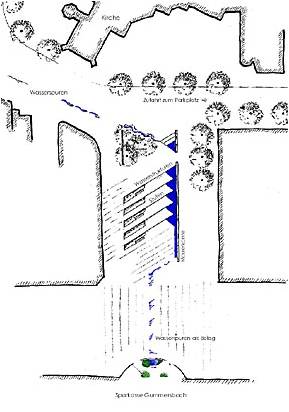
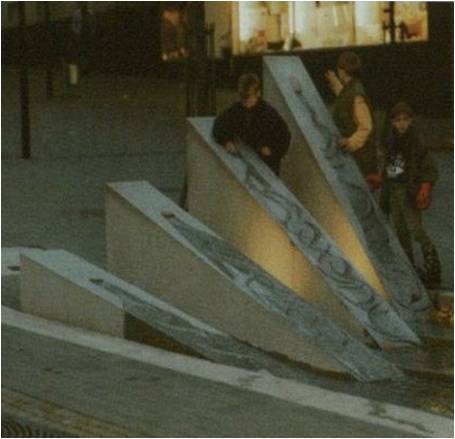
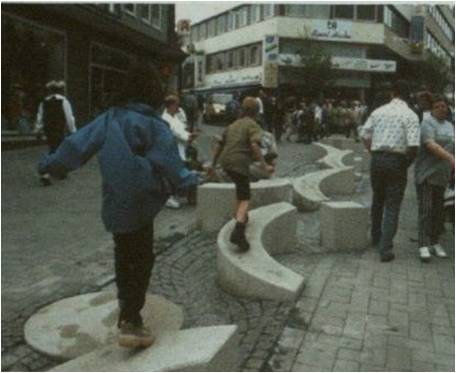
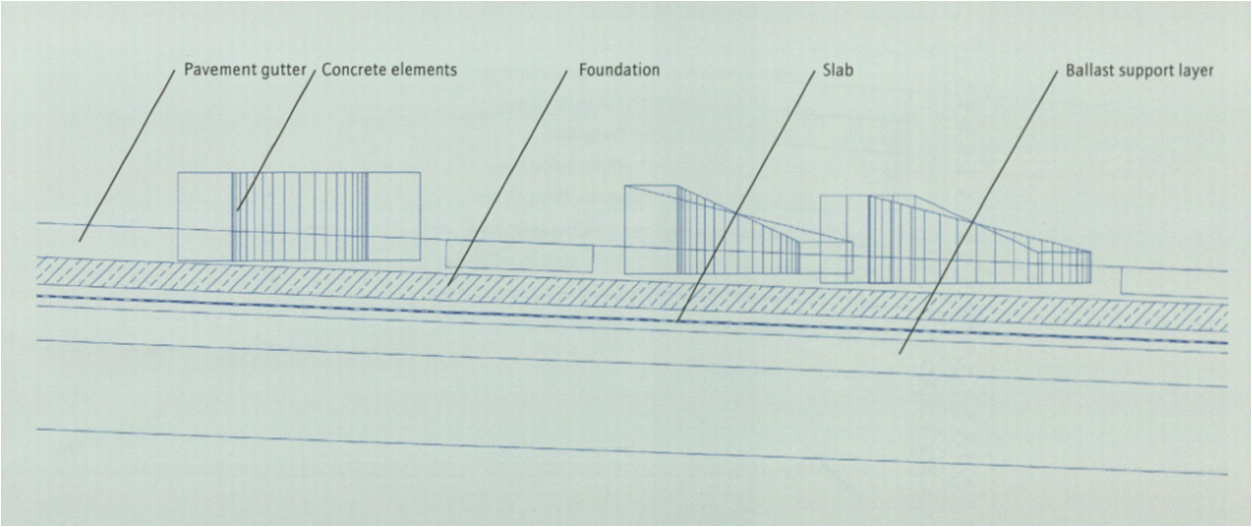
The water originates from a fan-shaped sculpture of natural stone slabs that acts as a spring. From this spring, the water flows down a curved path, lined with curved concrete slabs, toward the center of the square. The stream disappears underground, creating an opening in the square for delivery trucks. The water later reappears in a jagged pool flowing along a low-sloped set of stairs in the center of square. At the base of the stairs, the water disappears underground again and flows to a small pool at the entrance of a bank building at the end of the square.
Featured Artistic Elements
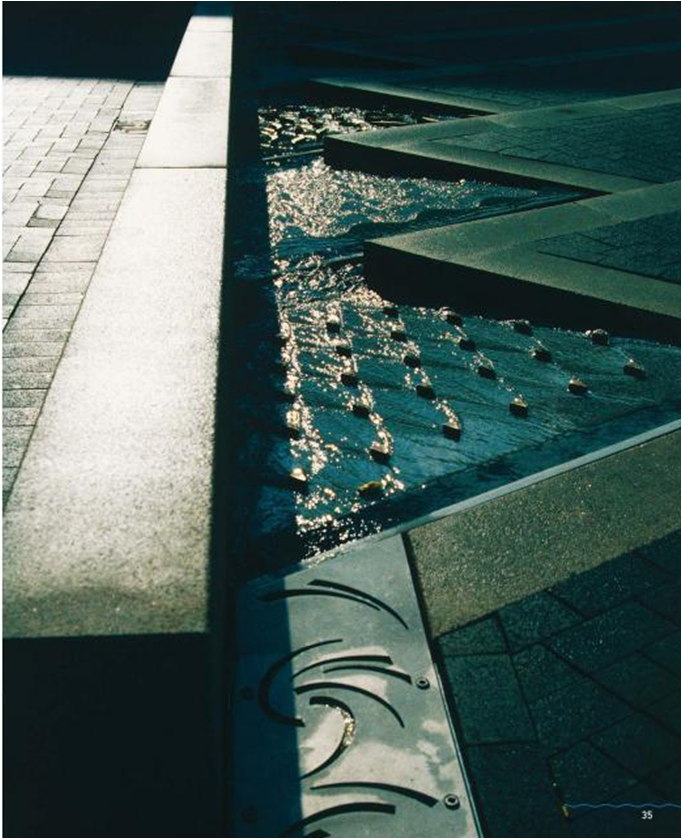
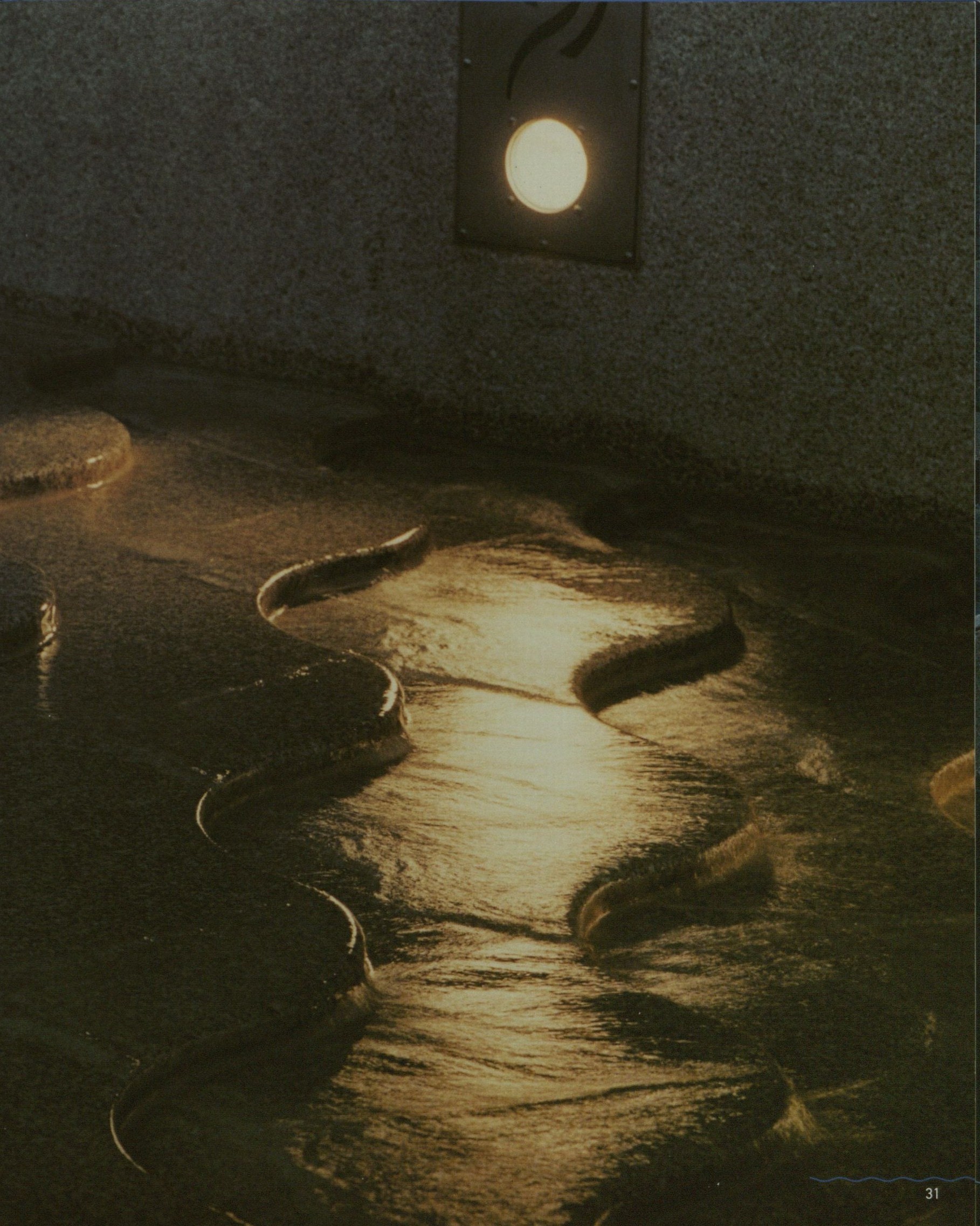
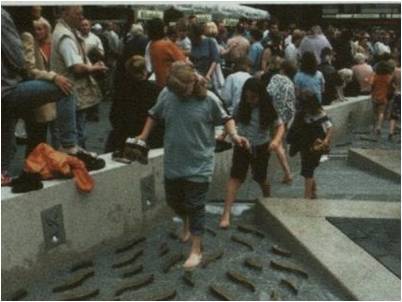
The main artistic feature of the square is the jagged pool of water that flows by the stairs in the center of the square. Here, Atelier Dreiseitl’s design is intended to play with the natural flow of water, creating both familiar and unfamiliar experiences.
As the water runs down the slight slope, it passes over a variety of surfaces that are carved out of the stone base or punched-out with small bronze features. The varied surfaces of the pool create different textures in the running water, which interact with sunlight and floodlights creating additional dimensions.
 |
 |
| Image from New Waterscapes: planning, building, and designing with water. | Image from New Waterscapes: planning, building, and designing with water. |
The stairs themselves are intended as a gathering place for people to sit and interact with each other, with the square, and with the water. The shallow pool of water acts as an easy extension of this social space, encouraging people to enter the space of the water. Interacting with the varied surfaces and water textures provides people with additional ways of experiencing and enjoying the waterscape.
 |
 |
| Image from New Waterscapes: planning, building, and designing with water. | Image from New Waterscapes: planning, building, and designing with water. |
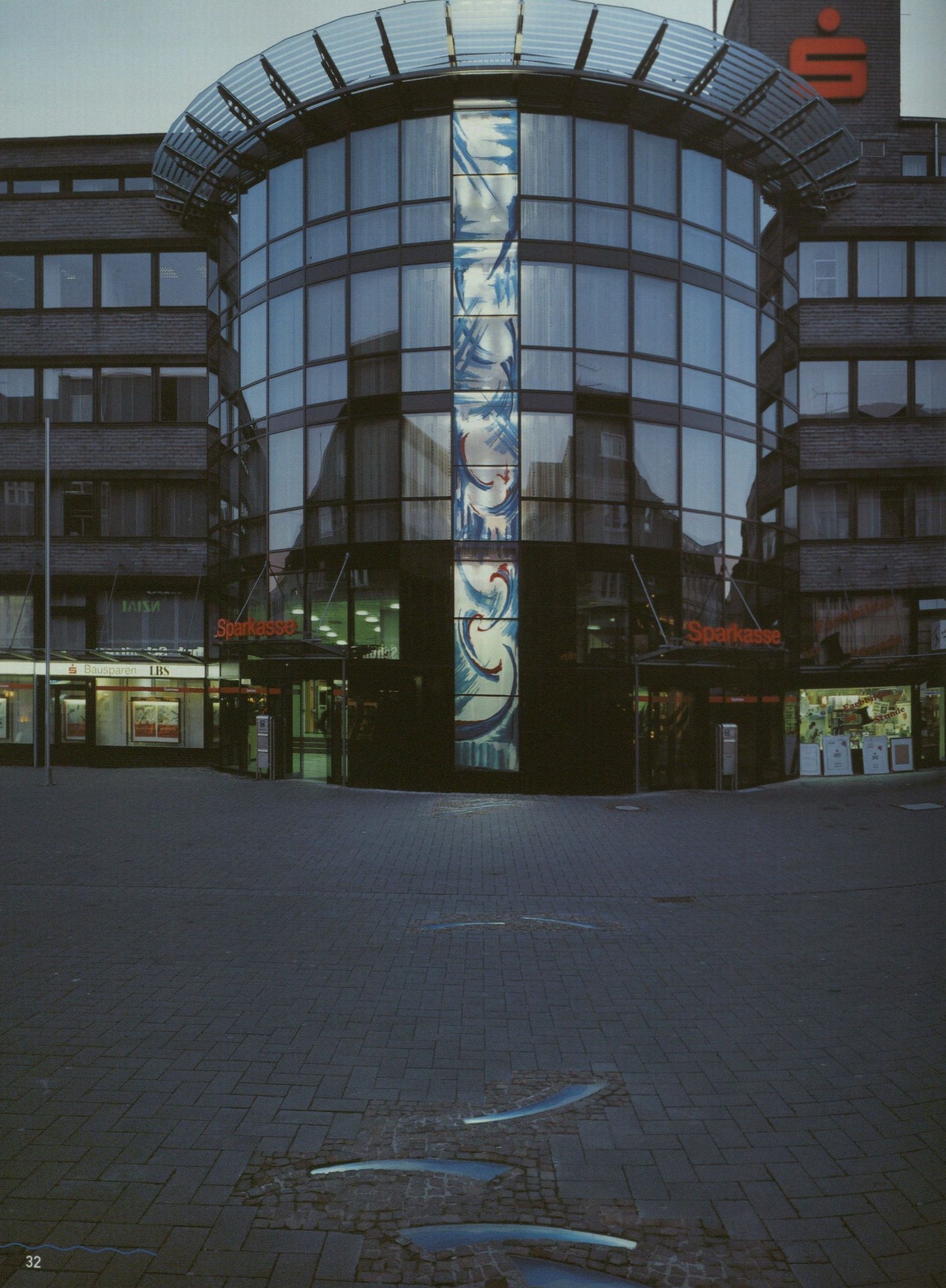
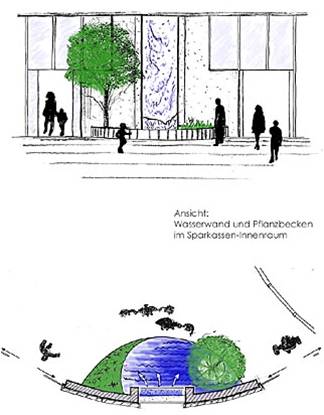
The second focal point of the square is a glass wall water art installation on the bank at one end of the square. Unlike the waterscape in the square itself whose client was the City of Gummersbach, this feature was designed for the bank Sparkasse Gummersbach.
 |
 |
| Image from New Waterscapes: planning, building, and designing with water. |

The glass water wall is crafted by Herbert Dreiseitl, who used steel, bronze, and fused glass to create a glass wall 15 meters high on the front of the bank building. Water flows down 4.5 meters between the two panes of glass and drops into a pool of water at the entrance of the bank building. The falling water draws air through the open space into the building, cooling the atrium. The opening can be closed in the cold winter months.
Engineered Systems
I have been unable to find information on the type and configuration of the system used in the Gummersbach waterscape. However, there is no evidence that the system employs outside water sources, such as run-off; thus, the water is most likely supplied by the city’s source of drinking water and is probably a closed system.
 |
| Image from New Waterscapes: planning, building, and designing with water. |
For more information about the technical aspects of Atelier Dreiseitl’s projects see the Atelier Dreiseitl Engineering section of this webpage.
Analysis
The design of the Gummersbach water system primarily focuses on creating a space that encourages individual and social use through the beauty and use of water. The fan-shaped stone sculpture, watercourse, and glass sculpture create interesting images, textures, and sounds with water to create a space that encourages use. The participatory and interactive elements create new experiences that draw people to the space and, more importantly, to stay in and use the space.
Additionally, Atelier Dreiseitl’s waterscape is designed to contribute to the studio’s vision of introducing water and urban water processes into public view. By turning a stale public square into an active waterscape, Atelier Dreiseitl hoped to demonstrate how functional water systems can be incorporated into artistic design practice.
While the Gummersbach waterscape appears to be successful in bringing life back to the square and encouraging active participation with the water art, it is unclear if these elements contribute to the public’s understanding of how functional water processes fit into the urban environment.
The only element of the square that attempts to communicate the natural qualities of water is the glass sculpture. As the water drops into the retention pool in the atrium of the bank, it cools the air entering the building. However, it is unclear to what extent the cooling system works. Even if it provides a noticeable cooling effect to people entering the atrium, it would not be noticeable to most people using the square. Thus, while the design makes an attempt to communicate natural qualities of water, people using the square are probably not aware of it.
Overall, the design of the square at Gummersbach is somewhat successful. The participatory sculptures and interactive water elements create new ways to use public space that encourage use of the square. However, the use of water does not necessarily add to the permanent physical elements of the square. While the water might encourage people to use the sculptures in ways that they would not without the water, the use of water does not contribute to the public’s understanding of urban water processes. Thus, in terms of creating a new public center that encourages public use, Atelier Dreiseitl’s design appears to be successful. However, in terms of Atelier Dreiseitl’s big-picture goal of creating experiences that communicate urban water processes, the design is not particularly successful. While the ideas are interesting, it is not clear that the complex waterscape contributes anything different than a traditional fountain would contribute.