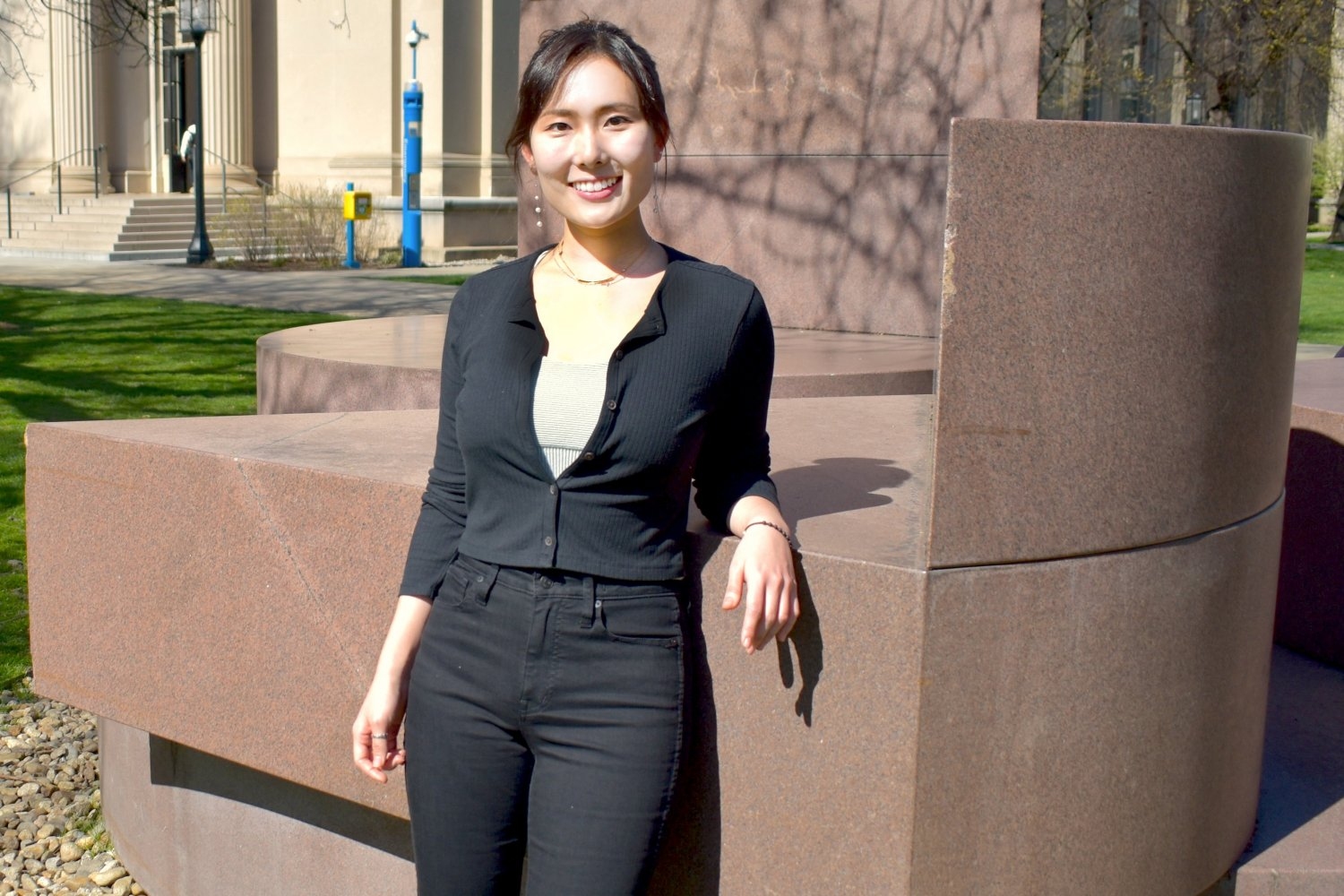
News Jeong Min Park earns 2024 Schmidt Science Fellowship The doctoral student will use the prize to find novel phases of matter and particles. Filter by Research Area Research Area Astrophysics Observation, Instrumentation, and Experiment Astrophysics Theory Atomic Physics Biophysics Condensed Matter Experiment Condensed Matter Theory High Energy and Particle Theory Nuclear Physics Experiment Particle Physics Experiment Quantum Gravity and Field Theory Quantum Information Science Strong Interactions and Nuclear Theory People People Faculty/Emeritus Students & Alumni Undergraduates Graduate Students Alumni Pappalardo Fellows Postdocs Academic Staff WiSTEM URM STEM Admin Staff Visiting Faculty General General Research Awards/Honors Profile Q&A Op-Ed Education In The News Events In Remembrance Labs & Centers Video Podcast Research Article Papers Wilczek's Universe Community Emails CTP News CTP News CTP News Jeong Min Park earns 2024 Schmidt Science Fellowship John Joannopoulos receives 2024-2025 Killian Award Five MIT faculty elected to the National Academy of Sciences for 2024 MIT researchers discover the universe’s oldest stars in our own galactic backyard Four from MIT named 2024 Knight-Hennessy Scholars Physicists create five-lane superhighway for electrons Darius Bunandar PhD ’18 named to Boston Globe’s Tech Power Players 50 for 2024 Tracy Slatyer named 2024-25 Harvard Radcliffe Institute Fellow Electron–Hole System Harbors Rich Phases ‘Milestone’ discovery as JWST confirms atmosphere on an Earth-like exoplanet Tomorrow’s physics test: machine learning MIT astronomers observe elusive stellar light surrounding ancient quasars 1 2 3 … 74 Next »