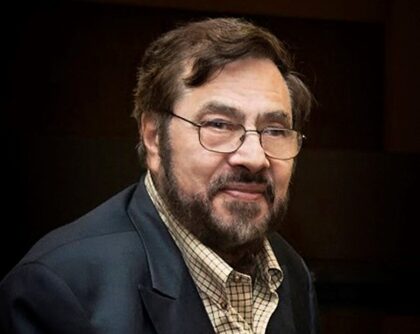
William A. Barletta
Research Interests
William Barletta maintains a broad range of professional research activities that include free electron laser physics for ultra-fast synchrotron radiation science, the design of colliders and high intensity linacs and cyclotrons for high energy and nuclear physics, ion beam technology for nanofabrication of integrated circuits, and compact plasma-based neutron and gamma sources for medicine, research and security applications. In addition he has an active research interests in coronavirus epidemiology, in strategic management of research institutions, and in international legal and policy aspects of cyber-conflict.
Free electron lasers (FEL): Work in the early ‘80s concerning analytical and computational studies of generating bright, high current beams of ions (for inertial fusion) and electrons (for driving FELs) was the first exploration of the influence of non-linear space charge forces within beams to drive emittance growth both during beam transport. The plasma transport work with Sessler was the first exploration of using weak ion channels within undulators to increase FEL gain and also led to the first published proposal (1988) to use synchrotron radiation during plasma transport (now called betatron radiation) to make a powerful source of gamma rays. His analysis of the FEL as a buncher of space-charge dominated beams led to an SBIR grant to design and build a high current source with sub-nanosecond rise time and 100 Hz rate, used for several years as monopole electromagnetic radiation source. He was the original proponent of a high-gain, high-harmonic generator cascade in a master oscillator-power-amplifier configuration to generate fully phase coherent soft X-ray beams for the FERMI@elettra project at Sincrotrone Trieste. He oversaw the Berkeley design effort of this FEL and has continued to serve as an advisor to the President of Sincrotrone Trieste regarding upgrades of the facility.
High energy colliders: During the design phase of the PEP-II B-factor, he was chief vacuum technologist. He produced the design concepts for the vacuum systems of both rings of the collider that handed unprecedented levels of synchrotron radiation. The choice of materials for the vacuum chambers were based on his measurements with Forester of the engineering properties of copper, aluminum, steel alloys exposed to extremely high cumulative X-ray doses. He also developed an approach to maintain extremely high vacuum conditions near the interaction points. Actual construction began after he left the project to lead the LBNL accelerator division. His active interest in energy frontier proton colliders has included overall system studies, work with the LBNL magnet program to drive the design of very high field accelerator magnets, and analysis of issues concerning synchrotron radiation in cryogenic environments. His paper in 1993 was the first to propose the use of thin-film high temperature superconductors as a coating for the proton collider vacuum channel – an idea now being considered by CERN.
Ion beam technology: Working with the group of Leung at LBNL, he invented the x-y addressable low voltage pattern generator plus a multi-cusp (magnetic field) ion source to replace stencil masks for ion-beam reduction lithography. This patented work led to several experimental investigations to refine the concept by shaping the exist holes of the pattern generator and shielding external fields. This concept also permitted detecting a single ion passing through a channel of the pattern generator. Thus, this device can be used to implant single ions on a Si substrate at 25 nm spacing. The multi-cusp source was also the basis for other patented devices to generate compact sources of neutrons (for security and medical use) and gamma rays (for security applications).
His work at MIT has concentrated on the design and use of high current cyclotrons for both discovery science and industrial applications and on fourth generation synchrotron light sources. His newest research area has been in the epidemiology of coronavirus infections.
Biographic Sketch
He has multiple leadership roles in the international scientific research community: Member of the Board of Directors of the American Physical Society (APS); Councilor for the APS Forum on International Physics; Member of the Advisory Board of John Adams Institute (Oxford University) ; Member of the Scientific Council of the German national laboratory, DESY, and Member of the Scientific Council of the Ettore Majorana Foundation (Italy), He is a Foreign Member of the Bologna Academy of Sciences.
He has been an Associate Laboratory Director of the Lawrence Berkeley National Laboratory and Director of the US Particle Accelerator School.
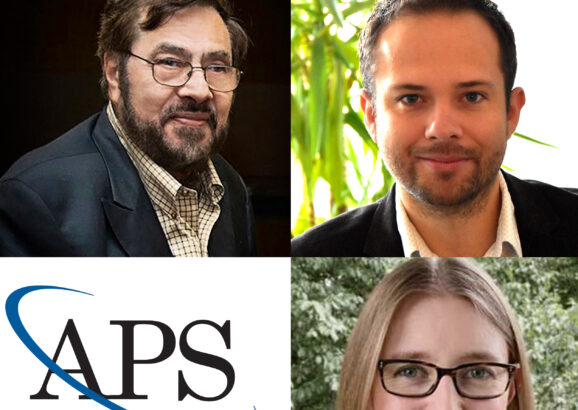
Five MIT researchers receive awards from the American Physical Society
William Barletta, Ronald Fernando Garcia Ruiz, Chanda Prescod-Weinstein, Katelin Schutz, and Phiala Shanahan honored for contributions to physics.
Awards & Honors
- 2021 // Foreign Member of the Academy of Sciences of the Bologna Institute (Italy)
- 2020 // Exceptional Service Award - APS Division of Physics of Beams
- 1995 // Fellow - American Physical Society
Key Publications
-
“Laser-Slicing at a Low Emittance Storage Ring,” S. Di Mitri, W. Barletta1 A. Bianco, B. Diviacco, L. Raimondi, C. Spezzani, S. Spampinati, and C. Masciovecchio, J. Synchrotron Radiation, 26, pp. 1523-1538, 2019.
-
“Aspects of Elettra 2.0,” E. Kanrantzoulis and W. Barletta, Nuclear Inst. and Methods in Physics Research, A 927 (2019) 70–80
-
“The influence of SARS-CoV-2 variants on national case-fatality rates: A Correlation and Validation Study,” JMIRx Med Vol 3, No 2 (2022): Apr-Jun, doi:10.2196/32935
-
“Free-electron laser emission architecture impact on extreme ultraviolet lithography,” Hosler, E.R., Wood, O.R., Barletta, W.A., Journal of Micro/ Nanolithography, MEMS, and MOEMS 16(4),041009
-
“Future hadron colliders from physics perspectives to technology R&D,” W. Barletta, M. Battaglia,, M. Klute, M. Mangano, S. Prestemon, L. Rossi, P. Skands , Nucl. Instr.and Meth –A 764 (2014) 352–368