Now in its third year, SEED Academy was started as an academic
enrichment and career exploration program to prepare traditionally
underserved high school students from select Boston and Cambridge
public schools for academic and professional careers in the
technical fields. During the six-hour day, the program provides
students with mini-lectures on everything from vector subtraction
to buoyancy. The lynchpin of the program is a “life mastery”
class taught by Christopher Jones, who has a B.S. degree in
physics and mathematics from Morehouse College (1999) and a
M.S. in nuclear engineering and technology and policy from MIT
(2003). Currently an algebra teacher at Boston’s MATCH
School, Christopher focuses his class on strong goal-setting
abilities, achievement standards, and public presentation skills
over the course of each ten-week term. In addition, outside
lecturers are brought in to tell students how they moved from
underprivileged backgrounds to stellar academic careers.
Each spring, the program selects about 20 ninth grade students
from its eight partner schools: the Academy of Public Service,
Cambridge Rindge and Latin School, East Boston High School,
Economics and Business Academy, Madison Park High School, Media
and Technology Charter High (MATCH) School, John D. O'Bryant
High School of Mathematics and Science in Boston, and TechBoston
Academy. This February, SEED Academy welcomed 19 juniors and
13 sophomores, in addition to 25 new freshmen, the largest class
thus far.
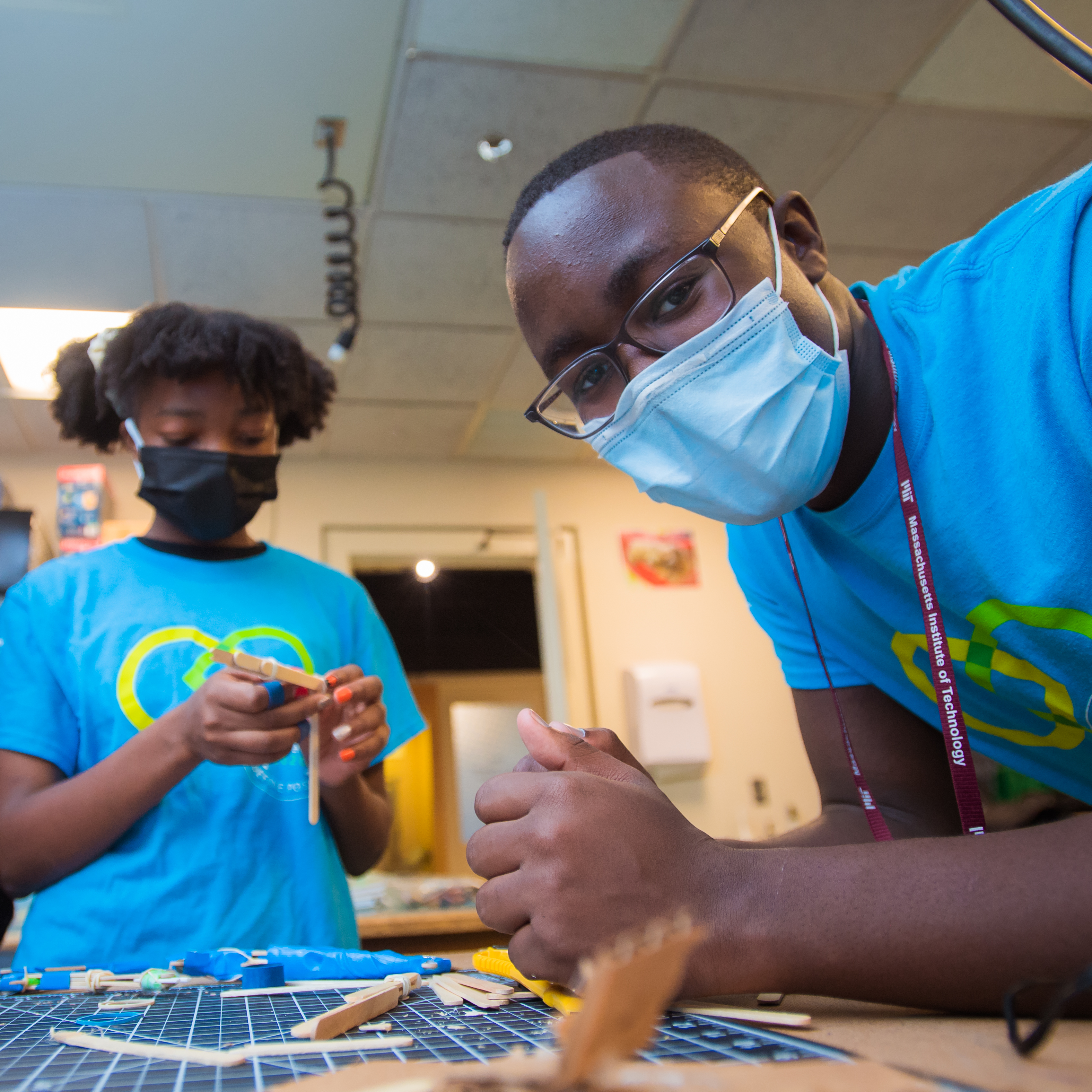
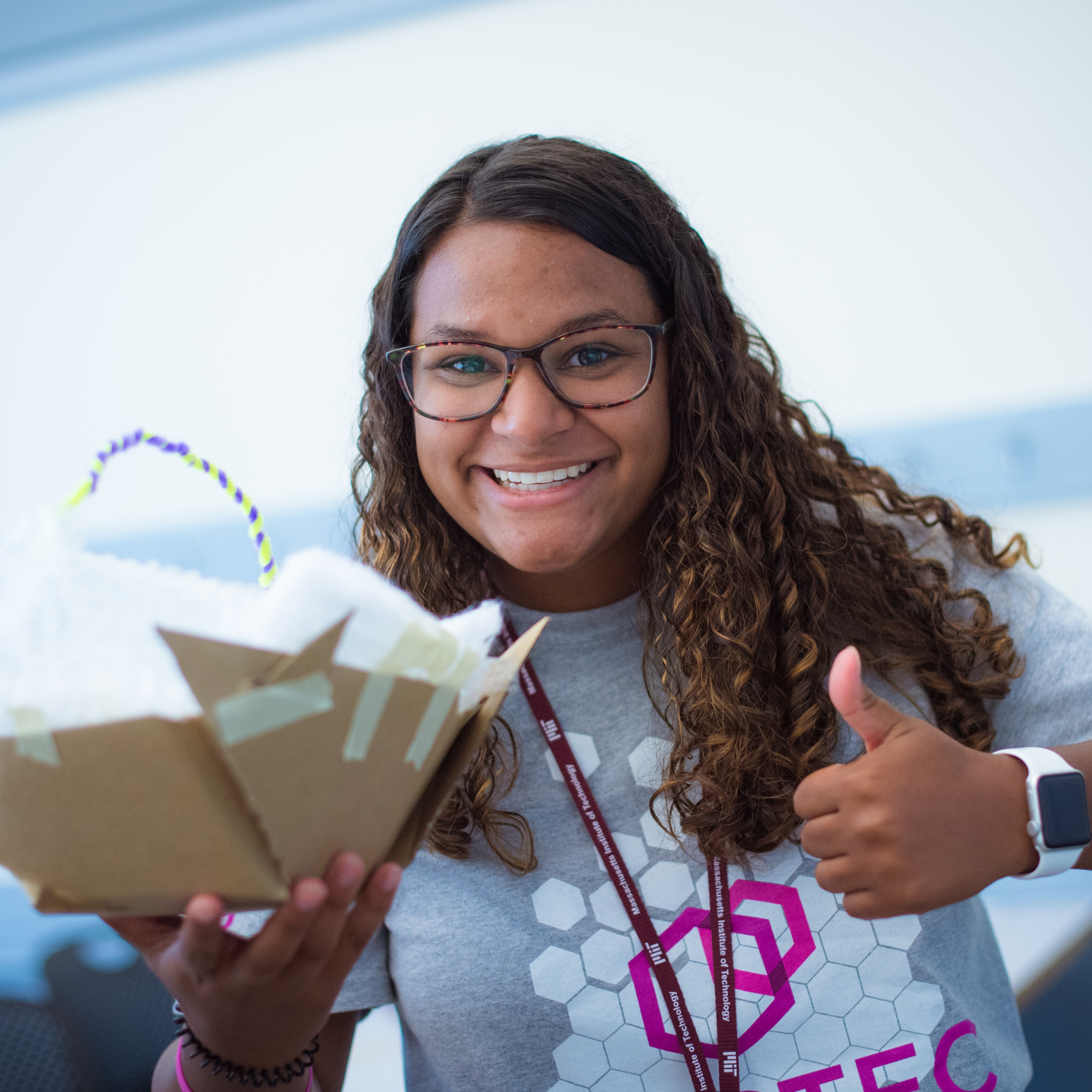
The students are introduced to the wonders of engineering through
a series of hands-on demonstrations designed to raise questions
that students try to solve working in small groups. In the process
of investigating, designing, building, and collaborating with
their peers, participants cultivate the fundamental math, science,
and communication skills critical to success in college and
the workplace.
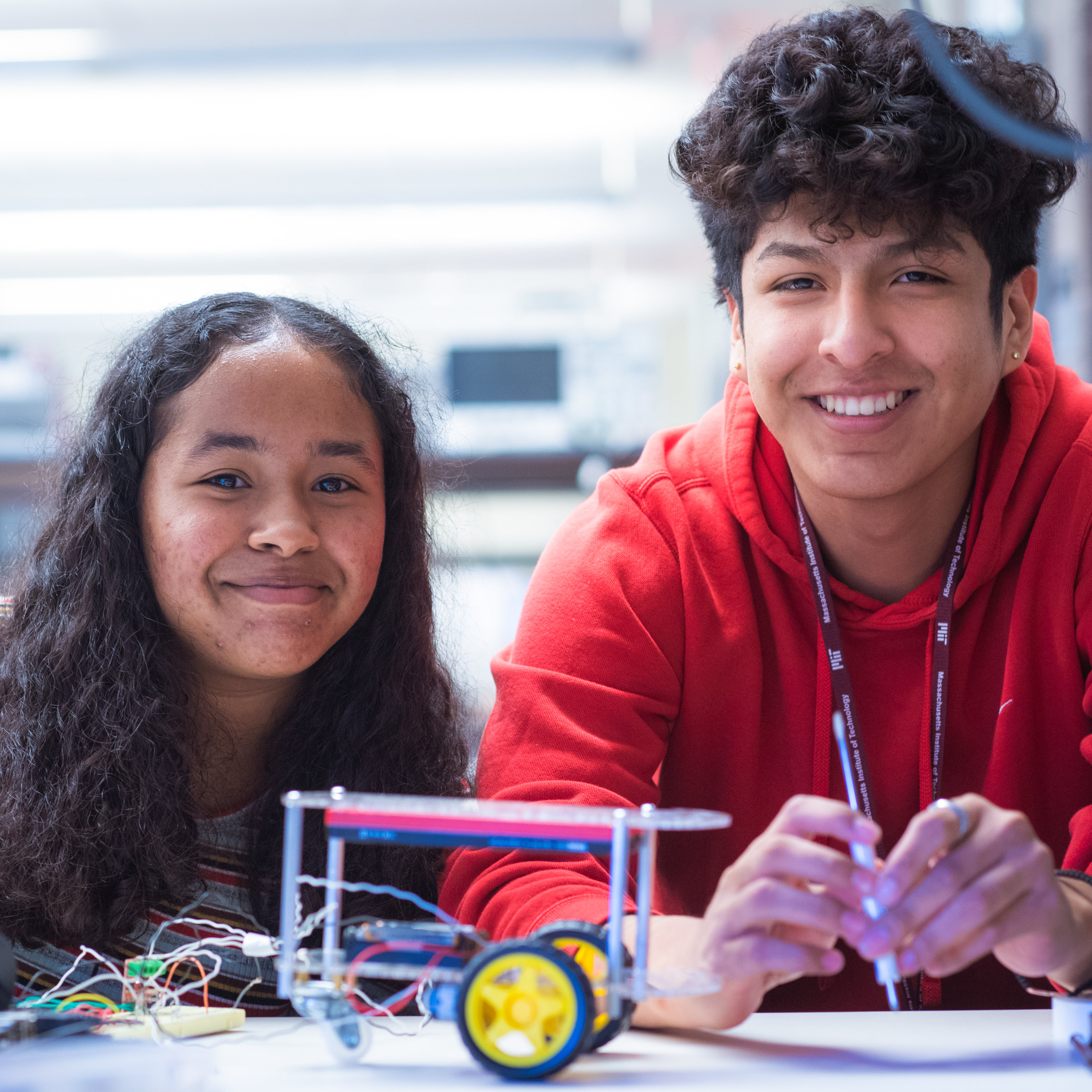
For example, what teenager isn’t interested in cars?
The ninth grade instructor, Marc Graham, and MIT student tutors
have developed a lesson on the conservation of energy using
a battery powered car. The students have built simple electric
motors and assembled gear boxes and will be machining parts
to build a simple car. Their objective is to assemble the gearboxes
so that the cars can best carry varying loads.
Last year’s class used student-built catapults to throw
various objects into receptacles, winning points for distance
and accuracy. The students had to adjust placement, tension,
and velocity to make precise tosses, thereby learning the basics
of mechanical engineering in a fun, supportive atmosphere that
reinforced their knowledge of algebra and one-dimensional kinematics.
Last semester, miniature cars powered by vinegar and baking
soda were the highlight of the chemical engineering segment.
Students had to consider various data and adjust the amounts
of ingredients to power their cars along an impromptu racecourse
in Killian Court.
SEED Academy gives students access to not only laboratories
and instructors, but the highest-caliber engineering “professors”
and technology. Eboney Smith and an MIT student co-instructor
for the 10th grade, have created an aeronautical and astronautical
engineering curriculum that brings students into MIT’s
wind tunnel, allows them to test the flight simulator, and introduces
them to Professor Wes Harris, head of the Department of Aeronautics
and Astronautics.
The 11th grade team, led by instructor James McLurkin and another
MIT student tutor, experiences this year’s course on renewable
energy sources. Students will address the world's power crisis
by learning about sustainable energy sources. Advanced algebra
will be used to support the physics concepts of work, energy,
efficiency, and power. The entire energy production/consumption
cycle, from power plants to hybrid vehicles, will be explored
through lectures from experts on fuel cell development and nuclear
material proliferation. Students will meet with MIT's Solar
and Electric Vehicle Team and build their own miniature windmills
to learn about alternative sources of energy production and
storage.
The class will also form a small energy company, SEED Energy
Co., dividing into six subsidiary companies for the final project.
Each subsidiary group will design and construct a small power
plant that generates electricity by using sustainable energy.
These plants will be installed in an outdoor location for an
extended period of time to collect performance data. Each group
will lease the space they construct on; the final results will
be judged on profit/expense ratios.
Karl Reid, the executive director of School of Engineering
Special Programs, in his annual address exhorts students to
raise the bar for their personal achievement and commitment
to the program’s goals. He also urges families to continue
to support academic excellence and intellectual curiosity. But
as one student notes, it’s the engineering projects that
capture the imagination: “DRY ICE — the coolest
thing I have ever played with and used in my life.”
SEED Academy is made possible through the generous support
of its corporate, individual, and philanthropic sponsors and
MIT.