The STAR program at MIT seeks to bridge the divide between scientific research and the classroom. Understanding and applying research methods in the classroom setting can be challenging due to time constraints and the need for advanced equipment and facilities. The multidisciplinary STAR team collaborates with faculty from MIT and other educational institutions to design software exploring core scientific research concepts. The goal of STAR is to develop innovative and intuitive teaching tools for classroom use.
All of the STAR educational tools are freely available. To complement our educational software, the STAR website contains curriculum components/modules which can facilitate the use of STAR educational tools in a variety of educational settings. Students, teachers, and professors should feel welcome to download software and curriculum modules for their own use. We welcome your comments and feedback as you explore these educational tools.
|
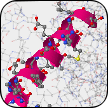
StarBiochem is a molecular 3-D viewer that allows students to learn key concepts in structural biology in an interactive manner. This software allows for the visualization and manipulation of any of the structures present in the Protein Data Bank. |

|
StarCellBiois a cell and molecular biology experiment simulator. In StarCellBio, students design, perform, and analyze their own cell and molecular biology experiments using three different experimental techniques: western blotting, flow cytometry, and microscopy. |

|
StarGeneticsis a genetic cross simulator. Using StarGenetics students can performing virtual mating experiments between genetically different organisms across a range of traits. |
|
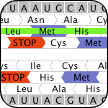
StarORF facilitates the identification of the protein(s) encoded within a DNA sequence. Using StarORF, the DNA sequence is first transcribed into RNA and then translated into all the potential ORFs (Open Reading Frame) encoded within each of the six translation frames (3 in the forward direction and 3 in the reverse direction). This allows students to indentify the translation frame that results in the longest protein coding sequence. |
|
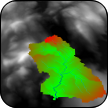
StarHydro is an application for distributed hydrological analysis. It allows the user to delineate watersheds and explore various watershed statistics. |
|
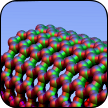
StarMolsim is a collection of molecular dynamics and atomistic materials modeling research software available via the web. It enables the user to run molecular dynamics simulations on a distributed compute cluster and retrieve the results, all from a web browser. |

|
StarCluster is an open source cluster-computing toolkit for Amazon's Elastic Compute Cloud (EC2). StarCluster automates and simplifies the process of building, configuring, and managing clusters of virtual machines on Amazon's EC2 cloud. StarCluster allows anyone to easily create a cluster computing environment in the cloud suited for distributed and parallel computing applications and systems. |

|
StarHPC provides a virtual machine image configured for parallel programming in both OpenMP and OpenMPI technologies. StarHPC can be used with Virtual Box, VMware player, etc. to quickly get started with MPI and OpenMP programming. |


|
|
STAR (archived) | star@mit.edu |