

![]() ![]() |
Frequently
Asked Questions
Q. What are the academic advantages of enrolling in
Terrascope?
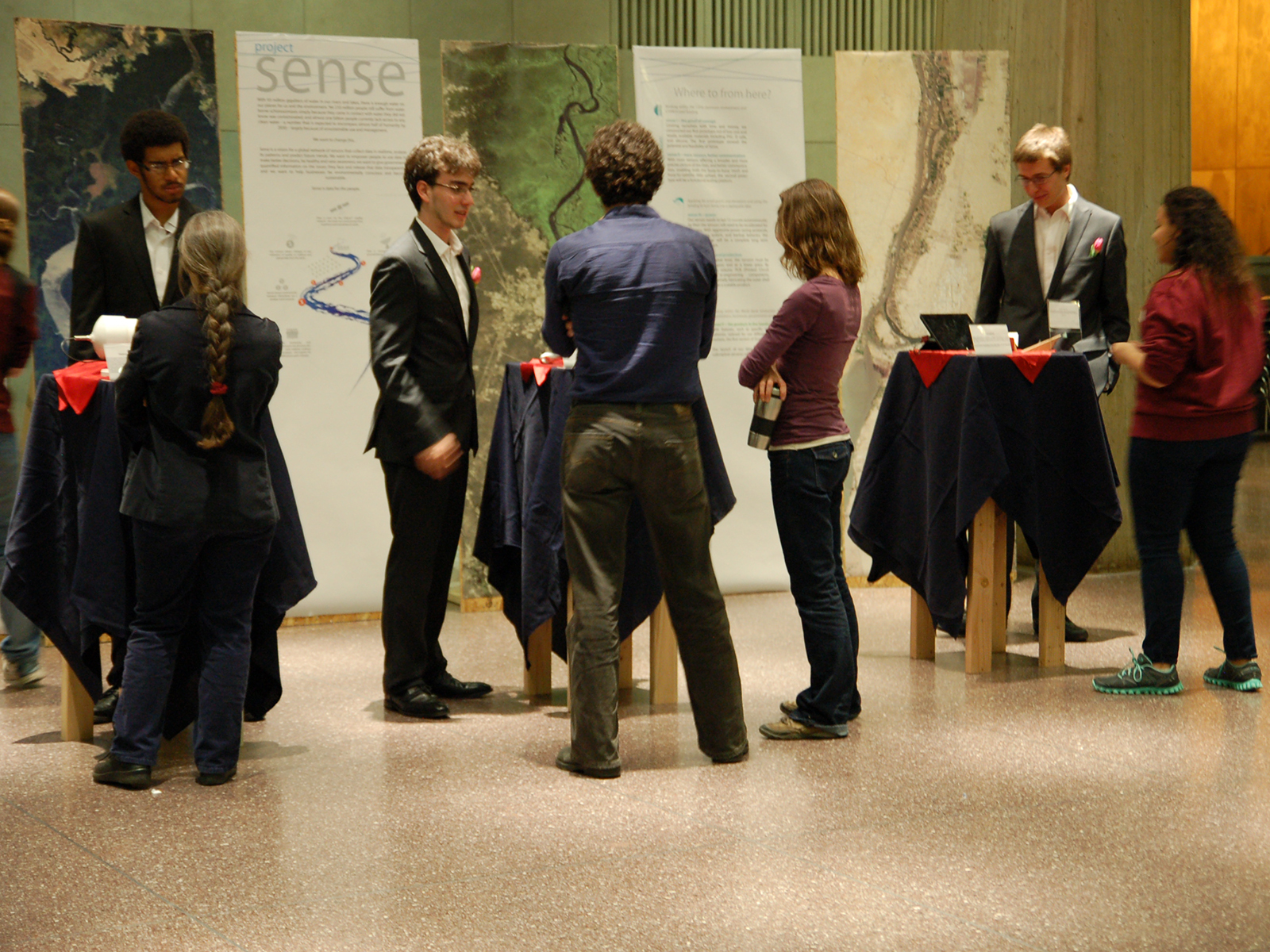
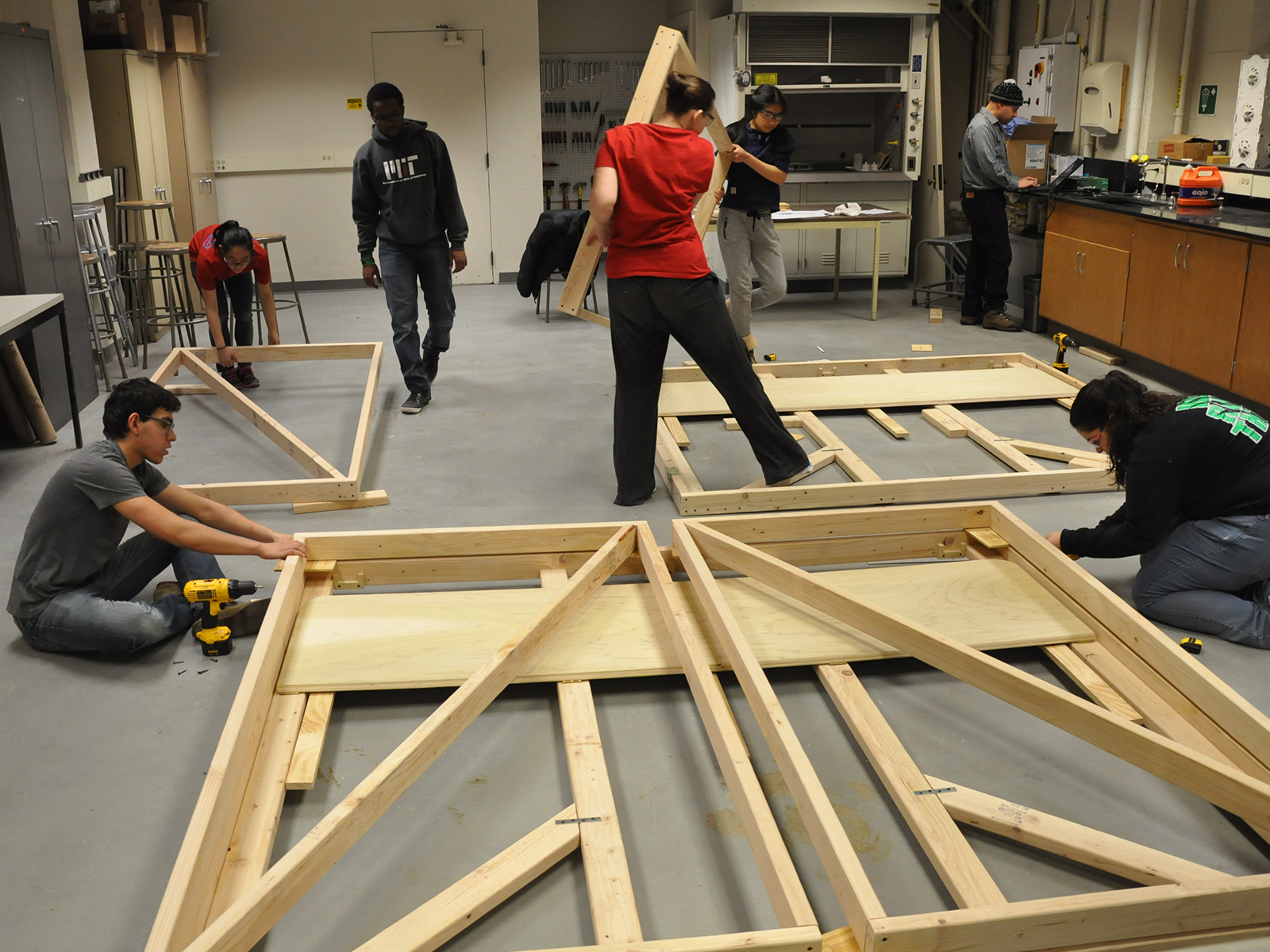
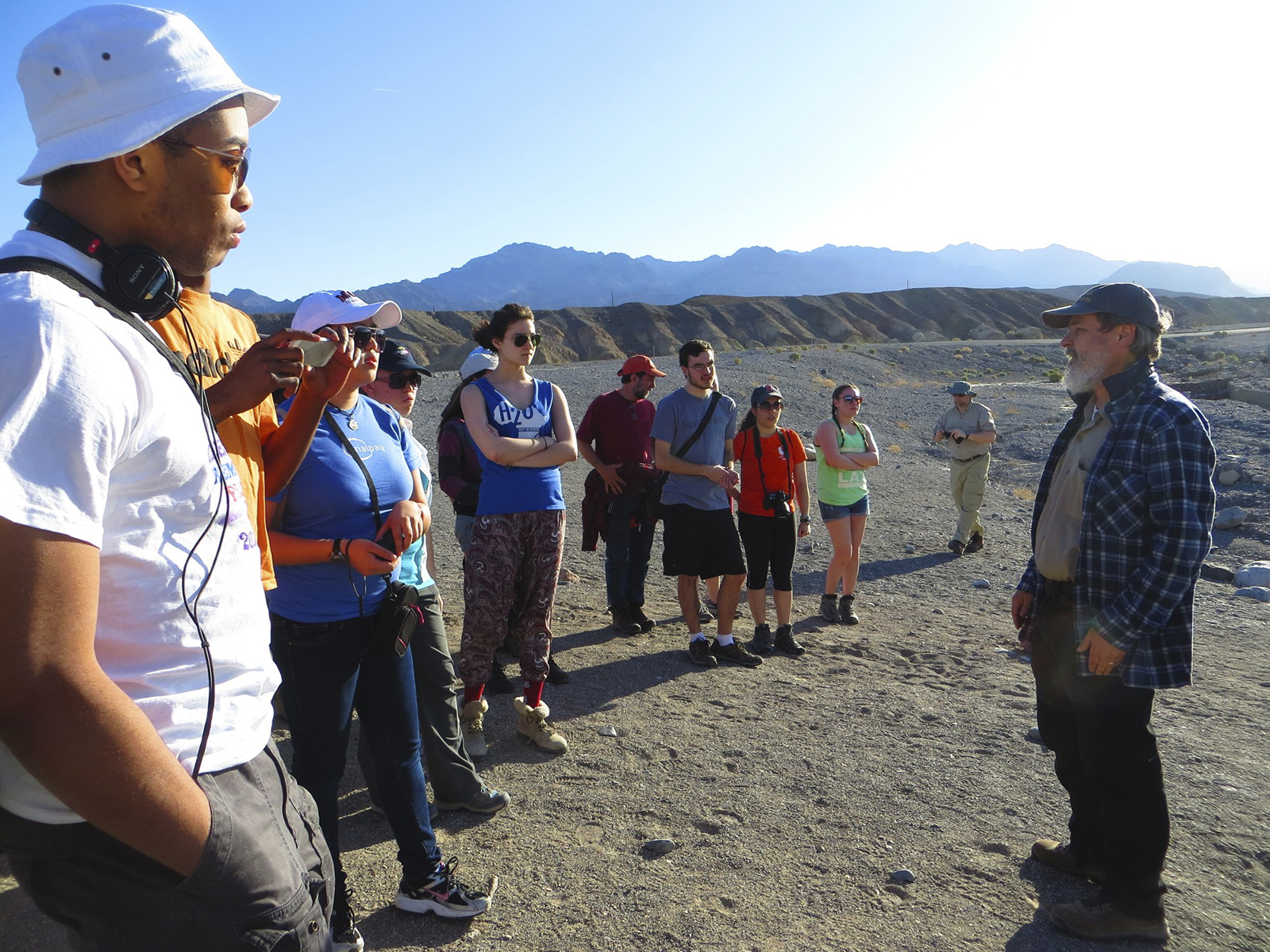
A. Most of your first year at MIT is comprised of large lecture subjects in which you will attend lecture and complete problem sets. Terrascope is based on a different model for learning. We give you a complex problem to solve in your first semester (Mission 2012--12.000). Working in teams, you will develop and propose solutions that are brought together and presented before a panel of experts and the entire MIT community. This style of learning continues in spring. You will explore how to communicate some aspect of your learning by designing and building museum-style exhibits. Besides the advantage of a systems-oriented approach to learning, Terrascope students enjoy a small, friendly academic community of faculty, staff, and students who enjoy learning in a way that transcends traditional disciplinary boundaries. You will develop close working relationships with several MIT faculty, upperclassmen, and alumni early in your freshman year. You will receive tutorial support for mainstream subjects, help with finding UROP projects, and encouragement to develop your ideas into practical solutions to complex problems. Q. How do I enroll in Terrascope? A. Go to the Class of 2012Advising Choice page and apply for the traditional advising option. Be sure also to select the "Yes, I'd like to be in Terrascope/Mission 2012" button, when asked for your advising preferences within the Housing Lottery. You cannot be in Terrascope/Mission 2012 and also take a Freshman Advising Seminar because of the freshman credit limit. If you are interested in a Residence-based Advising (RBA) residence, be sure to select the traditional advising option and also check the "Yes, I'd like to be in Terrascope/Mission 2012" button, when asked for your advising preferences within the Housing Lottery. If you are in Terrascope/Mission, you will be assigned an advisor who is affiliated with the Terrascope program. If you are assigned to an RBA residence, you will keep the RBA advisor, but you will also be assigned a secondary, Terrascope advisor. Q. Can I enroll in Terrascope and another freshman learning community, i.e., Concourse, ESG, or MAS? A. If your schedule permits--and the other program agrees--you may take courses in another learning community. Q. Does Terrascope have its own facilities? A. Yes, we have our own 24-hour facilities: classroom/study space, lounge, and kitchen. Q. How does Terrascope differ from the other programs for first-year students? A. We are the most flexible of the programs. You can choose all your other subjects from within MIT's "mainstream" curriculum. All Terrascope students must enroll in Mission 2012 (12.000) during the fall and subject 1.016 in the spring. Your credit limit is 57 units as opposed to 54 units in most of the other freshman programs. Q. What subjects MUST I take if I enroll in Terrascope? A. ALL Terrascope students take Mission 2012 (12.000) in the fall and 1.016 in the spring of their freshman year. Q. Can I enroll in Mission 2012 but not in Terrascope? A. Yes, Mission 2012 is a stand-alone class that can be taken by any first year student. For the Fall semester all Mission 2012 students will enjoy Terrascope affiliation, even if they do not intend to continue in the Spring. Q. Does participation in Mission 2012 and/or Terrascope require me to major in either Civil and Environmental Engineering (Course 1) or Earth, Atmospheric, and Planetary Sciences (Course 12)? A. No. Terrascope was designed to demonstrate that the Earth system provides a valuable context for the study and application of basic concepts in science and engineering. Developing a systems-oriented approach to learning in the first year pays enormous dividends throughout your academic career, regardless of your choice of major. Our Terrascope alumni are spread across the different majors at the Institute. Q. Can I meet MIT's communication intensive (CI) requirement in Terrascope? A. YES! Terrascope has a spring CI-H subject called Terrascope radio. This course explores radio as a medium for communication, particularly the communication of complex scientific information. Q. I am worried that I will be too isolated from mainstream MIT if I enroll in Terrascope. A. We think that Terrascope offers you the best of both worlds! You will take your science and math subjects with the rest of the first year class. You will be able to take full advantage of the wealth of opportunities offered in the sometimes-overwhelming environment of MIT, but you also have the advantages of our small, friendly community. In Terrascope you get to know other students and faculty in a way not common in "mainstream" courses. You will meet a variety of people as a student in Mission 2011, all dedicated to helping you make the most of your year: graduate and undergraduate Teaching Fellows, faculty members, and MIT alumni mentors. You will also be able to count on help from our network of former students. Getting to know us means that we can help you find UROPs or internships, write recommendations for you, and help you navigate MIT bureaucracy. Q. I have advanced placement credit for some of my math and science courses. Can I still take Terrascope? A. YES! Many of our students enroll in other science or math subjects and still take Terrascope. Q. What difference will enrolling in Terrascope make to my life beyond my freshman year? A. Perhaps the answer to this question is to hear about the work of Terrascopers in the semesters beyond their freshman year. A large number of students participate in UROP or other projects that in some way continue interests first kindled in Terrascope. The experience of developing solutions to a complex problem as freshmen means that you will be more likely to have the confidence to continue to find challenging projects to pursue at MIT and beyond. Q. Can I go on the field trip during the Spring Break of 2009 if I take Mission 2012 but not Terrascope. A. The spring field trip is intended for those that have committed to the Terrascope program throughout the year. Should space be available, the opportunity may be open to others, particularly students who participated in Mission 2012. Q. If I enroll in Terrascope, will I be prepared to take mainstream MIT courses in subsequent semesters? A. As you will take mainstream math and science lectures along with the full first year class, the material you study in these subjects will be the same as that of other students. Q. If I miss the June 15th deadline for registering for Mission 2012 and Terrascope can I still add them later in the summer or on Registration Day? A. You should register for Mission 2012 and Terrascope during the summer as required by the freshman advising office. If for some reason you miss the opportunity or decide you want to join after the registration period we will work with you to register shortly after the beginning of the fall term. More questions arise if you register for a freshman seminar during the summer ... but anything is possible. Q. How can I find out more about Terrascope and Mission 2012? A. The best way is to email Ms. Debra Aczel or call 617-253-4074. For Mission 2012 email Professor Sam Bowring. |
![]() |