curriculumadvisingfaqshistoryapplycommunitycalendartestimonialshome
Discover Terrascope
Terrascope: a learning community that begins in your freshman year but lasts a lifetime! If you are interested in understanding the ultimate complex dynamical system - the Earth - Terrascope is for you!

Terrascope, one of MIT's learning communities for first-year students, is a unique opportunity for freshmen to expand their academic experience. Terrascope offers the advantages of a small, vibrant community of students and faculty and alumni committed to learning together. The friendships and bonds formed in your first semester often last throughout your MIT experience and beyond. Your academic advising will be through the Terrascope program where in addition to your assigned advisor you will be able to seek advice from the diverse community of faculty, staff, and students. Although the program is for first year students, many Terrascope veterans remain involved as Undergraduate Teaching Fellows or interested alumni and are an important part of the community and a rich source of reliable advice.

What will I do in Terrascope?
You will enroll in the same core subjects as other MIT freshmen, but also participate in two special subjects. During the fall term, Mission 2012: Solving Complex Problems (12.000: 9 units), explores how teams of scientists and engineers approach difficult problems that require multidisciplinary approaches. All students who enroll in Mission in the fall automatically become a part of Terrascope and can enjoy the full benefits of belonging to the community. While we hope that you will take advantage of Terrascope membership, there are no requirements beyond participating in Mission 2012. We hope that you will stay with us in the spring, but enrolling in Mission does not commit you to continuing in Terrascope.

There is no other class like 12.000 at MIT and the organizational and leadership skills which you develop in the class will serve you throughout your MIT career. This is one of the only classes you will take where the students are in control of the class from organization to specific topics to the final product.

Communicating Complex Environmental Issues: Designing and Building Interactive Museum Exhibits (1.016--9 units), offered in the spring semester, is also unique at MIT. Self-directed teams focus on the engineering design process with the goal of articulating knowledge about the annual theme via a museum exhibit. You will conceptualize, design and build museum pieces that are then publicly exhibited at MIT and judged by museum designers of the Boston community. In achieving this goal you will develop additional depth on the subject matter that you have studied in the fall, hone-in your organizational and research skills, and carry-out your ideas all the way to a concrete outcome via an unforgettable hands-on experience.

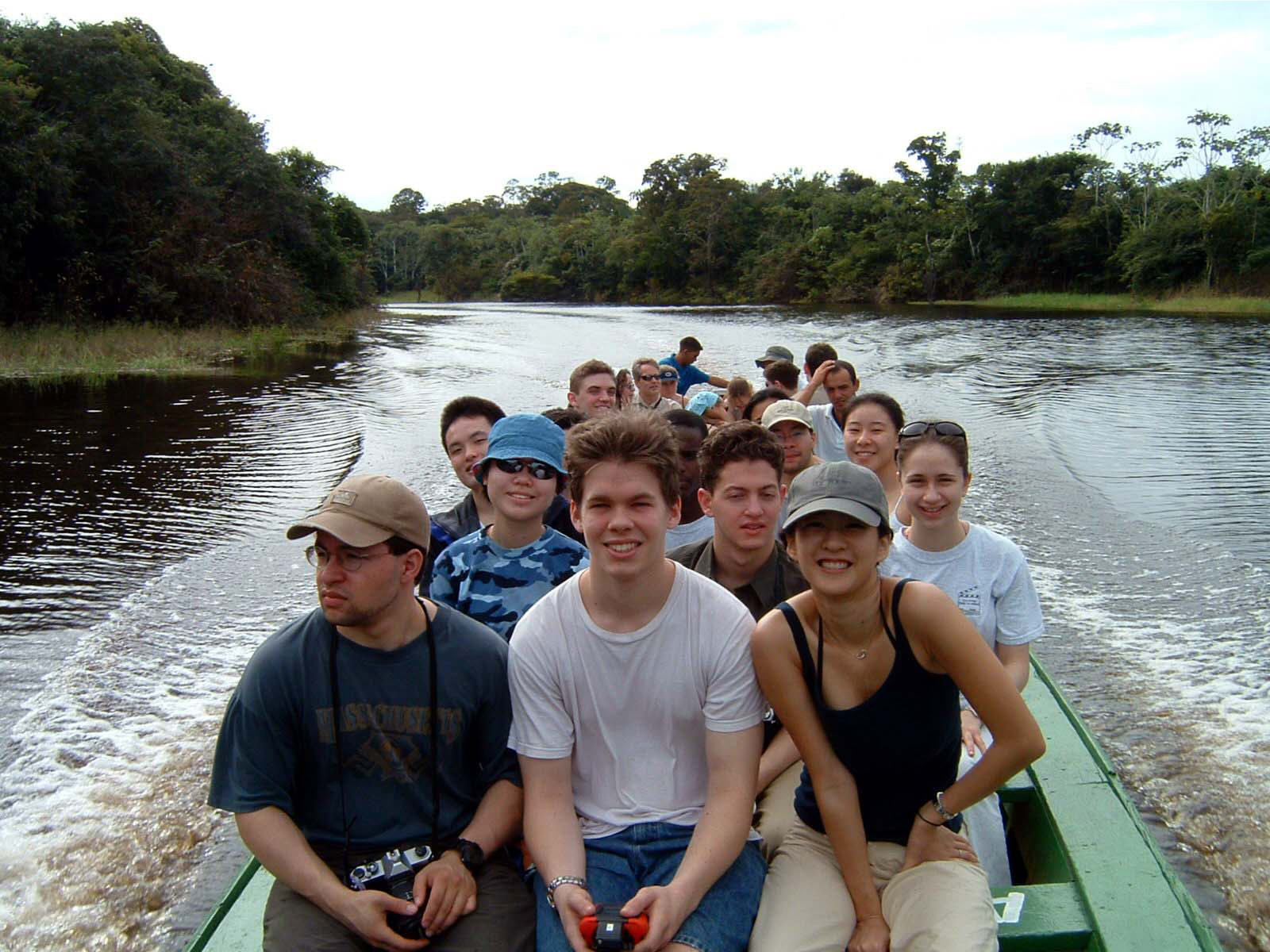
These two classes develop around an annual theme, the focus of the yearlong effort. Past topics have included: sustainable development of the Amazon Rainforest; comparing the environmental costs and resource benefits of drilling for oil in Alaska's Arctic National Wildlife Refuge; guaranteeing the survival of the Galapagos Islands; designing effective emergency tsunami response strategies for the circum-Pacific region; developing a plan to reconstruct New Orleans and the Gulf Coast. For the class of 2012 we will concentrate on developing strategies for preserving/maintaining the fresh water of the western North America. For more information on the topic visit the Mission 2012 website. During spring break in March of 2009 we plan to take a field trip to western North America to study water use practices and evaluate the effectiveness of treaties with Mexico.

Terrascope Radio (SP.360--12 units) is an exciting spring subject that offers the opportunity to satisfy the required freshman communications requirement by granting CI-H credit. In this subject, you will produce a professional quality radio program based on your year's study. This class is optional but perfectly integrates the Terrascope theme into the Institute's communication requirement. Click here to hear a sample of student work from a past semester.

Terrascope sponsors weekly luncheons where faculty and others speak about their work--a great way to learn about current developments in scientific research. These lectures take place in the Terrascope facility, which is a large meeting room, lounge, and adjacent kitchen. As Napoleon is reported to have said: "An army marches on its stomach." Terrascope endorses this view and between weekly lunches and a well-stocked kitchen you can always depend on finding something to eat at any time of day or night. The Terrascope room is a great place to work on class projects or to just hang out with your fellow students.

Why focus on Earth?
Many students who participate in Terrascope do so because they are curious about the Earth system--how it works, how it has changed over the 4.567 billion years of earth history, and how it will change in the future. Some will want to learn what they can do to promote responsible stewardship of our planet. But Terrascope isn't just for students with an interest in the Earth sciences or the environment. Terrascope students come from across MIT and have or are majoring in virtually all areas offered at MIT.

Terrascope is a great way for anyone to explore the remarkable feedback relationships that characterize the behavior of complex dynamical systems, using Earth as a giant laboratory.

Most first-year subjects at MIT focus only on the basics. Terrascope gives you more - a head start on learning how to deal with urgent real-world problems that have no simple solutions. Large-scale problems are usually solved by teams of researchers working across the boundaries that separate traditional disciplines. In Terrascope, you get to work as part of a cross-disciplinary team at the very beginning of your undergraduate career.