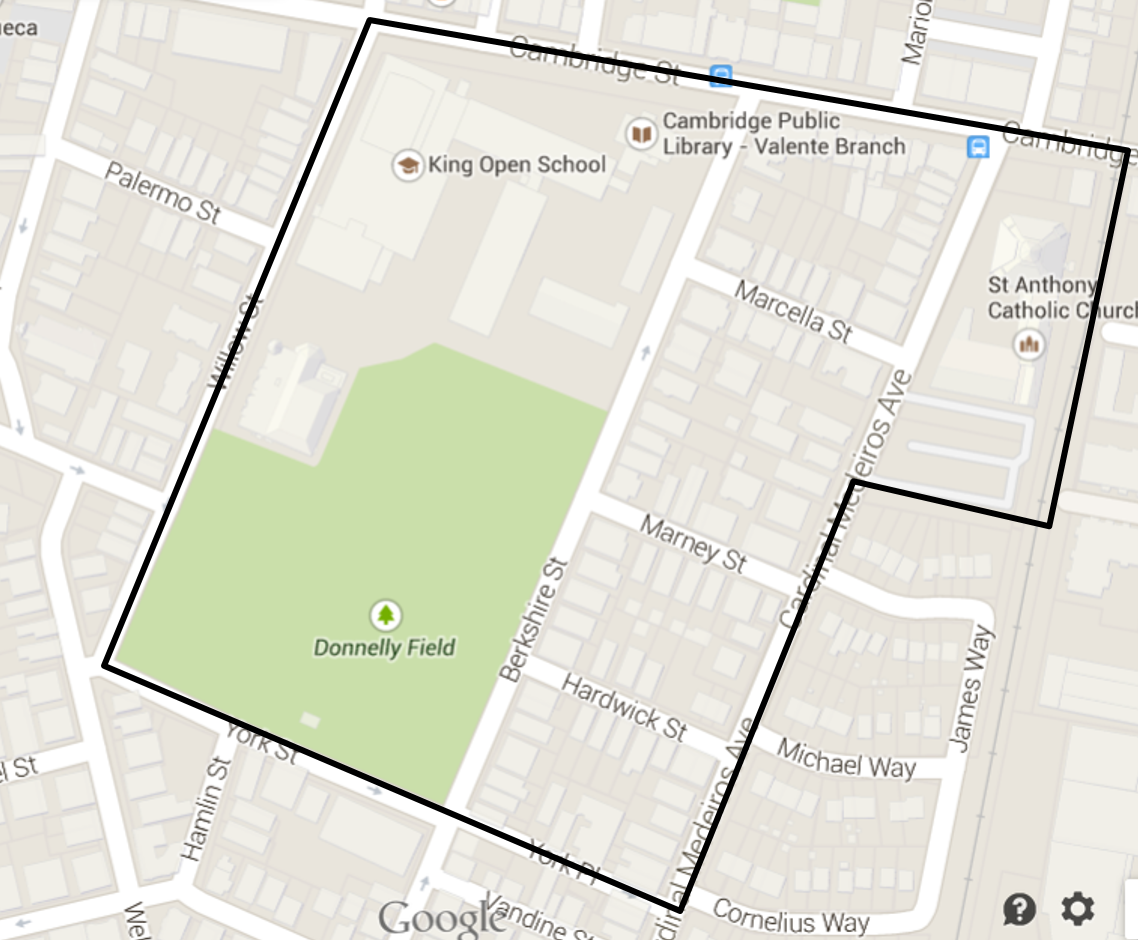
 Map data from Google Maps, 2015
Growing up, I always considered myself a suburbanite. I hated cities. Granted, my only experience of cities was with New York, but I considered them noisy, and dirty, and smelly, with far too many people for my taste, not to mention the lack of trees. However, when I came to Boston, I found that I did not object to all cities. Not all cities are the same, it seems.
Walking away from the MIT campus towards Cambridge Street along Cardinal Medeiros Avenue, the surroundings morph from commercial buildings under construction to 3-story wooden residential houses. The streets become quieter as fewer cars pass by, stop lights are replaced by simple crosswalks where cars yield to pedestrians, and the parking meters lining the streets are replaced by residential permit parking. On the snowy days that I went to look around, the walkability of the sidewalks drastically worsened as individual building residents became responsible for shoveling instead of businesses. A few bikers still braved the slushy streets.
The area was much more peaceful than I would have expected for a city neighborhood. There were multifamily houses with fenced-in yards instead of the towering apartment buildings that I had pictured. To draw the boundaries around my site, I expanded the borders around Cardinal Medeiros Ave until the area included a church, a school with a field, and a small commercial area. I want to understand the life, culture, and development of a city neighborhood. The final site is encompassed by Cardinal Medeiros Ave, Cambridge Street, Willow Street, and York Street. While there are not any “breaks” as Clay would call them, within the site itself, Cardinal Medeiros Ave marks a break from a different grid system to the east.
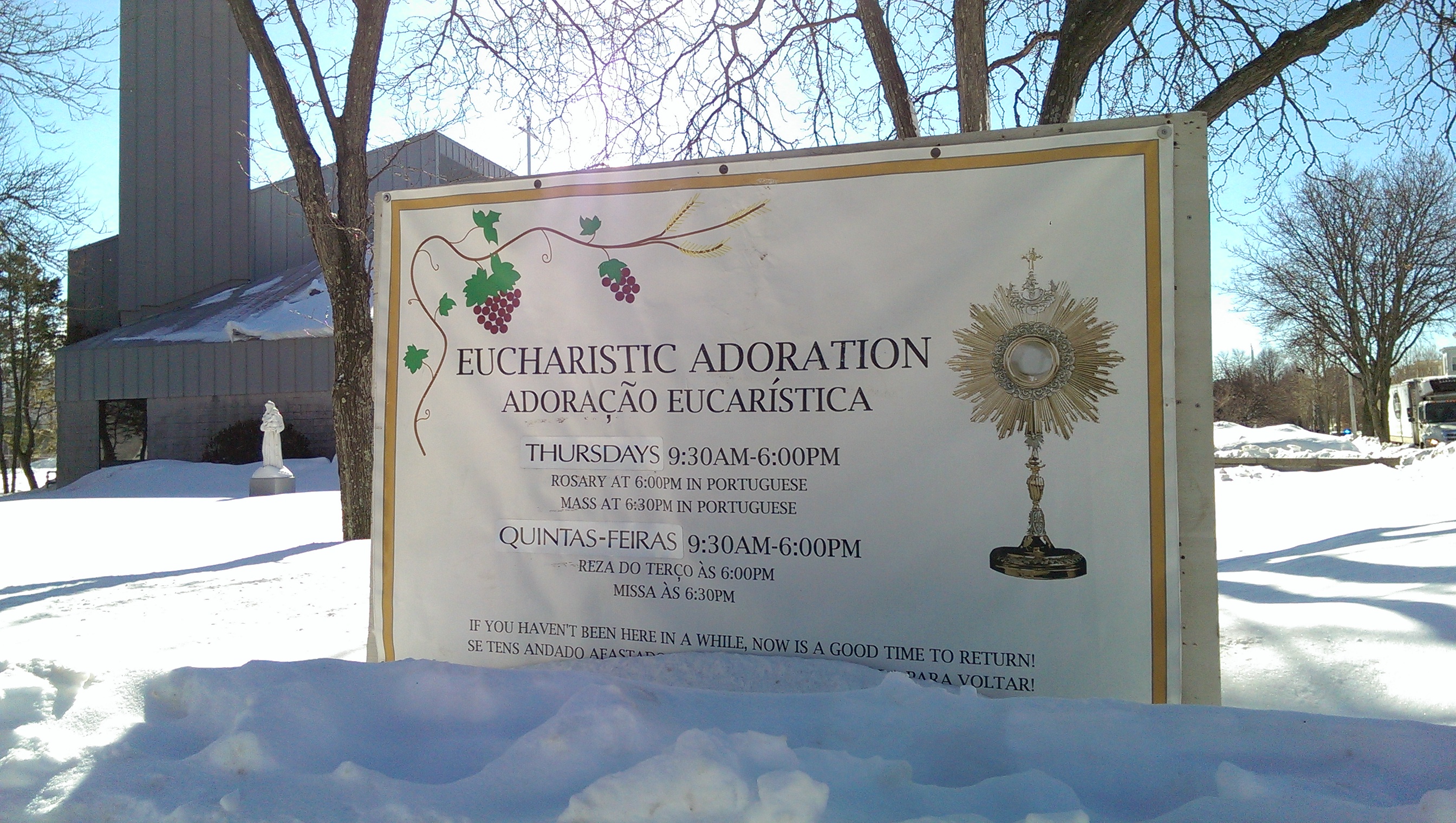 Sign in front of St. Anthony Catholic Church
One of the fascinating aspects of this site is the Catholic Church on the corner of Cambridge Street and Cardinal Medeiros Avenue. In the past, I have observed religious parades going down the street through this site on Catholic feast days. Upon further inspection, I noticed that this church was a Portuguese church. After making this realization, I began to notice that many of the street corners were dedicated to historical Portuguese figures. It appears that there is a heavy Portuguese influence in the area. I am interested in discovering how deep this influence is and how it may have shaped the development of the site. Was this church built after the Portuguese influence was established, or is the current influence a result of the church?
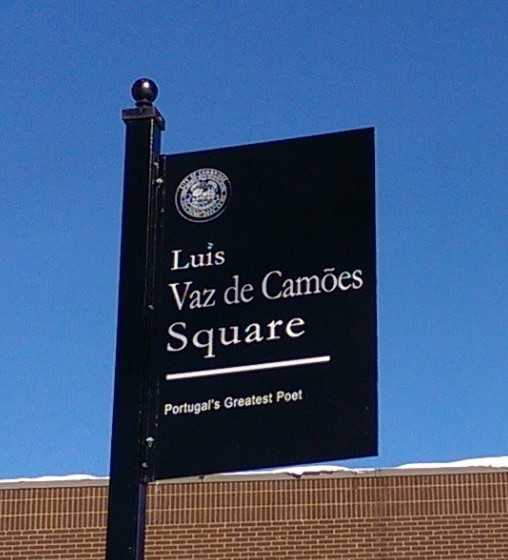 The square on the corner of Cambridge St and Cardinal Medeiros Ave is named after “Portugal’s Greatest Poet”
The other major feature of interest in this site is the school and field along Cambridge Street and Willow Street. Walking by, it draws the eye with beautiful murals based on the themes of Martin Luther King Jr’s messages. The name of the school, King’s Open School, hints that it hasn’t been established for more than 40 years. Why was the school established? And why in this location? Is it a central location for children in the area, or is there another reason that this site was chosen?
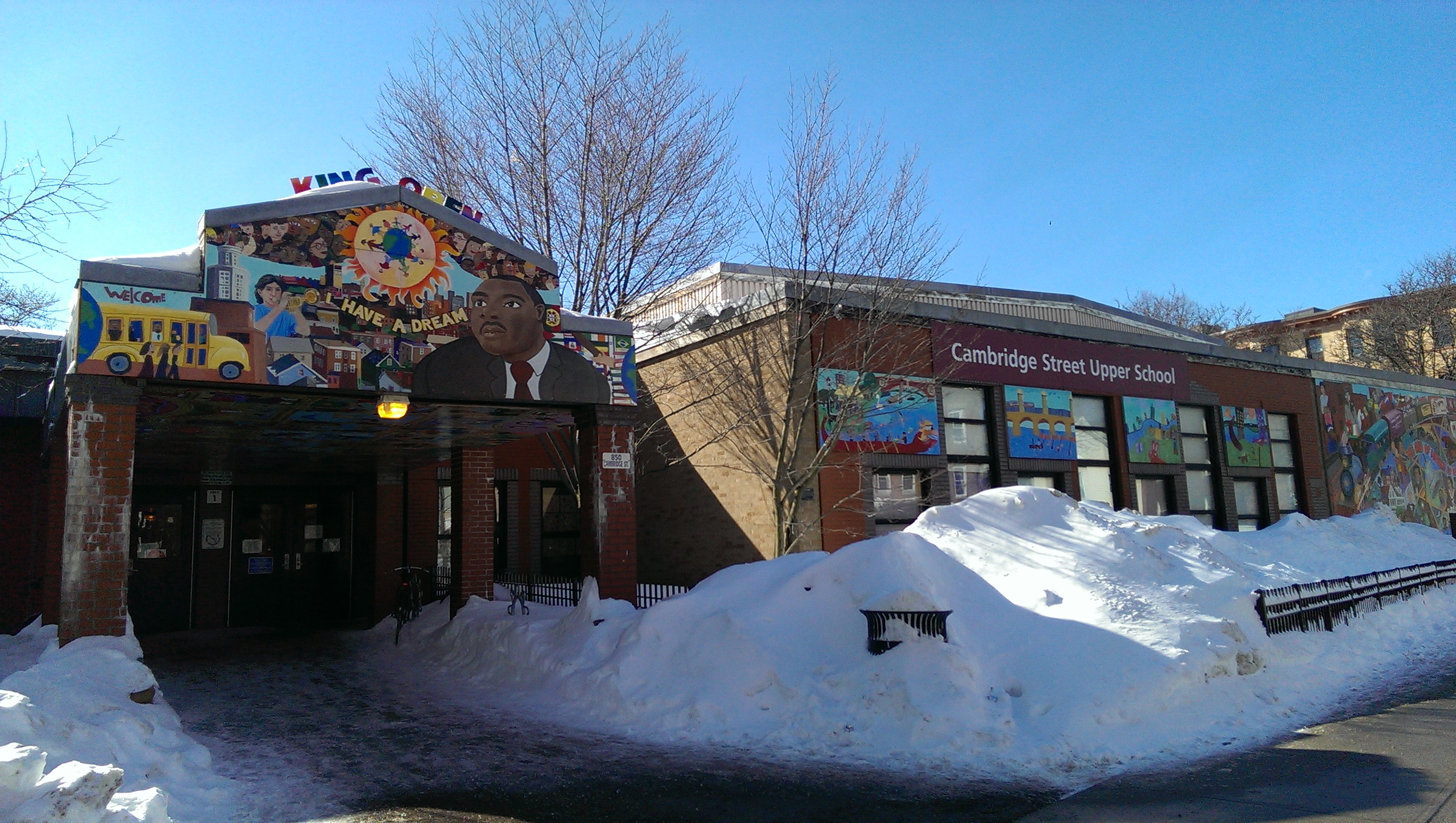 The murals on the front of King's Open School
Finally, the residential buildings themselves have their own questions to be answered. In this area, most of the buildings appear to be multifamily homes. Some, however, are in much better condition than others, potentially hinting at mixed economic levels in the area or, perhaps, pointing to recent development. How was the area originally developed? Do the current properties reflect the original divisions, or have drastic changes been made? I hope to discover some of the answers to these questions to help me better understand the development and feel of a residential city neighborhood.
Works Consulted
Clay, Grady. Close-Up: How to Read the American City. Chicago: The University of Chicago Press, 1980. pp 11-16, 38-65.