D9. Coulomb's Law using Charged Pith Balls
ELECTROSTATICS - Electric Charge
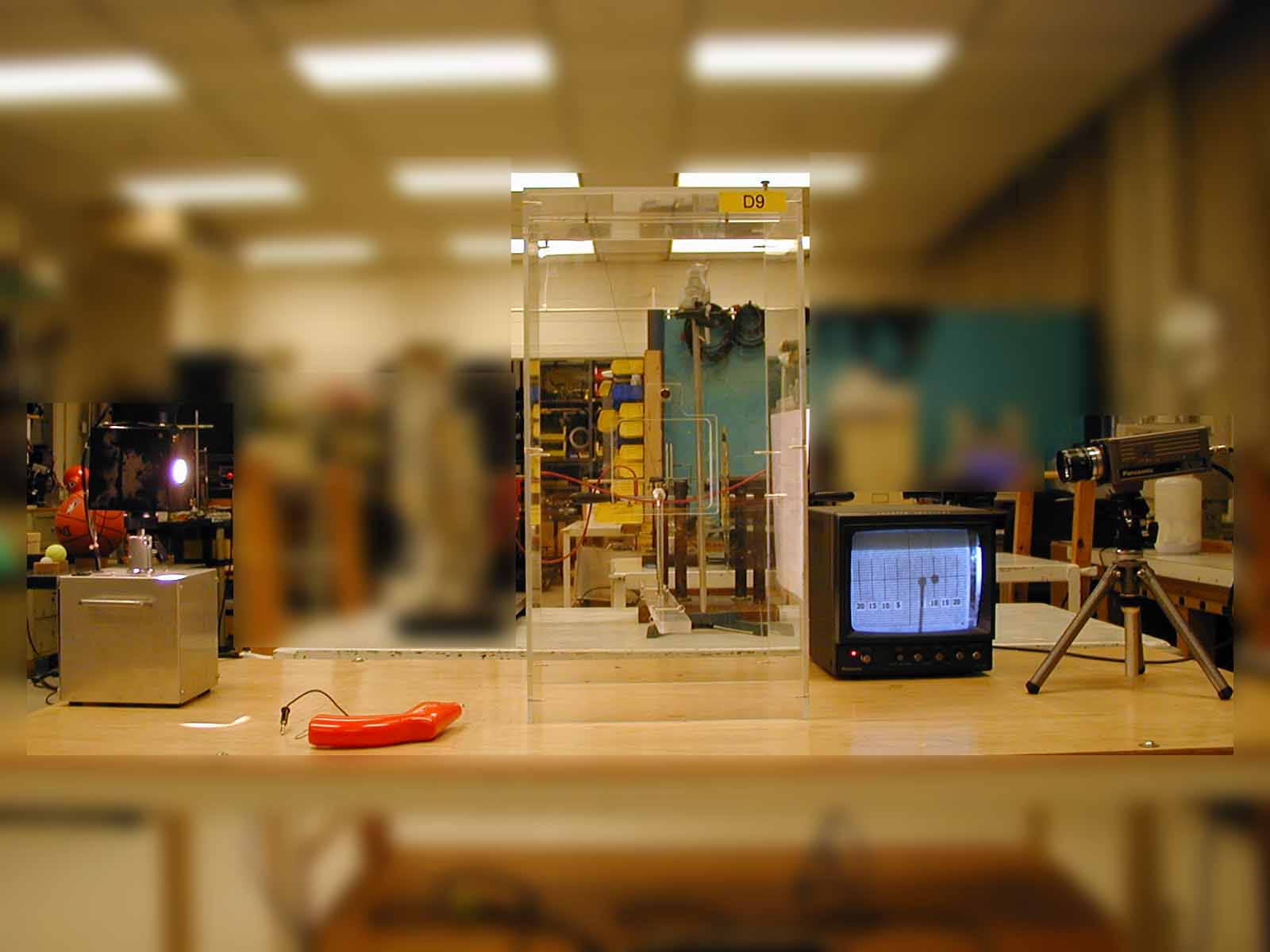
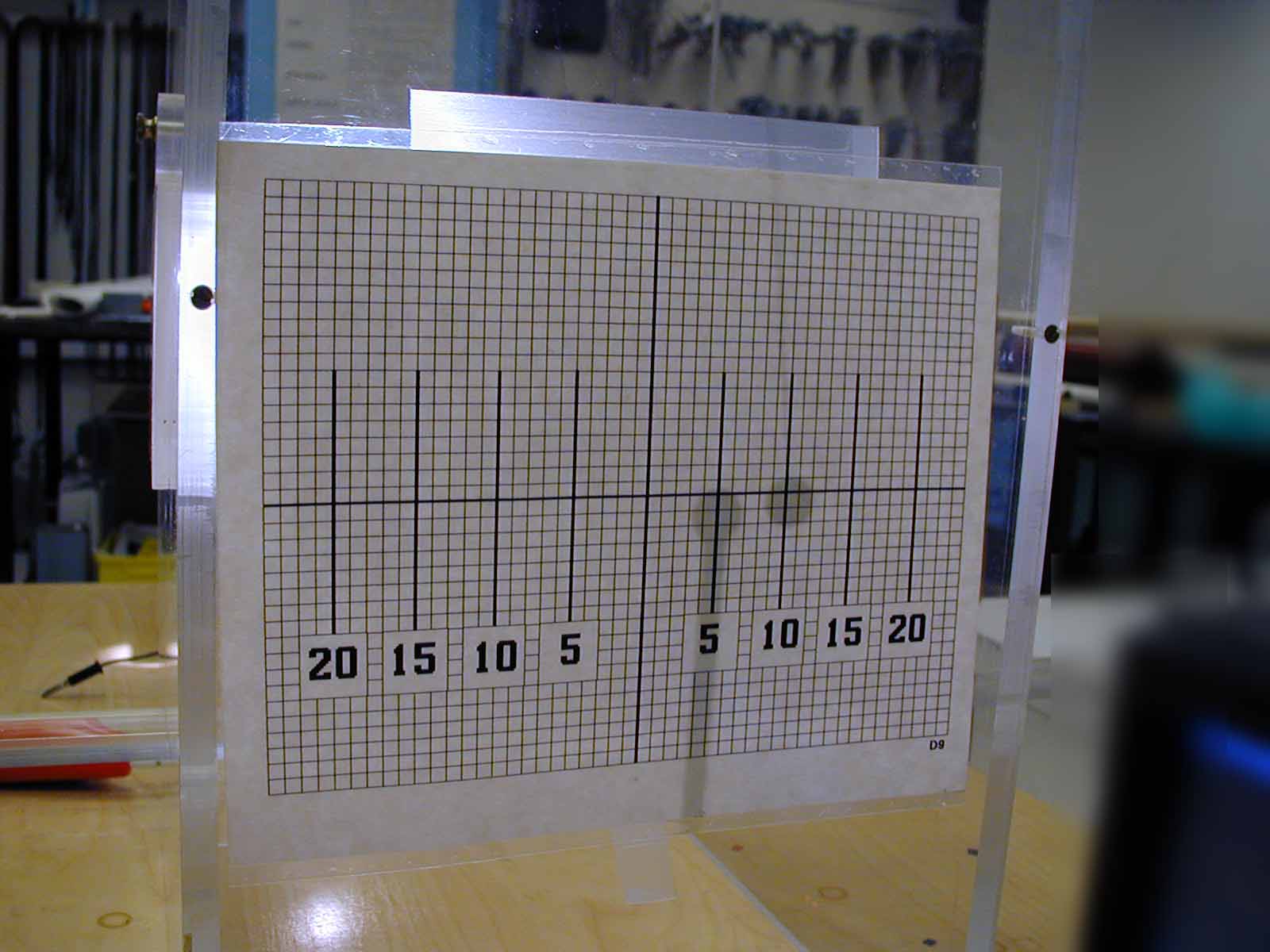
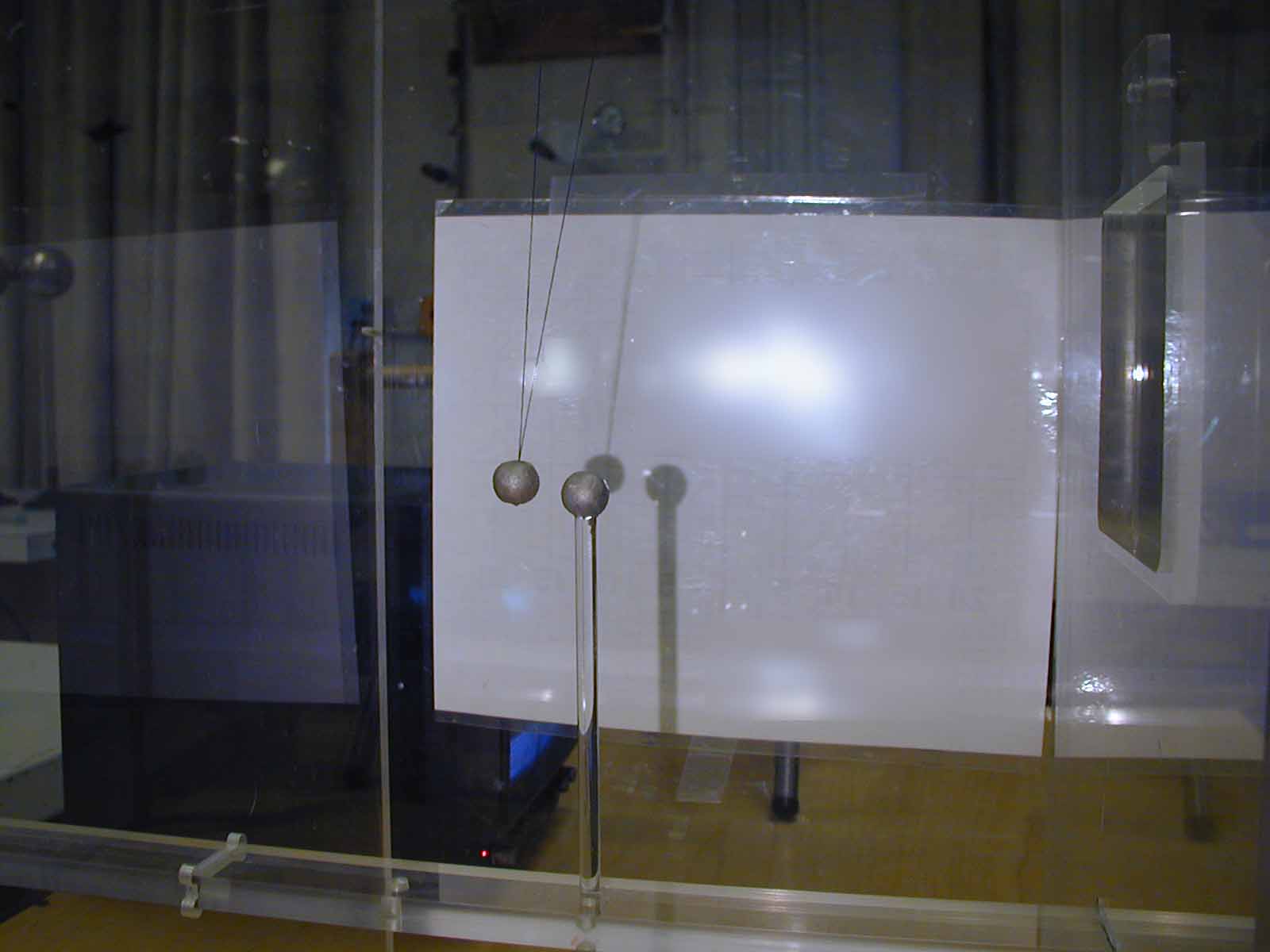
Two pith balls within a plexiglass enclousure are shadow-projected. One is suspended bifilarly and the other is attached to an insulated movable stand. A grid is also projected on the wall to note the distance between the balls. The pith balls are brought into contact with each other and charged. They acquire equal charge and repel each other. As the position of the movable pith ball is changed, the amount of repulsion of the suspended one varies.
Materials:
- Special plexiglass enclosure with two pith balls (one on a stand, one hanging)
- Halogen Lamp
- Piezo electric charge gun
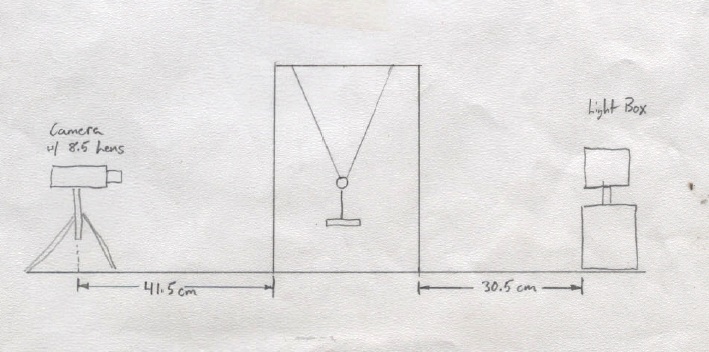
- TV camera with 8.5mm lens and tripod
Place plexiglass enclosure in front of lamp with graph paper facing away from lamp. Place camera on tripod facing the graph paper and project the video image. The shadow of the pith balls should appear clearly on video when lights are turned low. Be sure to align the lamp, plexiglass enclosure, and camera such that any paralax effects are minimized.
Procedure:
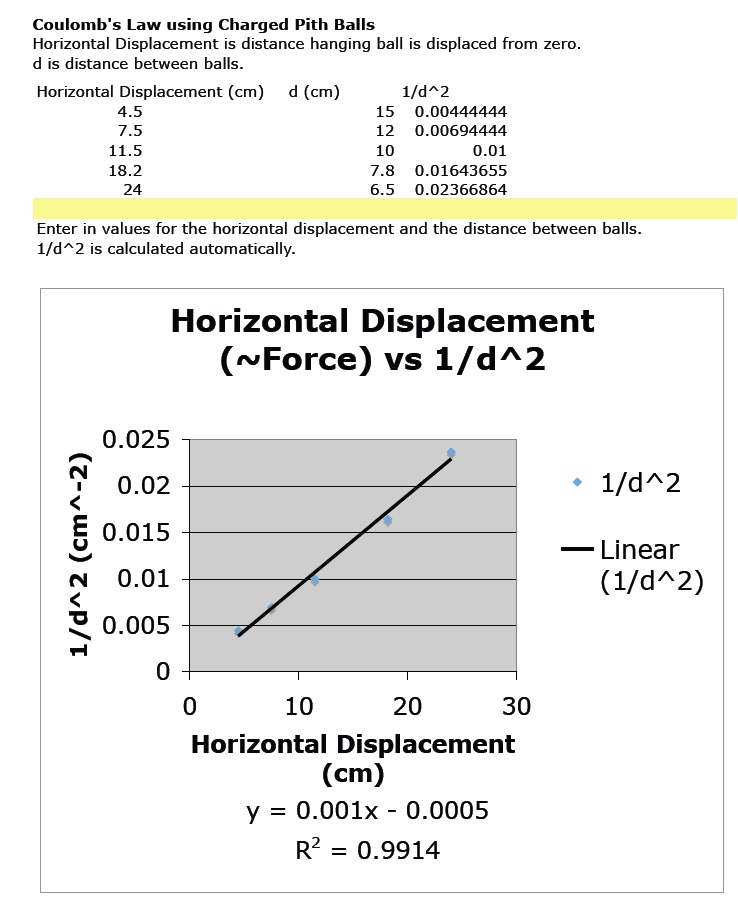
Initially, have the pith balls touching one another. Charge them both using the piezo electric charge gun. The suspended ball will deflect from from the vertical. Next, move the ball on the stand away from the suspended one until the latter reassumes a vertical position. Note the position of the suspended ball from the graph paper as the zero of the horizontal axis. Now, slowly approach the ball on the stand to the suspended one until the latter starts to deflect from the vertical. Measure: 1) the horizontal displacement of the suspended ball from the reference point (this will be proportional to the force, for small angles) (F), and 2) the distance between the center of the two balls (d). Make several such measurements and plot F vs. 1/d2
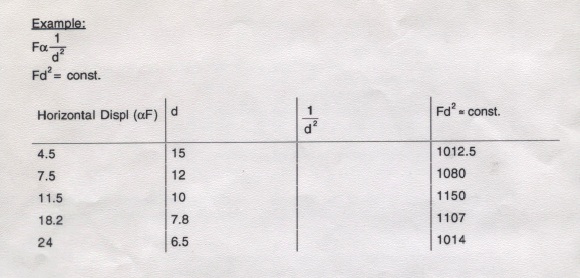
Here is an example of an excel worksheet configured to plot Horizontal Displacement (a.k.a. Force) vs distance between the balls, represented with sample data in this image:
Location: Room 4-309B, Shelf B5