Concept Sketches - Matt Haberland
RoboFish
RoboFish captures the excitement of MIT's robotic fish research in the form of a toy. Microphones sense the fish's surroundings, allowing it to respond to stimuli. In response to soft noises, RoboFish swims toward the source of the noise. In response to loud noises, RoboFish swims away from the source. In response to very loid noises, RoboFish takes in water through the inlet/outlet at the mouth to expand like a pufferfish. The skeleton of RoboFish is made of a hard plastic; the flesh and skin are mode of a soft, rubbery polymer. A swim bladder filled with air controls bouyancy by expanding and contracting, de-pressurizing and pressuring contained gas as necessary. Shape memory alloy "rays" within the fins cause them to move and change shape, allowing RoboFish to swim naturally. When RoboFish's battery runs out of energy, the spring-loaded swim bladder contracts, causing RoboFish to return to the bottom of the tank, where the internal battery is re-charged via induction.

Doc Edgerton's Camera
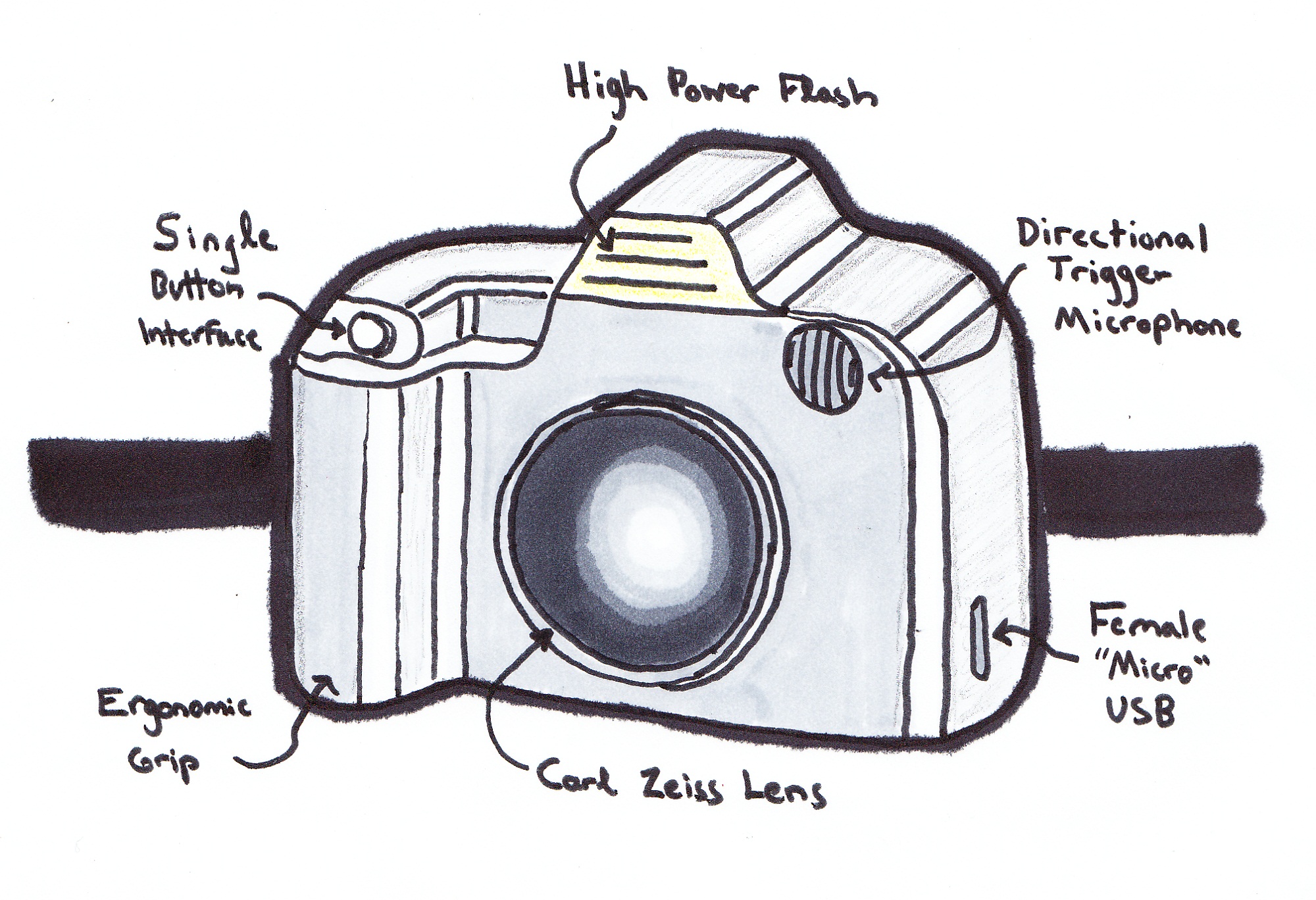
"Doc Edgerton's Camera" can be used to take images of phenomena "frozen in time". The extra high power flash produces so much light than the sensitive CCD (charged coupled device) inside the camera can develop an image much faster than a normal camera. The USB port is used to connect the camera to a computer. Software downloaded to the computer from the camera's memory is used to select the desired trigger mode and adjust the trigger threshold, as applicable. In "manual trigger" mode, the camera takes a single picture as soon as the single button on the camera is pressed. In "audio trigger" mode, the single button on the camera is used to "arm" the trigger. When the directional microphone senses a sound above the selected threshold, the camera takes a single picture. The photograph is then downloaded to the computer, from which it can be viewed and processed.
Baker Piano Clock
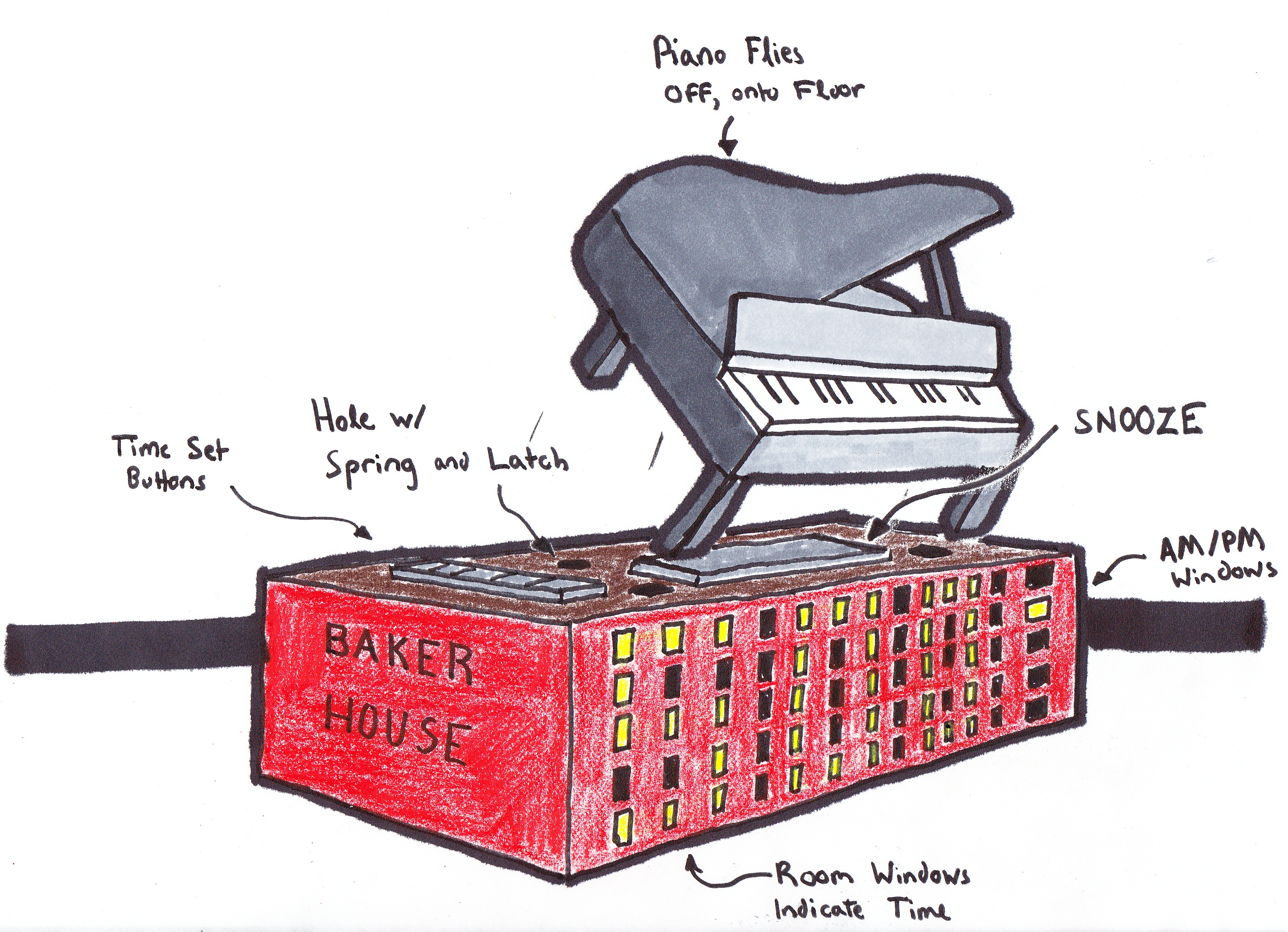
This alarm clock commemorates the baker piano drop by ejecting the piano from "Baker House" when the alarm goes off. The alarm can be temporarily disabled by pressing the snooze button. However, the alarm is not actually reset until the user latches the legs of the piano back in the spring-loaded holes. This forces the user to actually get out of bed to retrieve the piano before the alarm can be shut off.