9.35 Illusion Laboratory
Spring 2023 Auditory Lab

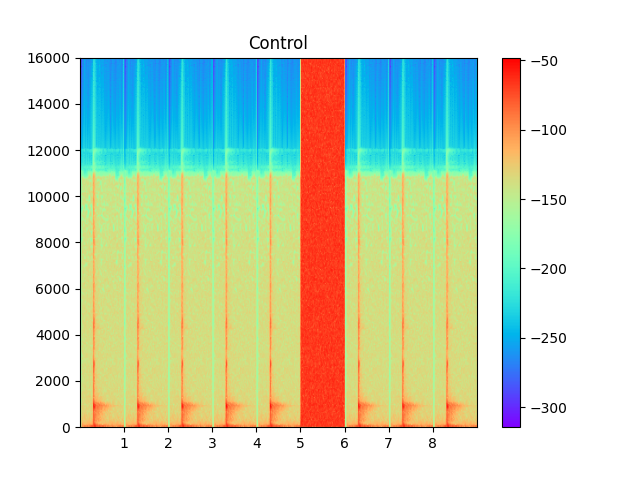
What happens in the filling-in illusion when the sound is non-continuous and instead is event-driven?
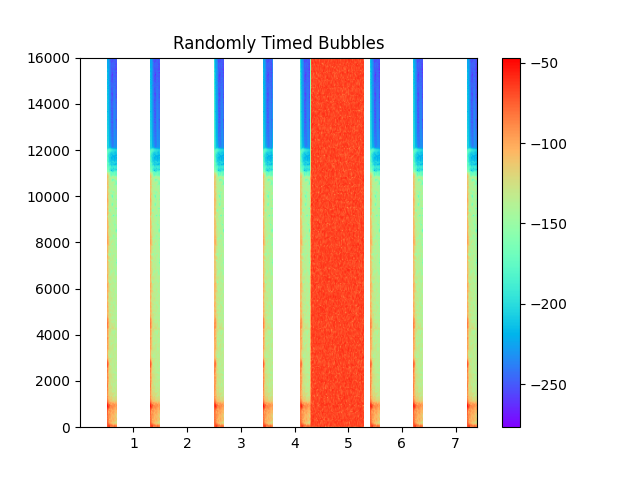
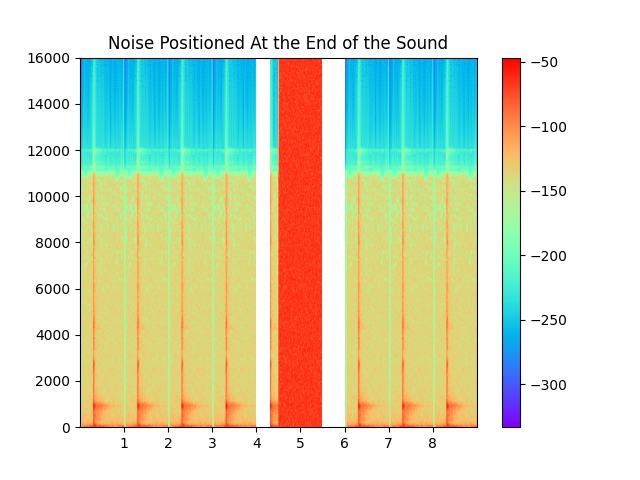
In order to determine how the filling-in illusion works with non-continuous sounds, we used individual pops interspersed with a period of white noise where the white noise covers where a pop would otherwise be (although a pop is not actually present). This is meant to test whether listeners’ minds subconsciously fill in the pop sound during the white noise or not. We also tested different variations of this to determine whether they affect a listener’s perception—or lack thereof—of the pops. These variations are 1) whether the pops occur in a pattern, i.e. at set intervals, or at random times, 2) when the white noise starts relative to the patterned pops (either halfway between pops, immediately after a pop, or immediately before a pop), and 3) whether the length of one or two expected pops are covered by the white noise.
Standard vs. Random Pattern
Standard Pattern (Bubble occurs every 1 second)
Random Pattern (Bubbles offset between 0.1~1 second at random)
Varying Noise Position Relative to Discrete Sound in Standard Pattern
Noise Starts at Beginning of Sixth Sound
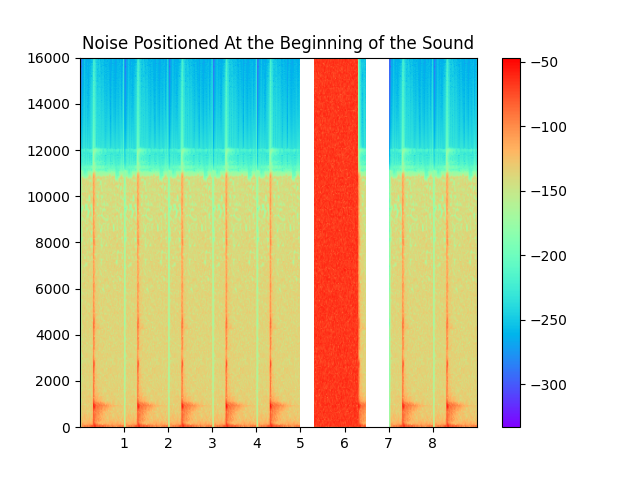
Noise Starts at End of Fifth Sound
Varying Noise Duration in Standard vs. Random Pattern
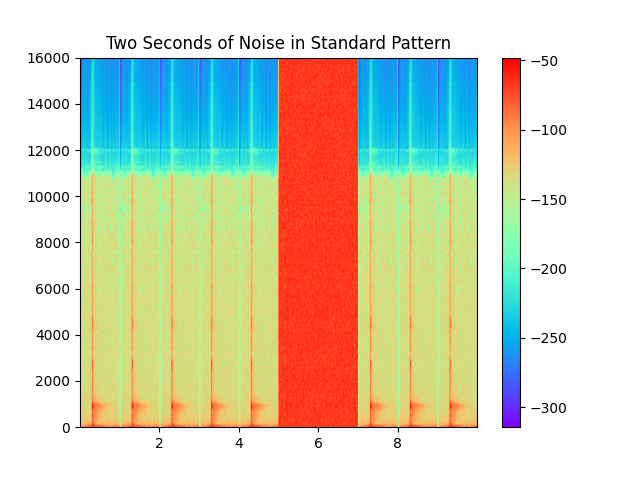
Two-second Noise in Standard Pattern
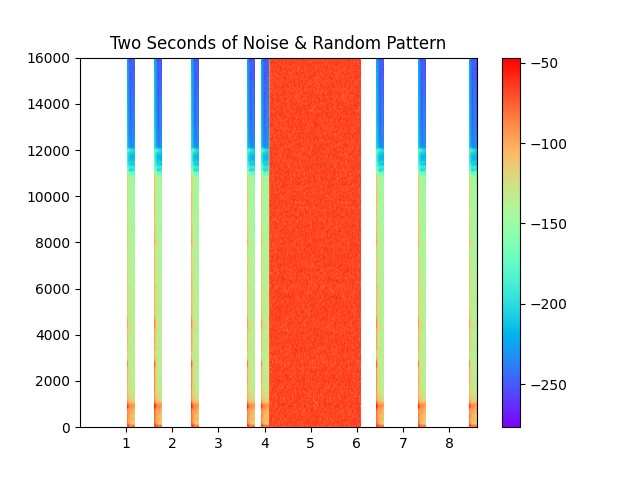
Two-second Noise in Random Pattern
Citations
McDermott, Josh and Richard McWalter. “Illusory Sound Texture Reveals Multi-Second Statistical Completion in Auditory Scene Analysis.” Nature Communications, vol. 10, Nov. 2019, p. 5096.