Green spaces are critical to cities; between the everyday pressures of work, pollution, and traffic, there is a need to escape into something simpler and more foundational to humanity. This is one of the greatest powers that parks have to offer. However, as Spirn writes on page 172 of The Granite Garden, “city plants are a natural resource, but human function and fashion are often more influential than natural processes in determining the location and arrangement of plants. Activities, urban forms and materials, and the infrastructure of central cities create new habitats for plants, many of them hostile”. My site, like many other urban spaces, is heavily developed with everything from corporate spaces (i.e. Genzyme) to upscale restaurants (i.e. café artscience). This leaves little room for well-developed and healthy pockets of plants and natural spaces. Volunteers are plants that grow on their own in cities, often in spaces that don’t offer much in the way of proper soil, water, and light conditions. In the spirit of these volunteers, my site has found ways to sneak in what I think of as ‘relief points’, smaller spaces and points of natural areas to break up the urban monolith and even offer somewhat of an escape for the people who work, travel and live near my site. My site has shown me that there are different ways of varying effectiveness to incorporate nature when there is limited space and cities must think critically about how to work best with the different conditions created by their cities to maximize the health and impact of these smaller, green spaces.
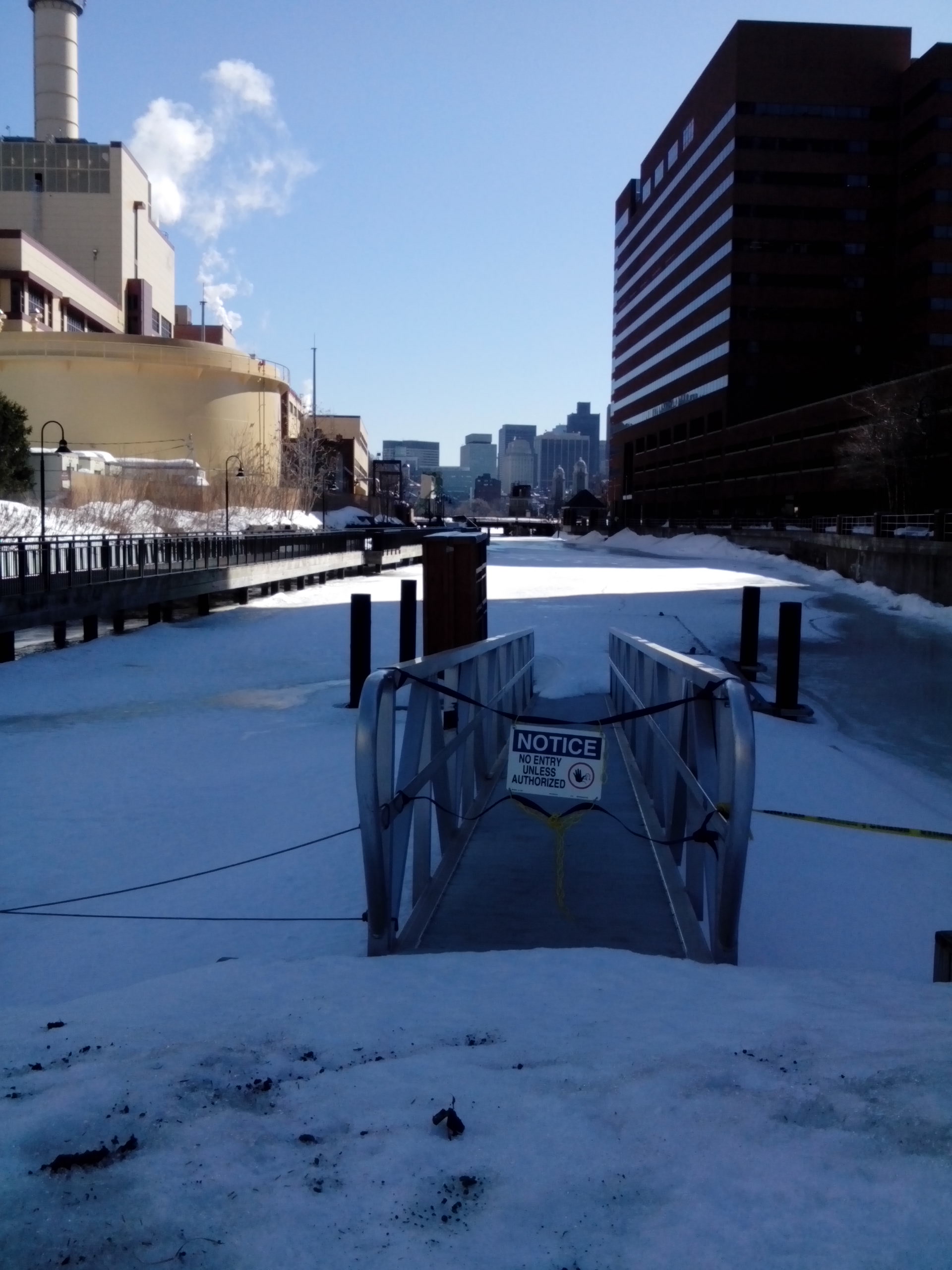 Looking out to Boston from the canal canoe dock
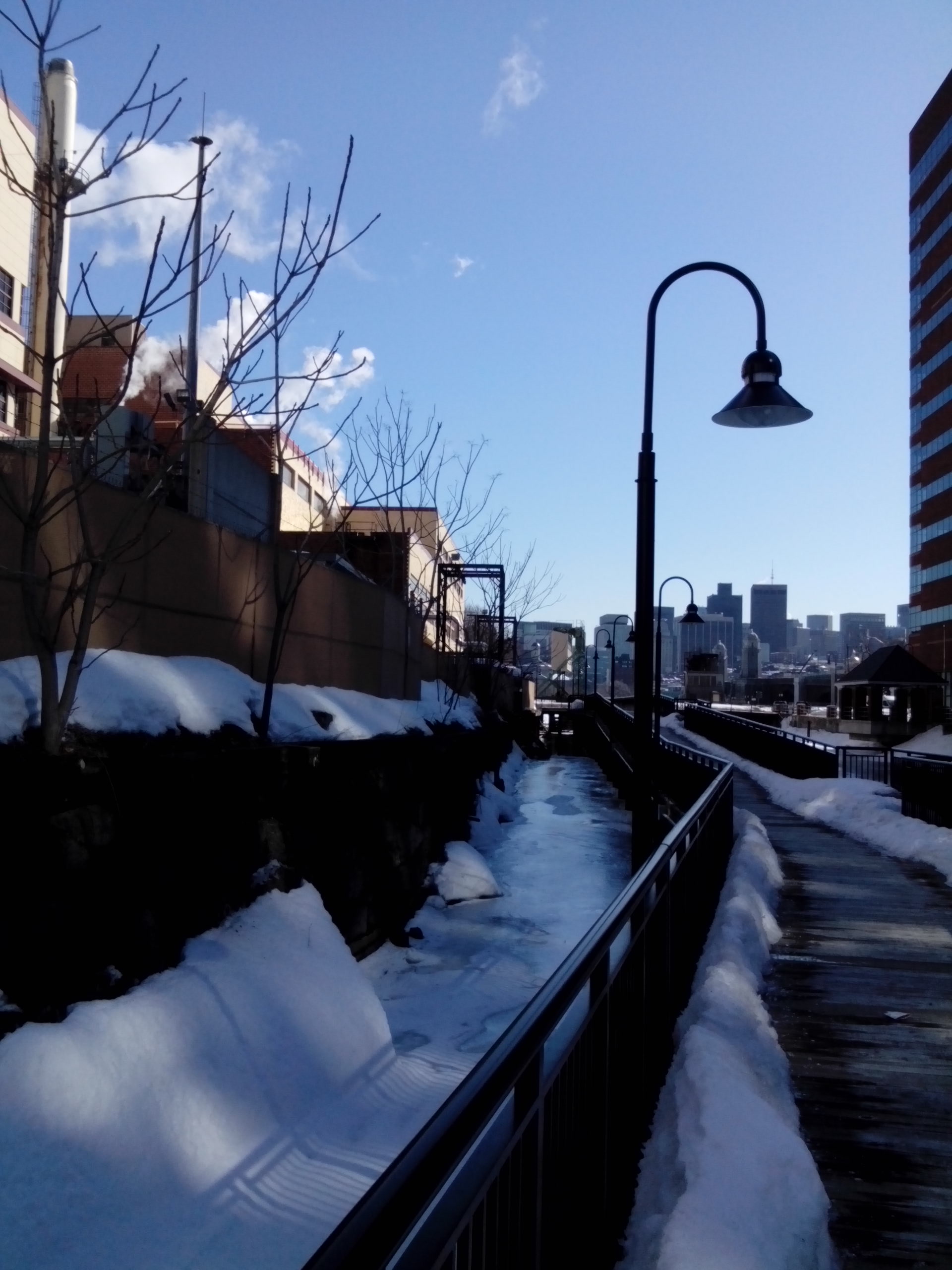 Trees growing from the south facing wall of the Broad Canal
My site’s champion of relief points is the Broad Canal. While small in size, people flock to its boardwalk as a respite to take in the calming waters and wildlife. Its seemingly haphazard location between the Longfellow Bridge and the Veolia plant enhance its abilities to serve as an oasis for those weary of the concrete and steel of the city. As Spirn writes on page 142 of The Granite Garden, “water is a source of life, power, comfort, and delight, a universal symbol of purification and renewal. Like a primordial magnet, water pulls at a primitive and deeply rooted part of human nature”. People come to the Broad Canal to calm themselves, to take joy in the face that there is more to the life than the daily grind. Through the canoeing and kayaking service that is offered on the canal, one can even escape Kendall and Cambridge entirely for the larger pleasures of the Charles River and Boston.
However, it must be noted that despite all of its restorative powers, the Broad Canal is still wedged between Veolia and Liquid Technology, Inc. Right outside of the boardwalk. The banks are dominated by brick buildings and electrical equipment and do not leave much room for plant growth. Despite these poor conditions, plants have found a way. On the wooden poles in the canal, moss can be found growing on the northwest facing side and vines can be found growing on the concrete and over the barbed wire of the south facing canal wall. Pockets of grass squeeze out between the cracks of the canal’s older stone walls. Atop this stone wall there seems to be a small sliver of soil (there is still a thick layer of snow obscuring full vision) and bushes and even trees can be found. There is even less soil and room for growth on the north facing wall, but the occasional tree has still found a way to take root here as well. It can be useful to think of land as having multiple uses, but when I look at my site I think of layers (hence the name of my site, Kendall Layers); because so much of my site is developed by corporate and commercial areas, space is scarce for land with multiple uses. Diversity in use has to find unique ways to make its presence known and volunteers, such as the ones on the Broad Canal set the natural precedent for this kind of approach.
Looking at older maps of Cambridge, it is clear that the Broad Canal now exists as a much shorter version of once it was. In Figure One, a map from 1852, it can be seen that the Broad Canal was once much larger and part of an interconnected system of canals in East Cambridge. This system of canals can be seen extending to the Charles River, which seems to have allowed Cambridge to be an active port. Having access to ocean bound water that allows for commerce draws people and development to that area. My site is an area of heavy commercial and corporate activity presently. The system of canals that once wove through it and connected it to the Charles River set the foundation for the heavy economic activity that now dominates the landscape of my site.
Figure Two contains a map from 1874 and a major reduction in the size and scope of the canal system the Broad Canal used to be a part of can already be seen. The Broad Canal still appears in a size much larger than its present iteration, but many of the canals that it connected to have been filled in.
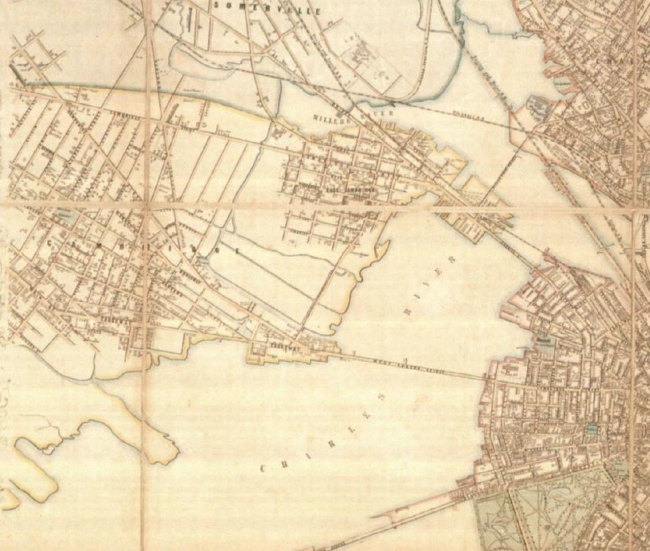 Figure One: Henry McIntyre, Map of the city of Boston and immediate neighborhoods (Boston and Philadelphia, 1852)
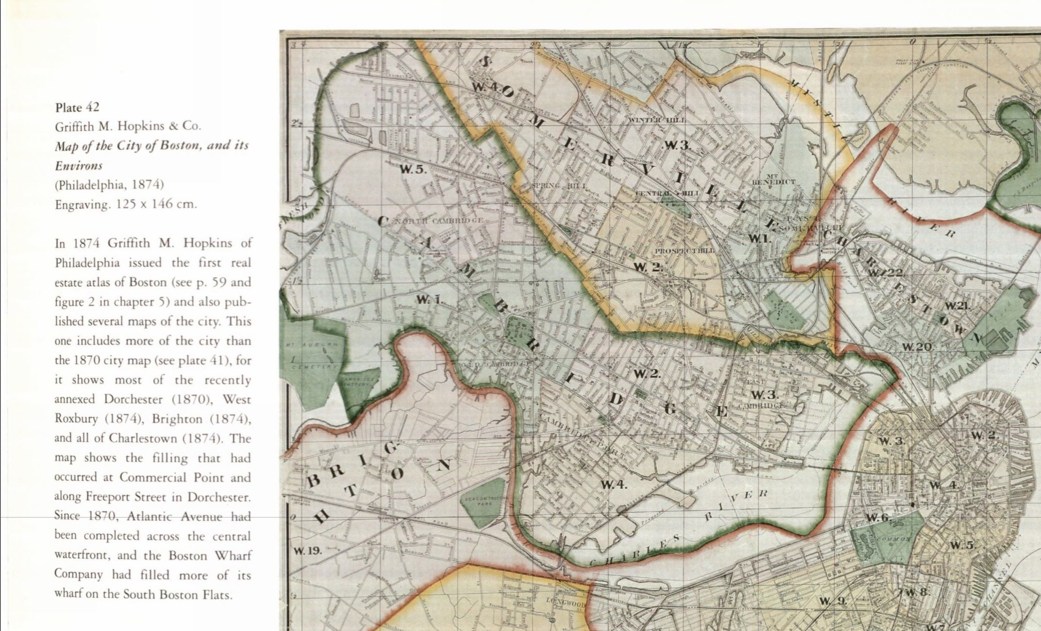 Figure Two: Griffith M. Hopkins & Co. Map of the City of Boston, and its Environs (Philadelphia, 1874)
As seen by exploring my site in the present day, the entirety of the canal system, besides a portion of the Broad Canal has been filled in. With more waterways, I would expect that plants would have had more opportunities to take a foothold in my site. However, as the need for land became the main priority and the canals were filled in, plants and natural spaces in general were pushed out at the hands of human development. This set the foundation for the question of incorporating natural spaces into areas that are already heavily developed that I am using to examine my site now.
To learn about what holds plants back in urban spaces, I thought it best to explore a place where there integration has not been as successful and within my site that occurs on Athenaeum Street. On Athenaeum Street, there are many street trees and they are all stunted in appearance. For the most part they are all confined individually to small, square plots of soil set in either brick held together with mortar or concrete. Both sides of Athenaeum Street are lined with tall buildings that effectively keep the plants beneath them in constant shade. This is full effect near the Athenaeum and First Street intersection heading south towards the river, where the presence of the buildings also creates a slight wind tunnel. As Spirn writes on page 172 of The Granite Garden, “the street tree is an endangered species” and Athenaeum Street does its best to ensure this fate for its street trees by mixing all of these factors together. Considering some of the other options that my site has employed to bring vegetation in, the street trees on Athenaeum seem to have been planted with a poor understanding of the very limited resources that would be available for their growth. But, as stated at the beginning of this paragraph, it’s important to learn from these situations, to make sure other urban vegetation is given the best chance to thrive.
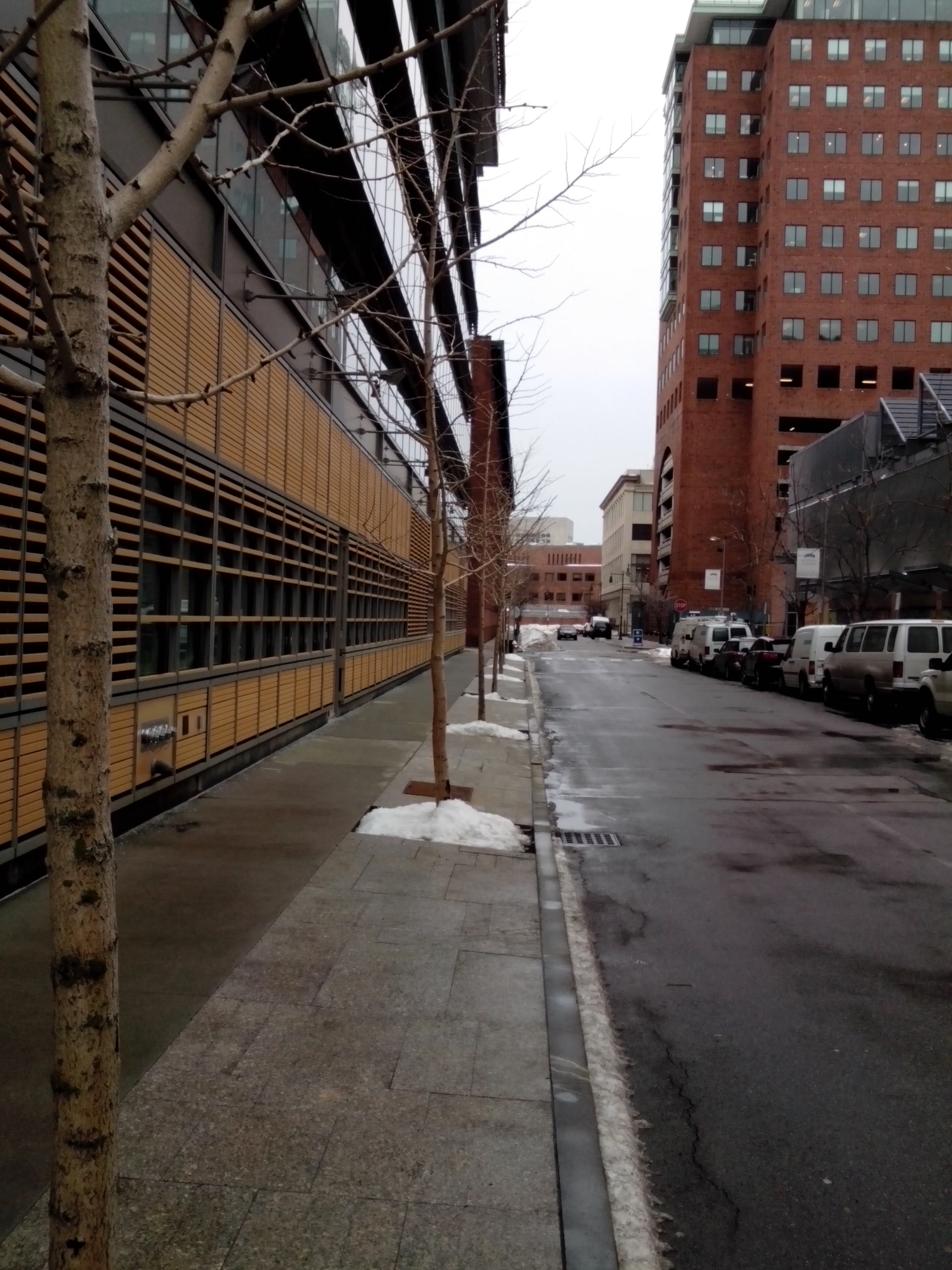 Struggling trees on Athenaeum Street
One of my site’s most interesting responses to its soil scarcity issue is the use of raised beds and pots to introduce some green into the city. With this approach, there is the concession of size: nothing planted in such a manner will grow to be large in size. As Spirn writes in The Granite Garden on page 171, “mature trees arching out over the street is an image to which urban designers and residents alike cling”. There is majesty in being able to contain a massive tree or grove of such trees in the teeming concrete heart of a city, but as seen on Athenaeum Street this proves to be quite the challenge. Even when this challenge is insurmountable, cities will move forward with trees anyways, with weak and sickly results (once again seen on Athenaeum Street). However, with plants in pots and beds, many other things open up. Since smaller plants are easier to cultivate and maintain, there are more options to select from. A smaller size also allows plants to be place in a larger variety of places: ledges, rooftops, stairs, shop fronts, anything big enough to allow for their container.
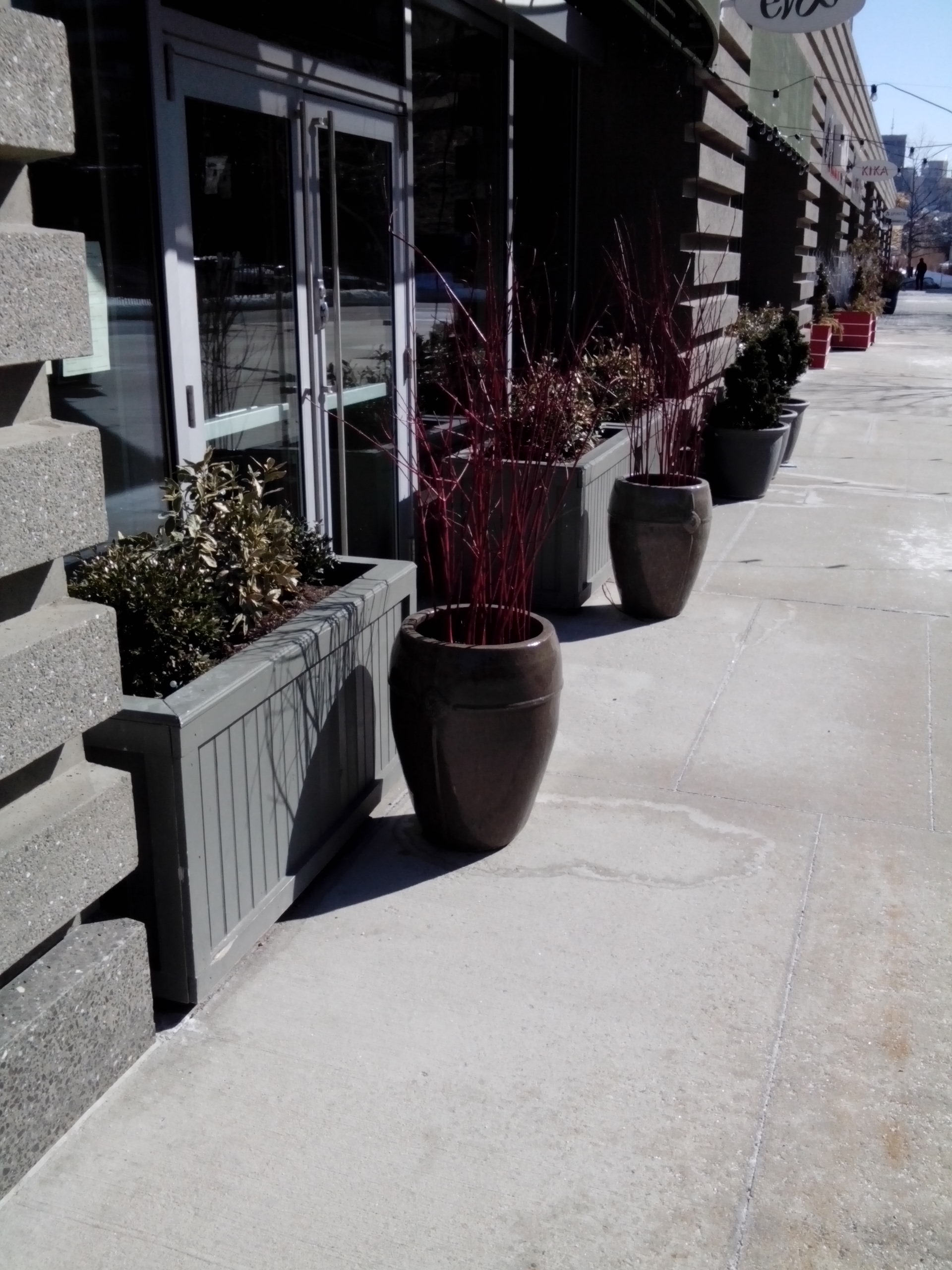
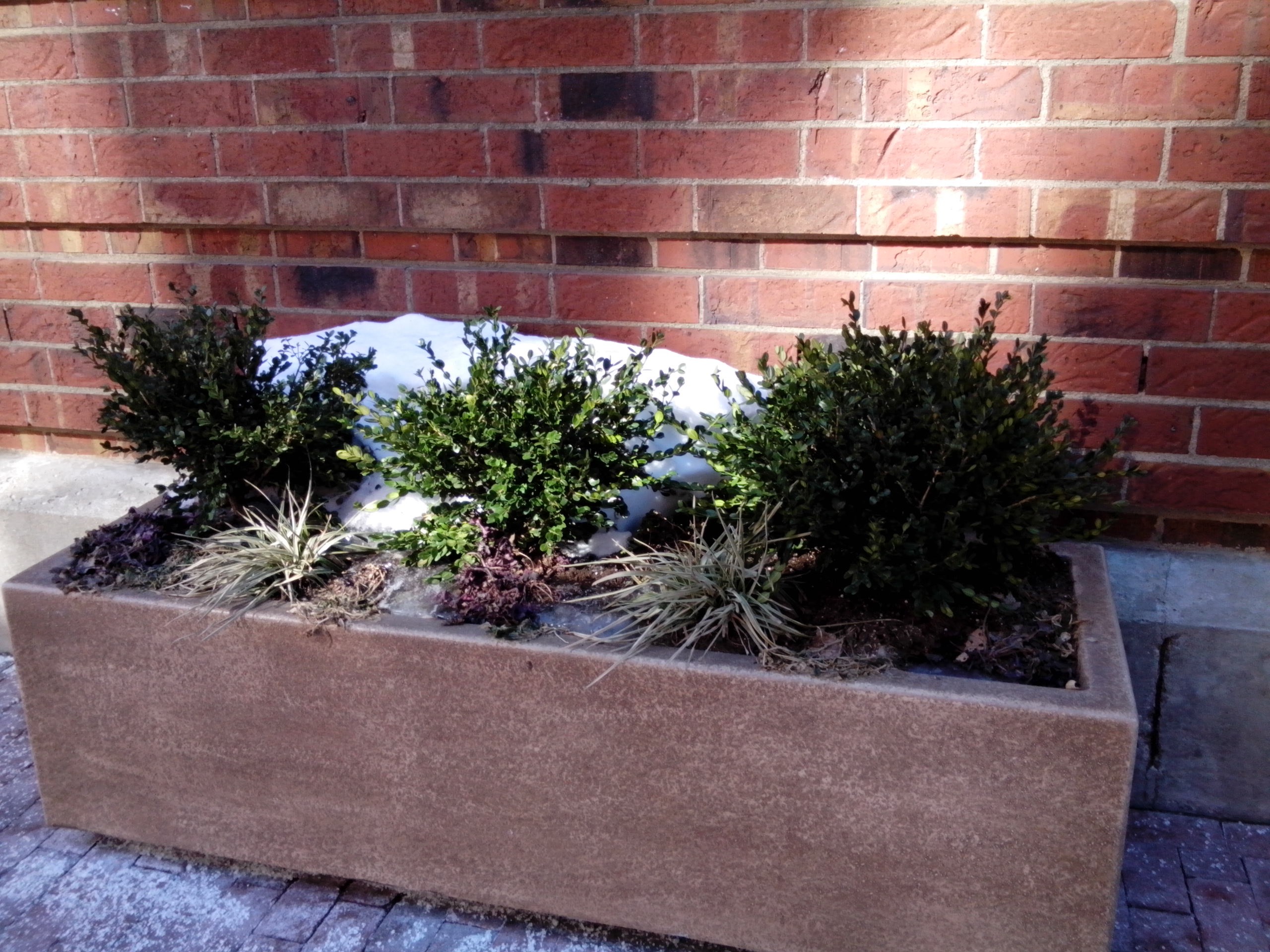 Bushes on Athenaeum Street
The go to potted plant for my site is a bush with reddish-pink branches. They are kept in blue pots and can be found all over my site (in front of a bank, under the ice rink, lining an upscale shopping front, ect.). They are all trimmed to maintain a uniformity in their size (another advantaged allowed by their smaller stature) and seem to be fairly portable. They have been maintained their vibrant colors through the city’s frigid and snowy February, which is something very few plants have done. Since most of the trees in the area drop their leaves for the winter, they come off as skeletal and contribute to the gloom of a long winter. Having plants that can stay green year round, even if they only exist in isolated, potted pockets, contribute to lifting the general mood of the area, especially through brutal winters. Besides the pots, there are scattered wooden beds. In fact the only plants I found on Athenaeum Street that appeared to be comfortable and healthy were some beds of small bushes tucked away behind some street trees.
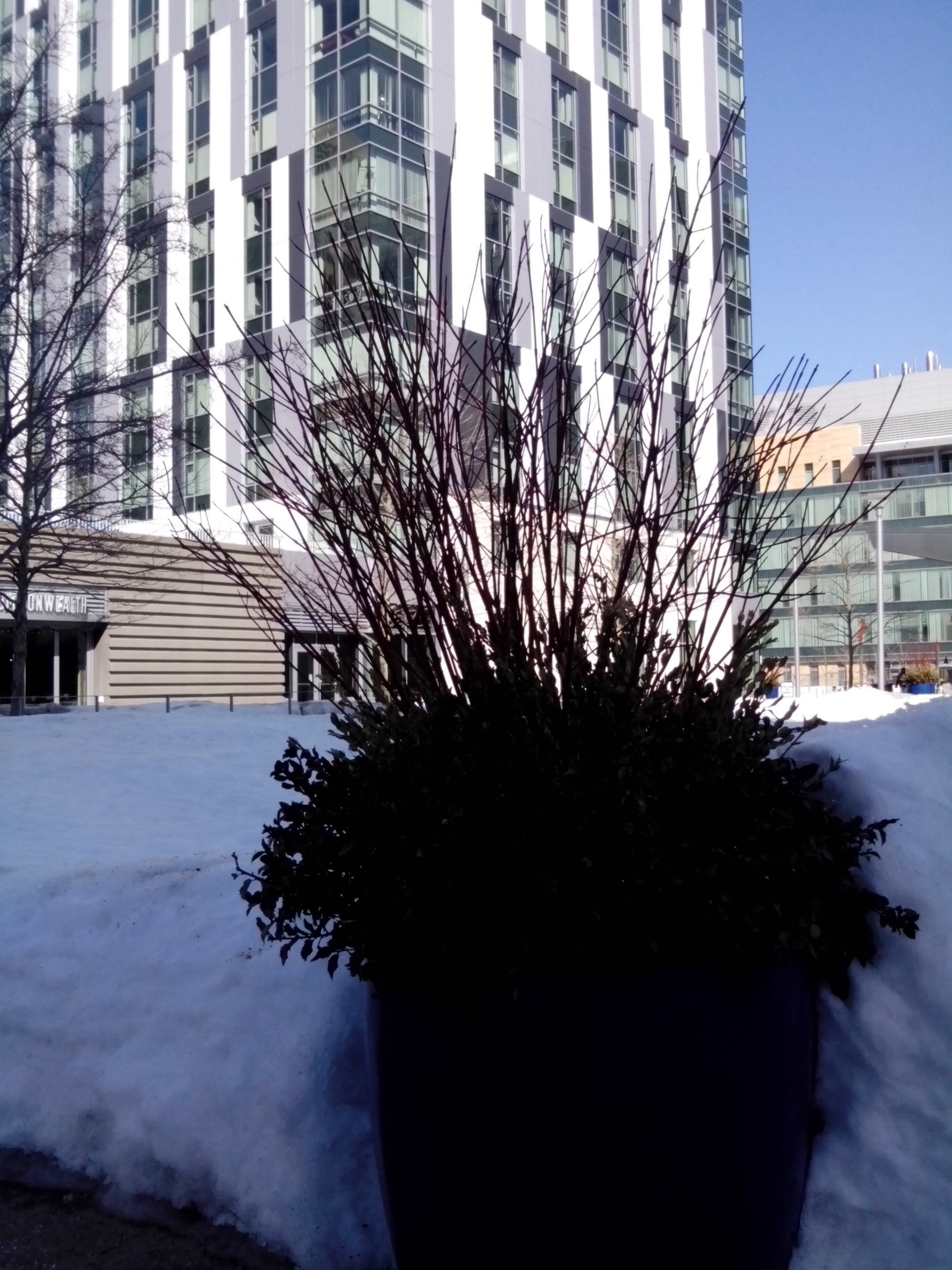 Main potted plant within site
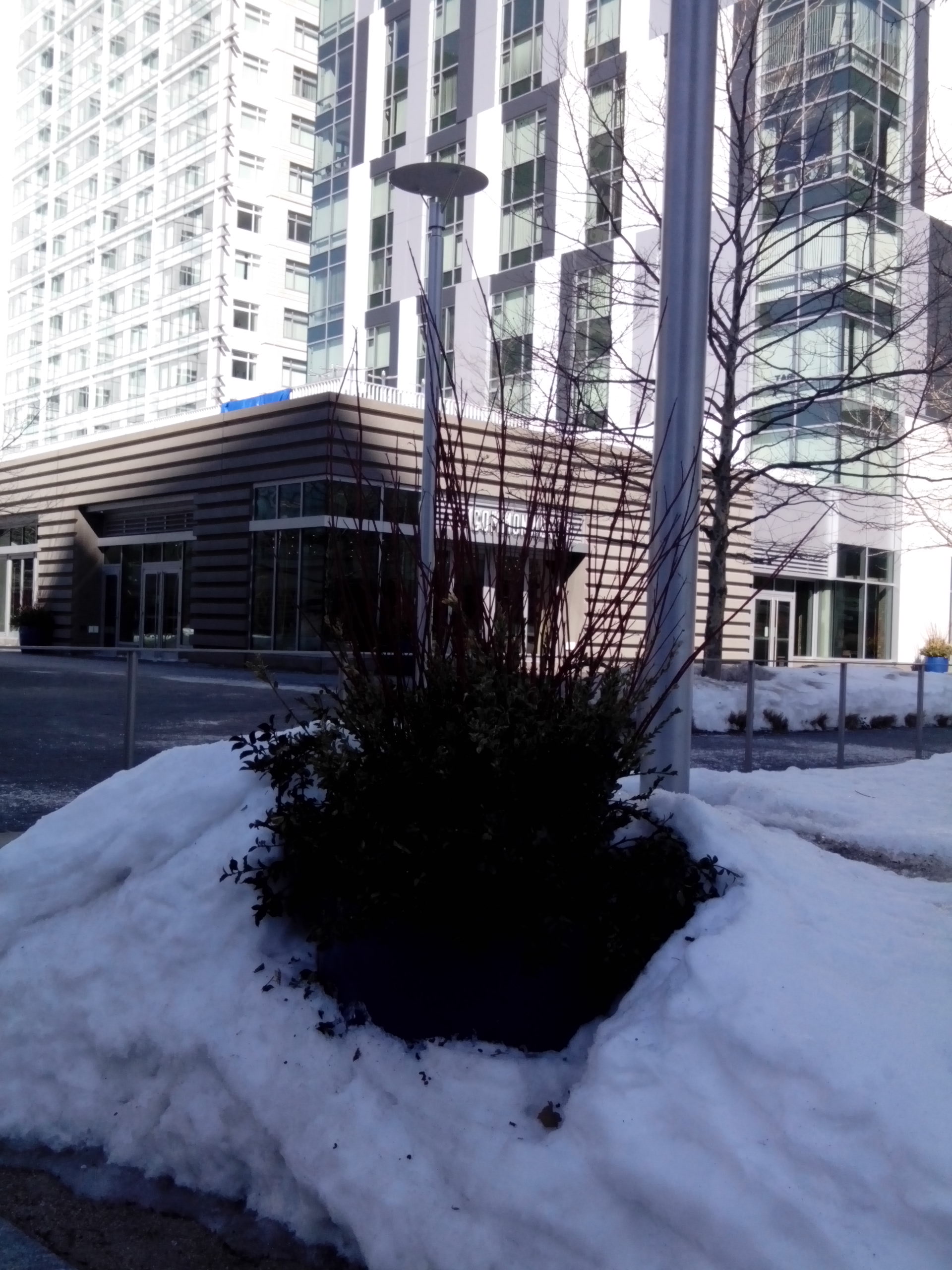
While not truly beds, I wanted to comment that there were some areas just north of the canal, where relatively large swaths of soil where cut out in a concrete plaza so that multiple trees could be planted together. If trees are to thrive large amounts of resources are needed, including space. While still not the ideal situation, this shows a greater understanding of the fact that trees cannot be crammed into a sliver of soil on the edge of a sidewalk. Like trees, people and the cities they inhabit are a part of the natural world and can adapt. Integrating vegetation into urban spaces effectively involves a never ending learning process
I believe one of my site’s best relief points and layering of land uses exists at the Community Ice Skating rink. The rink sits within some hills and an extended patch of soil, is open to the public twenty four hours a day. The land surrounding the rink I described earlier boasts two separate thickets of trees, a few of the potted bushes, and some smaller bushes. During the fall and winter, the ice rink can be employed for recreation and in warmer months the area will burst into a leafy, mini park. This really gripped as being an area that was planned to work very intricately with the conditions provided by nature, particularly climate. The area has multiple uses, but they cannot both be accessed at the same time. This area works with my layering concept, but takes it to an entirely different place, activating its multi functionality on a seasonal, time delay. Those who planned the ice rink also thought through things enough to make sure the vegetation had all the resources needed for good health by maintaining the hills around the rink. Despite being part of the natural world, we as human beings have an odd tendency to be at odds with the natural world they live in. Enabled by our dominance of the planet and our technological advancements, we often fall into combat with our natural surroundings, especially in areas where we are strongly concentrated (i.e. cities) and when we are faced with conditions that displease us (i.e. Cambridge’s long, cold winters). As human beings we often try to push our own agendas of what our natural surroundings most appeasing form is without considering what’s best for those areas and the restrictions built into them. The heavy development of Athenaeum Street is a human modification of a natural area that does not allow for proper tree growth, but street trees were still pushed onto the land to bad results. The ice rink is a small example of developing to the tune of natural world, not against it. As a result, the use of the land is maximized, the vegetation is healthy and we as humans have moved forward with the space in a harmonious and productive way.
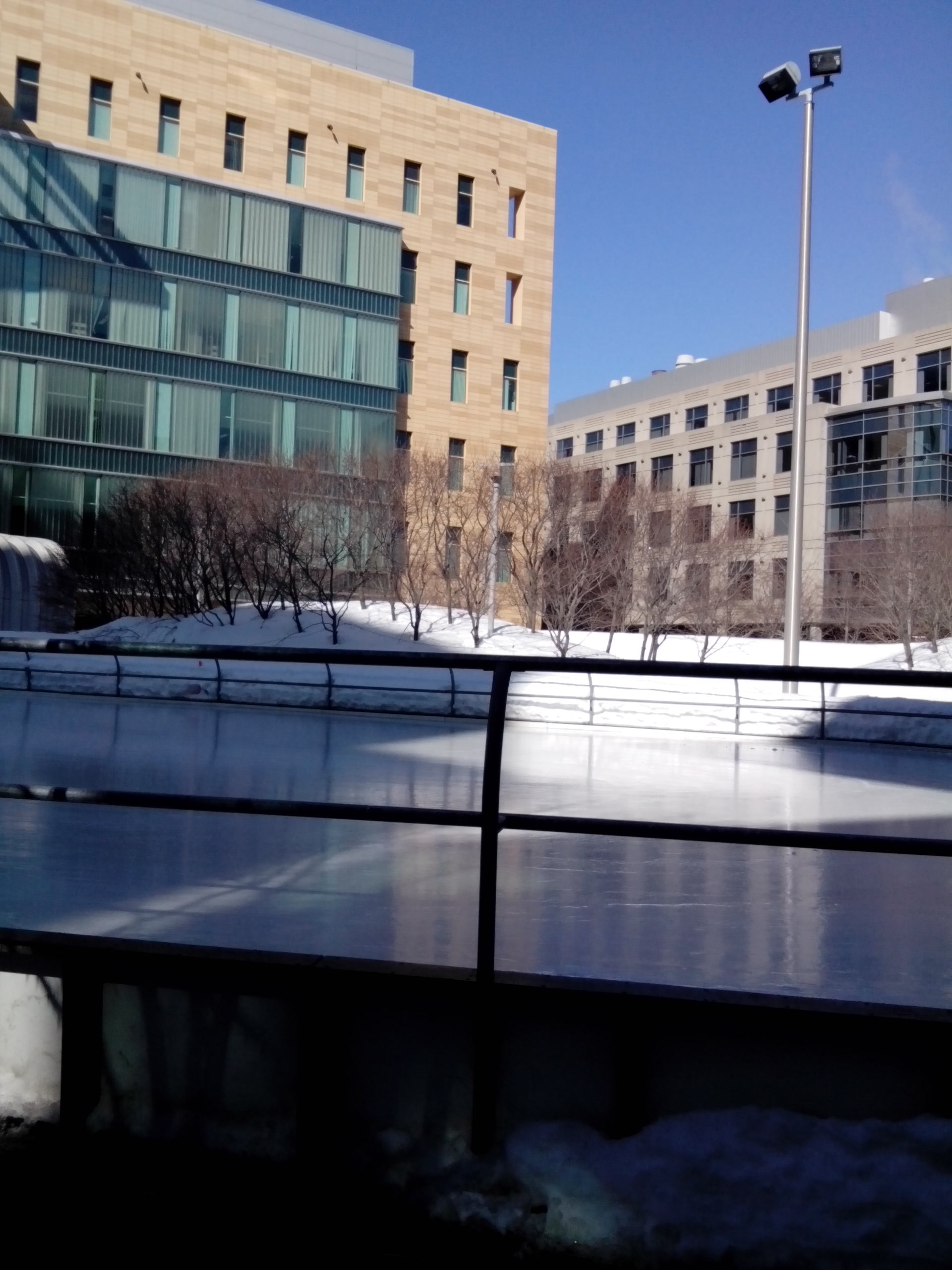 Community Ice Skating
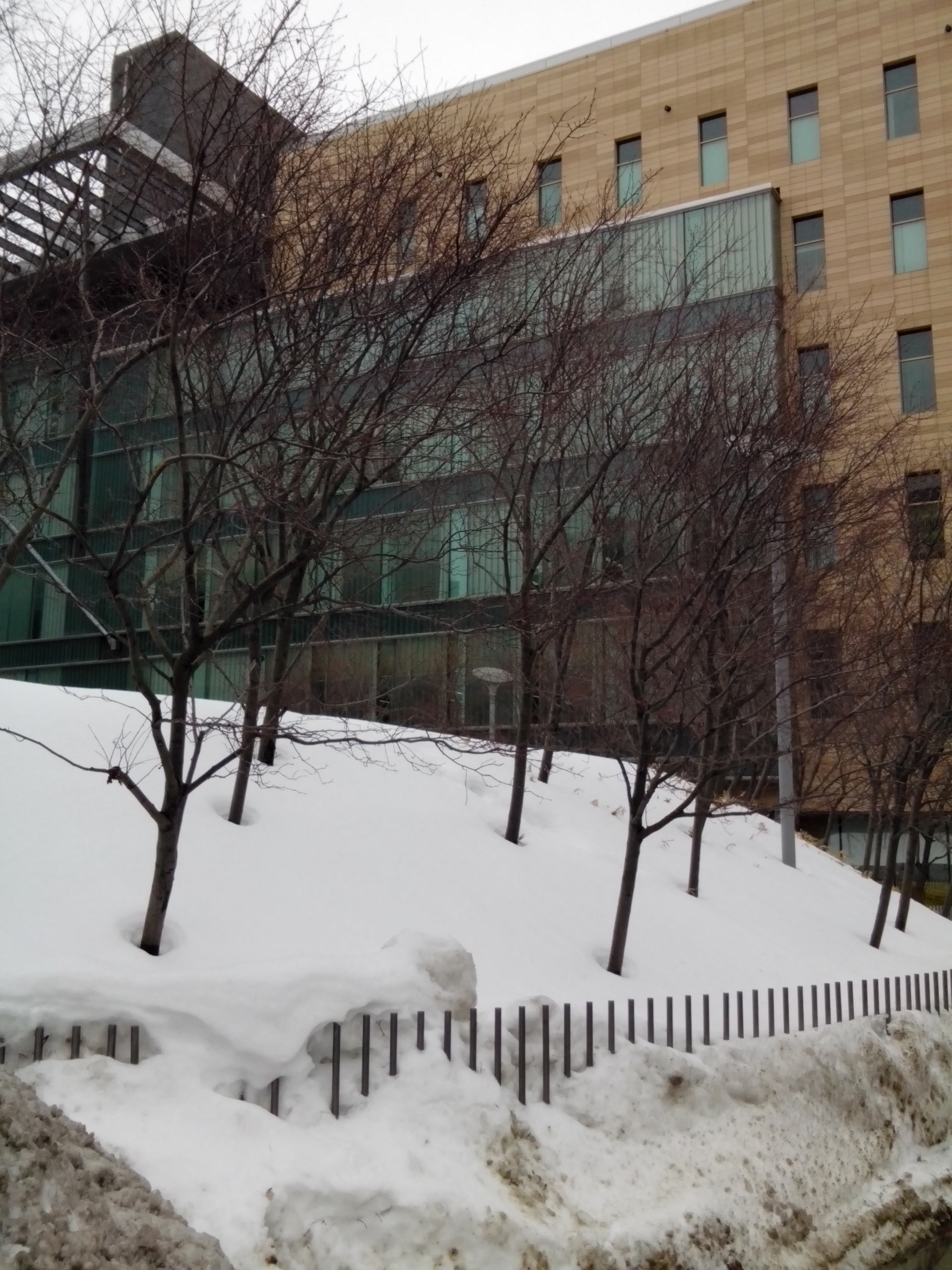 Trees growing on hill surrounding rink
The ice rink has shown me that humans can work very effectively and powerfully with the natural environment at very small scales. This leads me to believe that maybe the healthiest way to have a city interact, shape and be shaped by its natural environment is to look at it on the smallest possible divisions, whether that be a small plaza, a sidewalk, or an alley and thinking about how best to incorporate green spaces in those micro settings. Athenaeum Street takes on the form of a massive alley to me as it approaches First Street and I feel like the few beds of bushes I saw near the end of it is a small sign of a way of thinking that would allow cities to engage and build with the capacities of the natural world we live in to the best of our ability. Instead of thinking what we’d like best to see in our cities and where we can fit it in, which produces struggling street trees one after another, cities should aim to incorporate healthy natural spaces that work within the ever changing, but very natural environment of the city. Volunteer plant species have given us an example to follow and it is up to us to follow their vision and master it. Cities should not be convoluted masses of unbridled development which making living and working a chore. With relief spots we can improve our own health, the health of our cities, and the health of the world.
All photos besides acredited maps taken by author