Quick Look
Relative humidity
Relative humidity is a measure of how much water a parcel
of air contains as compared to saturation at a given temperature. It
is calculated as
| RH = ed / em | em .. mean vapor pressure
(as measured) ed .. vapor pressure of air parcel at the dew point temperature – dew point is the temperature to which the parcel would have to be cooled down in order to become saturated. |
| ed = 6.11 * e (17.27*Tm)/(Tm+237.3) | Tm.. Temperature measured |
Relative humidity is plotted below in figures 1a-d for
Salalah and figure 2a-d for Masirah. There is no monoton trend recognizable.
Lifting Condensation Level
The lifting condensation level is the level at which
a raising air-parcel becomes saturated (because pressure drops as it
rises). Under favorable conditions, for example when air is forced upwards
by mountains as it is the case in Dhofar, the lifting condensation level
coincides with the anticipated cloud base level.
Knowing the relative humidity it is possible to estimate the lifting
condensation level using 2 different methods:
1. Georgakakos and Bras (1984) propose the following formula to estimate the cloud base level in terms of pressure level:
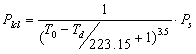 |
Plcl .. Pressure the
lifting condensation level T0 .. Temperature measured Td .. Dew point temperature – temperature to which a parcel would have to be cooled in order to become saturated (without adding moisture) Ps .. surface pressure |
Figure 3a and 4a are plots of the climatology of the lifting condensation level n mbar.
2. If using the temperature lapse rate per gain in height, one can calculate the Lifting Condensation level in m as follows:
| hlcl = Cp / g *
(Tm - Td) = 102 * (Tm - Td) |
Cp .. specific heat capacity in J/(Kg*K) |
This is a very simplistic method and shall just give us an idea how high (in m) the clouds over Salalah potentially are. Figure 3b and 4b show the climatology of cloud base in Salalah and Masirah as estimated with this method.
Relative Humidity
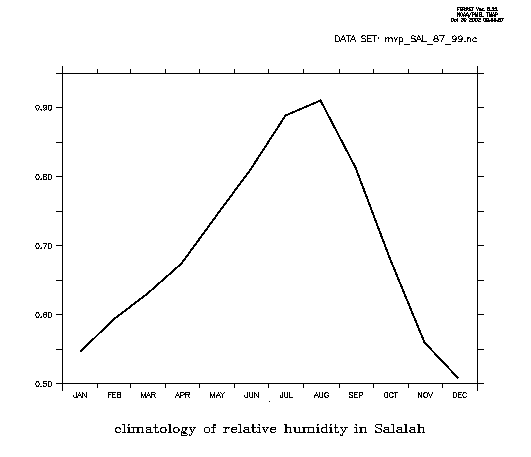
figure 1a: climatology of relative humidity in Salalah, calculated for
1987-1999
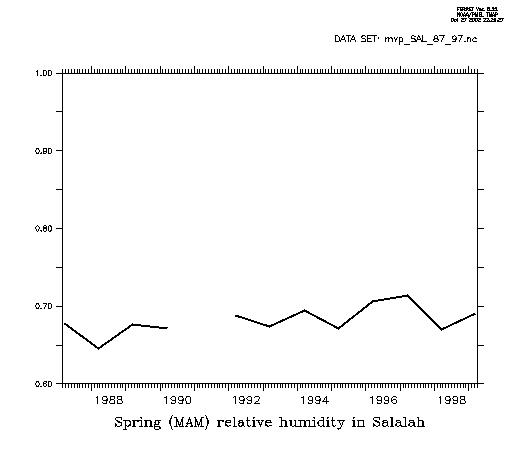
figure 1b: time series of relative humidity in Salalah in spring
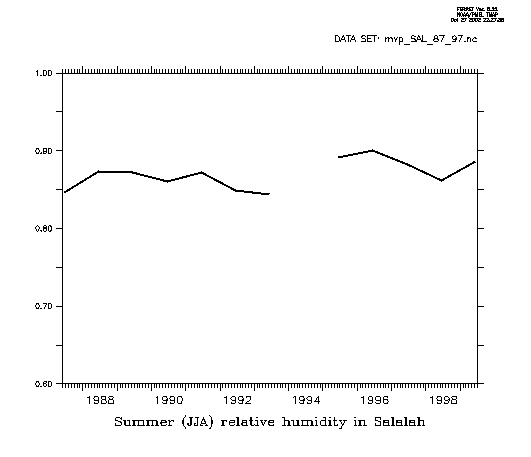
figure 1c: time series of relative humidity in Salalah in summer
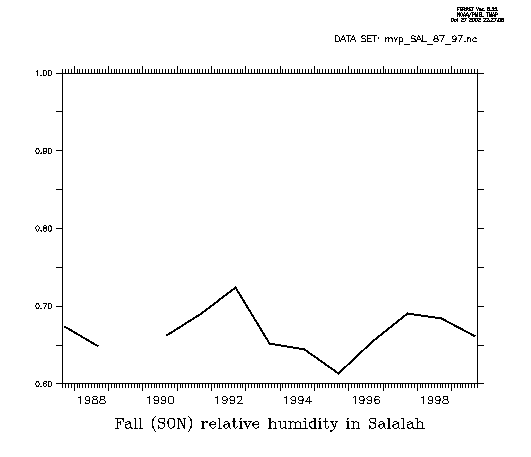
figure 1d: time series of relative humidity in Salalah in summer
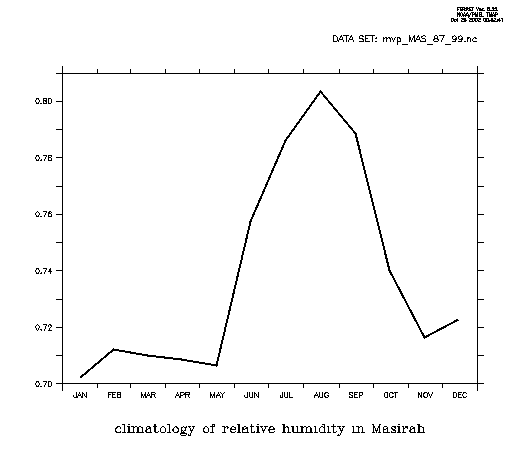
figure 2a: climatology of relative humidity in Masirah, calculated for
1987-1999
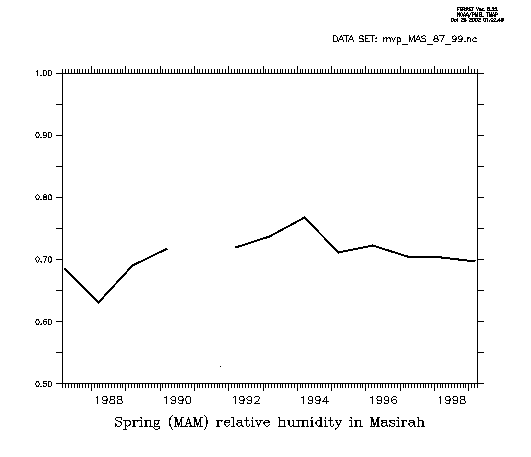
figure 2b: time series of relative humidity in Masirah in spring
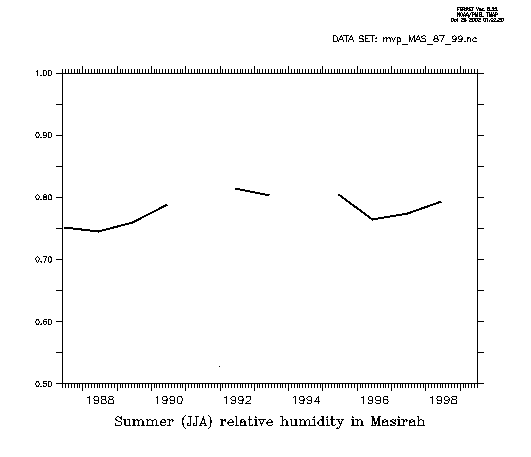
figure 2c: time series of relative humidity in Masirah in summer
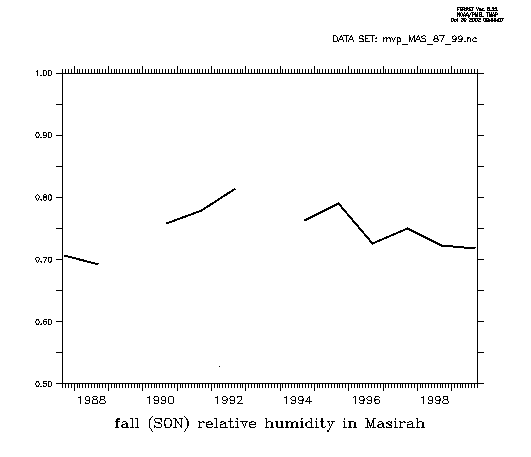
figure 2d: time series of relative humidity in Masirah in summer
Lifting Condensation Level
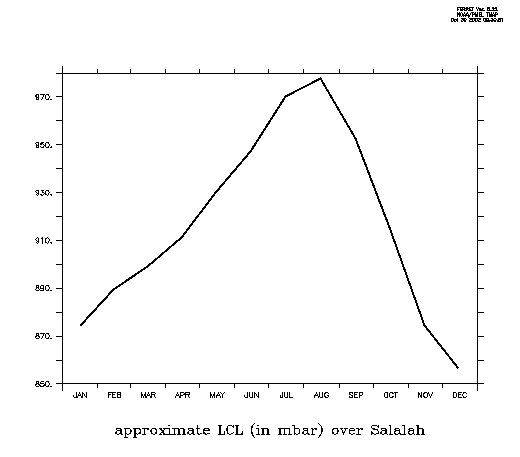
figure 3a: climatology of Lifting Condensation Level in Salalah (in
mbar) calculated after Georgakakos and Bras (1984) for 1987-1999
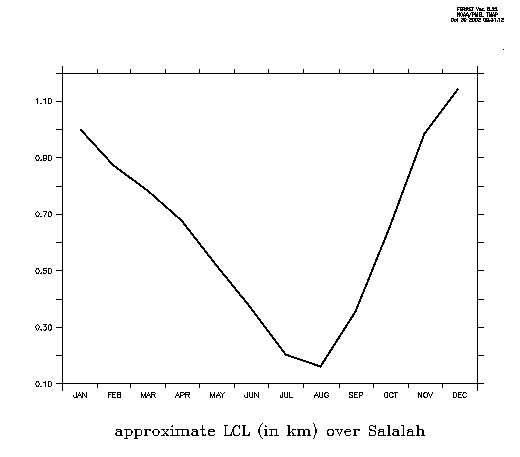
figure 3b: climatology of Lifting Condensation Level in Salalah (in
km) calculated using the temperature lapse rate for 1987-1999
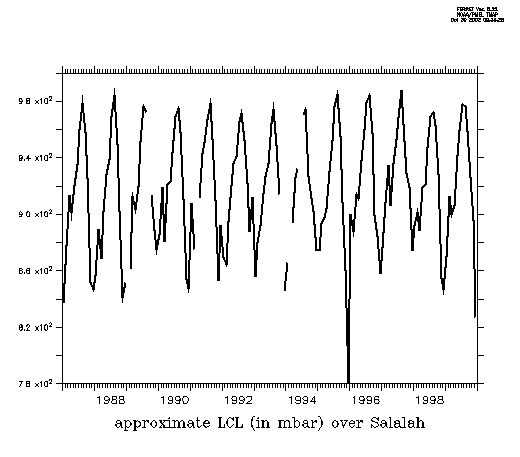
figure 3c: time series of Lifiting Condensation Level in Salalah (in
mbar) calculated after Georgakakos and Bras (1984)
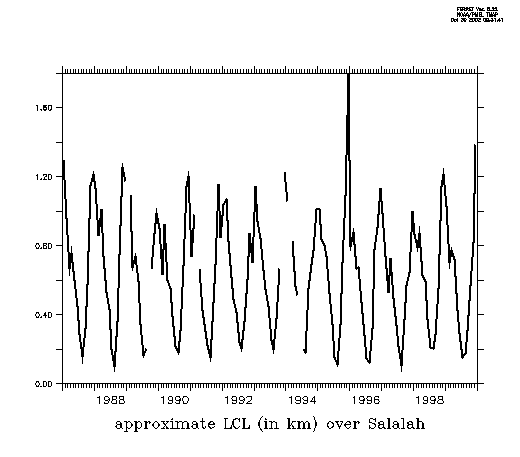
figure 3d: time series of Lifting Condensation Level in Salalah (in
km) calculated using the temperature lapse rate
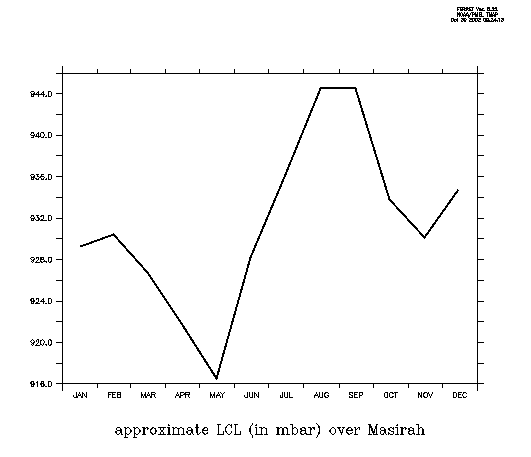
figure 4a: climatology of Lifting Condensation Level in Masirah (in mbar)
calculated after Georgakakos and Bras (1984) for 1987-1999
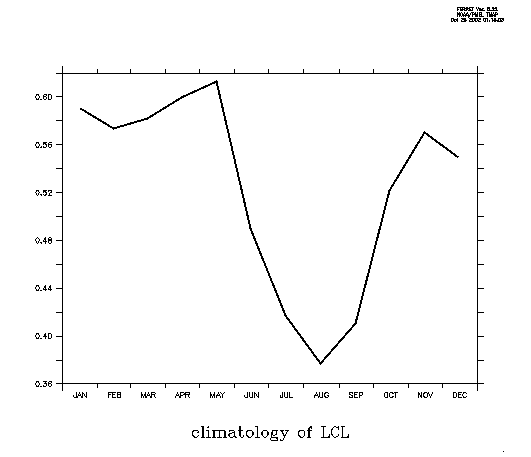
figure 4b: climatology of Lifting Condensation Level in Masirah (in
km) calculated using the temperature lapse rate for 1987-1999
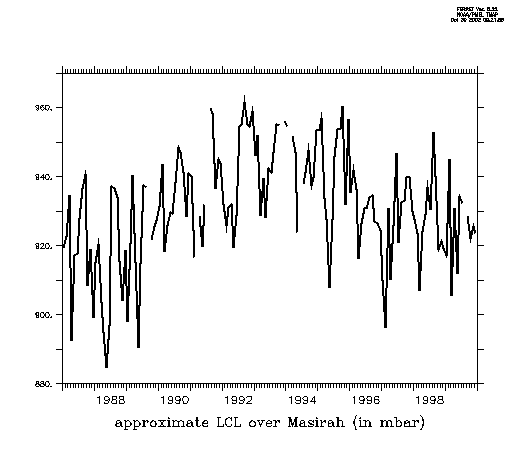
figure 4c: time series of Lifiting Condensation Level in Masirah (in
mbar) calculated after Georgakakos and Bras (1984)
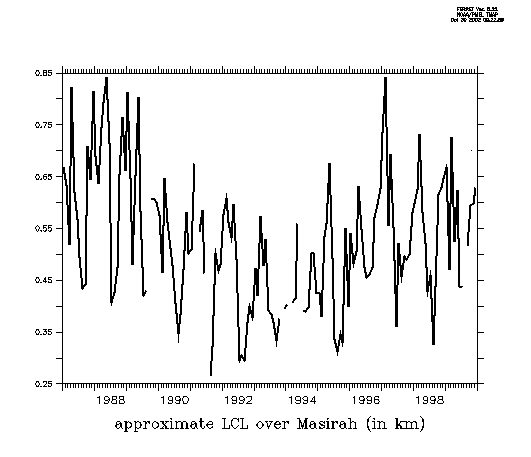
figure 4d: time series of Lifting Condensation Level in Masirah (in
km) calculated using the temperature lapse rate
Reference
Georgakakos, K.P. and Bras R.L. (1984). A hydrologically useful station precipitation model.1.Formulation. Water Resources Research, 20 (11), 1585-1596.