Dan Huttenlocher
Dean
MIT Schwarzman College of Computing
Panasonic Professor
Computer Science and AI & Decision-Making
Dept. of Electrical Engineering and Computer Science
Office: 45-301
Mailing Address: MIT, 77 Mass. Ave.,
Cambridge, MA 02139
Email: last name at mit.edu
Assistant: Eric Fletcher
Brief Bio. Daniel Huttenlocher is the inaugural dean of the MIT Schwarzman College of Computing. Previously he helped found Cornell Tech, the digital technology oriented graduate school created by Cornell University in New York City, and served as its first Dean and Vice Provost. His research and teaching have been recognized by a number of awards including ACM Fellow and CASE Professor of the Year. Huttenlocher's main research interests are in computer vision, social media, and understanding AI. He has a mix of academic and industry background, having been a Computer Science faculty member at Cornell, researcher and manager at the Xerox Palo Alto Research Center (PARC), and CTO of a fintech startup. He served as a member and as the chair of the board of the John D. and Catherine T. MacArthur Foundation, and currently serves as a member of the boards of Corning Inc. and Amazon.com. He received his bachelor's degree from the University of Michigan, and master's and doctorate from MIT.
Research and Scholarship
My research often bridges between academic subfields and between academia and industry. During the past decade I've primarily served in organizational leadership roles, leaving more limited time for research.
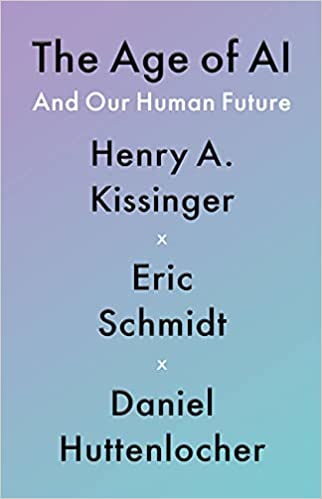
In the past several years I've been concerned with how to develop a better understanding of the broader implications of AI, and have co-authored the 2021 book The Age of AI: And Our Human Future, which aims to engage people in more in-depth conversation about how AI is changing the nature of what it means to be human.
Some interviews that Eric Schmidt and I have done about the book include the Hidden Forces podcast and a CHM Live conversation with Computer History Museum CEO Dan'l Lewin.
 Over the years I've developed a number of algorithmically-oriented computer vision techniques. The super-pixel segmentation method and Hausdorff distance methods that I helped create remain widely used, even in this era of deep learning. Hausdorff based image compression software that we created at Xerox nearly 25 years ago is also still used in document scanners.

I worked on early studies of the first online social networks such as group formation on LiveJournal, and have continued to work on social network analysis.
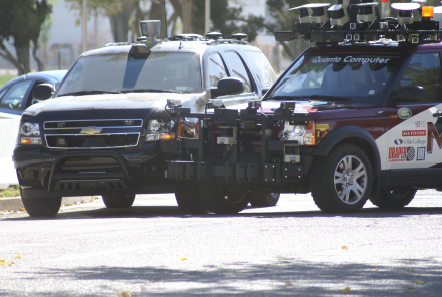 I helped lead a team at Cornell that developed one of the first self-driving cars as part of the DARPA Urban Challenge. Our vehicle was involved in the first fully autonomous two-car collision during the race (with the vehicle from MIT).
Opinion Pieces
Humans Are to Blame for AI Failures (The Wall Street Journal, September 2026): This piece argues that while tasks are increasingly delegated to AI it cannot take on the accountability for them, and that humans and institutions which deploy this technology need to also ensure appropriate independent oversight.
ChatGPT Heralds an Intellectual Revolution (The Wall Street Journal, February 2023): Co-authored with Henry Kissinger and Eric Schmidt, this essay outlines how generative AI alters human cognition and challenges our relationship with knowledge, posing a philosophical shift not felt since the Enlightenment.
The Challenge of Being Human in the Age of AI (The Wall Street Journal , November 2021): Co-authored with Kissinger and Schmidt, this piece argues against extreme reactions to AI (complete deference vs. total resistance) and advocates for a middle course shaped by human values and dignity.
The Metamorphosis (The Atlantic , August 2019): An early collaborative essay co-authored with Kissinger and
Schmidt, detailing how AI-driven platforms (like AlphaZero in chess) achieve
results beyond human constraints, signaling a fundamental shift in how humanity
will construct and understand reality.
Computing Education
Computational Thinking in the AI Age. Computer Science and related computing fields are increasingly important in today's world where almost everything depends on computation. This is all the more the case with the rise of AI coding tools and AI agents for software development. I am often asked what Computational Thinking is and why it's relevant in the AI age. These slides provide a brief explanation.
Integrating computing concepts with other fields of study can be challenging in the discipline-centric educational structure of university education. The Common Ground for Computing and AI Education complements department-specific offerings, bringing together expertise from multiple departments to infuse forefront computing and AI concepts with other fields. Common Ground classes are offered with more than 20 departments at MIT, co-taught with their faculty and helping meet educational needs of their students.
Select Events
Fireside Chat on Hallucinations, Hype and Realities of AI
at MIT Technology Review EmTechAI, April 21, 2026
Campus Lecture on the Age of AI
at EPFL, October 4, 2024
Discussion on Wicked Problem: A.I. and the Future of Everything
with Walter Isaacson and Eric Schmidt at Aspen Ideas Festival, June 26, 2023