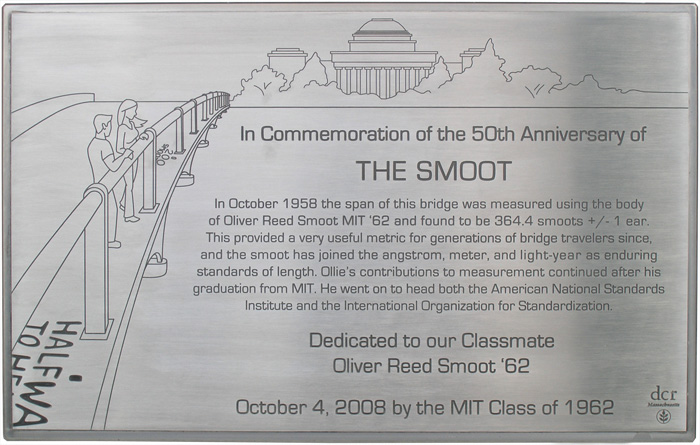
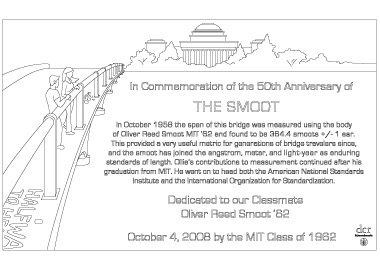
The Challenge: Under the commission and oversight of the MIT Class of 1962, create a long-lasting commemorative plaque which conveys the story and meaning of the "smooting" of the Mass. Ave. Bridge.
Technical Approach: I began by thinking about what role the bridge played in my life as an MIT student, and how the smoot markings on the bridge augmented that experience. The bridge is both a means of travel and escape. Winter journeys are particularly memorable, and the markings (when not obscured by snow) give hints as to the proximity of warmth. Midway across the bridge are the words "Halfway to Hell" and it is common during warm weather to see couples enjoying the view of MIT and Boston from this location. Working closely with my friend and artist Melissa Rothstein, and under the guidance of MIT Hobby Shop Director Ken Stone, a design was created and iterated upon which satisfied both the Class of 1962 and our own inclinations. An aluminum prototype plaque was machined at the MIT Hobby Shop to validate the proposed manufacturing processes, and was unveiled in an October of 2008 Smoot Day ceremony. The final titanium plaque was then manufactured, a concrete post was co-designed with Ken Stone, and the pair was mounted at the head of the Mass. Ave. bridge in time for the 2009 MIT graduation ceremony.
Selected Design Features: Titanium was chosen as the material for the plaque because of its coolness factor and corrosion resistance. Contrast was achieved between the artwork and the plaque\'s surface thru a multi-step process which involved first applying a black plasma vapor deposition coating to the titanium and then removing the coating from the surface using a power sander. This extremely durable coating was selected as an alternative to paint, and is expected to last well beyond the life of the bridge.
|
|
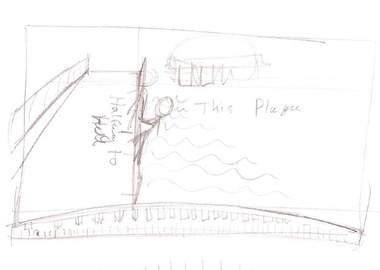
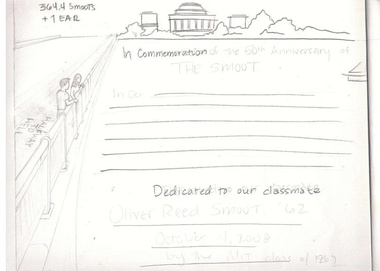
| An early concept sketch. | Melissa Rothstein's take on the concept. |
|
|
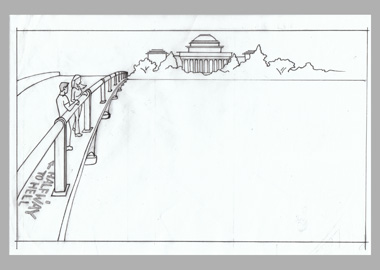
| Melissa's finished drawing, inked and ready to be traced in Adobe Illustrator. | After six reviews by the Class of 1962, and many iterations, the artwork is finalized and ready for machining. |
|
|
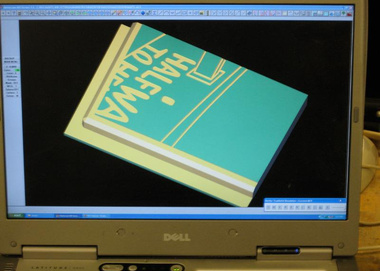
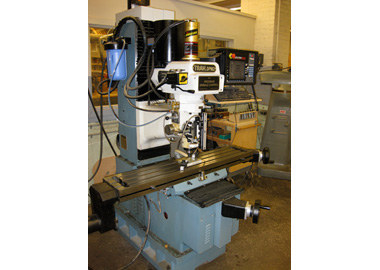
| CNC toolpaths were generated using a computer aided manufacturing software package called MasterCAM. | The MIT Hobby Shop's ProtoTrak CNC milling machine was used in most of the fabrication steps. |
|
|
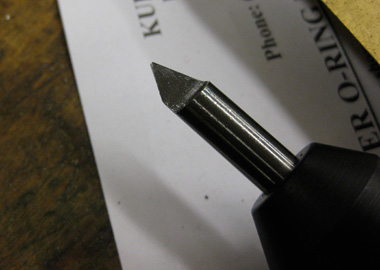
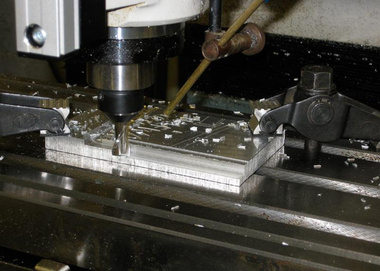
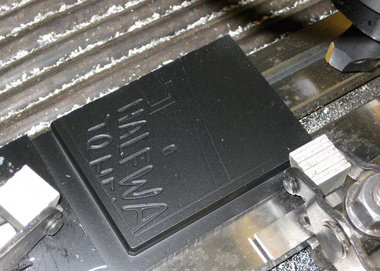
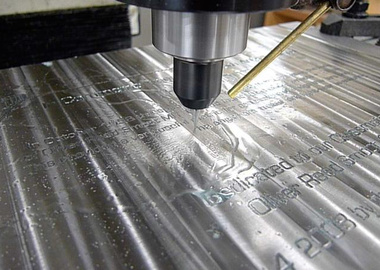
| Both the prototype aluminum and final titanium plaques were engraved using tapered carbide bits with tip diameters ranging from 0.005" to 0.030". | A small corner of the design was machined to test out fabrication and finishing ideas. |
|
|
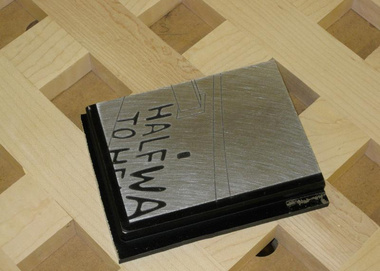
| High contrast was achieved by first painting and then flycutting the surface of the plaque. The titanium version used a PVD finish instead of paint. | This finished sample proved out the overall fabrication strategy. It also informed the eventual decision to darken the artwork but not the border. |
|
|
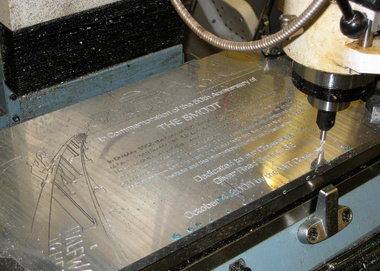
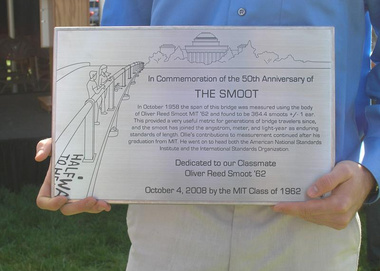
| A complete prototype was machined out of cast aluminum plate to verify all toolpaths. | The finished aluminum prototype underwent the same processes as the initial test piece above. |
|
|
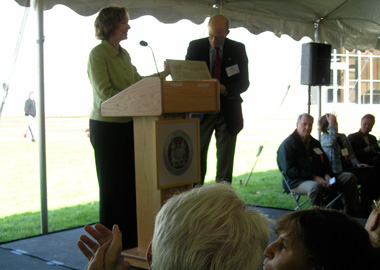
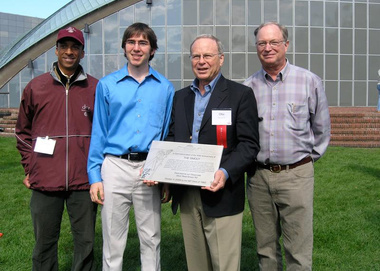
| MIT President Susan Hockfield presented the prototype plaque during the Smoot Day ceremonies on October 4th, 2008. | Ollie Smoot poses with myself, Ken Stone, and a representative from the Department of Conservation and Recreation. |
|
|
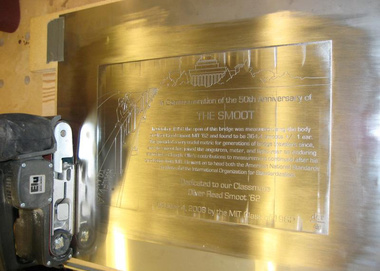
| Work on the titanium plaque commenced in the Spring of 2009. | Ken put significant effort into removing machining marks from the plaque's surface. |
|
|
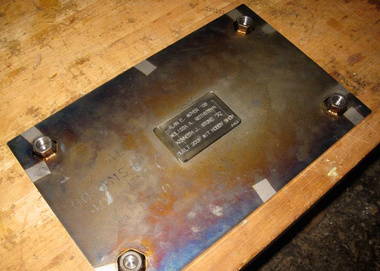
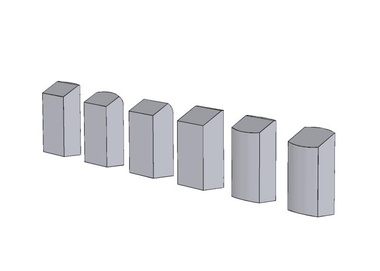
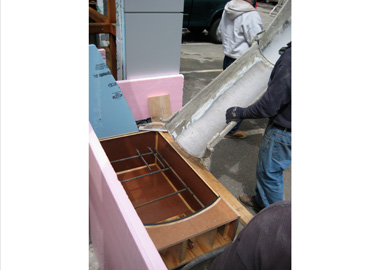
| After coating, the back of the plaque was signed. The large titanium nuts were welded prior to machining, and are involved in the mounting system. | Ken and I worked together to design a concrete post to house the plaque. |
|
|
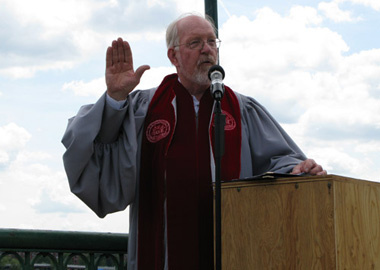
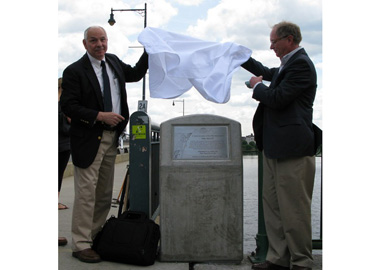
| The post was cast by the same people who poured the roof of the new Koch cancer research building. | An unveiling ceremony was held in June of 2009, slightly before MIT's graduation ceremonies. The Institute Chaplan bestowed a blessing on the plaque. |
|
|
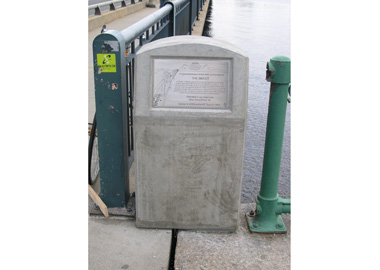
| The unveiling was performed by Ken Stone and Robert Ferrara, who is the director of FSILG alumnin relations. | The finished plaque, installed at the head of the Harvard Bridge, where Mass Ave. crosses the Charles River. |