|
|
 |
|
|
 |
"I want to help women understand and embrace their journey through the life cycle."
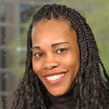
OB/Gyn nurse coordinator Nicole Napier sees women of all ages in MIT Medical's OB/Gyn Service in Cambridge. Napier came to MIT Medical in November 2004 after working as a community health nurse for seven years.
Napier says she was always interested in medicine, but she was sure nursing was for her after she started her clinical rotations in nursing school. "I just loved the patient interactions, especially educating patients," she explains.
After earning her bachelor's degree in nursing at Simmons College in Boston, Napier worked as an OB/Gyn nurse at the Geiger Gibson Community Health Center in Dorchester, the first community health center in the country. "I knew I had found my true calling in obstetrics and gynecology," she says. In 2001, Napier became the director of nursing at Geiger Gibson. Of her time there Napier says, "I loved really getting to know my patients and working as part of the community."
The community atmosphere at MIT is a large part of what attracted her to MIT Medical as well. In addition, Napier says she enjoys the clinical work and her administrative responsibilities as coordinator of the OB/Gyn Service.
Not one to stay idle, Napier is planning on pursuing a master's degree in management this fall. When not working or studying, she enjoys quiet time at home either reading American classics or scrapbooking.
|
 |
|
|
|
"I enjoy working with all members of the MIT community-students, faculty, staff, and their families. The combination of environment and people are positively inspiring." "
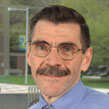
Orthopedic nurse practitioner Anthony Pasqualone, A.P.R.N., B.C., came to MIT Medical in February with more than 29 years of nursing experience.
"I originally studied engineering, but when I left the Navy after serving in Vietnam, there weren't many jobs for engineers," he explains. "An old girlfriend talked me into nursing," he laughs, "and I'm so glad I listened to her."
After earning his diploma in nursing at Newton Wellesley Hospital and his bachelor's degree in health care administration at St. Joseph's College in Maine, Pasqualone had an opportunity to work in San Francisco. "This was the early 1980's, and I was working with some of the very first HIV patients, before the disease had even been named," he notes.
He eventually returned to Boston, where he earned his master's degree as a nurse practitioner at Simmons College. "About six years ago, I moved into occupational health where I learned orthopedics, the skill I use today," he explains.
In addition, Pasqualone serves as a Lieutenant Colonel in the Army Reserve Nurse Corps. "My greatest honor as a nurse was running a military emergency department in Kuwait in 2002," he says. Pasqualone looks forward to working with the ROTC program at MIT, where he'll provide medical support at field functions and assist with classroom training.
In his free time, Pasqualone enjoys gardening, working out, riding his motorcycle, and traveling.
top
|
 |
|
|
|
"I see myself primarily as a teacher, whether I'm working with medical students or patients."
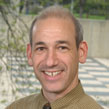
Endocrinologist Joshua Safer, M.D., began seeing patients one afternoon a week at MIT Medical in Cambridge last fall. "I enjoy my work here because I am usually teaching very knowledgeable people about their conditions," he says.
Originally from Wisconsin, Safer attended college and medical school at the University of Wisconsin, and then moved to New York City to do his internship and residency at Beth Israel Medical Center. He came to Boston, where he completed both clinical and research fellowships in endocrinology at Beth Israel Deaconess Medical Center. He's now an assistant professor of medicine at Boston University, where he also does research.
"I love science, but I'm also a 'people' person," Safer says. "Medicine is really a perfect blend of those two things." He adds he likes making his patients as knowledgeable as possible about their conditions, so they can make informed decisions. "I see myself as an advisor," he says. "Information is empowering and helps patients take control of their own healthcare."
Safer is married with three school-age children. He enjoys hiking, biking, and taking road trips with his family.
top
|
 |
|
|
|
"Education is the key to prevention; by educating my patients, I hope to help them prevent future dental problems."
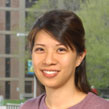
Dentist Catherine Wang, D.D.S., joined the MIT Dental Service in December 2004. "I find dentistry very rewarding," she says, "especially when I can help reduce the anxiety patients feel about receiving treatment." Listening carefully to patients and teaching patients about their dental health is just as important as the treatment itself, she adds.
Wang was drawn to dentistry at an early age. "When I was young, it seemed we were always taking my brother to the dentist," she explains. "I found the visits fascinating, even if he didn't," she laughs. She went on to study dentistry at the University of the Pacific in San Francisco (while her brother opted to become a physician).
Working at MIT Medical's Dental Service provides a unique opportunity to work closely with medical professionals, Wang says. "If I have a question about a patient's medical status, often I can get the information I need directly through the systems we have in place," she explains. This, she emphasized, is not only convenient for the patient, but provides them with truly coordinated care.
Wang enjoys traveling, cooking, and rollerblading. A transplant from Southern California, Wang is still adjusting to life in New England. "I haven't found a good place to rollerblade in Boston yet," she joked, "but I'm not giving up!"
top
|
 |
|
|
|
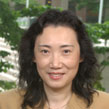
"Neurology is a fascinating area of medicine, because it is always changing. We continue to learn so much about the human brain."
Neurologist Katherine Wang, M.D., Ph.D., finds the challenge of clinical neurology especially stimulating. "I tell my medical students, 'if you like a challenge, clinical neurology is for you,'" she says. Wang sees patients one day a week at MIT Medical in Cambridge.
Wang and her family came to the United States from Beijing, China, where she was an ear, nose, and throat surgeon, so she could attend a Ph.D. program at the Uniformed Services University of the Health Sciences in Maryland. "My research project involved studying oncogene expression in the hypothalamus, which led me to neurology," she explains.
Wang says she always knew she wanted to return to clinical work, and she decided to pursue neurology after completing her Ph.D. After finishing her residency at UMass in Worcester, Mass., she completed a clinical neurology fellowship at Massachusetts General Hospital (MGH), where she focused on electromyography (EMG) and Botox treatment for focal dystonia and spasticity. But, she says, her study of neurology will never really end. "It is particularly important to keep up with the research in neurology," she notes, "because it is changing so quickly."
Wang is married with three children. In what little spare time she has, she enjoys reading, listening to classical music, and raising orchids.
top
|
|
|
|


