The BES Project
The IES Baltimore study poses three primary research questions, at the outset of its analysis of the urban metabolism at work in the Greater Baltimore Area:
- What are the fluxes of energy and matter in the Baltimore metropolitan ecosystem, and how do they change over the long term?
- How does the spatial structure of ecological, physical, infrastructural, and socio-economic factors affect ecological processes?
- How can urban residents develop and use an understanding of urban ecology to improve the quality of their environment and their daily lives?
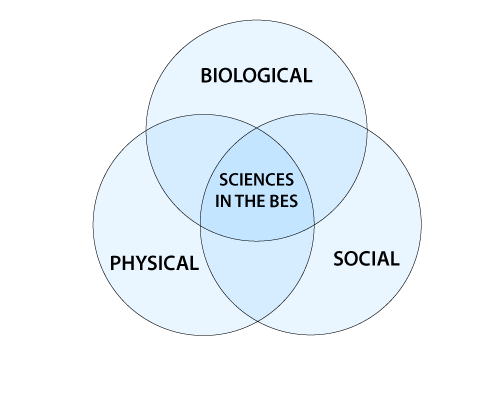
The researchers of BES strive to include a broad range of perspectives in their analysis, chiefly operating at the intersection of three typically divorced fields: physical, social, and bioligal sciences.
Who, Where, When
National Science Foundation's Long-Term Ecological Research Network
The BES is a massive ongoing collaboration, spanning the efforts of hundreds of collaborators, including principal researchers, affiliated research institutes, foundations, and students from the high school to the post-doctoral level. The studies are carried out in cooperation with city officials and municipal departments. The research begain in 1997, and is focused solely on the Baltimore Metro Area.
What
The study is an ongoing investigation of the relationship between social, infrastructural and biophysical processes. Central research topics include patch dynamics of built, social, biological, and hydrological components of the Baltimore metropolitan area, and the effect of infrastructure and development on fluxes of nutrients, energy, and water in upland, stream, and coastal regions of metropolitan Baltimore.
To understand the nature of processes at work in the study area, the researchers have clearly articulated the need to keep both retrospective and long-term perspectives in all areas of the study. Particular emphasis has been given to understanding how physical and biological processes have led to the study area as it stands, and also how cultural and social influences have shaped the area.
Findings
(mostly from the latest annual report, released August 2006)BES recorded and analyzed climate conditions during a severe 2004 Baltimore thunderstorm. The findings suggest that urban conditions can increase storm severity by as much as 50%. Researchers are studying the circumstances more rigorously, but preliminary guesses at factors include the increased heat, topographical condition, and particulate matter from automobiles and industries all contribute to the effect.
The study has led to a theory about the "Ecology of Prestige" - the phenomenon in which household patterns of consumption and expenditure on environmentally relevant goods and services are motivated by group identity and perceptions of social status associated with different lifestyles.
With respect to quality of life and preferences, the study finds that access to clean, natural settings near place of residence always contributes to higher life satisfaction, independent of the scale of measurement. In contrast, higher income increases life satisfaction at the individual scale. Social capital increases life satisfaction, but more so at the neighborhood scale.
Urban bird populations are higher in forested urban areas, such as parks or urban wilds, when surrounding neighborhoods are also densely vegetated.
Organic nitrogen (N) is released in high quantities from urbanizing coastal areas. Up to 40% of Organic N becomes bioavailable to freshwater organisms, stimulating enzymatic changes in aquatic microbes. Consequences of this nutrient shift are as yet unknown, though the additional nigtrogen is considered to be a pollutant in fresh watersheds.
High runoff areas (marked by high percentages of impervious surfaces) are only one factor in urban flooding. The study has found a siginificant correlation between flooding areas and areas with high storm sewer velocity, low dispersion of flows within the sewer, and high hydraulic connectivity to the sewer system.
The Data
The BES offers two general types of data, differing in availability to audiences:
Type I – data released to the general public within two years of collection
Type II - data released to restricted audiences, which the study attempts to minimize, and typically contains information considered to be sensitive to some user
In addition to traditional geospatial tools, the BES utilizes new geospatial technologies to communicate its findings publicly on the internet. Researchers mapped portions of the study using Google Earth, in to a basic set of visuals that aid in the understanding of ecological processes at work in the Baltimore area. A selection of the Google Earth overlays can be accessed by clicking the links below:
|
 Gwynns Falls Watershed Land Use change