Michel Foucault, Other Spaces: The Principles of Heterotopia, 1967

"In western culture the cemetery has practically always existed. But it has undergone important changes. Until the end of the eighteenth century, the cemetery was placed at the heart of the city, next to the church.... It is from the beginning of the nineteenth century that everyone has a right to her or his own little box for her or his own little personal decay, but on the other hand, it is only from that start of the nineteenth century that cemeteries began to be located at the outside border of cities. In correlation with the individualization of death and the bourgeois appropriation of the cemetery, there arises an obsession with death as an 'illness.' The dead, it is supposed, bring illnesses to the living, and it is the presence and proximity of the dead right beside the houses, next to the church, almost in the middle of the street, it is this proximity that propagates death itself. This major theme of illness spread by the contagion in the cemeteries persisted until the end of the eighteenth century, until, during the nineteenth century, the shift of cemeteries toward the suburbs was initiated. The cemeteries then came to constitute, no longer the sacred and immortal heart of the city, but the other city, where each family possesses its dark resting place."


cholera

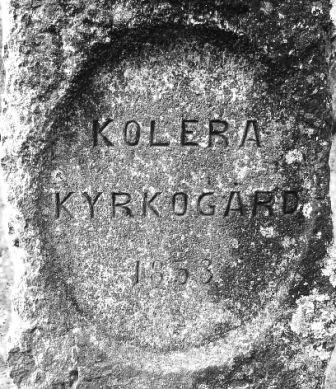
image source: Magnus Reuterdahl (http://inventerare.wordpress.com)


An example of an anonymous tombstone from the great cholera epidemics that affected Europe in the mid 1800s. Disease took burial grounds out of city centers for fear of infection. Paradoxically burial grounds had been considered to be disease breeding grounds that needed to be removed from city centers for the common good.
What we can learn from Foucault is that this cemetery reform embodied a major social shift - one that was in some ways propogated by the ill-health of the cities, but even more so propogated by the idea of the individual in society. Public health was a driving factor, not the environmental degradation that graveyards were causing. Nature as it relates to the city had no place in this argument, rather it belonged to the periphery. Nature was still an applied aspect of life, utopian and completely separate.