
Singapore–MIT Alliance

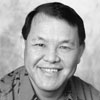
The Singapore-MIT Alliance and the MIT Industrial Liaison Program present:
Professor of Electrical Engineering and Computer Science
Director, MIT Laboratory
for Computer Science
The seminar will be delivered live from MIT to NTU & NUS in Singapore
MITWednesday, November 6, 2002 RSVP by October 31, 2002 |
SINGAPOREThursday, November 7, 2002 NUS Location: NTU Location: RSVP by October 31, 2002 |
PRE-REGISTRATION IS REQUIRED
Seating at MIT is limited and allocated to earliest registrants
MIT Contact: |
NUS Contact: |
NTU Contact: |
In September 1999, the MIT Laboratory for Computer Science, together with the Artificial Intelligence Laboratory, launched a five-year project called Oxygen. Oxygen strives to bring about revolutionary changes in the ways computers and humans interact through a vision of pervasive, human centered computing. The Oxygen Alliance, between MIT and six world-class companies - Acer, Delta Electronics, Hewlett Packard, Nokia, NTT, and Philips - was formed in June 2000. Since then, researchers at MIT have worked actively on all aspects of Oxygen, sometimes in close collaboration with our Oxygen partners. This has resulted in a number of accomplishments, some of which will be described and demonstrated in this talk. For example, a first generation Handy-21 has been produced through a collaboration among Delta Electronics, HP, MIT, and Philips. The resulting hand-held can perform a number of tasks, e.g., enabling device personalization through speaker/face recognition, and accessing information via speech. Meanwhile, a prototype Enviro-21 has been realized in the form of the Intelligent Room, consisting of cameras capable of tracking humans and objects, and microphone arrays with beam forming capabilities to facilitate un-tethered speech interactions for multiple people working collaboratively. On the Net-21 front, we have implemented a prototype version of a location support system, called Cricket, which allows users and applications to learn about the geographic space they are in. We also developed an architecture for Internet host mobility, called Migrate, that uses dynamic updates to the Domain Name System (DNS) to track host location. Finally, I will also describe some of our research on the use of speech for human computer interactions.
Victor Zue is a Professor of Electrical Engineering and Computer Science at MIT, and Director of the Institute's Laboratory for Computer Science. He is also the first holder of the Delta Electronics Chair endowed for senior researchers. Victor's main research interest is in the development of spoken language interfaces to make human/computer interactions easier and more natural, and he has taught many courses and lectured extensively on this subject. Recently, his group pioneered the development of many systems that enable a user to interact with computers using multiple spoken languages (English, Japanese, Mandarin, and Spanish). His work has been covered by several publications internationally including Time and The Economist . A 1997 Business Week article described him as one of five "trailblazers" in speech interfaces worldwide. He was also featured in an article in the Discover magazine in December 2000.
Outside of MIT, Victor has consulted for many multinational corporations, and he has served on many planning, advisory, and review committees for the US Department of Defense, the National Science Foundation, and the National Academy of Science. He is a Fellow of the Acoustical Society of America. In 1994, he was elected Distinguished Lecturer by the IEEE Signal Processing Society. From 1996-1998, he chaired the Information Science and Technology (ISAT) study group for the Defense Advanced Research Projects Agency of the U.S. Department of Defense, helping the DoD formulate new directions for information technology research. In 1999, he received the DARPA Sustained Excellence Award.
 |
|


Copyright © 2003-2006 Massachusetts Institute of Technology
Questions & comments about this site to webmaster