
Revealing Mill Creek

For most people in West Philadelphia the Mill Creek is not a concern. The cause of sunken blocks and vacant lots is not questioned but just assumed to be existing conditions of the urban fabric. Not many wonder what happens to storm water or their sewage. WHY? Because they never see it, let alone believe that it is one of the primary determining factors of their built/unbuilt environment.

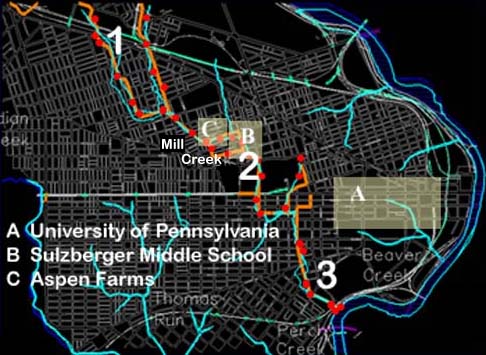
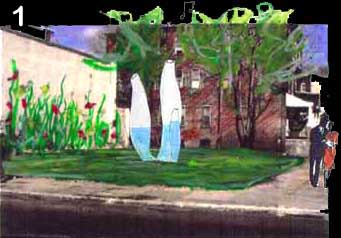
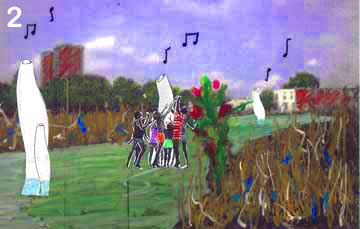
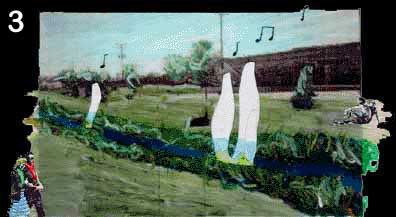
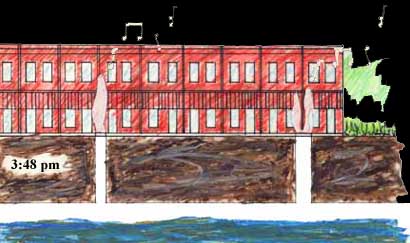
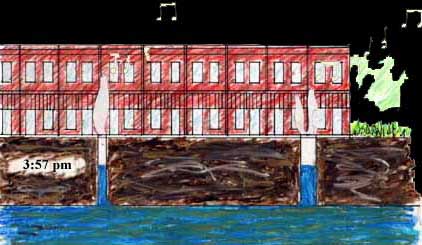
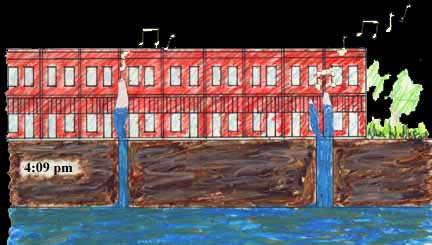
What this proposal offers is a chance for West Philadelphians to understand their environment by revealing the Mill Creek in a subtle way - through their visual and auditory senses. By placing translucent hollow pipes over the creek in vacant lots, streets and sidewalks the residents will catch a small glimpse of the world below them. By placing the pipes along the length of the Mill Creek, they will begin to map out or trace the underground phenomena throughout the city.

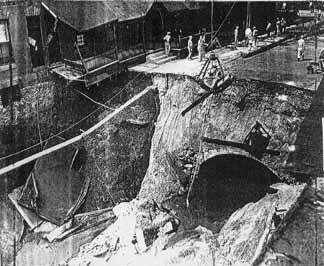


Cave-ins in 1952 destroy much of the city fabric and reveal the hidden Mill Creek to many who never knew it was there.


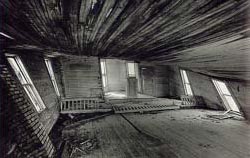
"Mommy!...What's the matter with our house? Where are we going to live now?"


Tracing the Mill Creek


Making visible that which is invisible


Visible

These translucent pipes are embedded into the earth and are actually tapped into the sunken creek. When the water pressure rises under the earth, the creek will start to rise and eventually emerge above the earth in these pipes. Filters at the base of these pipes prevents water from rising and purifies the water. Residents and visitors will clearly see the water rising and will be able to associate these pipes with underground activity. Even if the water pressure is low, these hollow pipes will be stained from past occurances and act as windows in the landscape to what is below.


Invisible

On windy and breezy days, the wind passes over these curved cylindrical pipes producing a certain pitch similar to that of a person blowing across the top of a bottle. On days when the water pressure rises or falls, the pitch will constantly be changing. Typical urban sounds will be replaced by music created by the environment. You need not see the Mill Creek to understand its presence, but close your eyes and listen to it.