MIT Center for International Studies


Back to Homepage
Audit Archive
Editor's Archive
EDITOR'S PICKS :: AUDIT
Audits are short essays, published by CIS, that put the conventional wisdoms of U.S. foreign policy under close scrutiny.


October 2007
Cambridge, Mass.
Who Failed Whom? Assessing the UN’s Human Rights Efforts
By Balakrishnan Rajagopal

Spotlight Image
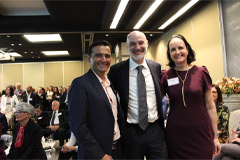
Balakrishnan Rajagopal
(Image courtesy Donna Coveney, MIT News Office)

SEVERAL MONTHS ago, during the finalization of the plan to replace the United Nations’ Commission on Human Rights with the new UN Human Rights Council, John Bolton, the U.S. ambassador to the UN, said with characteristic flourish, “We want a butterfly. We’re not going to put lipstick on a caterpillar and declare it a success.” Is the new UN Human Rights Council a butterfly or a caterpillar (with or without lipstick)?


Bolton’s pungent remark rests on three underlying assumptions: first, UN reform was urgently needed in the human rights field because its predecessor, the UN Commission on Human Rights, was a failure; second, the cause of failure was the takeover of the Commission by undemocratic and repressive states and the resultant hijacking of the human rights agenda; third, the best way to make the UN effective and legitimate in the human rights field was to restrict the membership of its premier body, i.e., the Council, to a handful of liberal democratic states and have them act as the custodians and enforcers of human rights. Bolton’s critique of the Commission (if not his language) and his vision to go forward have been shared widely by many academics, policy specialists, and western international non-governmental organizations (INGOs) that specialize in human rights advocacy.


Now the new Council is being harshly criticized for its failure to act swiftly to condemn the atrocities in Darfur and for what the West sees as its relentless focus on Israel’s human rights violations. The momentum created due to this rare convergence of views between human rights advocates and the likes of John Bolton ended up making UN reform happen rapidly in the human rights field, ahead of UN reform urgently needed in so many other domains, including at the Security Council or the secretariat. While the initiation of any reform at the UN could be welcomed, it is useful to ask if the assumptions on which the reform was based are in fact sound. For if they are not, the reform of the Commission and the creation of the Council could well be a “caterpillar with lipstick” and fail to achieve the purpose of the reform, which is to make the UN more effective and legitimate in the human rights field. The reform needed depends on the correct diagnosis of the problem with the UN Commission.


Did the UN Commission Fail?

The first assumption—that the UN Commission failed in the human rights field—is seriously wrong. Much depends on what was expected of it when the Commission on Human Rights began its operation in 1946, when the Commission was not expected to receive any complaints from human rights victims, discuss grave human rights crises in general, or assess threats to human rights from multiple sources, as it came to do starting in the late 1970s. In one of its earliest official acts, the Commission declared famously that it had no right to receive any complaints relating to any human rights violation committed in any state. The largely Western composition of the Commission did not lead the Commission to act in favor of human rights, contrary to current beliefs that it is the recalcitrant Third World that prevented the Commission from acting effectively.


Indeed, the leading countries of the West, including the U.S., treated the Commission with utter disdain and ensured that its wings would be clipped right at the start, despite the stellar role played by Eleanor Roosevelt in the drafting of the Universal Declaration of Human Rights. For example, the West consistently voted against any attempt by the Commission to address the most important human rights issues then—racial discrimination, apartheid, and self-determination of colonized countries. The colonial powers were afraid of the UN shining a light on their own violent and repressive rule across the world from Kenya to Malaya, which were witnessing tremendous resistance and repression, and so ensured that the Commission would not discuss the human rights issues in any colonial territory.


The U.S., for its part, was dominated by conservative southerners in its foreign policy in general, and did not want the UN to focus attention on its own problem of racial discrimination, Jim Crow laws, and the generally abusive treatment of its own minorities. Several leading African-Americans such as Walter White, W.E.B. DuBois and Charles Houston of the NAACP, Mordecai Johnson of Howard University, and Mary McLeod Bethune, founder of the National Council of Negro Women, participated as activist-observers at the Dumbarton Oaks and San Francisco conferences that gave birth to the United Nations, and subsequently attempted to use the UN human rights system to combat racial discrimination. Though this effort was not successful, it led to a serious isolationist backlash from the conservative foreign policy establishment and led the U.S. to assume an attitude of hostility to international human rights mechanisms and treaties that has remained largely consistent.


As a result of the hostility and the lack of support from the West and the politicization of the human rights agenda by the Soviets, the Commission remained paralyzed until the 1960s except for its work in drafting the first human rights treaties. Change began with the entry of newly independent countries of the Third World into the Commission, from 1967, and once again in 1979. The agenda of the Commission began to change, with a direct focus on racial discrimination, colonialism, apartheid in South Africa, and in later years, the Israeli occupation of Arab lands. Once these countries were put on the agenda, it was hard to argue with the logic of introducing more countries, and complaints about them, into the agenda.


But for the Third World countries, the UN Commission was no failure. It provided a very important forum for leveling a moral critique of the world order, based on a rejection of colonialism, racial discrimination, and a struggle for equality. Such struggles for self-determination and equality, Michael Ignatieff once noted, form the roots of the modern human-rights movement, and the UN Human Rights Commission was an important venue in that struggle. Third World countries gradually began to abuse their dominance at the Commission, however, especially starting in the 1970s when North-South politics was quite intense, to hide their own increasingly bad human rights records. But it does not take anything away from the simple fact that it was the Third World bloc that initially made the Commission active on the biggest human rights issues of the day. One must give credit where it is due.


The Commission also played a central role during those early years in standard-setting for the world through the drafting of major human rights treaties, and several declarations, principles, and other forms of soft law that had a major impact on national legal systems around the world. On the whole, it is very hard to conclude that the Commission was a failure until the 1970s, judged from the perspective of those who needed it the most—the abused people of the Third World. The Commission contributed significantly to the resolution of the major political questions until the 1970s, which revolved around the end of colonialism and the emergence of new nation-states in the Third World, and the subsequent competition between the U.S. and the Soviets for their affiliation.


The major political question of the 1980s was no longer colonialism, but the Cold War—how to end it and how to handle its aftermath. The Commission’s record during this period was mixed. At the Commission, the 1980s proved to be more contentious: established coalitions of states at the Commission began to break down, while the Commission began to be more active by examining the individual records of more countries, and adopted measures of censure. Going beyond the usual targets of South Africa and Israel, the Commission censured countries like Chile, Kampuchea (as it was then called), Iran, and Afghanistan. There was a hardening of the East-West and North-South divide, as seen in the voting on issues (such as right to development) as well as on countries (such as Iran). Meanwhile, the U.S. attitude to the UN also hardened, as exemplified by Jeanne Kirkpatrick, President Reagan’s UN ambassador (1981-84) and representative on the Commission, who called the Universal Declaration of Human Rights “a letter to Santa Claus.”


While the Commission continued its standard-setting role, its handling of individual complaints and its increasing use of targeted resolutions criticizing specific countries began to be arbitrary and inconsistent, and politicized by the Cold War. This, coupled with an increasing thematic focus on Third World-friendly issues such as the “right” to development led many American scholars and policy makers to conclude that the Commission was biased against the West. This belief was strengthened by the hostility of the Reagan administration toward the UN in general and the Commission in particular. However, in the eyes of the Third World, which had come to include not only states but transnationally active liberation and democracy movements in places such as South Africa, the Commission began to appear to have a Western and anti-Third World bias. The Commission passed almost no country-specific resolution against any Western country, as all of its attention was focused on small, repressive Third World countries that had the misfortune of being caught up in the maelstrom of the formal end of the Cold War—countries such as Cambodia or El Salvador. Indeed, countries like these remained continuously on the Commission’s agenda during the 1990s. Unlike the 1960s and ’70s, by the ’80s the Third World countries no longer looked at the UN Commission as a weapon of the weak. But other non-state actors—including transnational social movements in fields such as women’s rights—were beginning to influence the work of the Commission.


The major political question during the 1990s was globalization, including the institutionalization of the WTO, and the political backlash against it from below in many Third World countries. The Commission’s agenda continued to suffer from the politicization that characterized its work during the 1980s, and continued to focus only on small Third World countries such as El Salvador and Cambodia that lacked the power to stop the Commission from censuring them. But simultaneously, the Commission began to address the human rights implications of globalization more actively, by resorting to special mechanisms to investigate a range of issues from housing rights to education. The sub-Commission on Human Rights, a subsidiary body of the Commission consisting of independent experts, also began to address the human rights impact of global economic instruments (such as the proposed Multilateral Agreement for Investment, which was stopped by a global grassroots campaign assisted by critical reports from the sub-Commission) and institutions (such as the WTO). Increasingly, it was clear that the UN Commission was once again becoming a terrain of contestation between the losers and winners in the global order, but who were no longer strictly organized according to earlier statist classifications such as the West, East or the Third World. For the U.S., this proved to be a dilemma; on the one hand, human rights (and democracy) had emerged as key terms in the political vocabulary of the post-Cold War order; on the other hand, the Commission was seen to be out of control, and opposing the key doctrines and institutions of newly hegemonic neoliberal economic order after the collapse of the Soviet regime, using the very language of human rights.


Spotlight Image

In recent years, before the formal replacement of the Commission, the major political question had enlarged to include the war against terror since 9/11. The Commission’s formal response to the war on terror launched by the U.S. and its allies was quite toothless, as it did not handle complaints or pass any resolution cautioning the U.S. against rolling human rights back. The Commission and the UN Commissioner for human rights had very little input into new security bodies that were functioning in virtual secret, violating human rights with impunity, such as the UN Security Council’s Counter-Terrorism Committee. Even though the Commission’s subsidiary bodies and special mechanisms were contributing to a criticism of the war against terror, it was too little and too late and the Commission had lost its sources of support.


For the U.S., the Commission was a source of deep annoyance, contributing to a global critique of the American strategies in the war against terror and on globalization, while allowing too much political space for so-called Third World issues, such as economic and social rights. For its close allies such as Israel, the Commission had always been its nemesis, where a condemnation of Israel for its practices and policies had long been on the agenda. It was ready to see the Commission disappear. For the Third World states, the Commission had proved to be less useful as earlier Third World coalitions and the political solidarity on which they rested, had melted away. Indeed, with their own internal problems, growing democratization and globalization of dissent, states like India which are in fact liberal democracies, had come to see the Commission as a source of problems. This was a turn around for India, which had initiated the human rights revolution by putting the issue of the treatment of Indian nationals in apartheid South Africa, on the UN agenda in 1946.


An analysis that focuses solely, however, on state perceptions to judge if the UN Commission failed, or one that focuses on the Commission and ignores its multiple mechanisms, will miss important and tectonic shifts in the politics of human rights. The politics of human rights went far beyond formal state politics by the 1990s, and for most non-state actors including social movements, the UN Commission’s mechanisms, including the sub-Commission, provided important arenas of politics.


To sum up, the question of whether the UN Commission failed is a complicated one. One that can yield many answers depending on who is asked, and what was expected of the Commission from the many actors who were its members and users.


Was the UN Commission Hijacked?

Since the early 1980s, the U.S. has alleged that the Commission is biased against it and in favor of the Third World. As proof, the U.S. and the various defenders of this position have pointed to two factors: an agenda bias, which shows an excessive tilt in favor of Third World issues such as right to development; and an enforcement bias, which focused excessively on the record of Israel in particular. As noted earlier, the same charges are being leveled against the new Human Rights Council now. The Commission’s targeted resolutions against countries had indeed focused on Israel and South Africa over the years, but that was a reflection of the terrible human rights records of those countries, and the expansion of the Commission to admit Third World states from 1967 who began introducing issues that the previous West-dominated Commission had seemed unable or unwilling to do. During its lifetime, almost 30 percent of the Commission’s resolutions had reportedly concerned the human rights in Palestine and occupied territories of Israel. This figure is often cited as proof that the UN Commission had indeed been hijacked by a hostile Third World. The hijacking of the Commission by an undemocratic and repressive alliance of the Third World states is then seen by many in the U.S. as a cause for the failure of the Commission.


There are several problems with this analysis. First, as we have seen, there are serious questions about how to judge the successes or failures of the Commission. Estimations of both depend on the politics of human rights during particular historical moments in the evolution of the Commission, and on the changing nature of the expectations of member-states and the NGOs and others who filed complaints and interacted with the Commission. From this perspective, the Commission can only be as successful as the majority of its members intend it to be. That in turn depends on the issues and countries against which the Commission’s majority of members are willing to proceed, which is a matter of power as well. Strong states have usually avoided condemnation at the Commission, and this pattern can be seen during all of the Commission’s history, and this pattern is unlikely to change in the new Council. The five permanent members of the Security Council have never had a resolution adopted against them in the UN Commission, despite the lack of a formal veto mechanism at the Commission. Almost none of the other major middle powers such as Japan or India have been condemned either. The focus on South Africa and Israel came out of the simple fact that the Commission—along with the Economic and Social Council and the General Assembly—was one of the arenas where the Third World could bring in issues of racial discrimination and self-determination, because the most powerful UN organ, the Security Council, was unavailable due to the veto powers of the U.S. and other allies of Israel and South Africa.


In other words, the agenda of the Commission depended in part on what was on the agenda of other UN organs such as the Security Council. Indeed, it is for this reason that it is very doubtful whether the reform of the Commission would lead to its improvement in the absence of parallel reforms of other UN organs. The new Council is likely to operate in much the same way as the Commission; the new body may not be any less “biased” against Israel—indeed, one of the earliest acts of the Council in June 2006 was to pass a critical resolution on Israel and ensure that Israel will continue to remain on its agenda in every meeting in the future, thus continuing the practice of the Commission. Thus, the question of whether the Commission had been hijacked by the Third World is to bark up the wrong tree. The politics of human rights at the Commission was tied to the numerical superiority of Third World states and the politics of the international system elsewhere, including at the Security Council. The agenda of the Commission simply reflected the moral demand for the political recognition of multiple forms of human suffering, which were not being recognized elsewhere. In that sense, the Commission was always a weapon of the weak, either for newly independent countries in the 1960s, or the global women’s movement of the 1980s. In the absence of other venues such as the Security Council, where the search for justice could go on, the Commission provided one of the few remaining global venues for the weak. So long as Third World states remain numerically superior, it is not possible for an international organization—whether the Commission or the new Council—to entirely escape from the politics of the majority.


Small is Beautiful?

To deal with this problem, the U.S. tried to ensure that the new Council would consist of a much smaller number of states that would be further trimmed by a strict application of the criterion of liberal democracy, so that the member-states would be either from West or be pliant allies of the West. It failed to do so, and this, among other reasons, was why the U.S. voted against the UN resolution that established the new Council. For the West, especially for the U.S., the basic problem seems to be a human rights body it cannot control. When the post-Cold War order has come to rest on the idea of human rights, and its concomitant doctrine of democracy in so many fields of policy from security to development, the West plausibly needs the human rights organ of the UN to act in ways that provides legitimacy for their actions elsewhere, from globalization to the war against Iraq and the war on terror. For John Bolton and others like him, the new Council may not go far enough toward this goal—and that largely explains why the U.S. voted against the Council and refused to stand for election during last year and this year.


It may be too early to tell if the new Council is an improvement over the Commission. But the right lessons have not been learned from the performance of the Commission. The Commission’s best moments came when it helped resolve the most important political questions of the day—colonialism, apartheid, racial discrimination, and women’s rights. It contributed both by its politicized agenda that left no state unclear what its political proclivities were, and through its technical work performed through standard setting. But the basic problems with the Commission have not been really addressed during this reform process. The Council continues as a statist body, excluding other kinds of politics to enter the human rights domain. It maintains a weak and subsidiary relationship to other powerful bodies like the Security Council or the WTO. It attempts to confine its membership to liberal democratic states, when there are open questions about whether the membership ought to be universal (like the General Assembly), or extended beyond states. And the future of independent bodies, including the sub-Commission, remains uncertain under the Council.


For the West, the Commission remained frustratingly and inadequately uncooperative to their grand projects, whether of colonialism, globalization or the war on terror. The question is whether the new Council will also remain out of their reach, or turn into a pliant instrument of the hegemonic vision of the U.S. The Council’s credibility and legitimacy may well rest on the extent to which it is a weapon of the weak, much like the Commission, often inadequate and inconsistent, often was.


Balakrishnan Rajagopal is a Ford International Associate Professor of Law and Development, and director of the Program on Human Rights and Justice at MIT. This essay is adapted from an article appearing in the Buffalo Human Rights Law Review, vol.13 (2007).


Massachusetts Institute of Technology