MIT Center for Real Estate

Leveraging Science, Developing Innovation

building: mcgovern institute for brain research

To see an image full-sized, click on the caption beneath it.

MIT/CRE students visit the Letterman Arts Facility at San Francisco's famed Presidio

San Francisco. In the benevolent shadow of Star Wars' Yoda, MIT/CRE students visit the Letterman Digital Arts Facility in San Francisco's famed Presidio.

View of the Hunter's Point Naval Shipyard reclamation site

San Francisco. View of the Hunter's Point Naval Shipyard site -- a reclamation project of visionary scale.

Students visiting San Francisco's Gaia Building

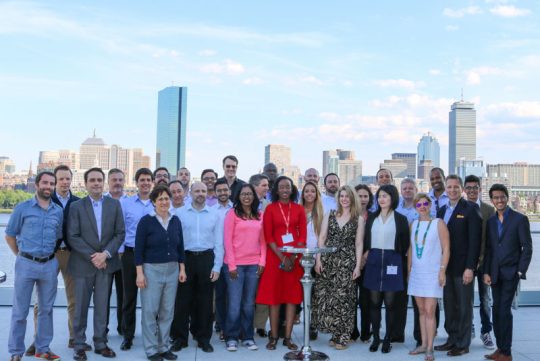
San Francisco. With the Bay Area as backdrop, MIT/CRE students stand atop Panoramic Interests' Gaia Building, joining MSRED alum Patrick Kennedy '85, founder of Panoramic.

Broadstone Enso residential project by Alliance Residential, Portland, Dan McCadden'96, Partner & Managing Director

Portland. Students are shown Broadstone Enso residential project by Dan McCadden '96, Partner and Managing Director.

Group tour of former correctional facility to be converted by McMenimins to pub/hotel

Portland. Students go to jail, visting former correctional facility to be converted by McMenimins group into pub/hotel.

Edgefield, another McMenimins project, former poor farm/county facility converted to mixed use

Portland. Edgefield, another McMenimins project -- former poor farm/county facility converted to mixed use.

Group shot at Multnomah Falls, Portland

Portland. Group shot at the city's exquisite Multnomah Falls.

Students visit Wrigley Field

Chicago. The group takes in a game at Wrigley Field - Cubs vs. Los Angeles Dodgers. The home team doesn't fare well. :(

Entrance to the historic Merchandise Mart

Chicago. Entrance to the historic Merchandise Mart, now converted into the LEED-Silver certified Design Mall.

Blue Cross / Blue Shield HQ vertical expansion

Chicago. Students visit the Blue Cross/Blue Shield Building, a dramatic example of vertical expansion.

"Think Globally, Act Locally"

Center students visit San Francisco, Portland, and Chicago to learn the two realities of realty

by Michael Mack.

Updated August 27, 2009

Most of us have seen the bumper sticker "Think Globally, Act Locally" – perhaps on the back of a Honda Civic as it turned left toward Cambridge, Massachusetts or Berkeley, California.

In fact, the phrase was coined in 1915 by a real estate visionary – a Scottish urban planner named Patrick Geddes. Long before global sustainability was fashionable – or for many, even conceivable – Geddes saw the future of development as a dialog between global vision and local action.

Nowadays, with instant worldwide communication having immediate affect on large and small markets alike, the real estate profession more than ever embodies the interplay between global and local realities.

To better understand this dynamic exchange, students from the MIT Center for Real Estate (MIT/CRE) visited three major U.S. cities to see for themselves how global commerce interacts with local development in a variety of diverse markets.

The nine-day intensive – running from May 25th to June 3rd, 2009 – took eight candidates for MIT's Master of Science in Real Estate Development (MSRED) out of the classroom and into a concentrated series of meetings with representatives from 35 real estate companies in San Francisco, Portland, and Chicago.

Joined by MIT/CRE's Chairman and Director Tony Ciochetti, students visited organizations of all sizes – from small private enterprises, to large pension funds, to immense, transformative infrastructure projects.

Along the way, they met with dozens of Center alums and partners, gaining an invaluable inside look at the relationship between real estate's micro and macro levels – and in the spirit of Patrick Geddes, focusing especially on issues of sustainability.

top

**********************************************************

San Francisco

The most densely populated city in California, and the second most densely populated in the U.S. (New York ranks first), San Francisco is the center of finance, culture, and transportation in the San Francisco Bay Area, a region of more than seven million people.

Nine people were added briefly to that population when students and Professor Ciochetti arrived on Memorial Day weekend. After a weekend as tourists visiting Alcatraz and other sites, they got down to business early Tuesday morning.

State Teachers Retirement System of Ohio

First on the agenda was a meeting with State Teachers Retirement System of Ohio (STRS), one of the nation's largest public pension funds. With over $72 billion under management, STRS seeks to provide its membership with a dependable retirement income stream.

In a departure from typical corporate presentation formats, in which a company delivers Powerpoint or other presentations to guests who largely watch, STRS invited students to engage with the company much more actively.

In advance of their trip, students received details of a specific STRS case study – one involving an opportunity to acquire land for industrial development – and were invited to share their findings on Tuesday, presenting their conclusions and assessing the investment's potential risks and returns.

In an exchange remarkable for its give-and-take, students shared their findings with STRS top executives – officers who after making introductory remarks might typically be called elsewhere to attend to company business. Executives stayed for the entire meeting, listening intently to students' analysis of the deal, and discussing with them the possible outcomes.

top

RREEF

Next, students met with RREEF Alternative Investments, a global alternative investment management business of Deutsche Bank's Asset Management division. RREEF consists of three businesses – Real Estate, Infrastructure and Private Equity –  and headquartered in New York, the company employs more than 1,300 investment professionals in sixteen cities around the world.

Students were treated to a presentation by three key members of the RREEF team. Andrew Nelson, Vice President of Research for RREEF/Real Estate, explored the green building movement and the ongoing research into operating savings provided by sustainable real estate. Asieh Mansour, RREEF's Chief Economist and Strategist, considered the global economy in the context of this downturn. Kevin Howley, who manages RREEF's largest REIT, spoke of the global REIT market in the context of the current capital markets.

top

The Presidio of San Francisco

Leaving the corporate boardroom for a more ecological setting, MIT/CRE students took a walking and bus tour of The Presidio – the famous park at the northern tip of San Francisco, and one of America's great natural and cultural treasures.

The Presidio officially became a national park in 1994, ending over 200 years of use as a Spanish and then American military base. It contains more than 800 buildings, a research facility, a golf course, a national cemetery, and a full range of recreational and community services on its 1,491 acres.

Led in part by LucasFilms, which selected the site as its headquarters, The Presidio has seen strong market interest in its real estate office products. Current development plans emphasize preservation and protection of the park's resources, as well as engaging organizations that focus on solutions to global environmental, cultural and social issues.

top

Panoramic Interests

Students closed their first day with a visit to Berkeley-based Panoramic Interests, founded by MIT/CRE alum Patrick Kennedy '85. Panoramic has been successfully developing in Berkeley since its founding in 1989 – the Gaia Building being perhaps its most prominent and iconic project.

One of Panoramic's  recent innovations is SmartSpace™ – a super-efficient, super-hip, super-small studio apartment design for high-density, prime urban locations such as San Francisco's North Beach, Santa Monica, New York City, or Harvard Square in Cambridge. The building includes key amenities such as City Car Share, Café, and Store, allowing a new tenant to move in with little more than a computer, tooth brush, and some linens. SmartSpace is "smart" partly because every area of the apartment is used for at least three purposes. It also includes many built in features, such as a table that can convert to a bench or bed.

top

Transbay Transit Center Project

Wednesday began with a city-altering project of impressive scale. The Transbay Redevelopment Project is part of an inter-agency effort to develop a new multi-modal transit terminal on the site of San Francisco's existing Transbay Terminal. Caltrain service will be extended to this new terminal, which long-term will connect high-speed rail service between Los Angeles and Sacramento. In addition, the project will revitalize the surrounding area, transforming it into a mixed-use, transit-oriented neighborhood consisting of office, hotel, and retail space, and will also include 3,400 new housing units – 1,200 designated affordable.

The tour and discussion – hosted by a panel of MIT alums – gave students first-hand knowledge about the complexities involved in developing a transit node and commercial real estate project of this scale, one that will redefine downtown San Francisco.

Interestingly, the MIT alums represented companies in every sector of the project – from planning and economic consulting to development and construction. Dan McGill (MSRED '07) works at Hines, Elizabeth "Libby" Seifel (MCP '79) at Seifel Consulting, Helen Lee (MCP '02) also at Seifel, Joshua Switzky (MCP '01) at the San Francisco Planning Department, and Stephen Perreault (CE '81) at URS. The representation of MIT graduates in so many sectors on one project suggests not only the scale of the effort, but also the importance of the MIT influence on projects of technological complexity.

top

Hines

Turning from ground-up development to preservation and redevelopment for sustainability, students visited the 100 Montgomery Redevelopment Project undertaken by Hines. A case discussion between students and Hines representatives led by MIT/CRE alums explored the project's acquisition in 2006.

Originally designated as 120 Montgomery, the building was designed by Wilbur D. Peugh and developed by Equitable Life Insurance as the company's headquarters in 1955. The 25-story, 424,254 square-foot office building is considered a historically significant to downtown San Francisco.

Rebranded in 2009 as 100 Montgomery, the 36-month, $30 million redevelopment project was redesigned and restored by Robert A.M. Stern Architects. It features an ultra-modern crystallized glass exterior complemented by the refurbished Art Deco metal panels and window mullions. The building is LEED-registered with the intent to achieve certification.

top

AMB Property Corporation

Wednesday afternoon began with a visit to AMB's Corporate Headquarters in San Francisco. MIT/CRE alum Aaron Binkley (MSRED '07), AMB Director of Sustainability, hosted a panel of experts who focused on the opportunities and challenges in a changing global environment.

In keeping with the company's focus on long-term investment, AMB pursues acquisitions and developments that provide sustainable returns. By combining experience and research to evaluate industrial distribution and overall real estate cycles, AMB invests and divests its capital strategically, building and buying the best-located, most functional product for customers who need efficient distribution property networks.

After a presentation, students had the remarkable opportunity to sit down in a roundtable setting with AMB Co-founder, Chairman, and CEO Hamid Moghadam, another MIT alum (CE, EE '78). Moghadam took 45 minutes out of his intensely busy schedule to share candidly his views on running a business, global logistics, the economic downturn, and its possible remedies.

Students left with a strong sense of how interconnected the world is, and how even local real estate enterprises are profoundly impacted by global economies.

top

Ted Horton Barbeque

Balancing the busy meeting schedule with fun and networking, students visited the house of MIT/CRE alum Ted Horton (MSRED '87). Ted is President of Antaeus Properties, which concentrates on high-end custom residential housing, but he is also a managing member at Norcal PV, which is committed to sustainable energy use through photovoltaic alternatives.

On Wednesday evening Ted and his wife graciously invited the students and about 15 alums living and working around San Francisco to their home in Marin County, giving everyone a chance to meet over a home-cooked meal.

As delicious as the barbeque was, the highlight of the evening came after dinner when Ted invited guests to sample his homemade wine! Ted is a self-proclaimed "garage-ista" who has all but perfected wine-making in his converted garage. Students tasted a variety of wines, made and aged in barrels at Ted's home.

top

Lennar Urban

In their last stop before flying out of San Francisco, students spent Thursday morning and early afternoon touring a reclamation project of breathtaking ambition. The Hunters Point / Candlestick Point Project had its beginnings in 1991 when the U.S. Defense Department closed the Hunters Point Naval Shipyard, leaving the land highly contaminated and the residential area around it depressed. The project expanded when the revitalization of nearby Candlestick Point (site of the Candlestick Park sports stadium) merged with the Hunters Point project.

Lennar Urban is one of the country's largest public housing developers, and in its role as the project's master developer, will likely need all of its expertise to pursue this large-scale mixed use redevelopment and urban revitalization effort – perhaps its most challenging to date.

The combined projects will redevelop 771 acres along San Francisco Bay with 8,500 to 10,000 homes (as many as 3,500 designated affordable); 350 acres of parks and open space; an 8,000- to 10,000 square-foot arena; 700,000 square feet of commercial and retail space; an artists' village; research and development facilities; and possibly a new football stadium.

Students learned of the myriad complexities of public private partnerships – especially in a project of this scale. It brings a host of challenges related not only to environmental mitigation and its negative public perception, but also to market fluctuations, and neighborhood and city politics.

top

**********************************************************

Portland

The most heavily populated city in Oregon, Portland is estimated to have over half a million residents. Yet it is often referred to as the greenest city in America, a reference that would surely warm the heart of visionary Patrick Geddes.

Portland has been winning awards for smart growth ever since the 1970s, partly because of Oregon's 1973 Urban Growth Boundary (UGB) law. The regulation controls urban sprawl by mandating that higher density development be contained within a specified border – the city's Urban Growth Boundary.

Portland's growth boundary, along with efforts of the Portland Development Commission to create economic development zones, has led to the development of a sizeable portion of the downtown area. This has resulted in the urban center having a large number of mid- and high-rise developments, an overall increase in housing and business density, and an increase in average house prices – all while maintaining modest growth elsewhere.

Interestingly, Portland is one of the few cities where developers are generally not required to provide parking associated with a development – a convention that fosters more pedestrian traffic and greater use of mass transit. MIT/CRE students visited Portland to learn more about how its policies have made it a leader in sustainability policies.

top

Nines Hotel

Students began their tour of Portland on Thursday evening, the moment they checked into their hotel. The Nines Hotel is Portland's only five-star luxury hotel, and is located on the top nine floors of the Meier & Frank building. Occupying what once was the headquarters and flagship store for the Meier & Frank department store chain, it is a prime example of successful readapted reuse.

Constructed in stages beginning in 1909, the building was the first major commission for Portland architect A. E. Doyle. His design encompassed a full block, and over the years the building and the Meier & Frank business each boasted a number of innovations, including vertical retail – unusual in the early 1900s – and Portland's first escalator. In 1982, the building was placed on the National Register of Historic Places (actor Clark Gable once worked in the Meier & Frank store's tie department).

The Meier & Frank stores were renamed Macy's in September 2006, the same year that construction began on The Nines' 330-room hotel. Since then, both hotel and department store continue to share the historic building.

top

Schlesinger Companies

MIT/CRE students were hosted in Portland by MIT alum Mick O'Connel (CP '95), whose itinerary gave students a broad view of the city – ranging from the Portland Development Corporation's Urban Growth Boundary, to condo developments that went bust, to a meeting with Gerald Mildner, Director of the Center for Real Estate at Portland State University.

Mick began his Portland career at the Portland Development Corporation, working through the painstaking process of public sector approvals. He later joined the Schlesinger Companies, a family-held real estate development company that also operates downtown parking garages in cities of the Pacific Northwest.

On Friday, students were treated to a tour of the most active development sectors in Portland's central business district. Included were the historic renovation of a downtown office building, an apartment project in the Pearl District, and over-zealous condo development along the South Waterfront near the Oregon School of Health Sciences. With Mick as guide, students met with architects, planners, economists, and general contractors.

top

Foundation Real Estate

Students were introduced to Bruce Wood, formerly the head of Opus Northwest, now an entrepreneurial real estate developer focused on suburban retail and historic rehabilitation the Portland MSA market.

Wood showed students a rehabilitated downtown office building that before he purchased it had sat vacant for nearly 40 years – for so long, in fact, that when it was acquired it contained animal carcasses and a sizable bird population. But Wood was drawn to the character and location of the building, and took on the project because of the great promise it showed. As in any renovation, capital budgets were predictions at best, and Wood exceeded his largely due to seismic upgrades to the existing building.

The most unique aspect of the renovation was the financing structure. It designated the building as an office condominium -- with historic tax-credit financing used as part of the capital stack (mostly to bridge the gap between the pro-forma budget and the actual development costs).

A condominium project using tax credits is not allowable because of the requirement for sole ownership, so Bruce and his financing team structured the condo ownership to originate first as partnership units in an LLC. The newly formed LLC created an operating entity which then paid each member of the LLC any revenue from the buildings. Another partnership was formed with the tax credit purchaser, a nationally-known bank.

Plans are that the partnership with the bank will dissolve after a predefined lock-out period of tax credit financing. Then partnership units in the operating LLC will convert to an ownership percentage in the building equal to the occupied square footage.

top

Portland State University

Students met with Gerald Mildner, Associate Professor of Urban Studies and Planning at Portland State University (PSU), and Director of the PSU Center for Real Estate.

PSU has a total enrollment of over 30,000 – mostly commuter students – and the Center for Real Estate itself has an enrollment of about 40. Mildner explained the structure of the program at PSU, and the recent decision to move the program from the Urban Planning department to the Business School. The real estate program does not yet offer a Master's degree (though it plans to soon), currently offering a Professional Certificate.

Mildner took students on a tour of PSU and the surrounding neighborhoods, then joined them for dinner at the Baghdad Theatre café, a McMenamins restaurant.

top

McMenamins

On Saturday, May 30th, on their last stop before leaving for Chicago, students visited a number of sites developed by McMenamins, a family-held business headquartered in Portland. Considered something of a local institution, and grounded in the spirit of the Portland community, McMenamins operates breweries, theaters, hotels, meeting facilities, music venues, a distillery & winery, and other entertainment-based enterprises – many of which are sites that have been converted from old, abandoned disuse.

For example, students toured a project that once had been a poor farm and then a county facility, and now is a multifunction site that features a brewery, hotel, restaurant, and retreat center. They also visited an adjacent project that had previously been a county jail, and is now slated to become another McMenamins hotel

top

**********************************************************

Chicago

It may not be the first city people think of when they think of sustainability, but Chicago is fast becoming a leader in the urban green movement. Mayor Richard M. Daley has vowed to make Chicago "the greenest city in America," and has spurred the city to transform itself especially through its Green Roof project.

Students arrived on the weekend of May 30th, and after relaxing with an architectural boat tour of the city and a Cubs baseball game (Cubbies lost to the LA Dodgers 8-2, sorry guys), students began on Monday at the Real Estate Center of DePaul University.

top

DePaul University: the Real Estate Center

In a session coordinated by Dr. Jim Shilling, Michael J. Horne Chair in Real Estate, students visited DePaul's Real Estate Center to consider the current debt market from two very different vantage points.

Megan McElgunn is a Senior Producer at Freddie Mac. She pointed out that not only is the agency still producing new business, but the organization's ability to raise debt is one of the few options for investors in the current market. In fact, 90% of all multi-family debt is produced through Freddie Mac, while the other 10% is produced by HUD. With rates continuing to fall into the 5% range, debt is affordable even now.

Lending practices, however, have changed. One change in particular is that both Freddie Mac and HUD no longer allow second mortgages or mezzanine debt to be placed on properties. And Freddie Mac is planning on issuing a new type of Commercial Mortgage-Backed Security (CMBS), with its first securitization being issued in June of 2009. Since all loans will be underwritten as Freddie Mac loans – which are more conservative than in past practices – the market should be receptive to this idea in light of the recent CMBS meltdown.

Thomas FitzGibbon Jr. offered a different take. The Executive Vice President of MB Financial Bank devoted much of his talk to his organization's Managed Assets Department (MAD) which concentrates on workouts. And he detailed agreements that MB Financial has made with the FDIC to acquire troubled banks. These acquisitions are attractive because his bank can sift through the held loans to determine which it wants to take on, which the government needs to guarantee, and which the bank is simply not interested in. FitzGibbon was recently interviewed on 60 Minutes to discuss a specific acquisition – one in which the FDIC paid MB Financial $14 million to guarantee performance of underlying loans on the troubled bank's balance sheet.

top

The Legacy at Millennium Park

After leaving DePaul, students tour of Chicago continued with a visit to the marketing center for The Legacy – a luxury 72-story condo development at Millennium Park. Developed by Mesa Development, and designed by architects Solomon, Cordwell, Buenz & Associates, the condo is known for dramatic use of glass and spacious balconies offering panoramic views of the city skyline, Grant Park, Millennium Park, and Lake Michigan.

Rich Hanson, Program Director for Mesa Development, shared background on the planning and construction of the building, which is being developed by the same Mesa team that developed The Heritage at Millennium Park just two blocks north.

Hanson said that Mesa's goal for this project is to deliver affordable luxury. With proposed sales prices starting at $600 per square foot, this will be an economical alternative to other high-end residential developments in the area, which include the new Trump development. Mesa keeps costs down in numerous ways – one of them being the use of a glass curtain wall manufactured in China that is not only less expensive but also has proven to be a superior product.

To facilitate sales, the building's floor plan is designed so that all rooms have optimal views. That way the company can avoid the problem of selling many of the units – those with better views – in the first few weeks, then laboring much longer over the sales of remaining units with less attractive views. Buyers are expected to begin closing on their new condos this fall.

top

Chicago City Hall

The next stop gave students a chance to see for themselves how Chicago is re-thinking sustainability, and establishing itself as a leader in the green movement. Students visited Chicago City Halls' rooftop garden – one of the nation's first – accompanied by two representatives from MIT/CRE partner Insight Realty.

Rob Hannah, Insight's President and CEO, and Donna DiBona, Insight's Director of Sustainability, explained that the prairie-like rooftop boasts over 100 varieties of plants, and includes bee hives that not only pollinate the flowers, but also produce honey that the City sells.

Because the building was designed to accommodate an additional story, no structural improvements were required for the installation of the garden, which uses soil depths of anywhere from six to thirty-six inches.

A convenient measurement of the rooftop's solar performance is right next door. The building's other half is occupied by the Cook County government, which has not installed a green roof. Differences between the two roof halves is dramatic. On days that City Hall's roof measures 95 degrees, the Cook County roof can approach 180 degrees. That cooling translates into significant savings on air conditioning, with the interior of the City Hall building being cooler by as much as seven degrees.

top

The Felix Hotel

Students' agenda then took them to the Felix Hotel and a tour by Vice President/Principal Mike Maurer and General Manager Julia Bennett. The Felix was born as a redevelopment project – a transformation from the building's previous life as a single room occupancy (SRO) hotel called The Wacker – which now in its new incarnation as the Felix is LEED-Certified Silver.

This redevelopment brought a number of challenges. For example, because of the building's unusual structural layout, the floor of each renovated room had to be a different size. The hotel's furniture therefore had to be custom-made, with some furniture requiring up to three different sizes to fit different-sized rooms.

Renovations incorporated many green technologies and methods, and some of these brought sustainability into conflict with customer demands. As one example, management considered installing an automatic device that would require guests to use their room cards to initiate power and air conditioning. This innovation might save a lot of energy, but customer research showed that many guests wouldn't want to wait an extra five minutes for the room to cool in the summer.

Other cost-saving measures included an in-house laundry service. And a purposefully small lobby for the hotel's spa, which saves costs without reducing quality of service in the treatment rooms. And finally, the floor of the hotel gym is composed of a bamboo-like material that is attractive, functional, and less expensive than standard floorings.

top

Jones Lange LaSalle and LaSalle Investment Management

The final day of the students trip began with a visit to Jones Lange LaSalle (JLL) with a session exploring the "shadow vacancy" prevalent in the current market. In a recession that follows a period of unprecedented growth, a glut of real estate space suddenly becomes available. How can companies best fill it?

The morning began with a presentation by Tod Lickerman, President of Corporate Property Services. He presented an overview of services that JLL offers its corporate clients as outsourced real estate solutions – from property management to project management and beyond. Chris Akins and Ty Spearing, both Senior Vice Presidents of LaSalle Investment Management (LIM), detailed the company's investment funds, and specifically how investment strategy has shifted with the recent upheaval of the real estate and financial markets.

Perhaps the most exciting part of the visit to JLL – at least from the students' perspective – was an opportunity for them to share their assessment of a particular problem that JLL is facing. Specifically, a JLL-related project in Florida has become increasingly distressed, and in the weeks before the trip, students split into two teams to analyze the case and devise various solutions.

When they presented their findings to the LIM panel, they were pleased to find that not only were their ideas well received, but many of their ideas were already being reviewed or implemented by the company. This affirmed the quality of the students' research, the practicality of their solutions, and their understanding of JLL's corporate culture.

In the session's final period, students were joined by Peter Schaff, CEO of the American Division of LaSalle Investment Management. He discussed the strategic aims of the LIM portfolio and offered high-level insights on the state of the market. He also shared his sense about where he thought the market would go in the next few months, as well as advice on opportunities for students coming out of graduate school.

top

The Blue Cross / Blue Shield Vertical Expansion Project

Students finished their nine-day trip with the tour of a pioneering project that could be pointing to real estate's future. Guided by Jim D'Amico, Vice President of Development with The John Buck Company; Lou Rossetti, Senior Project Manager of Walsh Construction; and Joe Dolinar, Partner at Goettsch Architects, students visited what may be the most dramatic execution of real options theory in the world.

The Chicago headquarters for Blue Cross Blue Shield was erected in 1997 as a structure of 33-stories and 1.4 million square feet; but it was built to allow for vertical expansion at some point in the future.

That future is now. Since 2006 the project has been rising to what will be its ultimate height – 24 new levels added to reach a height of nearly 60 stories, with a total floor area of approximately 2.2 million square feet – all while company operations continue uninterrupted.

Designed by Goettsch Partners, the original building skin was selected so that it would not weather in the Chicago climate. That facade has proven to be a durable choice – no visual difference exists between the original and new curtain wall sections.

Another important part of the expansion plan was the elevator system. New elevator cores have been added to the 24 new floors, and they extend all the way down through to the original lobby ground level.

Interestingly, the 34th story – which once was rooftop level – has a ceiling height of about 30 feet. This height was necessary to allow enough overhead room for the original cooling towers on the original roof to continue working as construction proceeded above them. After the new cooling towers went online 24 stories above, the old cooling units were removed. The high-ceilinged floor that remains will be used for a grand boardroom style conference space with sweeping views of the city and lakefront.

Overall, the actual construction of the vertical expansion was not especially difficult. Logistics of construction staging and phasing brought various challenges, but most of these were identified during the construction of the original building. And with the exception of some temporary curtains installed in the atrium area during extended elevator work, there was virtually no impact to ongoing business in the building during the vertical completion project. See MIT/CRE article for details about construction and logistics.

Students left the Blue Cross / Blue Shield site with a keen sense of the implications for sustainability that building for flexibility can introduce. Their tour of this real options renovation was a fitting end to a 9-day survey of green building in its many forms -- re-use, reclamation, redevelopment, and beyond.

Were real estate visionary Patrick Geddes alive today, he would surely have wanted to join them.

Michael Mack '88 is a freelance writer and poet.

top