
Homepage
Enhancing the commercial real estate industry through financial, social, and environmental performance and responsibility.
Education
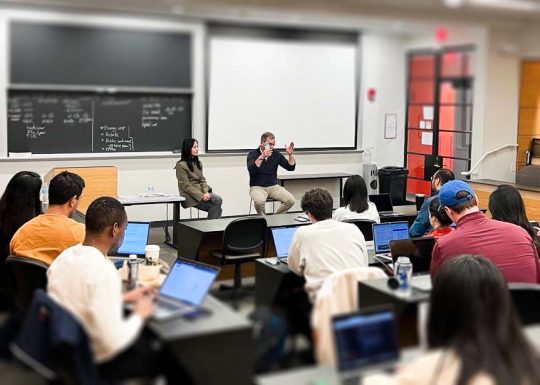
See All Programs
Master of Science in Real Estate Development
Leverages technical expertise, practical applications, and MIT's entreprenuerial ecosystem to educate the next generation of global innovators and leaders in the real estate industry.
Master's Program
Price Dynamics Platform (PDP)
Featured Lab
How are digital innovations and computer science informing the models and techniques we use to understand, evaluate, and estimate real estate valuation?

Climate and Real Estate Research Cluster
Featured Research
What impacts does climate change have on the real estate industry? Our research aims to make the playbook for reducing emissions and unlocking the societal value of buildings.
Quantifying the Impacts of Climate Shocks in Commercial Real Estate Market | Journal of Regional Science
Journal Paper
June 17, 2024Industry
Our Impact
We work closely with our partners to unlock potential within the real estate industry in ways of efficiency, profitability, and social and economic responsibility. Ready to partner with the CRE?
