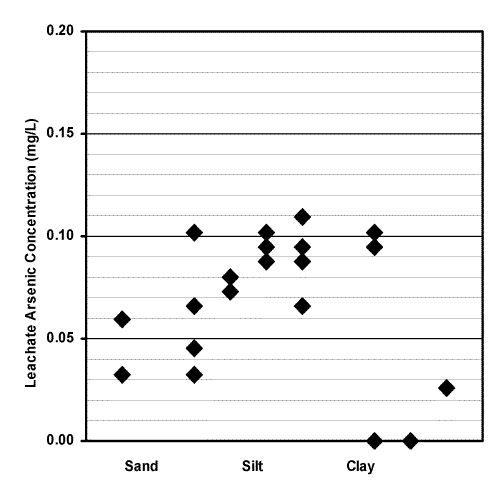
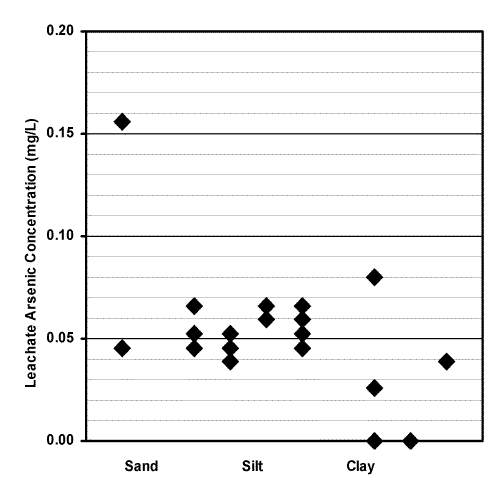
The results of the Soil Leaching Study are shown in Figures 11 and 12.
|
|
These results suggest that arsenic readily leaches from many Bangladesh surface soils after only 24 hours or 6 days of flooding. Arsenic can be uptaken by crops (11 and 18); therefore, this human exposure pathway should be evaluated. Rice is often grown in flooded soils analogous to the conditions of this experiment, is the major staple of Bangladeshi diet, and is grown primarily for domestic consumption (3); therefore, the ingestion of arsenic from domestic rice should be specifically evaluated as a potential human exposure pathway. Unfortunately, the sample preparation equipment required to determine the concentration of metals in biological samples is not currently available in Bangladesh.
The results of this study also suggest that leachate arsenic concentration is greater after 24 hours of flooding than after 6 days of flooding. This result is statistically significant at the 95% confidence level and is based on a paired t- test. This decrease in leachate arsenic concentration over time may result from the precipitation of As(V) after oxygenation by mixing, the precipitation of arsenic by reduced sulfur generated in an anoxic environment, or the precipitation of arsenic by a change in pH (19). If exposure to arsenic from ingesting domestic food crops is a significant risk to human health, then any factors that decrease leachate arsenic concentration should be evaluated as a way of reducing the uptake of arsenic by these crops.