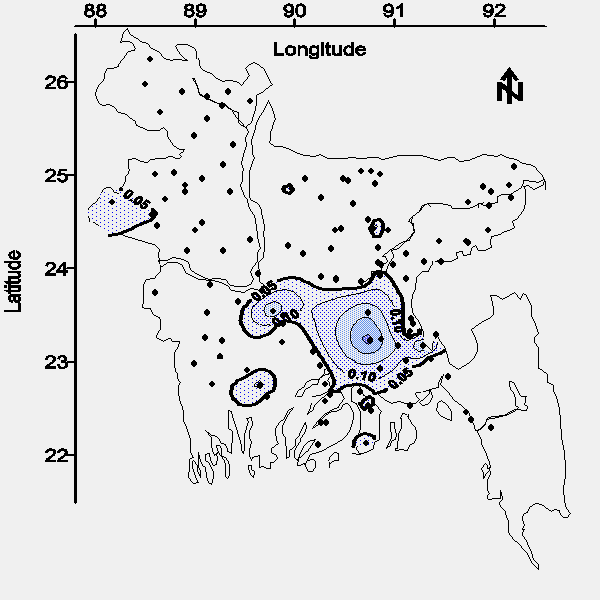
The contour map of minimum arsenic concentration in water from all (both shallow and deep) tubewells is shown in Figure 13.
|
| Figure 13. Map of the minimum arsenic concentration (mg/L) in water from all tubewells regardless of depth. |
This contour map was drawn using the lowest ("cleanest") arsenic concentration from the 4 to 6 tubewells sampled in each village. The shaded regions of this map represents areas where no tubewell had an arsenic concentration less than the 0.05 mg/L national drinking water standard. Approximately 15% of the aerial extent of Bangladesh contains groundwater with a minimum arsenic concentration greater than the national drinking water standard. This area of Bangladesh will require an alternative drinking water source, or groundwater treatment for arsenic removal. This result also suggests that 85% of the aerial extent of Bangladesh has access to groundwater that does not require treatment for arsenic removal prior to drinking.
Therefore, an intensive groundwater monitoring program identifying suitable drinking water wells within each village would eliminate the need for arsenic treatment for approximately 85% of this 120,000,000 person country. This relatively high success rate coupled with the potential to rapidly complete an initial survey of affected villages at a low cost suggest that groundwater monitoring should be a major component of an overall strategy used to provide safe drinking water to the people of Bangladesh. Once the initial survey is complete, periodic monitoring of selected tubewells should be done to ensure that the population has continued access to safe drinking water. The cost of this program would likely be minimized if the majority of the monitoring was done by trained technicians using specially developed testing kits in the field.