
To form a complex organ, simple tissues must be folded, stretched, compressed, and otherwise sculpted into a precise form in a process called tissue morphogenesis. One of the most dramatic examples of tissue morphogenesis occurs during embryonic development, when primitive planar tissues are folded to generate separate layers that will give rise to different parts of the body during gastrulation. Tissue morphogenesis requires that cytoskeletal machines generate forces that change cell shape and deform the tissue. The molecular mechanism by which the cytoskeleton generates force is not known for many of the diverse cell shape changes and tissue movements that underlie morphogenesis. Furthermore, how force generation by hundreds or thousands of cells is coordinated by biochemical and mechanical signals in a tissue is an important step to understand how cells collectively deform a tissue.
The Martin lab is interested in how tissues get their shape. Given that tissue morphogenesis fundamentally involves movement, we have developed a system to visualize and quantify the dynamics of molecules, cells, and tissues during gastrulation. We focus on mesoderm invagination in the fruit fly, Drosophila melanogaster, and mouse model system. Learn more about lab research.
“It is not birth, marriage, or death, but gastrulation, which is truly the most important time in your life.”
– Lewis Wolpert
Research in Focus
The Martin Lab studies a number of different morphogenetic processes.
The unifying theme for our research is the impact of mechanical force on cell behavior and tissue shape.

01.
Cell Holding Hands
Read about how interactions between cells direct forces in a tissue and how this makes development robust.
02.
Signaling Shapes
Read about how dynamic cell signaling leads to wave-like actomyosin and a tissue-wide gradient of actomyosin.
03.
Dividing the Right Way
Read about how cell division affects tissue folding and how forces can impact spindle orientation.
04.
Regulating Shape
Read about how different cytoskeletal systems interact and how cytoskeletal dynamics stabilize force transmission in a tissue.
Latest News
- Mary Ann Collins published review article in Developmental Cell
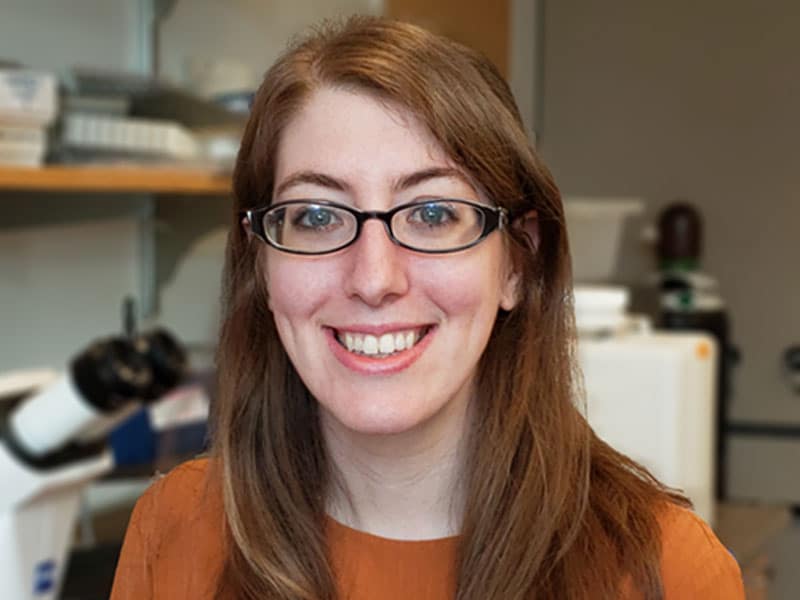
Congratulations Mary Ann Collins on publishing review article on plant and animal morphogenesis in Developmental Cell!
- Congratulation Dr. Jackson!

Congratulations Dr. Jackson on defending your PhD and getting a postdoc position in Germany. Best of luck.
- Congratulation Dr. Yeh!

Congratulations Dr. Yeh on defending your PhD and getting a job in industry! We wish her the best of luck.
- Welcome Anthony McDouglal!

Anthony is the newest postdoc in the lab. Anthony comes to us from the MIT Mechanical Engineering PHD program.


- Mary Ann Collins published review article in Developmental Cell
Congratulations Mary Ann Collins on publishing review article on plant and animal morphogenesis in Developmental Cell!
- Congratulation Dr. Jackson!
Congratulations Dr. Jackson on defending your PhD and getting a postdoc position in Germany. Best of luck.
- Congratulation Dr. Yeh!
Congratulations Dr. Yeh on defending your PhD and getting a job in industry! We wish her the best of luck.
- Welcome Anthony McDouglal!
Anthony is the newest postdoc in the lab. Anthony comes to us from the MIT Mechanical Engineering PHD program.