SECTION 6 - Discussing the Experiment
This section concerns the discussion of the thesis experiment, and includes the chapters:
1. Introduction
2. Experiment Overview
3. The FAQ Paradoxes
4. Planning Paradigms
5. The Institutional Implications
|
1. Thesis Introduction 2. Hypothesis and Method 3. Assumptions and Foundation 4. Designing an Experiment |
5. The Experiment 6. Discussing the Experiment 7. The Qualitative Jump 8. Thesis Conclusions |
Discussing the Experiment
Introduction; Experiment Overview; The FAQ Paradoxes; Planning Paradigms; The Institutional Implications
6.1. Introduction
In this section I discuss in-depth some of the findings from the thesis experiment. For that purpose I begin by discussing an overall review of the findings. Then, I focus on two of the more interesting findings, that require further analysis:
a) FAQ model performance and its compilation paradoxes;
b) Planning Paradigms (hierarchical vs. rational vs. pragmatic), the more significant finding.
Finally, I discuss some of the institutional implications concerning the experiment.
6.2. Experiment Overview
Introduction; Information Infrastructure in Public Administration; Use of Internet in Public Administration; Availability of EIA in digital format; The FAQ model validation; Dual Taxonomy and planning knowledge; The challenge of representing causal reasoning; The concerns with FAQ bias; The concerns with IMS "equalizer" effect; IMS role and audiences; Scope of the EIA Review; Duration of public consultation period in EIA reviews; The role of public hearings; The role of the non-technical summary; The role of the world wide web; Who pays the bill? Unanswered questions.
6.2.1. Introduction
In this chapter, I present a general discussion of the findings, as an overview of the experiment.
6.2.2. Information Infrastructure in Public Administration
In general, no one in the IMS project had any illusions that Internet could (at the time) reach more than a small part of the targeted audience in the EIA public consultation. What became notorious is that the entities that could benefit more from this resource were even less prepared for it than many thousand of individual citizens without any public responsibilities.
Of all the entities involved in this EIA review, only IPAMB acquired an Internet connection in time to make real operational use of it in the process. DGA was walking in that direction, but not really there yet; and even with CITIDEP intervention installing email accounts for DRARN-LVT and Valorsul, they had no significant role. In the same condition were the main environmental NGOs (Quercus, GEOTA, LPN).
Therefore, apart from IPAMB that played a pioneer role in this process, CITIDEP was the only entity that made intense use of Internet for its work in this process, either in support of the IMS Expert Panel, or for the IMS team that indexed Valorsul’s EIA to the FAQ and published it on the Web.
And yet, there was a clear political will to use Internet, and equally clear support and good will from many senior staff in the public administration, in particular the EIA Review Committee.
The main reason is that it is not enough to install the IT infrastructure; it is necessary to follow-up with efforts towards training and motivating staff, as part of a deliberate policy, which was at the time either non-existent or lagging behind the (small) steps in motion concerning the infrastructure.
6.2.3. Use of Internet in Public Administration
Since then, considerable progress was made concerning Internet infrastructure and training within public administration in Portugal. But some structural impediments became even more visible as the Internet network was generalized
6.2.3.1 - Hierarchical vs. network management
The experience from the work developed by the IMS Expert Panel leaves no doubt that the intensive use of .resources offered by Internet - as well by other IT, was the condition that made possible the breadth and quality achieved. But also provided some indication that work processes and procedures have to be adjusted to the new format of communication. The most interesting one is the network-style of project management and team interaction.
Typically, a project manager or job supervisor in a public administration service privileges communication either individually or with sub-teams that are engaged in a common task; and so on, through a hierarchy of tasks and task supervisors. This hierarchy is frequently institutionalized, meaning that it corresponds to organic divisions of the service, with staff differentiated between heads of these divisions and subordinates. Other members of a project team are not kept informed of those detailed steps, unless they are directly engaged in that task, or eventually at project overview meetings. Even for small projects, institutionalized communication flows from subordinate to supervisor and vice-versa, not horizontally between services, unless with proper procedures that always go through the hierarchy.
But with Internet, it is frequently more efficient to just circulate everything, from general information to specific assignment instructions or progress reports, within a common project mailing list. This provides a simple way to keep everybody up to date, without the need of too many meetings, and frequently generates some interbreeding of suggestions from people involved in different sub-tasks. Naturally there are projects whose size and diversity may lead to sub-mailing lists, but those sub-mailing lists are typically organized not according to hierarchy but according to functionality.
Such is the experience from not only the IMS project teams, but also from other related CITIDEP projects since the IMS (CITIDEP 1999).
The problem is that this "network project management" also dilutes the sense of hierarchy: there is still a project coordinator and task supervisors, but everyone has equal access to the manager, multiple supervisors and each other (that is, everyone can communicate horizontally between different divisions and services, without going through the hierarchy first).
That this is a factor, was put in evidence by the way in which public administration tackled the introduction of Internet (and email) in its procedures.
The first observation was the tendency of organic units of public administration to put to use only one central email address. In a few cases (including within the public administration for environment) I noted the following procedure: an email arrives, and the person in charge of the email account prints it, attaches it to a "transmission" or "internal document circulation" form, and delivers it to the internal traditional ("snail") mail circuit -- who may take days before reaching its final destination.
This procedure is illustrated by an (allegedly) true joke about a certain member of the Parliament (according to another, identified, member of the Parliament), who had his e-mail printed by his secretary, who then put it on his desk to be acknowledged and signed upon and noted any decision or comment, then typed again by the secretary and sent again as an e-mail. The joke was that this member of the Parliament allegedly once commented that he didn't see what was so hot about e-mail, it seemed pretty much of a big waste of time in his opinion.
6.2.3.2 - Hierarchical vs. network circulation of documents
But the issue cannot be dismissed just as a joke, because it relates to a real process in place, for a long time: a clear chain of tenure, a corresponding chain of responsibility and ultimately a chain of command. In this case, the established procedures for internal circulation of documents have (theoretically) in mind to keep track of a document (identifying always who got it and when), to allow due control of content by hierarchy and to yield to the responsible person the judgment to forward it to whom she or he so decides.
The role of hierarchical procedures in public administration is perhaps more dramatic in countries with a Latin tradition of centralized state, such as Portugal. There is little doubt that public administration, at least in these countries, took a lot from the military model (some say "napoleonic" military model). But traces of these procedures can be found in practically any public administration. While a frequent source of complaints against "state bureaucracy", the fact is that notwithstanding the legitimacy of many of such complaints, one of the reasons this "chain-like" procedures were put in place was to make administration accountable, by providing a system that ultimately makes individual staff members accountable. For instance, to answer this simple question: "who has now the application X sent by citizen Y?".
So the issue is whether such procedures, inherited from a time when available IT was limited to printed paper or manuscripts, were also, at least in part, created and molded to serve a "paper-based" administration. Why? Because in these early days, one paper could only possibly be in one place, with one person, at a time. It is interesting to note that even before Internet and email arrived, a similar kind of disturbance occurred with the proliferation of cheap and high quality copiers (Xerox machines). Then, a complex and careful system had to be adjusted, establishing clear distinctions between the "original" and the copies, and mandating them to be numbered, etc. Records of this system are still in place, for instance through notary rules of copy certification.
Internet and electronic mail certainly brings a new challenge to this system. Information can flow not only horizontally, but also simultaneously to many recipients, and the concept of "original" vs. "copy" is diluted within digital media, and not possible to control the same way as with paper copies. Hence the questions arise: How to re-adjust procedures, to allow to make full use of the new IT advantages, and still keep public administration (and individual staff) accountable? Is it possible to do so within a hierarchical paradigm built and inherited from a paper-based administration?
In this particular aspect, the only relevant experiment finding is the reaction to deny equivalence of an email to a "written" paper, as a legal contribution from a citizen to the EIA review. However, that particular aspect of it was addressed by legislation, defining also a legal frame for electronic signature certification. The only factor of interest is that it was necessary to wait 2 years for that legislation, long after the use of email and web on EIA public consultation. This suggests the difficulty in handling the problem, but also suggests it can be solved without the need of a major institutional reform. Whether this is the case or not, requires further observation.
6.2.3.3 - Hierarchy and control of IT use
Another consequence of the institutional resistance to the changes brought by the new IT is the inefficient and wasteful process of staff training for the new IT.
-- On one hand, public administration imposes limits on personal use of email and web, or even access to Internet, or severely restricts the scope of web searches, with artificial security measures so blown out of proportion that in some cases even block access to web pages of their own services (I gathered evidence of two such cases, as recent as 2002);
-- On the other hand, it spends millions in training and motivation courses for its staff, with un-motivating or sometimes quickly obsolete manuals and poorly prepared instructors. In fact, IMS experience, as well as larger scope experiences such as MIT’s Athena Project, show that where personal use is allowed (with only reasonable, mild restrictions), the fact that people can use Internet for their personal normal life, leads them to quickly develop know-how and creates the familiarity and routine habits that soon allows the whole community to profit from that familiarity. Examples of this at MIT are the courses that, soon after Athena generalized access to Internet, began distributing weekly assignments by email instead of spending time, money and trees in printed copies.
Resistance to allowing just about any staff / employee to have Internet access and individual email accounts, was by no means exclusive of public administration, but extended to the private sector, sometimes by similar reasons. Besides the discussed above, typical concerns of misuse of work hours, etc., all account for the slow introduction of a "culture" of use of Internet in public administration.
The observations gathered during the experiment just confirm this trend. But they also are an illustration of the powerful efficiency gains brought by the new IT. These gains became more obvious since then, which explains why, despite the troublesome challenges to the traditional settings, Internet generalized and individual access is becoming, albeit slowly, the inescapable dominant trend.
Nowadays, public administration (as other sectors) has to deal with a whole new set of Internet-related issues, from privacy policy on personal email use to the consequences of email swamp, advertisement "spam", hacker attacks endangering public data bases integrity, commercial uses of costly data published for free on the public web sites, etc. Still, most institutions and agencies continue to struggle with the contradiction between the new communication channels and traditional hierarchical communication procedures.
Meanwhile, we observe the difficult co-existence of two parallel circuits: the formal, hierarchical, requiring still printed paper and handwritten decisions over standard paper forms, and an informal, network-wise, using predominantly email. The uneasy co-existence is emphasized by the many restrictions to personal use of email still in place (and sometimes enforced) and by the still predominant need to duplicate the electronic circuit with a paper trail.
6.2.4. Availability of EIA in digital format
In the previous section I described the obstacles my team faced to obtain the EIA source documents in their digital format (Institutional response and Knowledge acquisition chapters). These difficulties are only emphasized by the fact that the EIA "owner", Valorsul, was not only supportive but actually funding our efforts. It is interesting to briefly discuss these difficulties.
6.2.4.1 - The nature of the difficulties
One of the first expressed difficulties was the access to proprietary (and expensive) mathematical models included in the EIA. Although it was not formulated in any specific way, I understood the issue regarded the protection of copyrights and "art secrets". This is an interesting problem. The model authors’ have the legitimacy to protect their rights. On the other hand, how can citizens test and verify the model’s validity during a public consultation, without access to full model documentation and to the model itself?
Another difficulty put forward by EIA consultants was the alleged risk of delivering the EIA in digital media (computer diskettes, etc.), because "anyone could change the content". This concern seems a little farfetched, since there will be always some master copy of it to denounce fraudulent changes (either printed copy, or any "Read-Only" media, like CD-ROM).
More interesting is the fact that some consultants considered that providing EIA documents in their digital source format was not part of the contract, and in consequence did not feel obligated to it. More, they insisted in a written request from Valorsul, even after a verbal confirmation that my team was to have access to the digital sources. This is a legitimate point and shows how these details must be spelled out.
Finally, there were complaints that Valorsul itself only complied with the minimum legal requirements, which did not specify that all the mandatory copies had to be in color. The result was that all color-dependent information, for instance in maps, was lost. The same complaint was put forward by LPN representative, piling it on top of the significant expense it meant for the ENGOs (or any interested citizen) to acquire Xerox copies of the EIA.
6.2.4.2 - The impact of the difficulties
Why is it important to have access to the EIA in digital format?
If we value the introduction of Internet-based or systems like IMS to support technical and public consultation, there is no doubt that this is a must. The thesis experiment findings illustrate in very specific and detailed way how expensive and time-consuming it is to proceed even with partial access to digital sources, let alone none.
Other more "common sense" factors exist. For instance, informal interviews mentioned that the boxes full of copies of the 16 EIA volumes took their time to reach all members of the EIA Review Committee, in consequence of the cumbersome and heavy paper format. In one instance, the EIA volumes took a full week to reach the top floor (housing some EIA Review Committee members) from the ground floor where it was delivered, because the ground floor support personnel claimed incapacity due to medical reasons to carry such heavy parcels (even just to an elevator, I presume, since there is one in that building), and the top floor support personnel claimed it was not part of their job description. Meanwhile, the review period deadline (120 business days) was ticking closer every day.
6.2.4.3 - The role of state regulation
All these examples suggest the need of a regulation stipulating that digital source delivery is a mandatory part of the EIA review requirements, otherwise... it won’t happen. Recognizing that much, the new EIA law, drafted soon after this experiment, incorporates this request. Unfortunately, the requirements are not made specific by further regulation.
In any event, based on the experience here recorded of the IMS project team, and given the new availability, mandated by law, of EIA digital sources, both the costs and time required to replicate the IMS project will be considerably less. The evidence of this is direct: the budget spent on all work required by the absence of digital sources was around 25% of the total cost of the effort to put the EIA on-line, and the time-span (not possible to shorten with more manpower, since it depended on Valorsul’s consultants chosen timing) was more than the duration of the public consultation period.
This does not mean that a new project will be able to have full gains in this scale. Since law and regulations are still vague, many doors are open to keep obstacles in this process: from poorly compatible formats to poorly organized files, deficient resolution, etc. Again, there is still room for improvement through regulatory reform, and in this case it is not visible any major institutional impediment against such reform other than inertia and eventually some lobbying from economic or other interests that prefer to keep things vague (like the general "anti-state regulation" ideological lobby).
For instance, since this time, Adobe’s PDF format has become widely used as a publication format, that is sufficiently rich and reliable to provide a suitable format for archiving documents. For 3 D models, engineering models and databases the standard reporting formats that would be suitable for regulatory use are less clear. Nevertheless, requiring a digital as well as printed format would be a step forward.
6.2.5. The FAQ model validation
One of the most significant findings of the IMS experiment was to identify the FAQ model as an adequate and feasible way of capturing and represent knowledge relevant to the EIA review.
It proved adequate, because of the success in anticipating the kind of questions that were considered relevant by many actors (even if not pleasant neither convenient for some). There was a significant match between the FAQ compiled and the "real" FAQ observed. Two useful notes illustrate this:
a) Valorsul executives commented, in a playful tone, that given the kind of questions they had to answer to the EIA review committee inquiries, it seemed like they were the same persons in my IMS Expert Panel. They were not; but even if they were, this does not undermine the claim that it was possible to anticipate the questions, on the contrary, it just indicates the usefulness of having knowledgeable people in the FAQ building task force, from the same recruiting ground where Review Committee members are designated.
b) The other is the dissenting opinion by one of the EIA Review Committee members. In her view, she asked a key, fundamental question that was not included in the FAQ. While interesting, it only reinforces the success of the FAQ model. On one hand, if only a few examples, out of so many, calls the attention of an EIA reviewer, this is like the exception that confirms the rule. On the other hand, if it is so fundamental, then probably it could have been anticipated, with a more thorough work done by a professional IMS expert panel, well equipped and well funded, instead of an expert panel of very busy volunteers.
The FAQ model also proved feasible, in the sense that this approach allowed an effective process of capturing, within a short period of time, a meaningful knowledge set in the form of question-answer pairs, even without any past experience to rely upon; and a flexible representation paradigm to link the "core" knowledge units (question-answer pairs) to multiple references in different media. The evidence of this is the successful implementation of the IMS as simultaneously a knowledge base and a multimedia relational data base.
6.2.6. Dual Taxonomy and planning knowledge
The FAQ model success opens interesting prospects of building a cumulative knowledge base of multiple FAQ series, case after case, providing each new case with a rich library of past experiences and inheriting useful knowledge sets that will contribute to an increasingly rich multimedia knowledge base.
The FAQ model shows it is possible to identify, capture and represent what we can call "planning knowledge", that is, a body of knowledge units organized in a consistent structure that is directly or indirectly relevant to review an environmental impact assessment.
The experiment shows that the key for this planning knowledge base is to build a dual taxonomy: a more stable, general purpose "domain taxonomy", and a more case-specific "issue taxonomy". The FAQ question list is neatly part of this "Issue taxonomy", with the major classes (or sections) of the FAQ at the root of the taxonomy, the sub-classes (or sub-sections or chapters) filling the intermediate layers of the taxonomy tree, with the questions as the "issues", or leaves of the taxonomy tree.
Also, the adoption of simple yet data rich forms associated with each FAQ question-answer pair, like the forms described in the knowledge acquisition chapter, proved to be an efficient way to gather metadata information, such as the taxonomy classification, the technical difficulty level, keywords associated with it, other document and multimedia references, etc. These forms allow to generate automatically a great deal of the cross-referencing between FAQ and other support documentation, EIA report segments, etc. This sped the process, a key aspect given the time constraints; and made the FAQ a much more rich and useful format than printed lists or plain documents.
What is more, a good deal of the metadata forms may be usable as a template in other cases. Our own form for the FAQ was based in, and adapted from, past experiences, like the one described in the design section, concerning a questionnaire framework for case-based reasoning in natural resource management (Ferraz de Abreu 2002b) (Razzaz 1993).
In this sense, this experiment opened the way to a much simpler process of gathering, structuring and publishing FAQ, either on web or through an IMS-like system. A lot of the work done by the IMS Expert Panel was due to the exploratory nature of the path we were following at the time.
For instance, now we know we don’t need to go through all the lengthy, time-consuming process of classifying in detail such a large set of vocabulary, in order to obtain a workable taxonomy and a good set of FAQ. Knowing before hand we need a dual taxonomy and what kind of dual taxonomy is likely to be useful, allows to jump stages and focus right away in a much more limited set of vocabulary.
On the other hand, this exploratory work gives other credibility to the final outcome (the adopted dual taxonomy plus FAQ), as compared to some arbitrary structure dreamed up in the design stage and adopted blindly for the IMS.
Finally, the experience of the IMS Expert Panel suggests that one important part of the key to compile and structure "planning knowledge" within a multi-disciplinary body of knowledge, such as the represented by the EIA and what it takes to review an EIA, is to build very early in the process a common reference, or language, between a team of experts from different areas. For that purpose, the role of the initial "brainstorming" described in the Expert Panel chapter was as much to generate the seed for the system vocabulary and future taxonomies, as to allow the forming of this common reference, providing an opportunity for each other to get acquainted with the "lingo" and specialized terms and expressions of the different areas of expertise.
6.2.7. The challenge of representing causal reasoning
The experiment shows the difficulty to represent causal reasoning, given the more demanding requirements (in time and human resources) of its "natural" knowledge representation paradigm - rules. It is nevertheless an important component of the knowledge to consider for an EIA review.
FAQ model represents cause-consequence reasoning through the sequencing of questions, or question trails. An inference engine equivalent to the one used by rule-based systems was put in place: in this case, "forward chaining" the questions.
User feedback, even if in small numbers (the mentioned 6 comments from the survey on-line, plus comments from a small group of citizens at the public hearing and several IMS users during and after the public consultation period, adding to around 40 people) was unanimous: the "question trail" feature on the web was appreciated, in part because of the flexibility to follow a "green" or "red" or "yellow" path (non-technical, technical or in the middle), or sequence of questions and answers, in part also because it allowed to follow a logical chain of issues (in other words, causal reasoning). But I also received comments denoting user frustration when most often than not, a "question trail" would end abruptly, after only very few questions, before reaching its logic conclusion, or when the "trail" did not offer more than one level of technical depth (either "red" or "green" level questions but not both, for instance).
Such comments reflected an accurate picture of what was implemented: more than 50% of the questions were part of a "trail", but as reported in the chapter on the knowledge acquisition, the majority of the trails had the observed limitations. The experience from this research shows it is not easy to build such sequences. Authors clearly struggled with suggesting them; and when they did, it rarely reached more than one step ahead.
The reason is simple, and well researched: rules, not FAQ, are the "natural" representation paradigm for this kind of knowledge, expressing series of cause-consequence relationships (as discussed in the chapter on information technology review).
In my view, this suggests the need to consider two parallel knowledge-mining processes, running at different paces. One, the aforementioned FAQ process, which can occur as multiple iterations, one per case, following closely the EIA review timing and cadence. Another, compiling sets of cause-consequence rules from each actor, with a slower pace and wider time frame, corresponding to one iteration for each phase of their strategic thinking.
I exemplified the interest and the challenges of rule (causal) representation, in the chapter dedicated to the FAQ model in the previous section. Here I call the attention to another interesting element: the causal reasoning of different actors show similar goals, or ending conditions of the if-then inference chains, but they reach these goals from different or even opposite premises. So we have a convergence in results claimed by both lines of divergent causal - consequence reasoning. -- such as the final "good" consequences for public health, economy, solid urban waste management, etc.
One particular example is a direct evidence of this concept. Both Valorsul and ENGOs are concerned with the waste of good agriculture soil, a scarce resource in Portugal.
One side (Valorsul) arrives to the goal of protecting it by arguing "IF NOT incinerator THEN there is the need of large surfaces of waste landfill sites in the metropolitan area"; THEN, given the nature of land use, this will inevitably lead to waste agriculture soil. On the environmentalist side, they argue that "IF incinerator THEN there is the tendency to ignore or render insignificant efforts towards composting, because the incinerator burns also the organic component of the solid waste"; THEN, this prevents the possibility to use compost to help regenerate the badly depleted soils for agriculture. On the other hand, IF NOT incinerator THEN incentives towards composting will increase considerably, leading to the final advantage to agricultural soil.
In other words, one side reaches the protection of agricultural soil with the condition "IF incinerator", the other with the condition "IF NOT incinerator", and both seem to be using sound arguments. By representing the causal reasoning of all actors, we make more explicit each step of the argument, and arguably obtain a better view of what assumptions give more weight to one or other path.
Nevertheless, it remains that the experiment findings suggest that the knowledge-mining process for rule-based representation is difficult, expensive, time consuming and with uncertain outcome. Should we instead try to improve the "FAQ trail" approach and the process of acquiring and identifying sequences of questions? Further research is needed to allow more insight on the best way to represent causal reasoning.
6.2.8. The concerns with FAQ bias
An interesting and important finding of the experiment was the difficult co-existence of the different actors’ content contributions in the IMS. It all began with the controversy around a perceived bias in the first few iterations of the FAQ question list.
6.2.8.1. Concerns due to bias in FAQ questions
It is worth to note the evolution of expectations in this matter.
In the beginning, all actors were favorable to the experiment, and the expectations on the IMS prototype varied from mild to high, but positive in general, with the exception of Valorsul, by the reasons already described (chapters "The Actors" and "The Institutional Response"). When the knowledge acquisition process began, the fact that there was a predominance of questions with a critical presumption (example: "Can we really call this an EIA for an waste management system?") led some public administration decision-makers to reevaluate their stand on the IMS, and their expectations (or concerns) became negative.
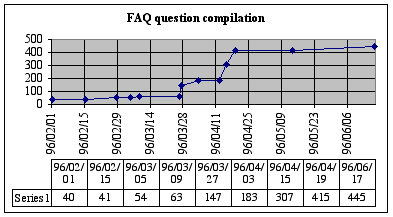
These concerns were expressed in middle April 1996, in the described meeting ("The Institutional Response"). By then, it had already circulated 8 versions of FAQ lists (only questions and only in paper, not inserted yet into the IMS). A sizable set of FAQ questions had already been collected (307). Fig. 6.2.8.-1 shows the evolution of FAQ compilation.
Fig. 6.2.8.-1
- Evolution of FAQ question compilationThe first stage, until 9th March iteration, was concentrated on adjusting the "Issue" taxonomy, with a small set of seed questions. After that, FAQ compilation gained speed, and the bias concerns were raised.
Following my effort to bring some balance to the FAQ, as described in the previous section, I obtained funding from Valorsul (a couple of days later) and in result, more resources were added to the IMS project: a team of paid consultants working under contract to index Valorsul’s EIA to 260 of the FAQ chosen by Valorsul.
In consequence, the final result was that Valorsul itself was mobilized to provide a significant number of FAQ question-answers pairs (62), more than any other actor alone. The last 3 FAQ iterations, between 19 April and 17 June, already reflect the contributions from IMS consultant team and Valorsul.
6.2.8.2. Concerns due to imbalance in FAQ answers
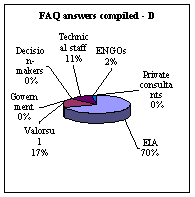
I tried to collect (and insert in the IMS) more answers from the other actors to balance once more the content, but without the help of paid consultants, relying only on the volunteer efforts of the IMS Expert panel (and my own), I could not generate and process as many answers. I managed to insert into the system 404 out of the 453 answers compiled. Among this 404, 290 were inserted by my CITIDEP IMS team funded by Valorsul, corresponding to 228 answers extracted from the EIA and 62 provided by Valorsul (the detailed numbers by actor and issue class were presented in the chapter "The knowledge acquisition").
Naturally, all the 49 answers that I had no time to insert were from all the other actors. In other words, 290 answers were inserted (and published on the web) by paid consultants, coordinated by me; the remaining 114 answers, from other actors, were inserted by myself, with the occasional help of non-remunerated members of the IMS Expert Panel.
Fig. 6.2.8.-2 shows the percentage of the answers inserted in IMS, by actor.
Maybe as a reaction to this, one of the environmental NGO (LPN) made the mentioned suggestion to set some kind of "quota" for each actor, concerning the IMS knowledge content, in order to avoid the supremacy of those who have more resources.
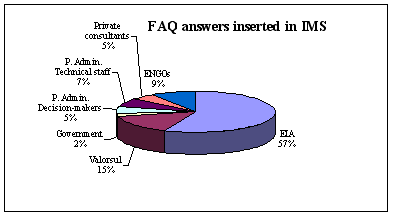
Fig. 6.2.8.-2
- Percentage of FAQ answers inserted in IMS, by actorGiven the experiment data, as seen in Fig. 6.2.8.-2, the problem is real, although I have some doubts on the feasibility of "quota" solutions. However, LPN’s representative reaction was linked to her view that EIA and Valorsul were one and the same (which added to the feeling of overwhelming dominance on the IMS content by one actor, Valorsul):
"(...) it is also not clear why in the ‘office’ space (‘Virtual Office’ module in IMS) it shows up a fraction (office) for the EIA and another for Valorsul, in what constitutes after all a duplication of the intervention of the same entity" (Moreno 1996).
The experiment brought nevertheless some evidence that indeed there were differences between Valorsul statements and the EIA produced by consultants (even if paid by Valorsul). As described in the chapter on the knowledge acquisition, among other things there were several questions in the FAQ list that Valorsul wanted to address somewhat differently. One typical "FAQ trail" begins with questions answered with quotes from the EIA, at the head of the "trails", followed by (related) questions suggested by Valorsul and answered by Valorsul, at the tail of those same "trails".
My team also noted specific "nuances" towards a different stand between Valorsul and the EIA, some times in critical details such as the impact of the chimney height, besides the mentioned contradictions between the specialized volumes and the "synthesis report". Nevertheless, it cannot be discounted that Valorsul might also have wanted to reinforce the EIA message, using their "separated" space as an echo of the EIA, expanding on it, saying the same thing with other words, etc.
Even considering the answers reporting directly the EIA content as different voice from Valorsul, and also the fact that they were gathered and compiled by my team (CITIDEP IMS team) with rigorous care to reflect exactly and only the EIA document, the fact remains that Valorsul was the actor more related to the EIA content. So the concern expressed by some ENGO members had a base just as real as the concern from decision-makers about the FAQ question bias.
Since the FAQ was the most popular and informative part of the "Virtual Office", it illustrates the relevance of the struggle for control of content that special interests can be expected to undertake as IT details play a bigger role in shaping public perception of project impacts.
6.2.8.3. No apparent bias induced in users
Despite this imbalance in the IMS content, the experiment findings do not show any evidence of it inducing a bias in its users, neither towards the critical tone dominant in the earlier question set, nor towards the final predominance of the number of answers from the EIA and Valorsul. On the contrary, as presented in the "Public Consultation" and "Knowledge Gap" chapters, both anecdotal evidence from user written comments, user interviews, and finally the controlled experiment with students, show that the system’s content allowed reasoned opinions; in many cases splitting their views favoring some arguments from ENGO’s and other arguments from Valorsul, together in a consistent opinion, whether this opinion was more critical or more supportive of Valorsul’s proposal of an incinerator.
In particular, the controlled experiment shows that it is possible for a set of users to evolve from large numbers of "no opinions" to large numbers of "some" opinion, and at the same time those newly formed opinions splitting evenly between new opinions favoring Valorsul views and new opinions favoring ENGO’s views.
It can be argued that, given the small number of people involved in both the public consultation and the controlled experiment, different results may be obtained with other experiment in similar conditions. That much is true, and it will be interesting to continue this research and build on it, compiling more experimental evidence. However, I don’t claim that the findings prove some intrinsic "no-bias" nature of the IMS. It is actually doubtful that anyone can definitely prove such thing about any technology.
What the experiment findings show is that such potential "bias inducing" phenomenon is not a deterministic, forceful consequence of a certain IMS content (and IMS design), even in a situation where there was a real risk of such bias inducement, given the imbalance between the actors’ represented voice. More: given the uniform direction assumed by all the different indicators observed, in different stages of the experiment, with different audiences and different settings, and given the unfavorable base conditions (the aforementioned real bias in the IMS content in terms of the relative volume of each represented actor’s voice), I contend that these indicators are significant and that they suggest the IMS favors reasoned thinking, as opposed to other forms of generating opinions, for instance subliminal messages or massive exposure to unilateral advertisement.
That this evidence obtained in the thesis experiment is relevant, is emphasized by the concrete worries and concerns from different actors that such deterministic effect could occur with the IMS.
This said, it is my view that it will be preferable to put in place some kind of mechanism that will favor a more balanced set of questions and answers, with a more even representation of at least the most significant actors. The experiment findings are very clear: this is not likely to happen spontaneously.
In this case, I played a definite role as an independent moderator, accepted or at least tolerated by all parts, seeking fairness and an even share of the IMS content per actor. To profit from IT such as the IMS and convenient knowledge representation such as the FAQ, the FAQ compilation process has to be institutionalized in some way, and someone will have to play this moderator role. Since neither the Government or the Public Administration is an independent actor in cases like this (where they clearly have a stake in the project under review, and favor one outcome), some other institutional solution must be found.
One possibility is to regulate the convening of some council of all stakeholders, who can either play the role or assign someone trusted by all parts. Incidentally, the same can be said about the importance of convening some equivalent to my IMS Expert Panel, with similar functions.
At least in the short term, and in its modest scale, the experiment findings in this instance (FAQ compilation process) put in evidence the reluctance and difficulty of decision-makers to deal with actors (and voices), perceived as adversarial, as partners in the decision-making process; and suggest that it may be necessary to have some reform towards a more flexible system, at least able to incorporate other actors in earlier stages of the decision process, as compared with the current EIA review framework. More concretely, able to accept the incorporation of other actors’ input, in this case in the form of FAQ questions and answers, before the small period assigned to public consultation, at the very end of the EIA review.
6.2.9. The concerns with IMS "equalizer" effect
Even more interesting is the concern on blurring the lines between actors, as a result of having them share side by side an office space in the "Virtual Office" module, and their requests for content authorship clarity with separation / identification of their different roles.
The interesting fact is, such concern was shared by different actors in opposing roles, like public administration decision-makers and environmental NGOs. More, it was also expressed by different actors in collaborating roles, like Valorsul and the consultants that produced Valorsul’s EIA, since the concerns shown by Valorsul and these EIA consultants in asserting their independence towards each other, led in this case to separate their "office space", as well as their space within the Web FAQ trails.
This concern provides a good insight for improving IMS design. The fact that the "Virtual Office" module includes office space for all actors may be complemented either by creating separated sections representing different virtual buildings (one per actor), or, what seems more practical, to emphasize the special character of this module as a "Public Consultation Virtual Building" with office booths temporarily assigned to actors, that otherwise have their headquarters in different places. Many interface elements can help, like visual cues (each office space generated can have an actor-related background photo or logotype, etc.).
Whatever the improvements to introduce in future versions of an IMS, it remains that this discomfort of sharing a consulting space, even if virtual, is a reflection of:
- The complex dialog in place between the different actors, with difficulty to share a common discussion agenda;
- The generalized, fierce concern with preserving their identity and corresponding image as independent actors; and finally,
- The decision-makers’ concern to not put in question their institutional authority and their corresponding role in a different plane of other actors in the EIA review process, like ENGOs or Valorsul.
The fact that introducing new IT, such as the IMS prototype and the Web, caused such explicit and strong reactions, is an indicator that these actors felt it had the potential to challenge the established role-playing and interaction, for better or for worse. In the last case, it suggests that decision-makers were specifically concerned that IT like the "Virtual Office", with its proposed design, had the potential to put in question public consultation procedures that were designed to preserve their special status in the process.
The experiment shows that it was precisely the current IMS design, with the ability to "take the question" (drag the "problem", in the system user interface) to contiguous "virtual offices" within the common "Office space" in IMS and compare the different views and opinions in such a simple process, that most attracted all recorded users of the system and was considered by them as the most useful IMS feature. It will be interesting to see, with future work, how far can design changes in IT (like the suggested above) go towards accommodating these concerns, without desfigurating and destroying the usefulness of an IMS, by defeating its purpose.
The experiment findings show that, at least for the proposed design ("Virtual Office" in IMS), the institutional response became indeed an impediment, when their reaction led to deny access to EIA documentation before the public consultation period and to restrictive guidelines (described in the chapter on the institutional response), for instance, making it impossible for members of the EIA Review Committee to get better acquainted with critical views from other actor’s experts, taking advantage of the IMS features, until the "day one" of the legal public consultation period. This suggests that only a more flexible institutional framework, more willing to incorporate the input from other actors in the decision-making process, giving them a more institutional role in the decision, can fully take advantage of what new IT has to offer as a decision-support system. However, the experiment findings raise also the question whether other actors, such as ENGO’s, are prepared and willing to assume a more institutional role, given their similar reaction and concerns.
6.2.10. IMS role and audiences
In the wake of the discussion within the IMS Expert Panel the audience targeted, as the primer IMS users, were: a) individual citizens, b) EIA review committee and staff, c) environmental NGO’s activists. The experiment provides more concrete indicators concerning real and potential audiences.
6.2.10.1. Individual citizens: reducing the knowledge gap
The anecdotal evidence gathered in the experiment, from formal and informal use of the IMS prototype and also from the controlled experiment with students (chapter "The Knowledge Gap"), suggests that IT such as IMS can contribute to reduce the gap between less technically qualified citizens and experts, which is an important issue given that much of the environmental impact assessment review is dependent on understanding technical data and technical reasoning.
Naturally, the experiment did not prove this will be always the case, neither did it bring to light whether this better understanding can have a significant impact in the EIA review. Given the delays and obstacles due to the institutional framework, as described in the experiment section, the late availability of the system severely limited the reach of the IMS, which only became available to the public at large in the last days of the public consultation. Still, all indicators are consistent with the IMS potential to play this important role. This is even more emphasized when compared with the other traditional means made available (the EIA volumes, non-technical summaries, public hearings), as it will be further discussed in this chapter.
There are other interesting aspects to consider, such as how those same impediments, that led to the IMS limited use, show that the real impact of IMS in this case was before its use (like the concerns discussed above), revealing expectations of a significant impact of IMS use by citizens; and whether a better understanding of technical data will necessarily facilitate the decision-making process. These and other facets are further discussed in this section.
6.2.10.2. Urban vs. rural areas.
As IPAMB senior staff emphasized, many of the EIA reviews concern rural areas. This presents both a problem and an opportunity for IT like IMS.
The problem is the obvious difference in the use of computer technology in rural areas as compared with urban areas, and the lower expectation of reaching meaningful audience in this case (either with Internet or with IMS). The experiment findings suggest that in order to facilitate access to a wider audience, even in urban areas, several aspects count:
- Good advertisement in traditional media, such as newspapers, radio and TV, on the same occasion official "notices" are circulated. In this case, the only public announcement occurred during the public hearings and in a press conference held by the Ministry of Environment, where a demonstration of the IMS was included at the end, but this press conference took place almost in the end of the public consultation period. With today’s much higher profile of Internet, email and web-based advertisement will have a much more significant impact than at the time, although the user reactions to the proliferation of junk mail and "spam", as well the confusing multiplication of web sites, can equally dilute its reach and impact;
- Multiple points of access to IMS, such as public offices, public rooms in Municipalities, etc. In this case, IMS was installed in a fairly distributed circuit (as enumerated in the chapter on the "Public Consultation", but it can be spread considerably more, for instance in Municipal buildings;
- Distribution of digital media, like CD-ROM. This was done in this case, although in too small scale (and again too late). Despite these shortcomings, the experience with CD-ROM distribution was very positive, showing that it is a simple, attractive and relatively cheap distribution media. Nowadays, it can be considered, naturally other complementing technologies, such as DVD;
- Distribution through the Web. In this case, the use of the web was mostly confined to the FAQ trails and the opinion survey, but today’s increase of access makes it also a good distribution media. However, in my opinion, even with the recent increases in higher bandwidth access, the distribution of video is still better achieved through CD-ROM (or DVD). Possibly, future improvements in video streaming broadcast and generalization of much higher bandwidth access, will increase web’s role as a distribution media.
The opportunity arises from the IPAMB difficulty in handling, with a very small staff, cases where the project under EIA review cross many municipalities (concelhos), like for instance a highway, or a railroad. This is because law mandates that, if public consultation is required for a project, then there must be a public consultation procedure in each municipality involved. It became hard for IPAMB staff to be physically present and support the frequently un-prepared staff of many municipalities at the same time. In such cases, IT like the IMS (and web) can help both IPAMB and municipalities’ staff to handle the public consultation requirements.
It is interesting to note that one of the public consultation-related tasks municipal staff are frequently requested to attend is answering questions from the public. This suggests yet another source of FAQ pre-compilation, and another interesting audience. If we consider rural areas, with considerably less citizens using Internet, both IMS and Web-based FAQ can be a very useful source to municipal staff in remote areas, with little to none access to a body of EIA experts to support them. Such was the opinion expressed by some senior staff at IPAMB.
6.2.10.3. Valorsul and journalists
From my observations, as referred in the chapter on the knowledge acquisition process, at some point Valorsul felt that the work and the time they were investing in providing in-depth answers to questions that were not being addressed by the EIA study, were useful as well for them to feed journalists and reporters that were knocking on their doors. The FAQ question-answer pairs presented them with some kind of an already made script, of which they made the most. This suggests another potential audience for IMS: reporters and newspapers.
6.2.10.4. ENGOS and IMS
Environmental NGO’s were solid supporters of the IMS, through all phases of the experiment. Even when some of their representatives raised concerns about IMS content and design, after using and testing with real-size data, they still considered IMS a good tool for them. They enumerated concrete advantages: the usefulness to help ENGO’s to prepare for public hearings; the quick access to EIA documentation, with better quality and cheaper than Xerox copies; their perception of IMS capacity to reach a wider audience with more comprehensive information within the short time, and their belief that IMS can improve citizen input in the consultation process, in terms of quantity and quality (chapter "The Public Consultation").
Why did ENGO’s concerns on content imbalance and potential problems arising from IMS design ("Virtual Office") not affect their firm support and interest in IMS? The answer is in the same feedback they provided. In the view of the ENGO’s representatives, their concerns could easily be addressed by simple changes in the IMS design and, most importantly, by stipulating ground rules for fair representation in its content.
This presupposes two assumptions: that design changes will not be controversial, and that such ground rules will either be easily institutionalized or easily set in place by tacit agreement with whoever moderates the process. The first one remains to be confirmed by further experimentation; and the second one, once again, implies the presence of a moderator filling my role, as discussed above.
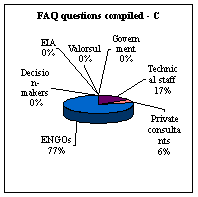
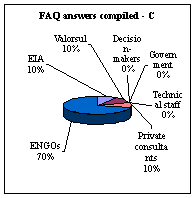
The fact that ENGO’s support of IMS stayed firm, despite concerns, raises interesting questions. Why did they not use it, at least as much as individual citizens did? Why was their contribution to FAQ minor as compared, for instance, with more skeptical actors like public administration technical staff? Part of the explanation may reside on factors like their lack of resources, and the kind. But my understanding of their positioning towards the planning process behind Valorsul’s proposal, questioning its validity (as presented in the "Institutional response" chapter) led me to further analyze these paradoxes, later in this section.
6.2.10.5 - Support to the EIA Review Committee
The previous section enumerated the IMS applications as seen by EIA Review Committee members (Institutional response chapter) and the need for an earlier availability of the fully loaded system, given that these applications focus on the first stages of the EIA review process.
Another advantage of using IMS at an early stage is the possibility to bring the citizen input to the consideration of the Review Committee before the Committee finalizes its work. IPAMB is in charge of reporting and summarizing the concerns and contributions gathered during the public consultation period, but in fact this report is incorporated in the final review report when the Review Committee already completed most of their analysis. It seems reasonable to expect that if citizen input is made available in this pre-digested format (IMS FAQ), it will have more chances to be taken in consideration by more members of the Committee in time to affect their analysis and recommendations.
6.2.11. Scope of the EIA Review
This also raises the nature of the EIA scope, and the corresponding timing and scope of a EIA review.
Other EIA review models exist, in which first it is studied (and discussed, with input from citizens) the general options and their impacts, for a certain site criteria, with several alternatives in view; then another EIA is produced for the specific detailed project, for a specific facility (or any development in general) and a chosen site. Briefly discussing these alternative planning processes is relevant, specially considering that ENGO’s criticism of the process also relate to them.
It is obvious that choosing an approach in which you only produce an EIA with public consultation after one site is selected, as opposed to presenting to public discussion an EIA considering multiple alternative sites, has a different social and political impact, with direct influence in the universe of citizens mobilized to participate in the process. So the choice of one approach versus the other is unlikely to be made on technical grounds only.
Political and decision-making problems arise from this extended scope, among which the problem of its costs (besides the political costs, there are also costs in resources needed and extended time - other form of increasing costs). There is the risk of going too deep into alternatives that will be abandoned later.
On the other hand, there are examples of other cases where trying to cut corners and present the population with a chosen site as a "fait accompli" did not avoid political consequences and population reaction, and may actually become an aggravating factor.
Even for the case of S. João da Talha, it was not lost on the population neither on ENGO’s that no other site was apparently studied properly as an alternative, as it is suggested by the some of the proposed FAQ, like:
Are there alternatives to the project? Which are they? (Section C)
What is the use of giving my opinion if the site has been chosen and the type of treatment to be given to the solid urban waste has been chosen? Haven't the project and the construction of the incinerator been adjudicated already? (Section I)
Which opportunities did the public have to participate in the process of choosing the solid urban waste management model for the municipalities of Amadora, Lisbon, Loures and Vila Franca de Xira? (Section I-1)
Still, if we compare only with the case of the siting of a "dedicated" incinerator for hazardous waste in Portugal or, a few years later, the co-incineration for hazardous waste, in which (both cases) it was reported to the public that alternative sites were being studied in order to better select the final siting, the evidence is clear. From the point of view of the political costs to decision-makers, to consider several alternatives is worse than presenting to the public only one, even if this approach is technically questionable. From the point of view of the population of the selected site, it is much better to exist alternatives in view, since it amplifies considerably the political impact of their reactions and concerns.
It seems therefore difficult to find a common ground between different actors concerning which approach to take on the scope of EIAs. Again, the only light at the end of the tunnel is the increase of citizen political education and sophistication, so that they will be able to support politically difficult decisions; meanwhile, the alternative to follow the easy path (however technically wrong) is to reach a wide multi-party agreement, translating it into law and this way spread and dilute the political costs for the incumbent government, whoever may it be at each moment.
6.2.12. Duration of public consultation period in EIA reviews
The IMS experiment shows that the typical duration of public consultation periods (between 15 to 45 business days, in this case 30) is clearly insufficient to load a useful set of data into support systems like the IMS prototype and the web. Not to mention the time needed to define a taxonomy, build a good FAQ, index the EIA to this FAQ, etc.
It is possible that with time, accumulated experience will allow gains in efficiency in the process and, possibly, use elements of past structure (and even past FAQ) to speed-up the delivery time of an IMS-like program. But it became obvious to anyone in the project that either the public consultation period is considerably extended, or the EIA must be available, already in digital format, much earlier than it was. If we consider the importance and usefulness of an IMS also for the EIA Review Committee, it follows that the EIA digital sources must be available even before the "official" EIA review period.
Another factor pointing to the usefulness of extending the public consultation period, is to allow for incorporating citizen input in time for the new IT to provide a forum of discussion among citizens and iterations of new FAQ and multiple answers with chains of reasoning, as discussed in the chapter "The Problem".
6.2.13. The role of public hearings
Observation collected at the public hearings in this case, as in many others according to information gathered from interviews, confirm that they are an important forum in the public consultation process. But more often than not, like the one in S. João da Talha, the hearing is used by citizens or groups as a forum (or a pulpit) to vent their opposition and use it as for expressing emotions and convictions, according to their interests and agenda, and not to ask questions to clarify aspects of the EIA or the project, and obtain respective answers. Even when some questions are asked, it is notoriously difficult to either respond in depth to each request or to satisfy all requests and respond to all answers.
The informative role of the hearings is therefore limited. This suggests two things:
First, there is a lack of other civic and political forums for citizen participation in planning, in earlier stages and also during project implementation and monitoring. If those foræ were created, public hearings may be alleviated of part of these other facets, since they would have their proper places to take place.
Second, that there is a need for complementing foræ, to allow for more in-depth answers to doubts and requests, and to allow to respond to all such diversity and number of questions. Meetings like the ones promoted by Valorsul before the public hearings are one example, as the informal contacts between citizen committees and environmental groups, but this creates also an unbalance, since in some cases some actors will not have the resources to be present and follow-up with contacts, or, in other cases, there will be no availability due to low priority according to actors agenda. This is where the "Virtual Office" fills the void, and the experiment suggests it can fulfill this role.
6.2.14. The role of the non-technical summary
The findings confirmed in a strong way the difficult role of the non-technical summary (NTS) document.
While the law and regulations do not stipulate that the NTS is just intended to satisfy "lay" citizens, leaving the EIA volumes for experts, instead formulating the role of the NTS as "informative" about the EIA and a kind of preview, serving to announce the public consultation, the fact remains that it is only the NTS that is distributed (and now published on the web) and circulated. Anyone wishing to consult the EIA has to come to either IPAMB or some assigned office in the municipalities involved. EIA regulation also specifies that the NTS must be written in a language able to be perceived by a non-technical audience. All in all, it is clear that the subjacent philosophy is that citizens are viewed as divided between experts and "lay", with the first category possibly providing some technically-related input to the review process, while the input from "lay" citizens is expected to be at the level of the NTS content, far from any discussion of technical issues.
The experiment observations point clearly to put in question the divide expert-lay. Instead, it shows them divided more along the lines of motivated vs. less motivated to participate in the public consultation. These less motivated, disregarding whether they were experts or citizens with little schooling, were in fact the citizens that were not much troubled with the superficiality of the NTS, since they did not care much about details and did not have the motivation to read more than a summary.
Highly motivated citizens, by contrast, were frustrated by the NTS and even aggravated by its (allegedly) simplistic presentation of the project. As citizens of S. João da Talha said, the fact that many of them have just basic schooling does not mean they cannot understand what is at stake; and they require detailed answers to specific issues, technical or not. They are not intimidated by the technical jargon, they just demand it to be explained. The non-technical summary simply fails the task.
In this aspect, the experiment observation shows that a more flexible presentation of the EIA, either in the IMS prototype or the Web FAQ trails, is more close to serve both audiences. Those only superficially interested in the issue could browse through more general oriented questions. Others plunged into detailed sections of questions. It was possible to observe that some citizens had a specific area of interest, and they would quickly focus on it, and reach more in-depth information in this area. But at the same time, almost every recorded user took a brief look at other questions.
The experiment observation, in my view, points to the power of the new IT in addressing multiple-level audiences. Instead of imposing, through the EIA structure (NTS + specialized volumes), an already disputable division between non-technical citizens and experts, information in digital format, properly structured, can be accessed in many more combinations of "in-depth-in-area-x-and-area-y" and "superficial-in-other-areas".
This is not to say all is easy and done. For instance, FAQ integrated in a "Issue" taxonomy is still an "imposition" of a certain pre-defined structure, even if made more flexible through cross-referenced hypermedia links, and even more if associated with keywords related also to a parallel "domain" taxonomy, allowing horizontal navigation and other sequences based on proximity or class inheritance.
In this aspect, the IMS prototype provided more flexibility than the web FAQ trails, although with current progress (search engines with proximity feature, JAVA, XML, etc.) it will be possible to enhance considerably the on-line component. Nevertheless, the first implication is the importance of a good strategy for knowledge representation and structure.
Where the real power begins to emerge, in terms of flexibility in supporting multiple, diverse mental models of approaching a problem, is when you add (or update) more knowledge units to the system. With printed media, this must be done either by adding new chapters or new volumes, eventually reformulating (and reprinting) the previous book structure. With a well organized knowledge base, adding more units (in this case, another set of question-answer pairs, or more complementing document files), only brings more alternatives of question trails, or hyperlinks to common useful supporting documents, etc.
While the process is not without difficulties, as illustrated in the chapter on the knowledge acquisition, the experiment findings show how it was possible to grow from a initial set of FAQ when implementation began (around 307 questions) to a larger set (445), having as a result more alternative trail sequences of questions, more hyperlinked cross reference paths, etc. Also, much of the difficulties we faced, were due to inexperience and a first generation of web publishing tools; replication of the system will be therefore considerably easier, with more powerful IT and learning from this experience, in particular the knowledge representation and structure.
6.2.15. The role of the World Wide Web
As mentioned in the findings, one of the unexpected phenomena observed was the fact that the Web site with the EIA FAQ trails continued to register visitors in increasing numbers, during years after the end of the Valorsul EIA review period. Fig. 6.2.15.-1 and 6.2.15.-2 show, respectively, the accumulated number of visitors and their daily visit rate averages.
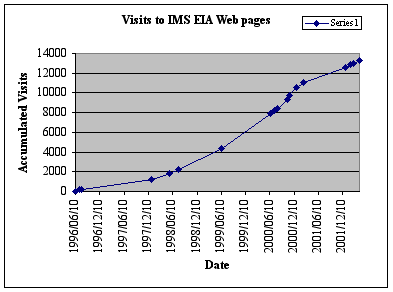
Fig. 6.2.15.-1
- FAQ web site accumulated number of visitors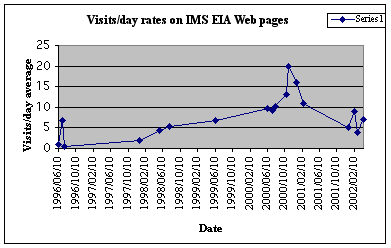
Fig. 6.2.15.-2
- FAQ web site daily rate averages of visitorsWhile it was clear that television-based or newspaper-based information regarding the impact assessment on the incinerator had a much wider audience and a larger impact in calling the attention of citizens to the issue, the other side of the coin is that it also presented a peak with a quick eroding slope, reflecting the quick disinterest of the press or of the television on the issue, accompanied by a lack of attention by the population.
Why did people continue to look for Valorsul EIA information, long after the process was concluded? Part of the answer is in some of the questions received years after, a propos the EIA. These questions came from students, searching for materials for course work in related area, came from citizens with environmental concerns, and from people involved in other EIA studies. Another interesting possibility (I say possibility, since there is no direct evidence of this), is the coincidence between a traffic peak and the re-surfacing of the controversy around the incineration, this time of hazardous waste.
Whatever the explanations, the evidence is that this kind of data and knowledge have a longer life period of usefulness than the EIA review period. The web is the only media that sustained that information and kept it within reach of a much larger audience than books, or newspaper and TV archives - the other media formats that can provide a memory record for this information. By comparison, media like TV (and in lesser scale, radio and daily newspapers), have a predominant impact in the short term, on top of the events; but within a short time, this peak of media attention evaporates and leaves little memory.
Internet, in particular the world wide web and supporting technologies, is one of the areas where IT has progressed with more spectacular speed (as shown in the IT landmarks table in the chapter reviewing IT). Even at the time of the experiment, it was already possible to use the web in more sophisticated ways than the FAQ index structure with trails. For instance, it was already possible to generate dynamically an index of questions according to a search keyword (or combination of keywords), a feature favoring the above discussed flexibility to allow multiple view points, provided in the IMS prototype but not on the web component. Time and resource constraints, rather than research criteria, imposed the limits to what was presented.
Given the much wider reach of the Internet, future replication or expansion of a similar project should invest more on the web component of a public consultation support system, making the most of all recent developments: from the more powerful search and indexing engines to metadata rich structures (CSS, XML), GIS plug-ins, server-client combinations, and scripting environments like JAVA.
6.2.17. Who pays the bill?
Replicability of this approach for EIA reviews depends also on simple, but very real details like this one: who is going to pay for providing a digital, FAQ-indexed version of the EIA, publish it on the web and/or insert it into an IMS-like system?
Without a funding policy in place, the introduction of new IT such as an IMS or Web FAQ trails will be a "one shot" thesis research phenomenon. From my observation, since this thesis experiment, there is only another case in Portugal (related with the construction of a new international airport) in which a more complete version of the EIA was published on the web. The only regular use of new IT is limited to the system set in place by IPAMB at the time of my experiment: web publication of EIA non-technical summaries and an email address to send comments. The new law limited itself to stipulate what was already implemented; and even the email status had to wait two years, as referred.
More recent data shows the limited reach and impact of a limited policy in place. Table 6.2.17.1 shows the "official" contributions of opinions from citizens using email, received by IPAMB:
Table 6.2.17.1
- Total number of projects with public participation and number of opinions concerning one specific project received by email and other means between July 1996 and August 1999 (Alves et al. 2000)|
Year |
# Projects with public participation |
Opinions received by email |
Opinions received by other ways |
|
1996* |
31 |
4 |
233 |
|
1997 |
43 |
4 |
314 |
|
1998 |
48 |
38 |
675 |
|
1999** |
34 |
9 |
321 |
*part of the year, first event was the CTRSU in this case
**partial data for incomplete year
Also, even with a thesis experiment like mine, there was an imbalance of the product presented for consultation. As already discussed above, in the end, not only the EIA content dominated among the volume of information inserted in the IMS, but also Valorsul was carried by this dynamic and inserted more answers than any other actor.
One factor is the costs involved. It is important to note that the costs of replicating the work done in this experiment will not be of the same magnitude. This derives from the research, exploratory nature of this work:
a) As can be observed by comparing the section on "Designing an Experiment" with the section on "The Experiment", not all the work done in the design stages was applied, like the IT related with expert systems and geo-referencing multimedia tools;
b) Some of the work done, with the help of the IMS Expert Panel, was a useful, learning experience, with possible future research implications, but was found not necessary, like the extensive vocabulary classification;
c) Some of the work done was necessary, but it is now done, available and easily adapted for future implementations, like reaching the conclusion about a dual taxonomy, its structure, as well as metadata forms and templates, collaborative work procedures and tools, etc.;
d) Better and faster tools area now available, or can be programmed more efficiently;
e) Work will now take place supported by an environment with generalized Internet access, a larger pool of experts familiar with new IT and better equipped, etc.
Nevertheless, it will cost something to somebody. Several questions arise. In a joint paper with a senior member of this EIA Review Committee, we refer to some of them:
"generalizing the use of new information technologies to support administrative processes will constitute a considerable financial investment;
- Who should pay for it? The costs should be supported by the State, or by project proponents? or by both, in which manner?
- Will the acceptance of the new IT be so wide and deep as to justify this investment?
- Considering the installation costs and also the rapid succession of IT generations, don't we risk an increase in social inequality and exclusion? How can we fight the info-poor / info-rich dichotomy in public participation?"
(Ferraz de Abreu and Chito, 1997).It seems that realistically there are indeed only two funding sources: The facility promoter and the state.
From the nature of the EIA review process, it seems reasonable that the promoter of the development under EIA review should pay the costs of organizing and publishing EIA content, either by presenting the EIA with a format compatible with direct insertion in systems like IMS and Web FAQ trails, or by paying some tax eventually earmarked for that purpose.
Public administration, on the other hand, can be made responsible for providing a free, conveniently distributed infrastructure of places to access Internet and desktop computers with IMS-like software.
However, this assumes that the current framework will enable, let alone promote, the institutionalization of such IT-based process, and therefore that decision-makers will feel inclined to stipulate the corresponding funding mechanisms. This raises other questions: To whom is worth an IMS-like IT incorporated in the EIA Review process? How much resistance is there to it, and why?
To get closer to answer such questions, it is needed further analysis of the institutional role of the different actors in the planning process behind an EIA review.
6.2.18. Unanswered questions
After this general discussion, there still remain several unanswered questions. Besides the ones just enumerated, others kept their relevance and were noted again during the experiment overview.
They refer to the most unexpected elements of the experiment findings already noted: Why did some actors not behave as expected (ENGOS, technical staff in public administration? Why the imbalance between questions and answers?
They also refer to some important elements of analysis: Why was the decision favoring the incinerator so final and the respective decision-makers so committed to it?
The key to understand these unanswered questions is in the paradoxes observed during the compilation of the FAQ, as discussed next chapter.
6.3. The FAQ Paradoxes
Introduction; The process of compiling FAQ; FAQ question / answer compilation by actor.
6.3.1. Introduction
There are 2 interesting paradoxes in relation to FAQ:
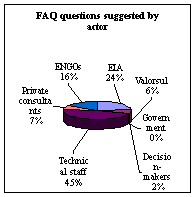
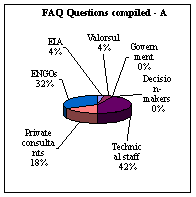
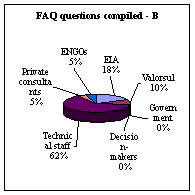
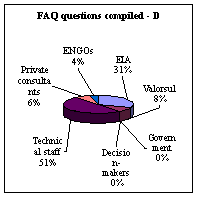
Actors like public administration technical staff had much lower expectations on the performance and role of the IMS and Internet as a factor of improvement of the EIA review process and public consultation, than, for instance, leaders and members of environmental NGOs. Why, then, did they contribute with many more FAQ questions than ENGOs did?
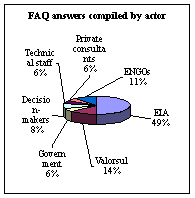
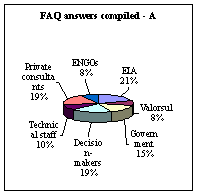
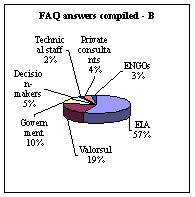
Why was public administration technical staff so productive and forthcoming in suggesting questions, but not answers? Why the focus on questions, rather than take the opportunity of using the FAQ to express their stands and technical views (in particular after the permission to provide such input had been granted by hierarchy and political decision-makers)?
In this chapter, I discuss these paradoxes.
6.3.2. The process of compiling FAQ
It is interesting that the motivation shown by several dozens of collaborators in adding questions to the FAQ list was much higher than in many other aspects of the project. Experts on the staff of the municipal administrations or on the Environment Ministry, put forward many questions pertinent to the environment impact assessment in review, but did not provide answers to most of those questions.
It was not obvious from the first moment what was the source of this high motivation. The first round of questions compiled seemed to target putting in question the methodology adopted by the facility promoter (Valorsul), and conveyed some underlying criticism of the government and public administration handling of the process. Therefore, their questions focused on issues like:
There are no alternative sites considered in the current EIA, since it was only given one alternative site.
There are no alternatives considered for solid urban waste management, besides the one centered around the incineration;
There are no alternatives regarding the nature of the incinerator technology and process.
In other words, in their view there was no real choice in the review process.
Those first compiled questions were always presented to potential new collaborators on the project, when requested to contribute with more questions. The immediate result was that when this first list of questions was given to people associated with the promoters, such as Valorsul, they reacted strongly to what they perceived as one-sided, obviously negative connotations associated with the current question list.
Maybe in consequence of this perception, maybe because they were less motivated by other reasons, there were very few contributors in the first FAQ iterations that had a favorable position towards the project. In result, as described in the previous section, there was clearly an imbalance, an overall bias associated with the questions compiled, towards an implicit negative judgment or evaluation of the promoter's incinerator project.
The first analysis to make is that it is obviously very hard to compile a list of technically, so to speak, independent, unbiased questions. And that it is necessary an explicit effort to include in the compiled list the views of other actors.
This was made even more clear when I was requested to come to the meeting referred in the chapter on the "Institutional responses", with top level public administration decision-makers within the Ministry of Environment, who, in a very diplomatic way, expressed the concern that I was raising very difficult and sensitive questions, to which I answered by clarifying that I was not raising myself those questions, I was merely compiling them; that I was aware of their bias, but that there were only two alternatives in front of me: I would either censor the compiling process or make an effort to have all sides contributing to the questions, which was of course what I chose to do. But I could not substitute myself for the project promoter, so the bottom line was that it was up to the promoter whether they were to contribute or not with their own questions.
At first, it seemed that was not going to happen, but at a certain point, Valorsul changed its approach and began contributing. First with answers, even to the harder questions (the ones biased and targeted against the views of the promoter) and then, gaining speed, by including their own set of questions with answers, that were added to the final round.
Because many of the questions that were put together in the earlier iterations had no one to provide an answer to them (only 314 of the 445 questions got answers), the final result had a very different bias: in effect, while many of the questions with a critical overtone were included in the system and were the majority among the questions, the large majority of the answers in the system were provided only by the project promoter or the EIA they presented. This was further amplified by the fact that out of the 453 answers compiled, only 404 were inserted in the system on time, due to lack of resources. Naturally, the missing 49 were from actors other than Valorsul (or the EIA). So, there was a clear minority of answers from the project critics.
In the chapter on the knowledge acquisition process, I presented the tables showing the questions and answers compiled for each issue class, by actor (Tables 5.10.8. - 2 and 3). In here I re-print only the totals in each of these tables:
Table 5.10.8. - 2
- (partial view) Source of FAQ questions compiled, totals|
EIA |
Valorsul |
Government |
Decision-makers |
Technical staff |
Private consultants |
ENGOs |
All |
|
|
TOTAL |
106 |
28 |
0 |
7 |
201 |
33 |
70 |
445 |
Table 5.10.8. - 3 - (partial view) Source of FAQ answers collected, totals
|
EIA |
Valorsul |
Government |
Decision-makers |
Technical staff |
Private consultants |
ENGOs |
All |
|
|
TOTAL |
228 |
62 |
25 |
37 |
27 |
26 |
48 |
453 |
Fig. 6.3.2.-1 allows to compare the significant differences of contributions of each actor in questions and answers.
|
|
|
Fig. 6.3.2.-1
- Graphs comparing sources of compiled questions and answersNote that we are now referring to the numbers of questions and answers compiled, which is an indicator of the interests and motivations of each actor, and not to the actual answers inserted in the system, (as discussed in the previous chapter), since although these reflect also motivation, the determining factor may very well be the differences in resources (funding, staff) at disposal of each actor. For instance, in these graphs "EIA" means in fact my CITIDEP IMS team, funded by Valorsul.
Even if we discount the high percentage of answers derived from the EIA, since it is only natural that the content of a system to support an EIA review should contain as much of that EIA as possible, it remains that Valorsul is the actor more represented with answers. How can we explain this apparent contradiction of having an unbalanced question list, against the promoter, but an unbalanced answer list which is clearly in favor of the promoter?
It can be argued that there is nothing unexpected in this. That the role of each actor determines naturally that the promoter of the facility under review is in the process precisely to answer questions, while the natural role of other actors is to ask those questions.
This is certainly one true aspect of the situation. But such analysis does not explain everything. For instance, ENGO’s are known, in at least most cases, to use the Fora like EIA public consultation periods to forward their message, their views, their environmental agenda. It is not common at all to have ENGO’s limiting themselves to ask questions and not expressing their opinions on the EIA and its merits or demerits. So why this phenomenon?
At first, the reason for that seemed to be circumstantial, derived more from the difficulty of the environmentalist associations to free their staff from their pressing order of business to provide a systematic answer to those questions. This is certainly one factor that counts, given that there is an obvious lack of human resources in environmental associations. However, the promoter of the project had his hands just as full and not much more staff available.
What they did have was more financial leverage, which they ended up using by financing a team to provide answers to many of those questions, including the hard ones, by going through the fourteen volumes of the environment impact assessment (EIA), reviewing, selecting, cutting and pasting, compiling answers extracted literally from the text of the EIA volumes. But the EIA did not answer all of the questions raised, because a significant number of the questions raised were added to the list by people who had precisely found the EIA lacking, not answering and not dealing with many issues they considered important. Therefore, the promoters of the project had to provide their own answers in these cases.
It is interesting that those answers were provided by Valorsul top executives (62). This can indicate a lack of human resources, at least prepared to defend and to argue in depth in favor of the project on such hard questions. Of course it can also be a measure of the importance, given by the top managers, to the process of public consultation and the political implications of facing questions that were going to be available to the public without having their 'proper' answer. Either way, this is not enough to justify the situation of this paradox of different bias between the compiled list of questions and the compiled answers to those questions.
For instance, public administration technical staff contributed with 201 questions (45% of the total) and only 27 answers (6%). Why?
6.3.3. FAQ question / answer compilation by actor
Let’s take a closer look, then, on the different actors involved in answering the questions, besides providing or suggesting questions themselves.
6.3.3.1. Public officials, government members, expressed several times their willingness to answer questions, but they answered only those that were presented to them in interviews.
6.3.3.2. As for decision-makers with responsibilities on the proposed incinerator (it is important to keep in mind that Valorsul is a consortium of municipalities and state controlled entities, like EXPO 98, etc.), a willingness to provide answers was clear from the very top. For example, in the municipality of Lisbon, the City Councilman in charge of the Environment, also representative of the Municipality in Valorsul, was available for an extensive interview of 2 hours to provide several answers to many issues that ranged from the more political to policy orientation questions, and even to some detailed technical-related questions (when referring to general options, not in details of the technology itself, though).
6.3.3.3. However, as for the experts and staff that were more closely related to the future implementation and management of incineration-related procedures, they were more motivated in contributing with questions and raising questions and issues than concerned with providing answers themselves or inserting opinions in the IMS, to be known by others.
Looking at the questions they suggested, a pattern emerges. They were concerned that some of these questions and issues were not being addressed by the Environment Impact Assessment and by the overall decision-making process. This was clearly more relevant for them than making a point or taking a stand in favor or against the incinerator .
Although they questioned the process as not being the right one, very quickly they concentrated on very detailed and very specific questions, according to their own domain of interests or their job area of responsibility and intervention.
For instance, people related with air quality would ask questions such as what kind of air monitoring was going to be present in the whole incineration project and which location and how many stations were going to be built and set up, and which entity was going to be in charge for checking and controlling and monitoring these emissions and comparing them with accepted levels, and what kind of leverage would this entity or agency have to enforce compliance of recommendations concerning minimization of air pollution.
People related with public health, raised issues such as what was being done to provide a history of epidemic data in the area, so that later on it could be compared with previous data, to establish the responsibility of the incinerator for increased public health problems or specific diseases. They were concerned that many of this elements had to be in place prior to the incineration and that decision-makers did not realize that afterwards it would be too late.
People related with municipal services, raised questions about what kind of mechanisms were foreseen in the contract between Valorsul, the entity exploring the incinerator, and the municipalities, regarding protocols of collecting the garbage, etc. and whether Valorsul was going to collect everything, that is, have the monopoly of the solid urban waste collected by the municipalities and delivered to Valorsul, and what kind of mechanisms were being established regarding the sorting and the recycling, meaning whether the garbage was going to be delivered to Valorsul already separated by types of solid urban waste , ready to facilitate the sorting and the recycling or whether they would do (it) themselves in block. Etc. etc.
Overall, these were very specific questions, from technical to more policy-oriented, and clearly show a concern that there were many kinds of issues that were going to have to be dealt with at their level, meaning at their expertise and job-function level, and that those issues were possibly not being considered, at least properly, by the decision-makers. From their experience, those who were making decisions not always made options after giving thought to these consequences; and technical staff, at their level, were left to "clean up the mess" afterwards, that is, they would have to deal with the problems caused by precipitated decisions and by wrong options made.
Why were they then so keen on providing these questions? Because there were no good mechanisms in place inside the agencies themselves, inside the Ministry and the municipalities, where they could be properly heard in useful time. That is, they perceived there was a separated level of information flow and feed-back:
1. At the level which involved political decision-making, and ,
2. At the level of execution by experts and technical staff of the decision made.
Their perception, based on past experience, was that the input from the experts at their level on those technical considerations was not considered when the basic decisions about these issues, such as the incineration process, were made.
So why the active collaboration with the FAQ process?
One legitimate assumption is that these experts and staff knew that my project had been accepted and was supported by top level Ministry officers, and had, therefore, some kind of political back-up.
Since I was providing everyone, regularly, with a version of the compiled questions, they knew that those questions were going to reach both Valorsul and the top level decision-makers in the Ministry or Municipalities. It is not farfetched to assume that there was an expectation that the process itself of my research project could help them by sending home their concerns, and, eventually, to obtain some answers that they considered critical to have in time. By raising issues that demanded some decisions to be taken now and not later, and with the full understanding of the consequences, they expected this would invite some reflection and eventually lead to some of those decisions to be (re)considered.
If we think more in detail now on the other actors, it is also interesting to analyze the way they behaved throughout the process, in regard to these questions and answers.
6.3.3.4. Lets look at the environmentalists. First of all, there was never any doubt of their support and their sympathy towards the IMS project. They were, after all, among the first who encouraged me, because they thought that it was very important to put the information technologies to good use in supporting the public consultation process. But they were caught between a rock and a hard place.
On one hand, they wanted very much to make the best of the public consultation process, to further their opinions and their positions. On the other hand, they disagreed with the whole process logic. They thought that it was wrong to put forward an environment impact assessment about the incinerator, before it was discussed, with the respective public consultation process, a strategic plan for managing the SUW. If after the overall analysis of the needs and alternatives, the incineration option would emerge as the only viable option, that would be a different perspective to discuss it. So, to now participate actively in the public consultation process of the incinerator of S. João da Talha was in fact tantamount to condoning the process that they were condemning.
This had a visible effect on their motivation to dedicate scarce human resources to this process in detail and explains the relatively weak intervention of their leaders, leaving to the nucleus of activists involved locally the task of intervening during the public hearing in S. João da Talha, sometimes in contradictory terms with the final ENGO position paper that was delivered, significantly, only in the last day of the public consultation.
The environmentalist associations, and their activists in general, really thinned their cooperation in this process. They did contribute with some questions that were more designed to facilitate the explanation of their positions - for instance, putting emphasis on questions about the "POGIRSU" (Regional Strategic Operational Plan for Solid Urban Waste Management), questions that allowed them to explain why they had participated in the expert panel promoted by Valorsul, why they were not condoning this process and (why) they thought the way things were happening was wrong. At the same time, they did criticize some aspects regarding the option for the incinerator as opposed to composting and the 3 R’s, and raised their concerns on the dangers of incineration. But instead of providing answers to previous questions compiled by other experts when they were given to them, in most cases they actually opted for introducing new questions and new wordings to facilitate exposing their points. Either they were not prepared to provide answers that presupposed a good knowledge of the EIA, or they were not motivated to do so.
6.3.3.5. Let’s now review the behavior of Valorsul, the promoter of the incinerator project, in what concerns this issue of questions and answers unbalance.
As described, they looked at the IMS prototype as a potentially dangerous tool, leading to create expectations of real-time answers to questions raised during the public consultation, in such a dynamic that they would not be able to respond to, or they had no interest in promoting such process, since it was in their interest to keep the lowest, least visible public profile both in the media and in the public hearings. A successful public consultation in their view was clearly a public consultation that would not raise many spectacular issues, that would be diluted by the previous meetings that they had directly with the population. In many regards, this was actually a successful strategy.
In consequence, when they finally decided to support a team to provide answers to some of those questions on the Internet, it was clearly more a gesture of cooperation than a change of policy. And because, on the other hand, they thought the Internet was an elitist environment, they really did not have any expectations of heavy traffic in the Internet nor concerns that Internet-based systems would be raising many more issues. In their view, Internet addressed a totally different audience, other than S. João da Talha population, and therefore an audience that was not as motivated as the S. João da Talha population to participate in the process.
In fact, since it was already decided that the incinerator site, if at all, would be S. João da Talha, it was unlikely that other population of the Lisbon area would feel concerned — in other words, the nimby phenomenon was centered only in S. João da Talha.
Therefore, when, at some point, Valorsul started to increase their level of participation not only by providing answers to the questions raised by others but also by providing their own questions to facilitate addressing their own views, (6% of the total), it raises the issue of why this happened this way.
One possible explanation (for Valorsul behavior) can be found in a couple of facts:
a) Several newspapers published articles that some of my own collaborators called attention to the fact that they were written in a format very close to the one I had provided for the Internet question—and-answer system. My interviews with Valorsul’s officers were often intertwined with interviews with those reporters . It is credible that they started to realize that, in fact, writing answers and having answers to that list of questions, in many cases, was facilitating their job in giving media coverage to their answers and questions, or guiding the reporters in the type of questions to which they wanted to give answers; and they already had them because they had been written for my system or by my team, working for them, in indexing the environment impact assessment to provide textual answers to some of those questions. So that can be part of the explanation. Which also rises an interesting target-object for such a system: the media, or the ‘traditional media’, as presented in the previous chapter.
b) The second fact was a comment made by Valorsul’s officers that the kind of questions that the Review Committee was asking Valorsul coincided with, or were a very close match to, the kind of questions in my compiled FAQ list.
It is also interesting to note that one of the answers they wrote more extensively was precisely about the POGIRSU, the strategic plan for SUW, which was exactly the main issue raised by the environmentalists and that coincided partly with some of the concerns of the Ministry of Environment technical staff themselves.
Since this plan had not been ready at the time of the environmental impact assessment and this had caused some criticism, they were clearly keen in making an effort to have it ready so that they could claim that there was not a total disconnection between the project of the incinerator for S. João da Talha and the overall strategic plan. Of course, the strategic plan was not officially on the web for discussion, it was only unofficially. But, nevertheless, it is interesting to see that they wrote a very extensive answer for this question for web publication and they obviously used it otherwise, not only for the web site. So there was some coincidence in their effort on the Web and their other efforts.
6.3.3.6. Summing this up, we had an imbalance both on questions and on answers. On one hand, the questions were in their majority biased against the incinerator alternative. On the other hand, the answers provided were, in their majority, in favor of, or justifying the incinerator alternative. We can now see that this can be explained by, on one hand, the environmentalists being more concerned in addressing strategic and general planning issues and not wanting to condone the discussion of details as if they had accepted the process. And on the other hand, the fact that the questions suppliers were really more interested in having answers provided by someone else and not exactly concerned in addressing themselves the issues, can be explained given that their concern was not so much to take a stand regarding the incinerator or the decision-making process but more of obtaining the answers from someone else, for issues that regarded their jobs and their professional responsibilities.
This interpretation is consistent with the analysis we can make of the experiment data.
In the chapter on knowledge acquisition, I presented the tables (Tables 5.10.8. - 1 to 4) showing the questions and answers contributed by each actor, per each section of the "Issue taxonomy" (from the "FAQ model" and "Knowledge acquisition" chapters). In here I re-print two of these tables, to facilitate analysis, and review this data in graph form for some cases, in Fig. 6.3.3.-1 and 6.3.3.-2. As a reminder, it is included there the top level classes of this taxonomy.
This data shows how each actor concentrated in their areas of concern, according to agenda and strategic positioning in the process.
Valorsul focused their suggested questions on (B) Project Characterization, (D) Project Impacts and (I) Public Participation. Not surprisingly, these were also the classes of questions they were more interested that my team, funded by them, would then index answers from the EIA. When it comes to answers, they were also the actor more interested in responding to (E) Project Risks; (F) Minimization.
On the other hand, ENGO’s both suggested questions and provided answers are concentrated in (C) Project Alternatives - the core criticism of the process, since they considered there were none, and (I) Public participation, with most of the question-answer pairs uniquely tailored by them to explain their posture in the process.
Decision-makers, on their side, suggested a few question on (H) Decision process, a natural focus, but their answers, besides the same class of issues (H), were concentrated in class (A) resent Situation and (B) Project Characterization.
Before observing other actors, some questions arise: How can these actors dialog, when their communication does not intersect (or very little)? How can they benefit from each other’s input, when apparently each one has little interest in each other’s area of concern?
ENGOs, for instance, don’t want to condone the process so they don’t focus at all on impact detail sections. Valorsul and Decision-makers prefer to skip or touch lightly the controversial issue of project alternatives. And so on. This data suggests the same interpretation gathered from other observations and interviews: it is like each actor is on a different wave length, with all the consequences for the decision-making process lack of breadth.
Finally, the most fascinating evidence of these paradoxes: public administration technical staff contribute with a wide breadth of questions, and almost no answers.
Their suggested questions reflect their concern on areas from whether it was done a proper characterization of the project and study of its impact, to what kind of minimization measures are planned - an area where they will have potentially responsibilities. They also worry about the proper evaluation of the present situation, with which they typically deal in first hand. On the other side of the coin, the politics of the process do not concern them very much (like the issue on alternatives considered or not), except when it comes to details on the decision-making process that have a direct bearing on their work, like contract formulations, etc.
Table 5.10.8. - 2
- Source of FAQ questions compiled, by Issue class|
Issue Class |
EIA |
Valorsul |
Government |
Decision-makers |
Technical staff |
Private consultants |
ENGOs |
All |
|
A |
1 |
1 |
0 |
0 |
12 |
5 |
9 |
28 |
|
B |
20 |
11 |
0 |
0 |
68 |
5 |
6 |
110 |
|
C |
0 |
0 |
0 |
0 |
3 |
1 |
14 |
18 |
|
D |
39 |
10 |
0 |
0 |
62 |
8 |
5 |
124 |
|
E |
4 |
0 |
0 |
0 |
10 |
2 |
6 |
22 |
|
F |
1 |
1 |
0 |
0 |
22 |
4 |
4 |
32 |
|
G |
0 |
0 |
0 |
0 |
2 |
1 |
2 |
5 |
|
H |
0 |
0 |
0 |
5 |
12 |
0 |
1 |
18 |
|
I |
41 |
5 |
0 |
2 |
8 |
2 |
18 |
76 |
|
J |
0 |
0 |
0 |
0 |
2 |
5 |
5 |
12 |
|
TOTAL |
106 |
28 |
0 |
7 |
201 |
33 |
70 |
445 |
Table 5.10.8. - 3
- Source of FAQ answers collected, by Issue class|
Issue Class |
EIA |
Valorsul |
Government |
Decision-makers |
Technical staff |
Private consultants |
ENGOs |
All |
|
A |
13 |
5 |
9 |
12 |
6 |
12 |
5 |
62 |
|
B |
64 |
22 |
11 |
6 |
2 |
5 |
3 |
113 |
|
C |
2 |
2 |
0 |
0 |
0 |
2 |
15 |
21 |
|
D |
58 |
14 |
0 |
0 |
9 |
0 |
2 |
83 |
|
E |
13 |
4 |
0 |
0 |
0 |
1 |
0 |
18 |
|
F |
25 |
2 |
0 |
0 |
2 |
0 |
0 |
29 |
|
G |
2 |
1 |
0 |
0 |
0 |
0 |
0 |
3 |
|
H |
7 |
7 |
0 |
15 |
0 |
0 |
0 |
29 |
|
I |
44 |
5 |
5 |
2 |
0 |
0 |
18 |
74 |
|
J |
0 |
0 |
0 |
2 |
8 |
6 |
5 |
21 |
|
TOTAL |
228 |
62 |
25 |
37 |
27 |
26 |
48 |
453 |
A-Present Situation ; B-Project Characterization ; C-Project Alternatives ; D-Project Impacts ; E-Project Risks; F-Minimization ; G-Compensation ; H-Decision process ; I-Public Participation; J-General
|
|
|
Fig. 6.3.3.-1
- Graphs comparing sources of compiled questions and answers by FAQ class(A-Present Situation)
|
|
|
|
|
|
|
|
|
Fig. 6.3.3.-2
- Graphs comparing sources of compiled questions and answers by FAQ class(B-Project Characterization; C-Project Alternatives ; D-Project Impacts)
This is also consistent with the fact that it was not easy to obtain a very large set of answers overlapping the same questions. Among the 445 questions, only 90 got answers from more than one actor, and even in this number, several are Valorsul-EIA paired answers, and some were introduced by my IMS Expert Panel.
Considered only on their own, these different areas of focus could, at first sight, be interpreted as simply reflecting the normal different agendas of each actor, with no other implications than that. But a more careful analysis shows this cannot be the case. For instance, how can anyone say that ENGO’s typical agenda do not include debating details of environmental impacts? Or that public administration technical staff don’t have answers to any of the questions related to their work? Such interpretations would be a nonsense. To understand this experiment evidence from the FAQ numbers, we must link it to other factors.
Considered together with the attentive observation of the process as described in this chapter, looking at how the different positioning of each actor concerning the process itself developed (and not only from typical agenda differences), then other implications arise and suggest that we are dealing with different concepts of a planning process. This invites further analysis.
6.4. Planning Paradigms
Facing different planning paradigms; Government and Pragmatic Planning; Environmentalists and Rational Planning; Public Administration and Hierarchical Planning; Discussion of the planning paradigms
6.4.1. Facing different planning paradigms
It emerges from the analysis of the process of FAQ question-answer compilation before and during the public consultation period, in particular of the FAQ paradoxes discussed in the previous chapter, that we have different planning systems or paradigms present.
It is useful to begin by addressing one of the answered questions, that may bring some light into this decision process. Why was the decision favoring the incinerator so final and the respective decision-makers so committed to it, long before the EIA review process?
The actors committed to this decision were Valorsul, or the promoters of the project, and also the decision-makers involved at political level, since Valorsul is a product of a top-level policy established at top-level political decision-making. As described in the previous section, Valorsul incorporates different municipalities, each one headed by different political parties, Expo98, itself a state project with wide multi-party support, plus (then) state controlled entities like Electricity of Portugal and the holding EGF.
Environmentalists argued that the main reason for Valorsul to put forward the incinerator as a fait accompli was motivated by Expo98. More concretely, motivated by the need to deactivate the solid waste landfill station in Expo98 ground.
This is undoubtedly at least partially one of the reasons, but it cannot explain solely by itself the decision, given the fact that, besides Valorsul and S. João da Talha, there was also the plan to build a similar incinerator for solid urban waste in the far away metropolitan area of Porto (Lipor), in the north of the country. There, EXPO’98 could not be a factor. Therefore we have to look at other origins of such early and strong commitment.
In the opinion of one of the more experienced experts and also from the staff of the Ministry of Environment, the real big constraint that made the decision-makers to opt for the incinerator in the long-run, many years before, was the constraint posed by European Union funding timing. It was my understanding that, in the view of decision-makers at political level, the only alternative able to be done in time to secure European Union funding was the incinerator; or at least, a decision to apply for EU funding for building the incinerator had to be made quickly, leaving no time for long-term strategic planning studies and even less time for long public debates about the issue. Particularly because many other countries and regions of the European Union were competing for the same funds and, therefore, if one country didn’t grab them at the right time and with the right project, the opportunity could be lost without appeal.
6.4.2. Government and Pragmatic Planning
This suggests a pattern of what we can call a pragmatic planning paradigm. First you make a decision, based on general strategic or political or conjunctural constraints. You then have the notion that you have to stick with this decision because, whatever second thoughts or new technical elements that show up, it is too late to go back, given the financial or political costs of doing so (or even of just showing second thoughts). We have our fait accompli. In consequence, you make further studies more to justify the decision (or eventually to fine tune the decision) than to consider new alternatives.
All elements under observation in this case suggest we are in the presence here of this paradigm, because not only do Valorsul officers defend vehemently their option for the incinerator, which would be natural since they were created, basically, to put forward this incinerator, but also since we have a political support from different political parties strategists and Government Ministries, Secretaries of State, etc. including some known to be sympathetic towards the environmentalist views. Even if some of them would now prefer a different kind of solution, closer to ENGO’s views, they support clearly Valorsul and they stick with their original decision-making concerning the adopted solution (build the incinerator), seen as inevitable (or as the least of the evils).
There are multiple indicators of this ambivalence, such as: the nomination of well known environmentalists (and leading critics of Valorsul process) to committees in charge to draft a new EIA law; the appointment of a former member of the IMS Expert Panel, known by her views in this subject quite close to ENGO’s views, to lead one key regional agency of the Environmental Ministry public administration; the inversion of the policy on incineration of hazardous waste, towards co-incineration (as briefly described in the last section), at the time defended by ENGOs as a better alternative to the "dedicated" incinerator; a major drive towards the "3 R" policy (Reduce, Recycle, Re-utilize), the ENGOs’ flag alternative to the incineration-centered strategy, even taking the heat for ignoring the lobbying of powerful economic interests resisting regulations enforcing higher percentages of glass containers (re-usable), vs. throw-away plastic containers; etc.
This suggests that decision-makers at political level are in some way "imprisoned" in this paradigm, by the role assigned to them in the current institutional framework, despite their eventual views that other inputs would be relevant and other actors may be right in at least some of their criticisms to the decision they are committed to.
6.4.3. Environmentalists and Rational Planning
On the environmentalists’ side, we also have a pattern of what we can call rational planning paradigm. Their position is ‘we should not get into details and specific solutions, and not address the specific siting of a facility like this, before we do an overall long-term study of the problem, decide on a solid urban waste management strategy, study several alternatives and then, rationally, according to these criteria established by this strategy and according to the results of these long-term studies, only then you opt to select a sub-set of the viable alternatives and, finally, you choose one.
Rational thinking typically calls for a systematic approach guided by scientific logic. The local planning should articulate with other local plans in regional planning, regional planning with other regional plans in national planning, national planning articulate with other nations in global planning. Tactics derive from strategies. And above all, plans must be preceded by thorough studies.
So, we have in face two actors that speak two different languages and are in different dynamics, with different timings. This creates an interesting phenomenon, which is that they are compelled to not be able to talk effectively to each other or not to be able to influence each other as much as each part would genuinely want to.
This is emphasized in conditions like this case, where it is not in question the sincerity of at least some of the Government officials, that were concerned about the "dark" side of the incinerator’s consequences; and whose democratic culture includes the desire to allow ENGO’s to give their input.
But the kind of input that the environmentalist lobby could provide here was useless in its essence to the Government, because it was directed exactly to what Government could not put in question: the process of decision-making and planning that led to a strong commitment to a specific decision, long before the EIA public consultation period.
On the other hand, the environmentalists themselves could not accept the process and therefore could not be effective in influencing the path that the incinerator process took, because they had their own hands tied with this general position of not wanting to condone the process by discussing details. In other words, they could not provide the kind of input the good willing decision-makers would like to have, for instance towards minimizing this or that impact and changing this or that detail in the project, since ENGOS wanted to focus the discussion and the debate on the process and more general issues.
ENGO’s minimized the participation on other levels and on details, when, in fact, had they felt free to act, they could have been more effective and have a real influence, which can be illustrated by the difference of behavior and of effectiveness in the case of the new bridge over the Tagus river. In that case, they had no problems in stating which option was wrong and which one was right. In this case (CTRSU), they could not, in full conscience, take a strong, definite stand saying ‘we don’t want the incinerator, we think it’s totally wrong’ because, in their own arguments, the issue was not yet well studied.
For instance, one of the environmentalists’ leaders suggested that there should be a "moratoria" on the decision about the incinerator. They did criticize the incinerator, they said that it was a bad thing, but they could not address it with full strength, they did not want to put themselves in the position of strongly condemning the incinerator because that would contradict their own argument that there were not enough studies done and that there was no strategic plan that would then provide an answer, because, to be coherent, you had to admit that one of the possible outcomes of this strategic plan and long-term study could include the incinerator.
Summing up, by focusing on a different agenda, their voice becomes almost an irrelevant input in the decision-making process.
On the other hand, if ENGO’s are right in criticizing the drawbacks of this decision, because of lack of better study of alternatives and of proper planning at a larger scale, then a similar outcome would derive from the opposite behavior. Had they accepted the rules of the game and focus instead on the agenda set by the Government and by the decision-making process in place, then they would have definitely not addressed the real important issue in question, and their real critical voice would be absent of the decision-making process.
This suggests that ENGO’s are also in some way caught in the old dilemma, work with the system to change the system or against the system to change the system; in other words, , between keeping their strategic thinking and have little influence in the institutional decision-making process, or accepting the institutional agenda and settings and have some institutional role but at the cost of giving up their strategic positioning.
6.4.4. Public Administration and Hierarchical Planning
The FAQ paradoxes suggest that we have here another actor, with yet another decision-making paradigm, within the public administration.
We concluded, by an analysis of the process, that there was a lack of a proper channel for effective communication between two levels: simplistically put, the more executive level; and the decision-making level, both administrative and more political. Whereas the top-administrative (and political) decision-making level was perceived as making decisions and adopting plans without full input from their intermediate and lower levels of staff and experts and administrators. So that when the time came for the executive level to be put up to date with the policies, plans and decisions, it was felt that in many cases it was too late to give this input in time to be useful.
We have here what we can call an hierarchical planning paradigm, where the decision-making flows in a totally top-down process; and the information and the feed-back trickles up very slowly. So slowly that when it reaches the top, it is usually too late to be able to change anything in a significant way. Even if this feedback would be perfectly acceptable from the point of view of the political and administrative top-level decision-makers.
Again, we have two levels that are not able to fully interact and help each other and participate in this process, because the top-level is concerned that if it flows down too early the rough sketches of their decisions, in very early stages, yet to be consolidated and matured into one firm decision, then the feedback that they would get would be either too much "noise" and / or could undermine their authority. In other words, part of the difficulty to interact and communicate properly arises from the fear that this could dilute the authority of the hierarchical system.
This suggests that decision-makers in public administration are in some way "imprisoned" by the old framework of the hierarchical system, in which they have reluctance in giving too much of a role in the decision-making process to subordinates (the technical, executive level), for fear of undermining the system of authority in place.
6.4.5. Discussion of the planning paradigms
This is one plausible interpretation of the process in this experiment, and it is consistent with the observed FAQ paradoxes. Naturally, things are usually more complex, and this case is not exception.
6.4.5.1. Discussing the hierarchical planning paradigm
For instance, concerning hierarchical planning paradigm and bottom-up feedback, some argue that this would just mean an exhaustion of resources in pushing forward too many alternatives in an early stage, when many of the pathways are going to be dead-ends and will have to be abandoned anyway, so it will only disperse the efforts and resources of the people that should instead be concentrating on the efficient execution of their own tasks.
The first question is, how can new IT facilitate the communication and feedback, without falling into this potential pitfalls (too much "noise" and efforts wasted in dead-ends)? The second question is, can these IT-based improvements be set in place, in other words, institutionalized, without having to change at least some of the old hierarchical institutional framework?
We saw in this case that the tool chosen by technical, executive level staff to convey their concerns, was the FAQ question list. This can be one possible avenue towards building a new procedure facilitating communication: why not institutionalize the process of staff being invited to suggest FAQ for each EIA, at a very early stage? On the other hand, the FAQ alone was not what it took for it to function, or at least to be perceived, as a channel of communication. In fact, the other critical component was my own role, as the collector and carrier of the FAQ, because of my access to all actors involved, including the decision-makers at both political and administrative level.
This raises another issue: my supposed role as a non-obtrusive observer, in anything other than the introduction of the new IT (IMS + Internet), was certainly a key factor for actors like decision-makers to welcome my experiment and my intervention in the process. With the FAQ process, I became inadvertently a real, obtrusive actor, in much more than the introduction of IT: I became a messenger for the authors of the questions.
On one hand, this unexpected role facilitated and probably was the key factor leading to such a successful FAQ, by motivating the main suppliers of questions (the technical staff); and those were very good questions, as proven by the sequence of the EIA review.
On the other hand, the same new role I inadvertently began to play irked some senior staff, that suddenly began to see me as someone aligned with the critics of the incinerator (a bit of "blame the messenger" syndrome), and in consequence became less or not cooperative at all, with a real and drastic impact on the reach of the new IT, causing the aforementioned delays to get access to the EIA, restrictions to use email, possibly excluding the IMS Expert Panel member from the EIA review team, promoting the "call to attention" by top-level decision makers in the reported meeting, which in turn led to more delays and restrictions in the use of IMS and could have blocked it if I had not secured again political support at Government level, etc.
6.4.5.2. Discussing the pragmatic planning paradigm
Just as well, concerning the pragmatic planning paradigm, things are not so black and white. The pragmatic paradigm does not exclude some elements of rational planning, and it would be nonsense to assume that decision-makers at political level make decisions solely guided by financial or political or geostrategic factors. On the contrary.
In keeping with this analysis, I suspect that other factor was involved in the decision of the incinerator.
At the time decision makers had to commit to a decision, the state-of-the-art, or the latest buzz words in solid urban management was the concept of "integrated management". This meant, at the time, a combination of use of some recycling effort, some composting effort, but most of all the use of incineration to address the most serious problem: the huge and increasing volume of waste, requiring in turn huge surfaces for landfills. Incineration was seen as the main tool to reduce volume, since the resulting products of combustion (like ashes, scoria, etc.) have a much smaller volume, and can even in some cases be incorporated in byproducts for civil construction (road pavements, etc.).
Meanwhile, standards on emissions of pollutants like dioxins and others became more sharp and cautious. The conscience of the problems resulting from these incinerator processes generating always more dioxins with potential cumulative effects, led the front of environment management to evolve towards another solid management strategy approach, with new corresponding buzzwords: the referred 3 R.
The issue is: how to promote a dialogue between actors when one has to commit to a decision at an earlier time, forced to take in consideration other constraints not resulting solely from technical elements, and the other is free to evolve with the new strategies and trends, and then when the EIA review time arrives, one (the decision-maker) is in a "time capsule" and the other (ENGO) is not able to influence the process, because all their arguments do not address the margin of maneuver the other actor has, given the early commitment and its consequences.
Three interesting questions arise:
1) Does this commitment really need to stay so frozen, or is this a consequence also of the current institutional framework where Government cannot release and does not want to release its complete hold (or monopoly) on decision?
2) Is it possible that IT, like the one used in this experiment, can help bridge the different planning paradigms? For instance, by speeding up the iteration between plans and corresponding impact assessments, and maybe more importantly, because they may facilitate incorporating in EIAs more factors in the realm of political, economical and geostrategic constraints?
3) Can the current framework stand this push towards more transparency on the real factors behind a decision, or is the lack of transparency felt as a fundamental layer of "power preservation" by the current power-holders?
6.4.5.3. Discussing the rational planning paradigm
Finally, on rational planning paradigm, another factor that cannot be dismissed is the difference between those that have a public responsibility, and one way or another will be held accountable for the decisions they make and their outcome, and those that are in a role without institutional responsibilities, and where accountability may exist but in a much milder form (such as more or less prestige and reputation, according to the accuracy, consistency and ethics of their stands, etc.). The ones without institutional responsibilities will not feel the pressure to look at all real factors influencing a decision beyond technical considerations, so in a certain sense, it can be argued that rational planning is a luxury of those that don’t have the responsibility to make decisions and make things actually work, or else face the consequences.
An illustration of the importance of this factor is what happens when people change their actor "affiliation", for instance when former ENGO’s activists or even leaders assume institutional responsibilities as decision-makers, at political or administrative level (recent examples of this "migration" exist in Portugal and in UK - Greenpeace). Sooner or later, and rather sooner than later, these persons change considerably their posture, even if keeping many of their original concerns, not unlike Jean Paul Sartre’s personage in his famous romance "L’Engrenage".
This change occurs not only at decision-maker level. In the book "The Recurrent Silent Spring", Hynes provides compelling examples on how former ENGO activists, now working for EPA, worry as much about industry action as about Greenpeace reaction, positioning themselves in "the embattled middle" (Hynes 1988).
On the other hand, the experiment findings, as well as my past research (Ferraz de Abreu 1992a) and my past experience as a political actor, leads me to argue that both roles played by the "responsible" institutional actors and the "critical" NGO actors are fundamental for a system of ‘checks and balances" in a democratic decision-making process. I agree with Peattie when she writes that "The traditional planners work(ed) within an established set of ideas as to the nature of things and the problems to be addressed; the social movements need(ed) to change ideas as to the nature of things, and to redefine the problems" (Peattie 1986). We need both.
It is reasonable to claim that in this case of the incinerator of S. João da Talha, the ENGOs strategic critical stand worked objectively in favor of a more fine tuned decision, with higher standards for the incinerator operation and stronger safeguards through monitoring, influencing the extension and depth of the conditions imposed on Valorsul resulting from the EIA review, even if they did not (and could not) influence the core decision.
For instance, my observations strongly suggest that the POGIRSU proposal was considerably sped as a result of ENGO’s strategic criticism of the lack of a proper planning process. It is also interesting and significant that the first media where the POGIRSU was thoroughly presented to the public was the web. More so that, in a certain way, it was the FAQ being published on the web that motivated Valorsul to provide an extensive answer to the FAQ question "What is the POGIRSU", because the EIA had only a single line (mainly translating the acronym), and this laconic answer was clearly perceived as reinforcing the referred ENGO’s criticism
So the ENGO’s rational planning paradigm did not imply a zero influence on this process. Neither could ENGOs influence the decision on the Tagus new bridge case referred above, when their rational planning paradigm did not interfere with their effectiveness (as it did in this case) and they piled evidence after evidence of the technical and planning nonsense of the government’s option. The above analysis on the difficult actors’ interaction, given their different planning paradigms, cannot thus be interpreted as a black and white picture.
This suggests that, in order to effectively incorporate the input from important actors like ENGO’s and other stakeholders in a decision-making process, one of two things, or both, should happen:
a) A different decision-making framework must be put in place, in which other actors besides decision-makers at political level (in democracies, elected representatives that will chose a Government, or elected executive), can be incorporated formally in the decision-making process in much earlier stages, at the time when decisions must be taken because of other constraints than technical studies. In other words, other actors besides current decision-makers must be made institutionally co-responsible, and the power of decision-making shared, in some degree and form, with them.
b) A form of building bridges between the different planning paradigms must be identified and set in place, in order to allow the different actors to interact meaningfully at all stages of the decision-making process, providing a path to escape their "imprisoning" within their roles and paradigms.
In both avenues, new IT is bound to play an important role.
In what concerns the first, as discussed briefly in the next section, new IT enables new institutional frameworks for public participation in decision-making (participatory democracy complementing representative democracy), thanks to, among other things, the combined potential of wide network communication infrastructures, lower access costs and direct interaction with microcomputer processing power.
In what concerns the second, the experiment findings suggest intriguing possibilities for the FAQ-IMS combination. For instance, despite all this lack of synchronism between actors and such sharp differences in each actor focus of interest and attention, illustrated by the little to none intersection between the FAQ questions answered by each actor, the IMS team achieved nevertheless the goal of gathering answers from more than one actor for a meaningful subset of the FAQ.
In fact, 90 questions with more than one actor responding to each, were inserted into the system. Even if this is a relatively small number, compared with the total of answers provided (453), the fact remains that those 90 questions cut across and beyond the closed boundaries of focus for each actor, and put in place a channel of communication where, despite everything, they are side by side addressing the same issues. Through citizen users asking those questions, a dialog between them takes place. This suggests FAQ-"Virtual Office" combination could play a role facilitating building a communication bridge between these different planning paradigms.
It is actually interesting that in the final analysis, in the "Virtual Office", even with some degree of "autistic" behavior from actors, like when actors insert their answers without paying attention or without motivation to dialog with other actors on issues beyond their strict focus of concern, a dialog between them is nevertheless set in motion, through the hand of a citizen using the IMS.
6.4.5.4. The limits of this analysis
Besides the caution against viewing ENGO’s as a uniform actor in all cases and issues, expressed earlier in this chapter, there is an important limit to all these considerations: the kind of factors involved in a decision, and its timing constraints.
The analysis done applies only to similar cases, where:
a) A decision depends strongly on other factors, "external " to the single technical nature of the problem, such as the ones present in this case (financial, political, geo-strategic, its impact on other major commitments with substantial strategic consequences, etc.); for instance, the EXPO’98 need to take place successfully and in 1998, with the Portugal image in question, the "economy engine" effect of EXPO’98 in other structural elements of Portuguese economy, etc.);
b) A firm decision has to be made well in advance, within time constraints "external" to the single nature of the problem, given the opportunity costs, or potential loss determined by those "external" constraints, such as the enumerated above;
c) The nature of the decision and of its constraints is such that the costs of inverting later the decision, or even introducing substantial changes, are too high (either political or economical costs, or both).
Only then can we talk about actors being "imprisoned" in their different planning paradigms, with the kind of consequences analyzed above.
Still, many of the most important, large scale developments, if not all, fall within this category. In this sense, and at its modest scale, the experiment findings are a nice illustration of the nature of the complex relationships that exist between a decision-making process, its institutional and regulatory framework, the role played by different actors and stakeholders, and the opportunities for IT-driven changes in information flow to make a difference.
Finally, I am assuming, for the sake of this analysis, that the incorporation of other key stakeholders in the decision-making process is important, useful and positive for the public good. What is "good decision-making" depends notoriously on each actor’s agenda, and this understanding may contribute to clarify the substance of the different planning paradigms.
6.5. The Institutional Implications
Introduction; Preparing the ground for institutionalization; Decision-making framework more flexible; Expert vs. lay; Experiment replication conditions; Visible IT and IT behind the scenes; Some simple experience to use; Epilogue of the CTRSU process
6.5.1. Introduction
In this chapter, I summarize some of the elements that are lessons from the experiment, a compilation of the aspects that may be relevant in order to replicate the experiment, in terms of what it takes to implement it and also to institutionalize key elements that must be in place. Finally, I conclude the chapter with an epilogue of the sequence of events with the incineration of S. João da Talha, after the closure of the process.
6.5.2. Preparing the ground for institutionalization
The concerns discussed about the FAQ process and the IMS "Virtual Office", show that the real impact of the IMS in this case occurred before it was put to use. This is a curious finding and important to better understand how did the introduction of new IT impact on the EIA review process.
It is reasonable to conclude that all the reluctance and concerns expressed by important actors, like Valorsul and Public Administration Decision-makers, are an indication that they perceived IMS as having a real potential to impact the process, in particular the public consultation. This perception came after the combination of the two elements above discussed: the IMS design, in particular the demonstration of the "Virtual Office" they were shown in earlier stages, with the later FAQ concrete question list, even if still only printed on paper and not inserted in the system.
It will be interesting to find out, with complementing research building on this experiment, whether such concerns have a real correspondence in the public consultation and citizen behavior and quality of input.
As discussed in the past chapters, the experiment observations point to IMS favoring reasoned thinking and not leading to a stronger polarization of the opinions (for instance, the fact that IMS users with previous "no opinion" on all issues, evolved to support ENGO’s arguments in some issues and Valorsul’s arguments in others). But it is perfectly possible that in some cases, with a scenario of deeply contradictory interests in question, the better understanding of technical data and arguments may lead to polarizing even more the public opinion and rendering more difficult a good solution.
This only emphasizes more the argument that it is not recommendable to introduce new IT blindly in the process, without looking at (and understanding) other factors, such as the institutional and regulatory framework, and the effect of each particular IT in the process.
6.5.3. Decision-making framework more flexible
There are very interesting precedents in this area, like the decision and negotiation process designed by the World Commission on Dams, presented in their report "Dams and Development: A New Framework for Decision-making" (WCD 2000), in which even extremely adversarial actors (building dams is not less controversial than building incinerators and can impact very large populations) accepted to be incorporated in a shared decision-making process.
The concept of stakeholder is itself a product of more modern decision-making, and reflects the growing awareness that nowadays, much more than in a not so distant past, even a democratically elected body, with formal legitimacy to make decisions in name of a population, cannot ignore public participation in the decision-making.
If there is any doubts of the trend of mainstream institutions to try to incorporate this concept, at least in their language, the following definition provided by the World Bank puts those doubts to rest:
"Stakeholder: Those individuals, groups and associations that have a material interest in the particular policy being developed, the program being designed, or the service being delivered. Stakeholders are those affected by the outcome - negatively or positively - or those who can affect the outcome of a proposed intervention (WB 1996)"
The question remains: are such new decision-making frameworks compatible with the current, larger institutional framework, for instance in countries like Portugal, or even within the European Union? Or do they require more or less deep reforms in order to become feasible?
6.5.4. Expert vs. "lay"
Some of the EIA questions are indeed technically complex, and it is hard to explain them to people without proper base knowledge. In the long term, the only solution is to raise the education level of all citizens.
Some people use this fact as an argument to defend the view that, until that day when citizens will have more education, decision-making should be left to the elite of experts. But in my view, the findings point exactly against this argument. It is because of citizen participation that there is a permanent pressure towards the need to raise their education, if experts want the population to understand and accept their technical arguments instead of pushing for solutions that, in the educated view of the experts, are against the "real" interests of the population. Without such pressure, the tendency is to keep the monopoly of the decision-process in the hands of experts, and spare all this trouble and time-consuming, project-cost-increasing represented by dealing with public consultation.
It was notorious that, even the staff with most expressive good will, was exhausted, tired and saturated after the public hearings. One of the Review Committee members that more defended public consultation and warmly welcomed the IMS project confided to me "I have an headache just from listening to all the nonsense from this ‘anti-toxic coalition’ people". If this is the reaction of those more open to public participation, one can imagine that the less democratic oriented (and I mention in this thesis the democratic concepts advanced by some senior staff) will not exactly become the mass education champions, if they have a choice of just letting "the rabble" out of the decision-making (like Plato used to say).
Finally, there is the issue of the definition of "expert". If we follow the "elitist" view on decision-making, who is qualified as an expert?
As discussed in the chapter reviewing the research on public participation, some matters involve values, and in this case all citizens are qualified (Kennard); other matters involve the perception of what are the needs and / or problem addressed by a development or facility, and the citizens that comprehend the population that has the targeted needs or problems certainly is qualified to at least indicate their perception of their needs and problems. But even for specific, technical elements, it remains the issue of who decides who is best qualified. The famous physicist Niels Bohr used to say that "an expert is a man who has made all the mistakes which can be made in a very narrow field". Who will be the judge of expertise, in a multi-disciplinary problem with abundant synergy’s and inter-domain interactions?
However, one cannot ignore the problem that, in the short time, poor understanding of technical data and expert reasoning hinders the good judgment of less prepared citizens. And this is why the experiment findings, showing that technology like the IMS may help in reducing the knowledge gap, is significant and relevant.
6.5.5. Experiment replication conditions
As discussed in this section, there are several aspects to take in consideration about how can this experiment be successfully replicated in other cases.
We have mentioned so far the following:
a) An adequate choice of a subset of the IT used in this case. As already mentioned, several elements of the designed IT were not implemented, others were implemented but not fully tested, and finally among those implemented and tested, some did not perform well, others did but are complex and costly, others are simple and less costly.
b) The introduction of new IT in this experiment cannot be dissociated from the role played by myself and by the IMS Expert Panel. Some equivalent role-playing needs to be in place. However, some components of the IT were more controversial than others (like the "Virtual Office"), and therefore the relevance of the role of a moderator for the introduction of new IT, as well of the role of an independent Expert panel, may differ according to the level of IT used and the level of integration / institutionalization pretended or achieved.
c) There are institutional and regulatory impediments that constrained the use and deployment of the new IT. Such impediments need to be well understood, in order to adopt a proper strategy, and in some aspects, the usefulness of the new IT will be limited in the absence of institutional and regulatory reform. However, as also discussed in this section, there are multiple levels of such impediments, and some of the regulatory reform is in place or on its way.
It is useful at this point to present the feedback from some of the key elements of the IMS Expert Panel, whose area of expertise is precisely EIA and EIA review. After all, they were a key element in the development and introduction of the new IT; they followed and suffered first hand the real difficulties and obstacles we faced, and the amount of work it took to set the new IT in place. Here is one extract of the "IMS Project Memoranda", a small series of informal documents I collected, with feedback on my analysis of the experiment findings:
"I agree in general with your conclusions. Most (IMS Project) hypothesis were adequately tested and proved or disproved. In particular, I concur with you that the IMS model is usable and effective.
There is however an important reservation that should be made regarding the IMS model. Since this approach involves a large amount of work, it is still to be proved how far is the model cost-effective. In other words, the limits of day-to-day application of the model are yet to be determined.
The problem may be handled in a number of ways:
- For projects of large size and complexity, it may be shown that the cost of applying the IMS model are smaller than the cost of not applying proved and tested technology (due to social unrest, project delays and/or public ignorance);
- Some features of the IMS methodology, namely the environmental impact statement and the user’s opinions on-line, are quite easy to implement (the EIS on-line in particular may already be considered a standard, although it was quite innovative when the IMS experiment was conducted in 1996/97). These features can readily be applied to general environmental impact assessment and planning procedures;
- Other features of IMS, such as the FAQ analysis and knowledge model, although quite powerful, require a lot of case-specific work, with the implied time and cost. My guess is that cost-effectiveness would not allow the full methodology "as is" to be applied on a standard basis;
- To alleviate this constraint, it may be possible to create basic indexation schemes following a keyword thesaurus, that could easily be filled in by the EIS author, plus a number of standard FAQ for different kinds of projects; thus avoiding a detailed survey for each and every individual project. There would still be significant work, but much less than in case-by-case analysis, and it would not be time constrained, since it would be done in advance. This approach is similar to the edition of impact assessment guidelines by project type, commonly used in many countries, and would allow for a much wider use of IMS.
(...)
As a teacher and practitioner, I find IMS useful as a tool and would like to see it more widely applied. " (Joanaz de Melo 2002)
These comments are in line with my discussion in this section, but invite further specifications:
First, it is very important to remember that the EIA presented by Valorsul was exceptional in many dimensions. The largest majority of EIA reviews, according to senior EIA Review Committee staff, does not get even close to the detail and volume of study done by EIA (14 volumes, etc.). Naturally, the very large developments, like the Alqueva dam, have large EIAs; but there are many other instances were the work involved, for instance to index the EIA to FAQ, will be considerably less. On the other hand, very large developments have large budgets, are much more "public image" and politically concerned with citizen reaction, and therefore there will be better conditions to have a larger and better equipped team of funded professionals to do what was accomplished by the team of non-remunerated, very busy, experts of my panel.
Second, issues like the mentioned efforts to build and classify extensively vocabulary, will not be needed to reproduce; and the already discussed exploratory work done in this experiment, will allow more cost-efficient performance of a future IMS Expert team.
Finally, it is important to keep in mind the motivation to implement a similar project. Who may be interested in it?
The experiment findings show that until the system content began to circulate (even if only in the form of paper printed lists of FAQ, questions only), the support and interest was more or less universal, and even warmly welcome by influencial actors. But after this experiment, some actors also may learn from experience that not all is good news for them and therefore have a different stand on welcoming the replication (let alone fund it).
On the other hand, the experiment findings also show that in the end, even the actors that were more directly put in question by the introduction of the new IT (Valorsul, the target of the critical overtones of the FAQ question list), could turn around the situation and make the best of the new IT to forward their agenda and increase the reach of their voice (evidenciated by Valorsul response, ending with a strong predominance in the system’s content).
This suggests that in order to replicate the use of IT such as IMS and web, it is important that the new team, or moderator, addresses carefully these concerns and emphasizes the advantages as proven by the final outcome. Since the process of introducing this new IT had so many curves and turn arounds, it is not sure that these advantages will be obvious, without requiring a targeted effort, specially actors like public administration decision makers. Another possibility is that actors learning from this experiment will develop more sophisticated strategies to control IMS content and / or its use.
Naturally, this last discussion is more about understanding the dynamics in place, rather than costs. The only impact in costs is indirect - who will be motivated to fund the project.
Summarizing on who may be interested and why, the promoter of the facility or development under review, given the final positive outcome for them; ENGOs provided their reasons as why, with some requests on fairness and design clarity, they are interested; public administration technical staff, have shown where the center of their interest is (raising questions to call the attention to technical factors and issues). As for other actors, the question relates to the limits of their margin of manoever within the current institutional and regulatory framework. At best, public administration decision-makers will support it, if they can agree that the FAQ compilation process may actually work to their advantage, as a mechanism towards reforming the inadequacies of the rigid hierarchy framework in place, in what concerns lack of input of technical staff in the decision-making process; and finally political level actors, if they are willing to build bridges between different planning paradigms and walk towards a more shared decision-making process.
6.5.6. Visible IT and IT behind the scenes
To better pinpoint the IT in question needed to replicate the experiment, it is useful to divide the IT between the visible and the invisible IT, from the perspective of the general public. But as referred, not all IT was really used. So it is also useful to identify the subset of IT that represent the "minimum Kit" to replicate the experiment:
Table 6.5.6.-1 shows the respective IT involved:
Table 6.5.6.-1 - Visible and the invisible IT, from the perspective of the general public.
|
IT Visible to the Public |
IT "behind the scenes" |
|
IMS prototype: IMS user interface "IMS Reception" "IMS Community Center" "IMS Mailbox" "IMS Virtual Office" + FAQ "IMS Trails" (multimedia booklets) "IMS Archive" direct file visualization "IMS Glossary" "IMS Expert System" (experimental data) "Multimedia NTS presentation" (Valorsul) Internet: Web site with EIA FAQ "Web Trails" Web site with on-line survey form Web site with NTS (IPAMB) Email for reaching IPAMB and IMS team
|
IMS prototype: Metadata structure Intelligent automatic layout Inference engine for expert system IMS formal definitions Knowledge canonical forms Dual Taxonomy (Domain, Issue) FAQ representation FAQ metadata form Metadata management tools (applescript-based) Vocabulary classification collaborative tool Knowledge classification (insertion) tool Multimedia Data Base code Knowledge Base code Internet: CGI form parsers HTML generation scripts and tool code CGI counters, HTTP servers, Mail servers |
Table 6.5.6.-2 shows the minimum IT required, considering the IT really put to use in this experiment:
Table 6.5.6.-2 - Visible and the invisible IT, minimum requirements for project replication
|
IT Visible to the Public |
IT "behind the scenes" |
|
IMS prototype: IMS user interface "IMS Reception" "IMS Virtual Office" + FAQ "IMS Trails" (multimedia booklets) "IMS Archive" direct file visualization "IMS Glossary" Internet: Web site with EIA FAQ "Web Trails" Web site with on-line survey form Email for reaching IPAMB and IMS team |
IMS prototype: Metadata structure (easy to adapt from IMS) Intelligent automatic layout (may be used as is) IMS formal definitions (simpler than this IMS) Knowledge canonical forms (may be used as is) Dual Taxonomy (Domain, Issue) (easier now) FAQ representation (easy to adapt from IMS) FAQ metadata form (easy to adapt from IMS) Metadata management tools (applescript-based) (easier now) Knowledge classification (insertion) tool (easier now) Multimedia Data Base code (need to develop from prototype) Knowledge Base code (need to develop from prototype) Internet: CGI form parsers (easier now) HTML generation scripts and tool code (easier now) CGI counters, HTTP servers, Mail servers (easier now) |
6.5.7. Some simple experience to use
The experiment offers to anyone willing to replicate or expand the introduction of new IT, some lessons on how to go for building a FAQ (issue taxonomy, clear guidelines in interviews to obtain answers, desegregated questions to invite concise answers, video segments ideally not more than 5 minutes); and also some specific wisdom in institutional handling, like: consider keeping expert panel membership private, no reason to make it public and some good reasons not to, unless the IMS Expert Panel is institutionalized and therefore designated from some stakeholder council, like suggested in this section; how to go for securing institutional support (always begin with political top level, even if the issue and decision level seems to be a lower political level (not Government level), or just technical; then, move top down through the hierarchy in place. Never cut corners when dealing with institutional sensitivities, turf’s and jurisdiction zones, even if at the surface evryone seems very informal..
Also, some conceptual frameworks can be used:
Canonical representation had a "proof by fire" of experience in a difficult exercise - cataloging a real-world-size knowledge base.
Concept of planning knowledge, inferred from the process of identifying FAQ as a natural model for capturing and reproducing knowledge concerning CTRSU and its impacts.
6.5.8. Epilogue of the CTRSU Process
The incinerator was supposed to be operational at least before the end of EXPO’98 (September 1998). In fact, it began tests in May 4, 1999, and was only fully operational in 15 December 1999; but its imminent opening apparently kept it from holding up EXPO’98. Alledged reasons for delays were technical difficulties together with some construction delivery problems.
The air monitoring network began tests in March 1998 and was operational by July 1998. This network was a reinforced version of the initial plan concerning the number of monitoring stations and the kind of pollutants to monitor. The plan was mandated by the EIA review decision and also by a parallel process (involving some of the same actors, like DRARN-LVT, but not connected to the EIA Review Committee), concerning specifically the air monitoring procedures, which had defined the need to enter in operation a full year before the incinerator, to collect reference data.
When this air monitoring network began measuring air pollutants, there was an incident, in which again ENGO’s had an active role. Apparently, some of the pollutants measured above the legally permissible thresholds. ENGO’s intervened, calling the attention that since the time the EIA was done, the World Health Organization head again set the standards on the side of caution, considering inadequate for public health values that were 10 times less quantities than before.
By 20 March 1999, the municipality of Loures approved, unanimously, a proposal set forward by the Communist Party (in power at the Municipality at the time of the EIA review), requiring complete information on the impact to public health and what was to be done to bring levels of air pollutants back to the legal permissible. The proposal also called for a thorough effort to inform the population on the situation.
Newspapers of the time report a political fight in the municipality of Loures in this same session, when a member of the socialist party accused the communist party (more accurately, the coalition led by the communists, with a small green party and independents), of being responsible for having imposed the siting of the incinerator to the people of Loures. This caused strong reaction from the communists, as natural. It is interesting to note that some apparent breaches in the former multi-party tacit agreement on Valorsul and incinerator strategy began to show up, when the incinerator was about to enter into full operation.
Some of my sources commented that Valorsul was keen on publicizing quickly these results demonstrating the poor quality of the air before the incinerator was operating, so that later on, low quality of the air would not be attributed to the incinerator.
In keeping with the decisions coming from the EIA review process, a monitoring committee was created. However, there are no formal representatives of the local population. Informal evidence exists that there is nevertheless a regular contact with the neighbor "Juntas de Freguesia" (territorial unit smaller than the municipality). The institution in charge of the monitoring is an institute from the Environmental Ministry , the Institute for Waste (Instituto de Residuos).
By 1999 it had presented a plan for publishing on-line monitoring data on air pollutants coming out of the incinerator 3 chimneys. However, all elements published (Dionisio and Delgado Domingos 2000) refer that the data is still restricted to an expert committee, and not yet open to the public.
Since the air monitoring network became operational, Valorsul distributed printed reports with a summary of the data. Such reports have apparently a low periodicity, and are mainly distributed to the Monitoring Committee, to some newspapers and to ENGOs, at their requests.
By February 2000, Valorsul put in operation several multimedia Kiosks, with daily updates on the solid waste received and the data from their air monitoring station network. These quiosks are installed at Valorsul facility, in Loures Municipal building and in the 3 nearest "Junta de Freguesia".
Some experts that served on the IMS Expert Panel commented that Valorsul managed to control the situation concerning the reactions of the population, who seam resigned to the status quo. They also commented that, in their view, Valorsul is doing a reasonable good job with the information on monitoring data.
From time to time, for instance when the hazardous waste incineration issue re-surfaced, the media echoes reactions from S. João da Talha that may be a symptom that nevertheless the situation is still not entirely accepted by the local population. What seems to be beyond doubt is that the careful strategy put forward by Valorsul, together with the multi-municipal agreement, the political tacit alliance behind the multi-municipal agreement and the EXPO’98 involvement in the process, paid off.
On the essential, Valorsul achieved its goals without major setbacks. However, the pressure from the public consultation, both from citizens of S. João da Talha and from ENGOs, added to the rigor of the monitoring safeguards and harsher standards on the incineration process and facility parameters (such as the mandated increase of the chimney height, one aspect vigorously resisted by Valorsul), that was imposed by the Government in the wake of the EIA review process.