
The Earthquake experience has evolved since its first iteration as we have focused on the needs of our client and on an enjoyable experience for the end users. Here we outline our evolved storyboard for the gameplay, highlighting both the key plot points as experienced by the team as well notes on the intent of each experience with respect to our concept refinement.
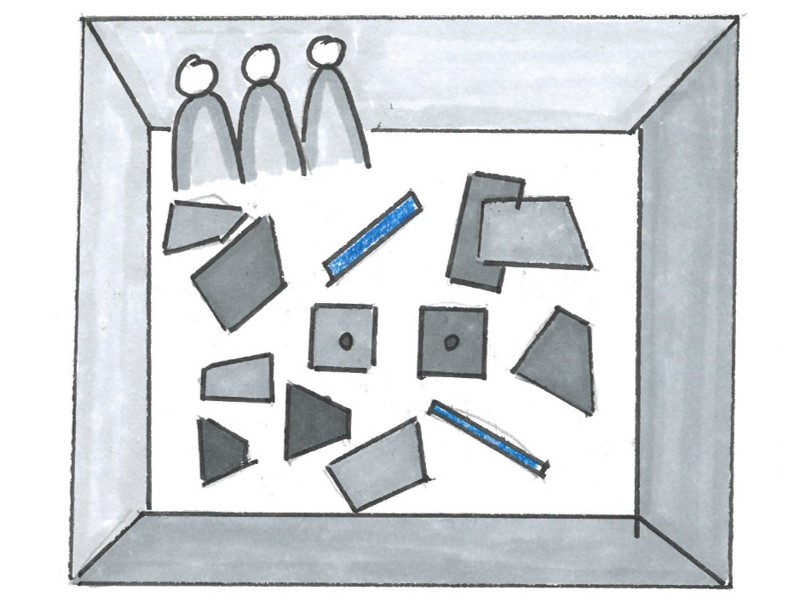
- The team enters the room to find buildings strewn about in pieces resembling the aftermath of an earthquake.
Concept refinement commentary:
From day one, we have thought about the initial experience of walking into the room. On first impression, it will be a bit overwhelming seeing large hunks of buildings at 1-10 cubic feet each.
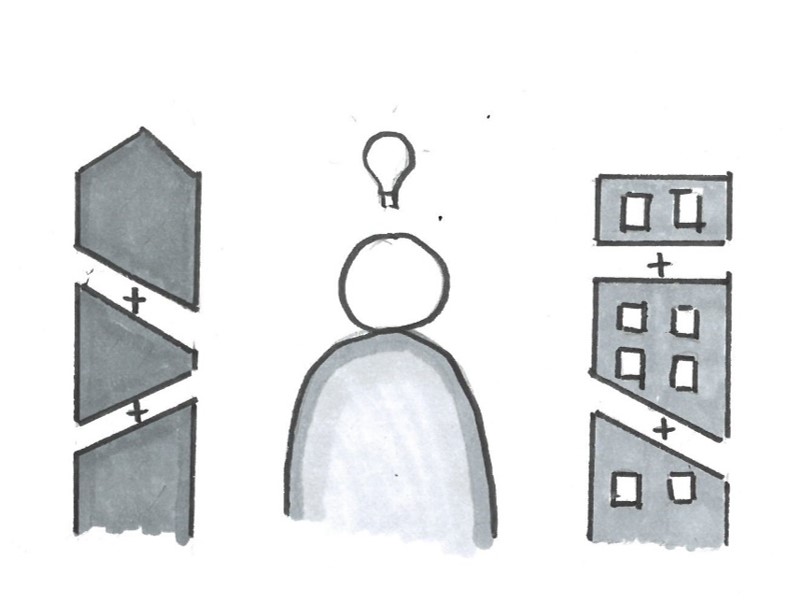
- External features on the building pieces and the skyline illustrated on the edges of the room suggest the buildings should be put together again.
Concept refinement commentary:
We want the team to be challenged but not overwhelmed. On the one hand, there will be over 20 individual building pieces lying on the floor. On the other hand, some will have clearly identifying external features to match pieces to one another. But, to add to the fun, the angular cuts require some maneuvering to see how the buildings come together.
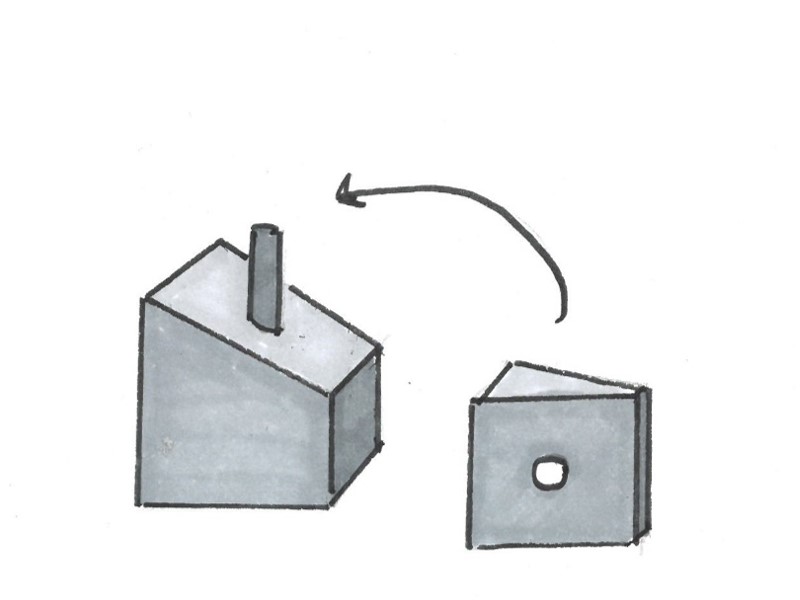
- The team sees the one or two internal supports and bored-out building pieces - this must be the easiest place to start.
Concept refinement commentary:
The internal supports play several key functions: they are designed to help indicate what the team should do (put the buildings back together), they create a starting point that gives the team a "quick win" in the face of complexity.
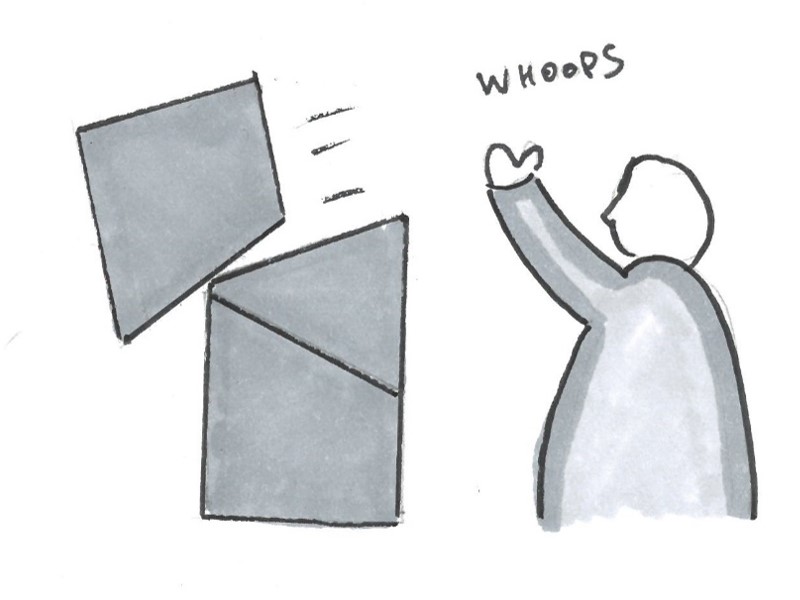
- But the internal support doesn't reach the top piece, which slides right off. “Argh!"
Concept refinement commentary:
After the initial quick win, the team is introduced to the core challenge of the game, namely that none of the buildings can stand on their own and now they'll have to think creatively to put them together.
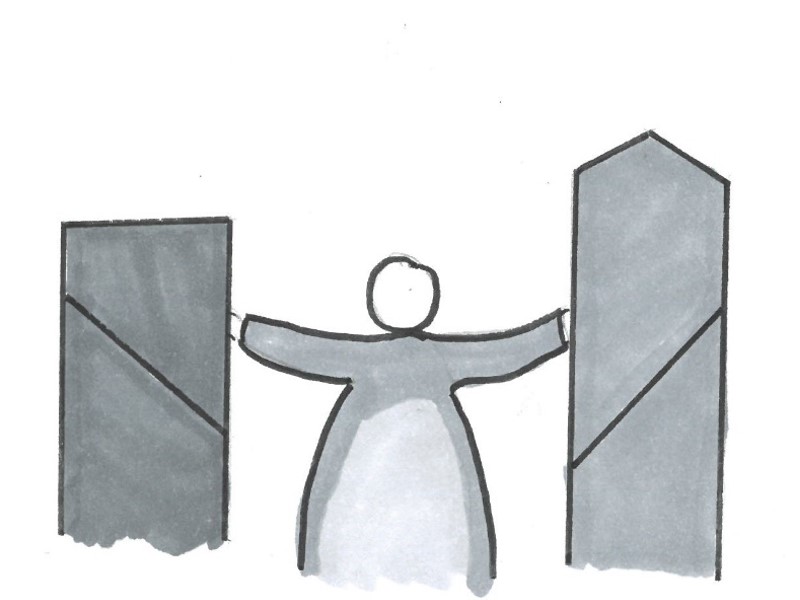
- Maybe they can hold up the buildings by hand?
Concept refinement commentary:
The team may try to hold up numerous buildings by hand, but the game is designed such that no matter how many players there are, they cannot reach all the buildings and hold them up by hand alone.
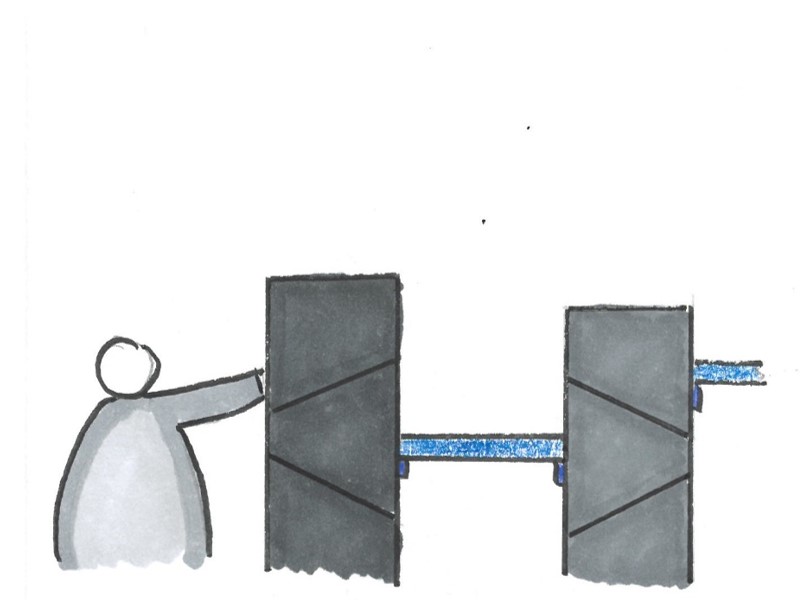
- The team finds that the distinct bridges fit on the buildings with ledges designed to hold them. This makes the buildings self-reinforcing!
Concept refinement commentary:
With internal supports, external bridges, and the use of their hands, the team has a suite of tools to solve the puzzle. The challenge should be sufficient that they recognize these tools but don't necessarily solve the puzzle on the first try.
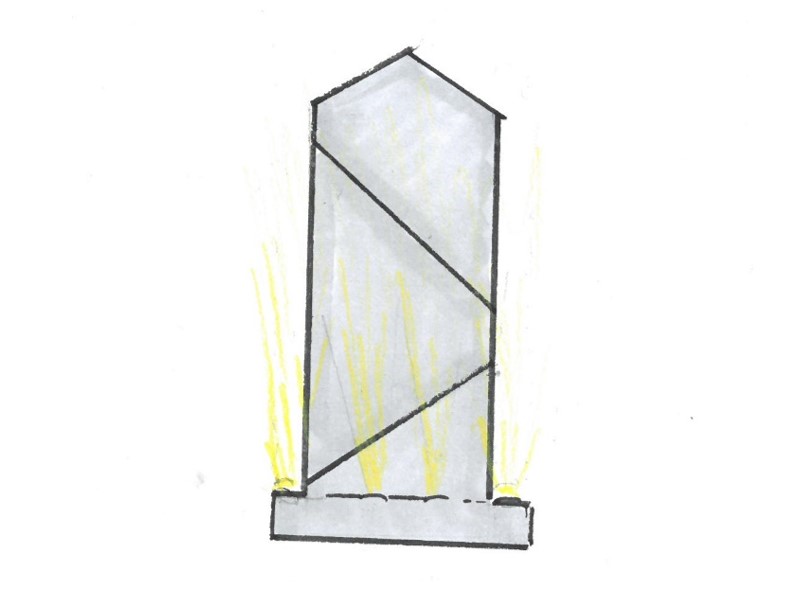
- As each building is put together, it is lit up by flood lights from below!
Concept refinement commentary:
The floodlights indicate to the team that they have succeeded with a given element of the overall puzzle. Similarly, with the lights turning off if the building is allowed to fall, the team is made to recognize that all buildings must be standing at the same time to win the entire game.
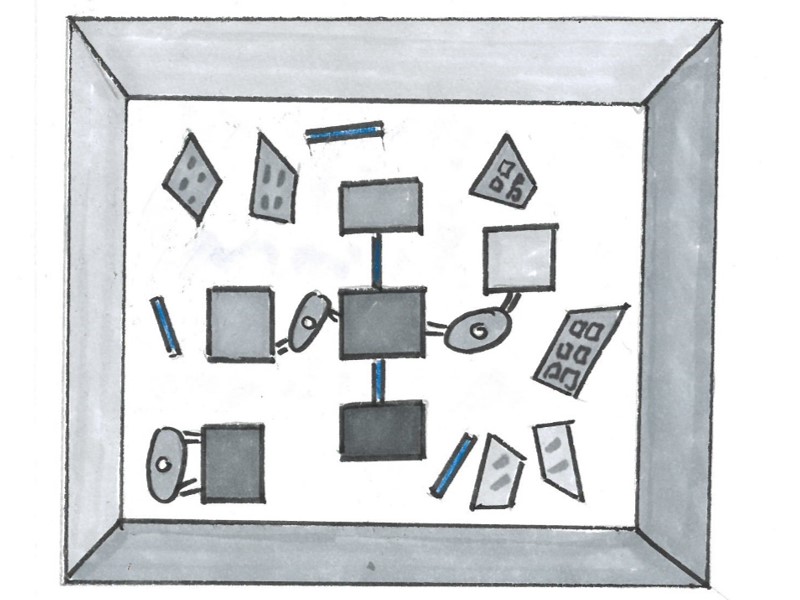
- But the team needs to sequence their construction project to get ALL the buildings standing at the same time!
Concept refinement commentary:
The team will likely try several approaches to holding up all the buildings, and hopefully learns what works and doesn't so that they can retry with better odds if they fail the first time around.
- Victory! With all the buildings standing, they are all illuminated, and the sound of triumph resonates through the room.
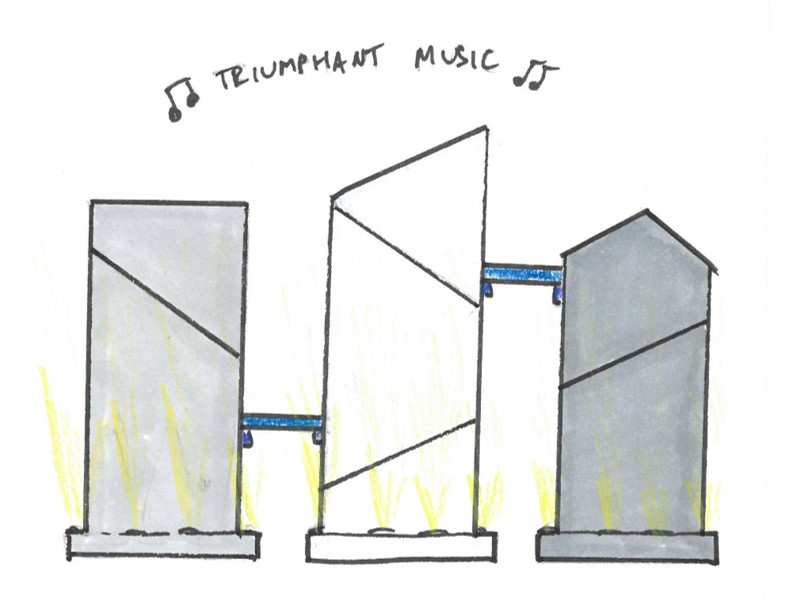
Concept refinement commentary:
The audio-visual effects are a welcome reprieve after several minutes (or several failed attempts) of frantic construction.