Abstract
Human settlement changes site ecology, affecting plants directly and indirectly, intentionally and unintentionally. Vegetation management involves the intentional selection, growth, and reduction of certain types of plants on specific sites for human safety, infrastructure and building security, resource extraction, aesthetic value, ecological health, or livestock or wildlife habitat.
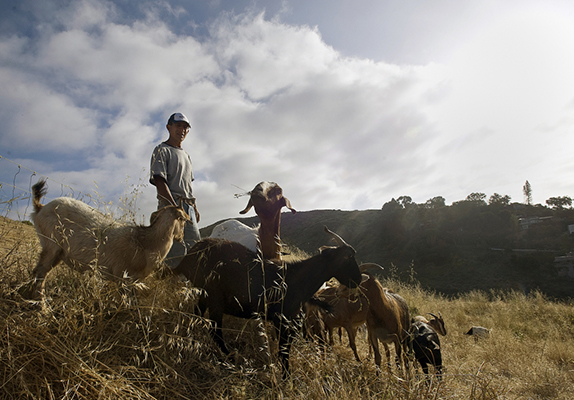
Conventionally, two methods are used: physical and chemical. Physical management involves gas-powered motorized equipment. Chemical management involves sprays which may cause defoliation or prevent seed germination. The use of goats as an alternative or complimentary management method is rapidly growing. Goats have a much smaller carbon footprint, numerous environmental benefits and technical advantages. They are charismatic and welcoming.
The research identifies advantages and disadvantages of capric vegetation management. It also identifies two settings of optimal value: the reduction of fuel loads in the wildland urban interface in the Western United States and the reduction of invasive plants in the East U.S. for faunal diversity. Both settings share steep topography.