Abstract
We may not think of cities as “wild”—cities are built for the habitation of humans, as places for people to live separately from the “wild.” But wildlife is all around us. The wildlife, the non-human animals native to the area, are often displaced to the fringe, moving unnoticed through the city, or considered ‘pests,’ but in other cases, they are valued and enjoyed.
Wildlife in the city can create both problems and benefits for city residents. Every city is different, with different native species in and around it, but some kind of wildlife exists in each one. Many cities have in some ways grown to accept and appreciate the native wildlife of their areas, and even make space for them in the city in ways that benefit both the wildlife and the human inhabitants. As cities and suburbs grow, urban interactions with wildlife will likely only increase as people move further into wildlife habitat. An urban design that takes other species into account can establish a successful relationship for both parties, now and in the future.
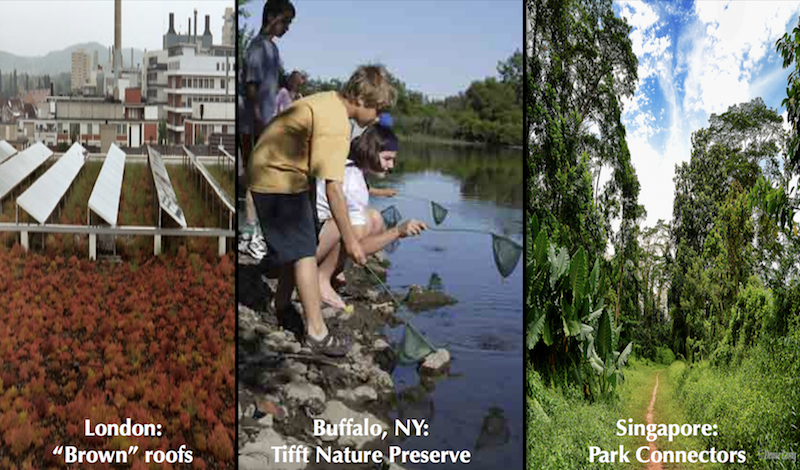
This project will examine the way that different cities, with different climates and cultures, have incorporated non-human animals into design plans, using three case studies that show how cities can be designed with wildlife in mind: 1. Green Roofs in London, 2. Tifft Nature Preserve in Buffalo, NY, and 3. Park Connector Network in Singapore.