 |
|
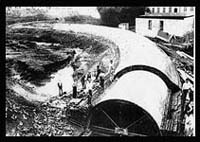
D E S C R I P T I O N O F T H E P L A C E Many streams once flowed across West Philadelphia. The largest of these is Mill Creek, a stream that drains nearly two-thirds of West Philadelphia. Its headwaters are outside the city in Lower Merion, and it flows into the Schuylkill River south of Woodland Avenue near 43rd Street. The Mill Creek cut a deep valley across parts of West Philadelphia and meandered and pooled in other areas. The large, grassy bowl in Clark Park was once a mill pond. In the late 1800s, Mill Creek was buried in city sewers. Its streambed was filled in and roads and houses were built on top, but it still flows beneath city streets. The steep valley is clearly visible in places like 47th to 48th Streets between Fairmount and Aspen and along 43rd Street from Walnut to Spruce Streets. Mill Creek now carries the rain that falls on much of West Philadelphia as well as sewage from thousands of private homes and businesses. Yet to most people the Mill Creek is invisible. Though Mill Creek is buried in a sewer, it continues to shape landscape and life. How can the buried river be revealed and rainwater celebrated so people feel and know the importance of these urban waters? Scenario: this "ideas competition" is envisioned as the first phase of a larger, long-term project to restore urban waters, landscape, and community. Assume the sponsors are the Philadelphia Water Department and a local arts organization. They wish to integrate landscape art and urban infrastructure planning to build public support for new public works. |
 RAISING THE PRESENCE OF MILL CREEK