|
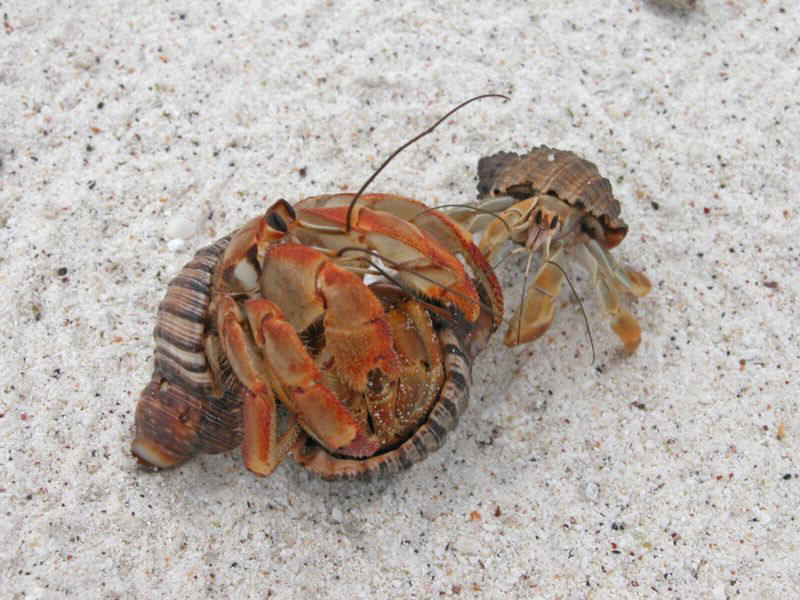
Photo: Bob Kusik
|
The purpose of this page is to keep you updated on my ongoing research
- - - - - - - - - - - - - - - - - - - - - - - - - - - - - - - - - - - - - - - - - - - - - - - -
I. LEGISLATION/MANAGEMENT Ü II. CURRENT THREATS Ü III. PREVIOUS ATTEMPTS
I. LEGISLATION/MANAGEMENT - - - - - - - - - - - - - - - - - - - - - - - - - - - -
EARLY FRAMEWORK
National Park: The Galapagos Islands, except those already colonized, was declared a National Park by the Ecuadorian Government in 1959. In September of 1973, the Master Plan was created and included a long-term conservation policy and plans for possible development within wider sphere of the province. The objectives of this plan were the total protection of landscapes and ecosystems, suppression of harmful feral species and harmful human activities, and the development of facilities and explanatory information for visitors
Marine Reserve: It wasn’t until 1986 that the Ecuadorian President León Febres-Cordero proclaimed a decree establishing Galapagos Marine Resource Reserve, which included the entire internal waters and those in a 15 nautical mile radius. (note: the current Marine Reserve extends 40 nautical miles from the islands)
CURRENT LEGISLATION
Galapagos Special Law:
The Galapagos Special Law is the current legislative framework of the Galapagos Islands. It was drafted in March 1998 with the intent of promoting the conservation of biodiversity and sustainable development in the Galapagos Islands. Below is a summary of a few issues touched upon in the document. To view an unabridged version, click here
Ø The Marine Reserve
The Marine Reserve of the Galapagos includes the marine area within a band of 40 nautical miles measured from the baseline of the archipelago and its inland waterways
Ø Administration and Management
The Galapagos National Park Administration is in charge of administering and managing the Marine Reserve of the Galapagos province
The National Park Board will coordinate the development and supervision of management, conservation, and sustainable use activities in the Marine Reserve and other policies to be developed under the principle of participating in adaptive management.
Ø Tourism
Persons traveling as tourists or in transit in the province of the Galapagos may not carry out any profit-making activities and may only remain on provincial territory for a maximum term of 90 days each year
Tourists are required to obtain the Transit Control Card distributed through tourist bureaus, traveling agencies, airline counters, etc and must buy a national, personal, round trip non-transferable airplane ticket or passage in a boat linking the mainland and the Islands.
National Park Rules (condensed version):
1. No plant, animal, or remains of such (including shells, bones, and pieces of wood), or other natural objects should not be removed or disturbed. 2. Be careful not to transport any live material to the islands, or from island to island. 3. Do not take any food to the uninhabited islands, for the same reason. 4. Do not touch or handle the animals. 5. Do not feed the animals. It can be dangerous to you, and in the long run would destroy the animals’ social structure and breeding habits. 6. Do not startle or chase any animal from its resting or nesting spot. 7. Stay within the areas designated as visiting sites. 8. Do not leave any litter on the islands, or throw any off your boat. 9. Do not deface the rocks. 10. Do not buy souvenirs or objects made of plants or animals from the islands 11. Do not visit the islands unless accompanied by a licensed National Park Guide. 12. Restrict your visits to officially approved areas. 13. Show your conservationist attitude.
II. CURRENT THREATS - - - - - - - - - - - - - - - - - - - - - - - - - - - - - - - - - - -
PROBLEMS OF NATIONAL PARK CAN BE CATEGORIZED AS FOLLOWS:
Control of invasive species Restoration of native populations Management of current human impact
INVASIVE SPECIES
Ø Several introduced species are considered invasive and pose a serious threat to the biodiversity and agriculture of the Galapagos Islands.
Ø Fauna: The first report of goats in the Galapagos dates back to the 17th century. Since then, other animal as well as plant species have invaded the islands and have caused mass destruction. Foreign animals such as goats, pigs, cattle, dogs, cats, rats, and many different kinds of insects have been plaguing the Islands for a number of years. More than 440 new introduced insect species were recorded in 2003, an increase of 22 percent since 2002.
Ø Flora: Within the last decade three hundred species of exotic plants have been introduced to the islands.
Some Effects Of Invasive Species:
L During the 1970's, wild dogs attacked a large colony of land iguanas on Santa Cruz, resulting in the death of over 500 iguanas; Cats have also been known to often feast on land iguanas
L The thousands of feral cattle that roam on the island of Isabela have been trampling the native vegetation and promoting the spread of grasslands
L The effects of pigs and goats on the island of Santiago have been so severe that once they eradicated, it's uncertain whether the vegetation will recover
L Due to predation by dogs, cats, pigs, and rats, the dark-humped (Hawaiian) petrel is now the only endangered bird species in the Galápagos
RESTORING NATIVE POPULATION
Due to all the harmful practices and occurrences on the islands, the native flora and fauna have suffered a great deal. Tortoises are near extinction, while other species have been experiencing drastic declines. In an effort to restore the native populations, scientists of the Charles Darwin Foundation have been carrying out numerous projects to save the fate of the Islands. More about their efforts can be found in the section titled “Previous Attempts…”
HUMAN IMPACT
The mass decline of the native population is not only the cause of invasive species but can also be attributed to humans. Humans have contributed to the degradation of the Islands by harmful practices like poaching and also by means of immigration/migration and tourism.
Ø Poaching: This has been one of the most serious issues plaguing the islands. Fishermen have been fishing illegally within the Galapagos Marine Reserve and have caused many problems.
Ø Immigration/Migration: If the rate of growth continues, the population is estimated to double every twelve years.
Some Effects of Human Impact:
L A larger number of inhabitants means an increase in the use of resources, waste accumulation, and introduction of diseases, plants and insects
L Due to a high demand for sea cucumbers, poachers have caused the drastic decline in their population
L Aside from the drastic decrease in marine animal populations, irate fisherman in the past have held tortoises hostage, threatened to kill tortoises and officials, and have destroyed offices
III. PREVIOUS ATTEMPTS OF AMELIORATING THREATS - - - - - - - - - -
INVASIVE SPECIES
Invasive Fauna:
Ø Project Isabela: Project Isabela is a collaborative project of the National Park Service and the Charles Darwin Foundation intended to protect native populations and rid the islands of invasive species. In 2003, Project Isabela made significant progress in the eradication of goats and donkeys on the island of Santiago, while preparing for a larger scale campaign in Northern Isabella, the largest of the Galapagos landmasses. Dogs are being used to help locate the goats that are contributing to the damage occurring on Isabela.
Ø Fire Ant Eradication Project: The Department of Terrestrial Invertebrates, in partnership with the National Galapagos Park Services has initiated a project whose purpose is to eradicate fire ants from the islands. Through the use of a pesticide AMDRO, fire ants have been drastically reduced on Marchena. The Department hopes that by next year Marchena will be completely free of fire ants
Ø As a result of intensive hunting programs by the Galápagos National Park Service, goats have been eradicated from 6 of the smaller and medium sized islands (Española, Santa Fe, Rábida, Marchena, South Plazas, and Pinta)
Ø A poisoning program has been carried out on Southern Isabela and has been proven successful in controlling the problem of wild dogs
Invasive Flora:
Ø Since 1971, the National Park Service has been trying to eradicate guava and quinine trees but have had limited success due to the remarkable recovery abilities of these plants.
Ø A program is currently being conducted that involves studying introduced plants, their effects, distribution, and methods of control. Scientists are working to develop a set of appropriate control methods for the most aggressive plants. Program administrators are also promoting the control of invasive plants as part of an improved system of local farm management, resulting in less land being abandoned and reducing the reservoir of aggressive plants.
TO VIEW A LIST OF ALL CURRENT PROGRAMS, CLICK HERE
Future Plans: Four key organizations, one of which is the Charles Darwin Foundation have been working together on the United Nations Global Environment Facility project titled: “Invasive Species in the Galapagos.” The goal of the project is to devise a strategic plan aimed at controlling invasive species within the entire archipelago. Dr Jill Key is the coordinator of this large project and is thus responsible for ensuring its implementation. The plan has three strategic directions: 1. Development and strengthening of the Inspection Quarantine System for the Galapagos (SICGAL), establishment of monitoring system and rapid response teams to detect incursion 2. Mitigation of the negative impact of existing introduced species including the implementation of restoration and management programs on cost-benefit criteria 3. Institutional strengthening of organizations within the Galapagos to enable effective management and implementation to the overall total control plan
RESTORING NATIVE POPULATIONS
Conserving the Tortoises:
Ø In 1959, it became illegal to capture or remove any species from the islands, including tortoises and their eggs. In years to follow, it became illegal to export tortoises from Ecuador (regardless of whether or not they had been reared in captivity or the wild) and to remove, alter, or disturb any organism or other natural object in the Galapagos National Park.
Ø Since February of 1992, Lonesome George, the only remaining tortoise of Pinta Island has been placed with two females from Wolf Volcano, Isabela in hopes of producing offspring that can help repopulate Pinta.
Ø Tortoise nests are protected; eggs and young are brought to Santa Cruz for captive raising (Since the program began, over 1,400 young tortoises have been repatriated to their original islands)
Other Species:
Ø The Galapagos National Park Service set up petrel colonies at Cerro Pajas on the island of Floreana that now have 80% breeding success and virtually no adult mortality as opposed to the 30% breeding success and 30% adult mortality rate prior to the project
MANAGEMENT OF CURRENT HUMAN IMPACT
Ø In 1934, conservation work began with laws protecting certain native animal species from hunting or capture and declaring Española, Santiago, Pinzon, Santa Fe, Rábida, Seymour, Genovesa, Marchena, Pinta, Daphne, Wolf, and Darwin as reserves and National Parks
Poaching:
Ø In 1994, regulations were put forth setting the minimal harvest of sea cucumbers of 550,000 over a three-month period
Ø On December 15, 1994, there was a total ban placed on sea cucumber harvesting and was ignored (an irate fisherman even took an endangered tortoise hostage and a park rangers was shot 1997)
Ø Under the Galapagos Marine Resources Reserve, commercial fishing was prohibited from waters around the islands; traditional style fishing is permitted in certain zones
Ø When the ban on sea cucumbers went into effect, a substitute lobster fishery was offered, resulting in a major loss of lobsters as well as continued illegal cucumber harvest
Ø Sea Shepherd International: In partnership with the Galapagos Islands, Sea Shepherd International has been patrolling the Marine Reserve in lookout of exploitation such as poaching. Since the beginning of the program, they have been successful in catching poachers. The project began in 2001 and is scheduled to end in 2005.
Ø Human settlements and immigration have been strictly limited and ecotourism has been regulated |