Research

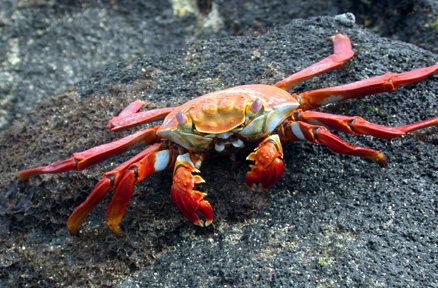
crabby (Photo by Bob Kusik)   


Click here to Santa Cruz

To My Journal
See research I'm working on
Click to see my research sources

The People of the Galapagos


    The Galapagos is under the governance of Ecuador.  The population on the islands consists of Ecuadorians, but also foreigners who are scientists, tourists, tourism managers, fishermen and businessmen.  Over the years, the population has been increasing from immigration and natural growth, placing a high impact on the ecosystem.  Also, tourism has risen, bringing many more visitors in that are harmful to the environment. 

Fishermen-  mostly believe it is their right to fish and manage the islands as they like.  The government tried implacing restrictions which led to riots.  Fishermen took hostage scientists at the Darwin Research Center and burned scientists' offices. Some fish in illegal areas, areas that have been claimed for reservation, and illegal produce, endangered species that have been called safe.


Team Site Contribution
Population:
        Currently there live around 20,000 people (Kriz, 1198) on the small islands off the coast of Ecuador.  Puerto Ayora is the main town located on Santa Cruz island.  The islands altogether only have one ATM, but do not lack modern technology such as the internet- having several ‘Internet Cafés.’
    The people of the Galapagos mainly base their lives on tourism, fishing, or scientific research. 

Primary Religion: Roman Catholic

Natural Resources: The Galapagos has no dependable fresh water resource on the Islands.  Oil is imported for energy.    

   
Fishermen- Since the 1990s, the number of fishermen has increased. The fishing industry has brought many people to the islands.  Due to the hard seasons of El Nino and overfishing, fishermen have lost most of their catch in Ecuador’s coastal area.  Thus, they come to the Galapagos to fish its more abundant resource, but also contribute to destroying the exotic life. 
     Worried about the conservation of sea life, the Ecuadorian government and conservationists placed restrictions to increase preservation.  However, many fishermen did not respond agreeingly, breaking the restrictions or protesting the government.  Several times fishermen attacked the conservationists of science research centers, holding people hostage and burning buildings.  Believing it is their right to take advantage of the resources, the issue of fishing still remains in dispute.

Galapaguenos-
        Originally, no natives existed on the Islands.  Supposedly the Incas initially visited the Islands.  Later, whalers and pirates spent time in the Galapagos.  Settlers of the early 1900s consisted of Europeans and South Americans.  These are considered the Galapaguenos, the more native people. (White, 1997)

Scientists- Scientists search to preserve and analyze the non-human life of the Galapagos.  They have built the Darwin Research Center as well as other constructions to locate themselves.  Part of the conservation movements, scientists oppose fishermen and affects of tourism.

Tourism business- The tourism business brings visitors on to the Islands in addition to employees.  The number of visitors to the islands has increased to around 60,000 people (White, 1997) in a year.


Effects on Environment
Pollution- air, water, land

A great amount of environmental destruction occurs in water and on land because of oil.  The Galapagos imports oil for the population to us.  Frequently, accidents have occurred on sea that result in oil spills.  In 2001, a massive spill of 180,000 gallons polluted the ocean.  In 2003, another spill of 2,000 gallons of diesel fuel fell in.  These frequent contaminations of the ocean produce harsh effects on the environment.  Not only do the spills make the marine life suffer, but also the land animals.  Researchers found that 62% of an island’s iguanas died within a year as a consequence of the spills.  (Kriz, 1198)

Air- Industry and motor vehicles cause pollution to the air.  For transportation, people mainly use environment unfriendly motor bikes.  Research has been done on the issue.  Toyota designed a more efficient motor bike that is cleaner for the environment.  However, many people disregarded the new alternative because of expenses, etc. (Kriz, 1198)

Agriculture- Much of the agriculture that had taken place no longer does.  People have left the farms for other opportunities.  There has been little study of ways to optimize the farming in the area and for its people.   (McGrath)

Spain, Germany, and the United Nations have constantly been researching ways to decrease pollution by recycling, alternative energy, and more.  (McGrath)

Current Events:

    In 1998, the Ecuadorian Government passed regulations to restrict the number of people on the islands.  This included tourists and immigrants.  The law also proposed restrictions on cars, boats, and fishing.  (Anonymous, 102)
    The conservationists and scientists highly favored Ecuador’s policy, but many of the tourist managers and fishermen did not.  In consequence, groups of fishermen took scientists hostage and burned offices of the Darwin Research Center.  They also set up road blockades and burned car tires and threatened to leave goats on islands not yet containing them.  Fishermen have shown their discontent taking a tortoise hostage, threatening tourists, and demolishing the telephone system.  (Unknown. The Economist 2004, 56)


MIT
Home