 15.220 Global Strategy

Here you can find a brief description of the cases
that will be discussed in the course.
PART I: FRAMEWORKS FOR ANALYSIS
Reading: Thomas
Friedman, “It’s a Flat World, After All”. (April 3)
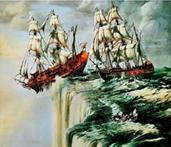 “History of the world twenty
years from now, and they come to the chapter "Y2K to March 2004,"
what will they say was the most crucial development? The attacks on the
“History of the world twenty
years from now, and they come to the chapter "Y2K to March 2004,"
what will they say was the most crucial development? The attacks on the
Case: BA and the
‘Open Skies’ Treaty. (April 5)
Webpage: www.ba.com
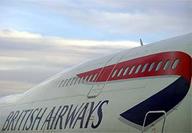
A member of the royal family of
European airlines, British Airways (BA) has had to relinquish its throne. Europe's
#2 carrier (newly formed Air France-KLM is #1) flies from its hubs in London's
Heathrow and Gatwick airports, the airline flies about 290 aircraft to more
than 150 destinations in some 75 countries. It owns a minority stake (11%) in
Case: Shimano Inc.
(April 10)
Webpage: www.shimano.com
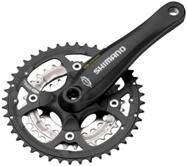
“People know the joy of contacting their
hearts to the breathing of nature. People know the joy of meeting someone to
communicate with each other.
That's simply because all people have
nature in themselves.
And tools are largely connected with the
joy of people.
We at Shimano have been providing attractive
products with a focus on cycling and fishing, the most popular outdoor sports.
Wind touching the skin, sunlight
streaming through the trees and wave patterns covering the water excite the
hearts of people. We are aiming to become a company to create excitements among
people.
We will continue to support people to
realize their dreams to create new lifestyles to bring them closer to nature
and share the joy of life with each other.” (source: Shimano webpage)
Case: P&G
Japan: The SK-II Globalization Project. (April 12)
 Webpage: www.pg.com
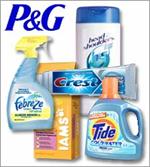
The Procter & Gamble Company (P&G) is a brand
behemoth. The world's #1 maker of household products courts market share and
billion-dollar brands. P&G's products fall into three categories: global
beauty care; global health, baby, and family care; and global household care.
It also makes pet food and water filters and produces soap operas (As the World
Turns). More than 20 of P&G's brands are billion-dollar sellers (including
Actonel, Always/Whisper, Bounty, Charmin, Crest, Downy/Lenor, Folgers, Iams,
Olay, Pampers, Pantene, Pringles, Tide, and Wella). Acquisitive P&G bought
Clairol in 2001 and a majority of Wella in 2003. Its purchase of Gillette in late
2005 was its biggest buy in company history. (source: Hoovers.com)
PART II: MANAGING
IN DIVERSE ENVIRONMENTS
Case: Lenovo vs.
Dell. (April 19)
Webpages: www.lenovo.com / www.dell.com
 Heard the legend of Lenovo?
Lenovo, formerly known as Legend Group Limited, is the largest PC maker in the
world's most populous country. It holds its own against PC giants such as Dell
and Hewlett-Packard, offering low-priced computers with Chinese character
systems. Other products include servers, handheld computers, imaging equipment,
and mobile phone handsets. The company also provides manufacturing and IT
integration and support services. Legend Group Holdings, which is controlled by
the Chinese government, owns a majority stake in Lenovo. Lenovo acquired IBM's
PC operations for approximately $1.75 billion in May 2005. (source:
hoovers.com)
Heard the legend of Lenovo?
Lenovo, formerly known as Legend Group Limited, is the largest PC maker in the
world's most populous country. It holds its own against PC giants such as Dell
and Hewlett-Packard, offering low-priced computers with Chinese character
systems. Other products include servers, handheld computers, imaging equipment,
and mobile phone handsets. The company also provides manufacturing and IT
integration and support services. Legend Group Holdings, which is controlled by
the Chinese government, owns a majority stake in Lenovo. Lenovo acquired IBM's
PC operations for approximately $1.75 billion in May 2005. (source:
hoovers.com)
Whether you spend most of your time in a cubicle or on a
couch, chances are good that there's a Dell in front of you. The world's #1
direct-sale computer vendor provides a broad range of computer and
entertainment products for the consumer and enterprise markets. In addition to
a full line of desktop and notebook PCs, Dell offers network servers, workstations,
storage systems, printers, handheld computers, digital music players, LCD and
plasma televisions, projectors, and Ethernet switches. The company also markets
third-party software and peripherals. Dell's growing services unit provides
systems integration, support, and training. (source: hoovers.com)
Case: Samsung
Electronics. (April 24)
Webpage: www.samsung.com
Samsung Electronics is an electronics Samson. One of the
world's largest microchip makers, Samsung Electronics is also South Korea's top
electronics company. It makes many kinds of consumer devices, including DVD
players, big-screen televisions, and digital cameras; computers, color
monitors, LCD panels, and printers; semiconductors such as DRAMs, SRAMs, and
flash memory; and communications devices ranging from wireless phones to
networking switches. The company, which is the flagship member of Samsung
Group, also makes microwave ovens, refrigerators, air conditioners, and washing
machines. (source: hoovers.com)
Case: ICICI’s
Global Expansion. (April 26)
Webpage: www.icicibank.com
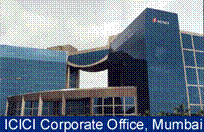
ICICI Bank is a commercial bank operating about 470
branches and 1,800 ATMs across India. Its commercial banking operations are
divided into corporate and retail. Corporate banking provides lending and
deposit services to business customers, while retail banking offers deposit
accounts, loans, and credit cards to individuals. Investment banking includes
treasury operations and handles the bank's investment portfolio. ICICI, which
is India's #2 bank after State Bank of India, offers Internet banking services,
online bill pay, and debit cards. Its life and other insurance products are
offered through joint ventures with Prudential and Lombard Canada.
Case: BTC
- Baku-Tbilisi-Ceyhan pipeline. (May 1)
 The
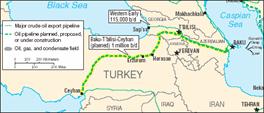
Baku-Tbilisi-Ceyhan pipeline (sometimes abbreviated as BTC pipeline) transports
crude oil 1,760 km (1,093 miles) from the Azeri-Chirag-Guneshli oil field in
the Caspian Sea to the Mediterranean Sea. It passes through Baku, the capital
of Azerbaijan; Tbilisi, the capital of Georgia; and Ceyhan, a port on the
south-eastern Mediterranean coast of Turkey, hence its name. It is the second
longest oil pipeline in the world (the longest being the Druzhba pipeline from
Russia to central Europe). (source: wikipedia.com)
The
Baku-Tbilisi-Ceyhan pipeline (sometimes abbreviated as BTC pipeline) transports
crude oil 1,760 km (1,093 miles) from the Azeri-Chirag-Guneshli oil field in
the Caspian Sea to the Mediterranean Sea. It passes through Baku, the capital
of Azerbaijan; Tbilisi, the capital of Georgia; and Ceyhan, a port on the
south-eastern Mediterranean coast of Turkey, hence its name. It is the second
longest oil pipeline in the world (the longest being the Druzhba pipeline from
Russia to central Europe). (source: wikipedia.com)
Case: Arcor: Global Strategy and Local Turbulence.
(May 3)
 Arcor's
sweets, which run the gamut from lollipops to chocolate Easter eggs, are now
available in 105 countries, including emerging markets such as China, the
Middle East, and Russia. The company also makes candy for Wal-Mart Stores Inc.
(WMT ) and Sara Lee Corp. (SLE ) "There are around 200 countries in the
world, so we figure we're about halfway to where we want to be," says
Arcor President Luis Pagani.
Arcor's
sweets, which run the gamut from lollipops to chocolate Easter eggs, are now
available in 105 countries, including emerging markets such as China, the
Middle East, and Russia. The company also makes candy for Wal-Mart Stores Inc.
(WMT ) and Sara Lee Corp. (SLE ) "There are around 200 countries in the
world, so we figure we're about halfway to where we want to be," says
Arcor President Luis Pagani.
Pagani's father, it seems, was
an early convert to globalization. The son of an Italian immigrant founded
Arcor in 1950, and the company quickly made a name for itself in Argentina. Yet
unlike many other prominent businesses in the country, Arcor never banked on
its grip on the domestic market lasting forever. In 1969, it sent its first
shipment of caramels to the U.S. And in 1976, it inaugurated its first foreign
factory in Paraguay. Today it has six plants in Latin America in addition to 25
in Argentina. (source: businessweek.com)
PART III: LEVERAGING ACROSS LOCATIONS
Case: The Cemex
Way. (May 8)

CEMEX has added some European
flavor to its cement. The company, which had already climbed to the #3 spot in
the cement world, acquired UK-based cement giant RMC Group in 2005. About 75%
of CEMEX's sales come from cement; the company has an annual production
capacity of more than 90 million tons. It also makes ready-mix concrete,
aggregates, and clinker (an intermediate product used to make portland cement).
CEMEX's operations are concentrated in North America and Europe, but it also operates
in the Middle East, South America, and the Pacific rim. North America accounted
for more than 50% of sales before the RMC acquisition, but now Europe is
CEMEX's largest market. (source: hoovers.com)
Case: Zara: Fast Fashion. (May 10)
 Webpage: www.zara.com
Trendy Zara is the flagship fashion brand for
Video: Carlos
Ghosn. (May 15)
Webpages: www.nissan.com / www.renault.com

Few people have ever been the president of two very large
organizations at the same time as Carlos Ghosn is nowadays. President of Nissan
and Renault, Carlos Ghosn was the ‘troubleshooter charged with reviving Nissan
Motor Co.’. After his success in Nissan, now its time for Mr. Ghosn to help to
revive the large French automaker, which lately has been lagging behind in the
world’s automotive race.