Communications Satellite Constellations
Massachusetts Institute of
Technology
“Technical Success and Economic Failure”
Version 1.1,
Abstract
This systems study takes us back to
1987, when the idea of global satellite constellations providing personal
mobile communications was first conceived. We will retrace the history of
Iridium and Globalstar from 1987 to 2002 and discuss the technological and
business context of both systems. The technical case presents the underlying
multiple access technologies and the advantages and challenges of operating satellites
in low Earth orbit rather than in the more common geosynchronous belt. The
business case involves estimating lifecycle cost, forecasting demand and quantifying
a pricing strategy. The enthusiasm and telecomm
boom in the 1990’s fueled the development of new technologies and architectures
and led to billions of dollars of investment. Satellite bulk manufacturing, intersatellite links, and constellation management were all impressive firsts
achieved during this time. Unfortunately, the subscriber market forecasts
turned out to be overly optimistic and both systems, Iridium and Globalstar,
ended up in bankruptcy. Two assignments are included in this unit. The first is
a brief role play during class, where various stakeholder groups are asked to
negotiate post-bankruptcy scenarios. The second assignment is an individual
problem set. The fundamental questions addressed by this unit are: (1)
"How can it be that these complex engineering systems were so successful
technically, but ultimately ended up as business failures?” (2) “What can we
learn from this experience for architecting and designing future engineering
systems?”
Learning Objectives
After completing this unit you
should be able to:
- Explain the history and basic technical principles of
communication satellites.
- Quantify the business case and understand the
underlying assumptions.
- Summarize the key technological and manufacturing
innovations that were required to implement global communications
satellite constellations in the late 1990s.
- Understand the main reasons for economic failure of
Iridium and Globalstar in their aerospace and telecommunications industry
context.
- Extract lessons learned for architecting and
designing similar systems in the future.
Disclaimer Statement: The
material in this industry systems study was created for educational purposes
only. In no way do the statements made in this study express official positions
of the Massachusetts Institute of Technology. The material may not be used for
any purpose other than classroom or distance learning instruction. Copyright ©
2003 M.I.T.- Engineering Systems Learning Center.
Author Information: Prof. Olivier de Weck (deweck@mit.edu),
Room 33-410, Prof. Richard de Neufville (ardent@mit.edu) , Room E40-245,
Darren Chang (darrenz@mit.edu) ,
Mathieu Chaize (chaize@mit.edu),
Massachusetts Institute of Technology,
Materials
Unit Material
- Unit 1: Lecture slides (unit1_lecture.ppt)
- Unit 1: “Technical Success and Economic Failure” (unit1_summary.htm) – this file
- Unit 1: Spreadsheet of relevant FCC data (unit1_data.xls)
- Unit 1: In-class stakeholder assignment (unit1_stakeholders.htm)
- Unit 1: Problem set (unit1_problemset.htm)
Reference Material
- Communications Satellites: “Making the Global Village Possible” by David J. Whalen – A brief history of communications satellites (satcomhistory.html)
- Iridium FCC Filing,
- LEO Commercial Market Projections, May 1998, Associate Administrator for Commercial Space Transportation, Federal Aviation Administration (leomarket98.pdf)
- Class
Action Lawsuit against Iridium and Motorola,
- A list of additional references (some with URL links) is contained in the back of this document.
Time required: Approximately 3 hours preparation, 1.5 hours in class, 3 hours homework.
Table of Contents
Concept
of LEO Satellite Constellations (The Technical Case)
Communications
Satellite Economics 101 (The Business Case)
Historical Background
The idea of satellites in geosynchronous Earth orbit was first mentioned by H. Potocnik, an Austrian military officer in 1928 who published under the pseudonym Hermann Nordung. Sir Arthur C. Clarke’s article “Extra-Terrestrial Relays” in the October 1945 issue of the British magazine Wireless World is credited with first presenting the concept of communications satellites in 24-hour orbits. The first operational communications satellites were launched into geosynchronous Earth orbit (GEO) in 1962 (TELSTAR and RELAY). Since then communications satellites have supported commercial intercontinental telephone service, television broadcasting, scientific missions and space shuttle operations, among others. A more detailed history of communications satellites is discussed in the article “Communications Satellites: “Making the Global Village Possible” by David J. Whalen. To this day the majority of communications satellites operate in geosynchronous Earth orbit (GEO), which causes them to appear fixed in the sky to users on the ground.
A distinct change occurred in the early 1990’s after interconnections between large numbers of satellites in Low Earth Orbit (LEO) became technically feasible. The satellites would be dynamically cross-linked and form a constellation, providing global coverage. However, of the roughly 35 LEO constellations for which the Federal Communications Commission (FCC) has received applications from 1990 to 2001, only three were actually built: Iridium (by Motorola), Globalstar (by Loral) and Orbcomm (by Orbital Sciences). A database summarizing these FCC filings is contained in the reference material for this unit. Two of these systems, Iridium and Globalstar, were actually built and are of particular interest to us due to their scale and complexity. The conceptual design of both systems started as early as 1985. Iridium filed for its operations permit and frequency allocation in 1990 from the Federal Communication Commission (FCC) and Globalstar followed suit in 1991. The following paragraphs briefly examine the background of the telecommunication industry in the late 1980s and early 1990s to set the context for this study.
.
In 1980 many of the telecommunications applications that we take for granted today were not yet available. Both public internet and terrestrial-based cellular phone systems were technological wonders that still had to be matured in order to find broad consumer acceptance. The primary backbone of the telecommunications infrastructure was the public switched telephone network (PSTN), carrying mainly voice and some low bandwidth data signals such as telefax and embryonic computer data traffic. This was essentially the same system that had grown organically since the early 20th century in all industrialized nations. The main disadvantage was that PSTN was limited to developed areas were end user equipment could be directly connected to the network by wire. The only way to provide global wireless communications was via GEO satellites. INMARSAT was the first system to provide satellite telephone service – mainly for marine users. A constellation formed by three GEO satellites, 120o apart in longitude, can provide communications coverage to anywhere on the surface of the Earth below approximately 70o of latitude. GEO systems, however, have at least three major disadvantages:
1. Because GEO systems orbit the earth at an altitude of 35,786 kilometers, the time delay for one-way transmission between the satellite and the ground is at least 120 milliseconds, which is perceivable in two-way voice communications.
2. Losses along the ~36,000 km long path are high, since signal strength falls off with the square of the distance between transmitter and receiver. High power transmitters and large antennas are required for the user terminals on the ground to overcome these losses. This reduces the mobility of end user terminals to the point where handheld personal devices for GEO communications are impractical.
3. With bulky and expensive terminals, GEO systems could only win over a small group of users, typically consisting of mariners, field workers, and military personnel. As a consequence, GEO systems were unable to generate a customer base large enough to lower the cost of service significantly based on economies of scale. The typical cost of a GEO satellite was around $100-200 million with launch costs on the order of $50 million in the mid-1990s.
The astute reader will have realized that these three disadvantages are not isolated from each other. They all have their origin in one root cause: distance. Practical personal satellite communications would not be possible without overcoming the distance factor. The main players in the telecommunications industry realized the same problem in late 1980s and were actively searching for – primarily technological - solutions. This led to the development of Low Earth Orbit (LEO) communication satellite constellation systems. The next section describes the technical fundamentals of these systems. The business case is described below. Lloyd Wood maintains an excellent overview of satellite constellations on the internet[1].
Concept of LEO Satellite Constellations (The Technical Case)
A LEO
communication satellite constellation system is a constellation of satellites
that orbit the Earth at an altitude of about 500-1500 km and provide wireless
communications between terminals on the ground. There are two major types of
constellations: Polar and
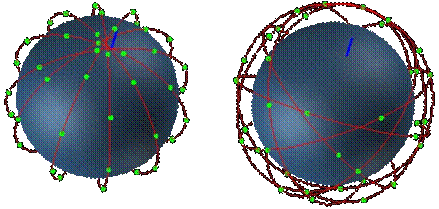
Figure
1. Polar (left) and
Some of the systems have inter-satellite links (ISLs) and onboard processing that allow transmission between neighboring satellites in the constellation, while other systems act as “bent pipes” that simply “bounce” the signals between different ground users. Ground users can be either an end user terminal in the form of a “satellite phone”[2] or a gateway. The gateway has a larger antenna dish and is connected to the PSTN to allow communications between satellite phones and traditional wired ground telephones. The concept is illustrated in Figure 2.
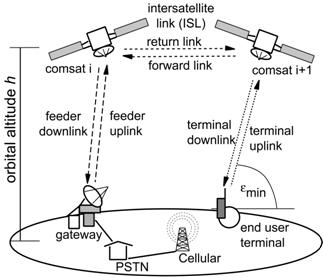
Figure
2. LEO communications
satellite constellation concept. The orbital altitude, h, is typically between 500-1500 km. The
minimum elevation angle, emin, is typically 5-15 degrees.
LEO systems overcome the distance problem that plagues the GEO systems. Time delay for LEO systems is on the order of 10 milliseconds, negligible for voice communication. The short distance also reduces the requirement on power and antenna size. As a result, LEO satellite phones are much more compact, which enables them to be carried by individual users. The smaller distance, however, comes at a price. While three GEO satellites, separated by 120 degrees in longitude, can cover the entire globe below 70 degrees of latitude, LEO constellations typically require dozens of satellites to ensure continuous global coverage because the footprint of a LEO satellite is much smaller. Technically, these systems are more challenging than GEO satellites, because a LEO satellite will travel in the sky from West to East at roughly 7 km/sec and will only be visible between 7 and 20 minutes depending on satellite altitude and user position relative to the satellite’s ground track. Longer calls must therefore be seamlessly switched over from one satellite to the next. This requires complex (and therefore expensive) switching hardware and software. Also, many GEO satellites work in a one way broadcast mode, i.e. one source of transmission in orbit and many receivers on the ground. LEO satellites on the other hand require two-way many-to-many connections, which increases the need for frequency bandwidth as well as hardware and software complexity of both space and terrestrial elements.
The following paragraphs will briefly cover the concepts of multiple access and spot beams, which are the foundation of LEO communications constellations. This will help explain satellite communications in general and will lay the foundation for subsequent units of this systems study.
We can view
radio frequency (RF) transmissions as propagating in three domains: the
frequency domain, time domain, and spatial domain. In the
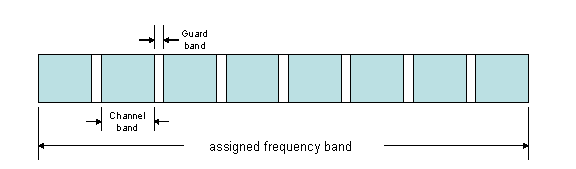
Figure
3. Frequency division multiple
access (FDMA) scheme
Besides frequency, access time to a system can also be divided into frames, and frames are again divided into time slots. A basic channel is formed by a particular time slot inside every frame. This is the time-division multiple access (TDMA) scheme. In the forward link (satellite-to-user terminal downlink) and return link (user-to-satellite uplink), usually the same frame structure is used. In order to avoid simultaneous transmission and reception of a user, the corresponding time slots for the forward and return links are separated in time. The TDMA scheme is illustrated in Figure 4.
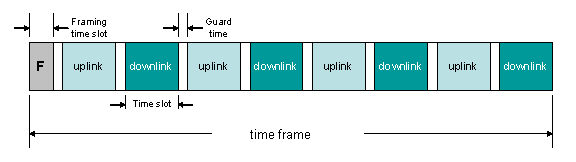
Figure
4. Time division multiple access (TDMA) scheme
Frequently, satellite manufacturers have made use of hybrid multiple access schemes. In multiple frequency-time division multiple access (MF-TDMA), multiple TDMA carriers at different frequency channels are used to increase the total number of channels, as illustrated in Figure 5. In this way, the same frequency band can be used more efficiently compared with pure FDMA.
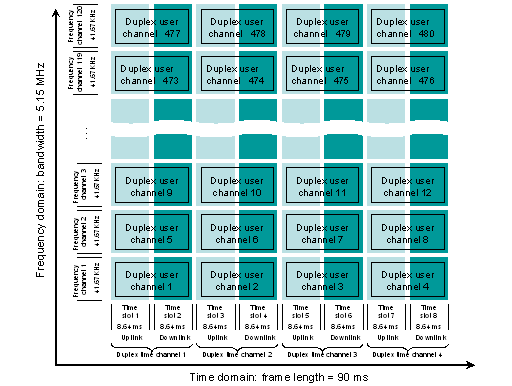
Figure 5. Multiple frequency-time
division multiple access (MF-TDMA) scheme for Iridium
Aside from FDMA and TDMA, there exists a third popular multiple access scheme. Using a unique pseudorandom noise (PN) code, a code division multiple access (CDMA) transmitting station spreads the signal in a bandwidth wider than actually needed. Each authorized receiving station must have a matching PN code to retrieve the information. Other channels may operate simultaneously within the same frequency spectrum as long as different, orthogonal codes are used. The CDMA scheme is illustrated in Figure 6. This is the primary operating mode of most ground-based cellular telephone systems. In MF-CDMA, multiple CDMA carriers at different frequencies are used to increase the total number of channels.
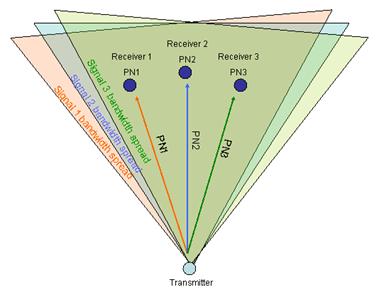
Figure
6. Code division multiple
access (CDMA) scheme.
LEO communication satellites typically concentrate their transmission power in multiple spot beams. Each spot beam covers a cell on the ground, and all the cells together form the footprint of the satellite. The spot beam contour is usually defined by the area where the antenna concentrates 50% of its radiation power. (This is equivalent to a -3dB decrease in antenna gain relative to the peak gain.) The usage of spot beams offers two advantages: 1. Focusing transmitted power on a much smaller area than the total coverage area of the satellite, spot beams increase the transmitter gain and therefore improve the link budget. 2. The reuse of frequency bands in different cells further improves bandwidth efficiency because cells that do not neighbor each other can use the same frequency band. Figure 7 shows the footprint pattern of an Iridium satellite. The circles containing the same letter represent spot beams that use the same frequency band.
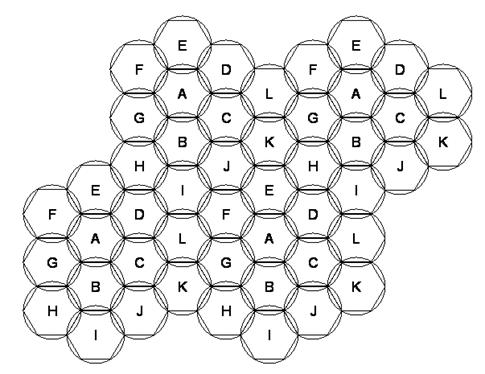
Figure
7. Footprint
pattern of an Iridium satellite.
Equipped with the above technical knowledge on LEO communication satellite constellations one may now consider the business aspects.
Communications Satellite Economics 101 (The Business Case)
Part of the information listed below for Iridium and Globalstar is about the financial aspects of the systems. Good system architects and designer must be concerned with not only technical aspects, but also be aware of the underlying economics. A brief introduction to cost, financing and pricing of communications satellite systems is provided below.
System Lifecycle Cost
Cost must be used in parallel with technical performance metrics in judging the merits of a satellite project in order to achieve a cost-effective system. According to Larson and Wertz, the lifecycle cost of a space system can be broken down into three main phases.[3] The Research, Development, Test, and Evaluation (RDT&E) phase including design, analysis, and test of breadboards, brassboards, prototypes and qualification units. It also includes prototype flight units and nonrecurring ground station costs. The Production phase incorporates the cost of producing flight units and launching them. The Operations and Support phase consists of ongoing operations and maintenance costs, including spacecraft unit replacements. Replacement satellites and launches after the space system’s initial operating capability (IOC) has been established are also included in this phase.
Dividing life-cycle cost (LCC) into the above-mentioned three components, an estimate of LCC can be obtained by means of cost estimating relationships (CER) which express the cost as a function of key design variables and performance parameters. Using CERs, a designer is able to estimate the space and ground segment cost, the operations cost and launch costs systematically. While such estimates might be uncertain, they are often useful for preparing bids or for comparing competing architectures.
To get a basic idea of the cost of a space system, one may consider examples of actual systems. Table 1 shows the specific cost (cost per unit mass) of four types of spacecraft. By the time this table was prepared, CERs for LEO communication satellites were yet to be developed; therefore the data for LEO communication satellites are not included in this table.
|
Type of space systems |
Typical range of specific cost ($k/kg) |
|
Communication satellites in GEO |
70-150 |
|
Surveillance satellites |
50-150 |
|
Meteorological satellites |
50-150 |
|
Interplanetary spacecraft |
>130 |
Table 1.
Specific cost of spacecraft (data from SMAD)
The specific costs listed above are for spacecraft alone. The National Aeronautics and Space Association (NASA) has supplied an approximate breakdown of mission cost of its small spacecraft.[4] According to NASA, the spacecraft cost (bus, instruments, integration, and associated ground equipment) represents about 60% of the total mission cost (TMC). The breakdown is shown in Figure 8.
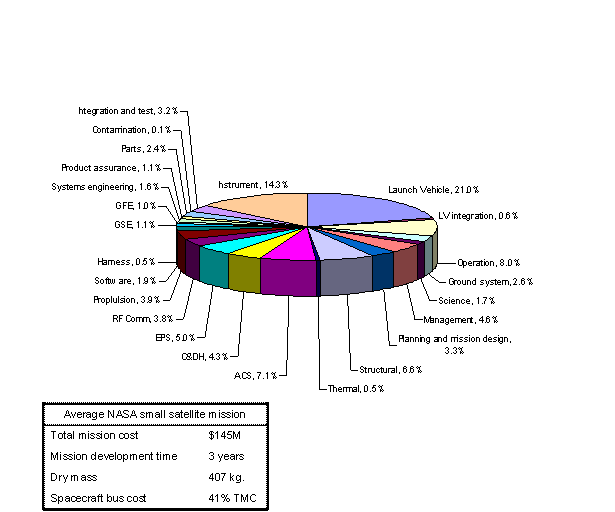
Figure
8. Average NASA Small Spacecraft
The NASA data is helpful in getting a basic idea of the cost of LEO communication satellite systems. For systems like Iridium and Globalstar, more than one spacecraft is produced. Therefore, fixed costs such as RDT&E costs are nonrecurring while variable costs, including most production, launch and operation costs, increase with the number of spacecraft. For production cost, a learning curve effect can be considered because as experience and economies of scale increase, the unit cost per spacecraft decreases. Iridium presented a cost estimation in its 1990 FCC filing, as listed in Table 2. Although this estimation was significantly lower than the actual cost, it nevertheless provides a basic picture of the cost distribution over system segments and development time. The costs are given in terms of 1990 dollars.
|
|
1990 |
1991 |
1992 |
1993 |
1994 |
1995 |
1996 |
1997 |
|
Pre-operating expenses |
3 |
10 |
20 |
23 |
52 |
61 |
83 |
42 |
|
Research and development |
8 |
43 |
130 |
133 |
97 |
46 |
46 |
46 |
|
Satellite construction |
|
|
83 |
273 |
352 |
257 |
141 |
|
|
Launch services and insurance |
|
|
|
|
51 |
260 |
260 |
|
|
System control facility |
|
|
25 |
41 |
15 |
|
|
|
|
Interest |
|
4 |
5 |
34 |
63 |
102 |
136 |
154 |
|
Depreciation |
|
|
|
|
|
47 |
216 |
385 |
|
Total costs |
11 |
57 |
263 |
504 |
630 |
773 |
882 |
627 |
Table
2. Projected total system costs ($M) in Iridium FCC
filing
The cost of the entire system from 1990 to 1997 was predicted to be $3.7 billion. Globalstar’s FCC filing in 1991 also contains a breakdown of the anticipated costs, although it was distributed over system segments only (not over time). The data is listed in Table 3. The money is referenced to 1991 U.S. dollars.
|
Research, development, and experimental program |
58 |
|
Construction of 48 satellites |
384 |
|
Launch of 48 satellites |
242 |
|
Ground control facility |
29 |
|
Pre-operational, operational, interest and administrative costs through first year of operation |
174 |
|
Total costs at the end of first year of operation |
887 |
Table 3.
Projected total system costs ($M) in Globalstar FCC filing
It should be noted that in the above cost data, the ground segment includes only the control stations. The gateway costs are carried by third party gateway operators around the world. This reflects a fundamental difference in the business strategy between Globalstar and Iridium. Gumbert and Hastings estimated that the gateway cost of a 66-satellite LEO constellation would be $106 million with operations cost per year on the order of $67 million. For a 48-satellite LEO constellation without intersatellite links, the gateway cost is $164 million and the operations cost is $91 million per year. All monetary terms cited here are in 1994 dollar values.[5] The gateway cost for the second type of system is higher (despite the smaller number of satellites) because much of the complexity is contained on the ground rather than on the satellites themselves (no intersatellite links).
Financing
As private enterprises, these projects were financed via a mix of debt financing, private investment, and initial public offering (IPO). From July 1993 to December 1998 Iridium spent a total of approximately $4.8 billion. The expenditure was funded with 1) $500 million in secured bank debt; 2) $625 million in bank debt guaranteed by Motorola; 3) $1.62 billion from the issuance of debt securities; 4) $2.26 billion from the issuance of stock (private placement and IPO); and 5) $86 million of vendor financing. Iridium investors included private corporations, entrepreneurial companies, and equipment manufacturers. Besides Motorola providing a large percentage of the financing, other large institutional investors included Raytheon, Lockheed Martin, Hewlett Packard and Siemens.
Price charged for Service
Another important consideration is the price that should be charged to customers for one unit of service. This is not a simple question to answer apriori. A method for determining the minimum price to charge is based on a cost per function (CPF) pricing model. The “unit of service” for communications satellite constellations is “one minute of two-way (duplex) connectivity at a fixed data rate, bit-error-rate and link margin”[6]. These three attributes of the communications channel drive the quality of service (QOS). The following equation expresses the CPF for a typical communications satellite system such as Iridium.
 (1)
(1)
The numerator contains the lifecycle cost (LCC), which is represented by the total non-recurring investment cost, I ,and the associated interest accrued at rate k over T years of life as well as the sum of yearly operations costs Cops of the system. This assumes that the operations cost does not get discounted. The denominator on the other hand represents the total number of billable minutes generated by the system over T years. The capacity of the system, Cs, is given as the number of simultaneous channels the system can support at any given time, while Lf,i is the average load factor of the system in the i-th year. The load factor is the fraction of available capacity that is actually used. The load factor is estimated as follows:
 (2)
(2)
where Nu is the expected number of subscribers to the service and Au is the average user activity expressed in minutes/year. The load factor is always a number between 0 and 1. So, what are reasonable numbers for CPF for the types of systems that are discussed in this systems study?
Let us substitute numbers into Eq. (1) and (2) that are representative of systems similar to Iridium and Globalstar:
 (3)
(3)
So, the minimum charge per minute for a satellite telephone call would be 20 cents per minute. In reality one would add some amount of profit and terrestrial connection fees by other service providers to this figure. By and large this appears to be a reasonable proposition. Note, however that a number of important simplifying assumptions were made in the process:
- The interest rate corresponds to a low, “risk-free” rate
- The investment cost is not spread over time or discounted, i.e. it has to be all spent at the beginning of the first year.
- The number of subscribers and their activity level are actually achievable and constant throughout the life of the system
- The yearly operations costs are much smaller than the investment cost and don’t have to be discounted over the years
- The effect of competition is not reflected
- There is zero inflation over the life of the system
- The capacity of the system remains constant throughout its life (no degradation or upgrade of system capacity will occur)
While such back-of-the-envelope calculations are useful during conceptual design, they must be interpreted with caution. Take, for example, the expected number of subscribers (users), Nu. This number, along with Au, is often obtained from market surveys before the system is built and put in to service. What happens to the CPF if the number of subscribers is much lower than three million as assumed above?
By substituting Nu=50,000 - a number similar to Iridium’s subscriber base in March 2000 – in Eq. (2) and substituting Lf in Eq. (1) we obtain a CPF= 12.02 [$/min]. This changes the business case significantly and potentially makes the system non-competitive.
Unit 2 of this study will consider a large set of architectures in the lifecycle cost versus capacity space. We will see that minimizing CPF tends to promote large scale, high capacity systems due to potential economies of scale. This makes sense if there is a high degree of certainty that a substantial fraction of total system capacity will actually be used. If this turns out to be false, the system is significantly oversized and actually more expensive – in terms of CPF – relative to a smaller system. This important point will be revisited in Unit 4.
Market Predictions
The number of users, Nu, and user activity level, Au, are the two key variables that need to be estimated for any particular type of service. Typically, these estimates are obtained from market surveys of potential customers, from focus groups and “clinics”, using early prototypes as well as from analysis and extrapolation of demographic data.
The uncertainty grows as one forecasts demand further into the future as well as with the level of novelty of the product or service. We will see that the user prediction for Iridium (see page 58 of 389 of the FCC filing) was 6,076,000 subscribers in 1990. Retrospectively, this number turned out to be much too optimistic.
Predictions made in 1991 for the
number of terrestrial cellular subscribers, on the other hand, were too
pessimistic. Figure 9 shows this fact by comparing the forecast of
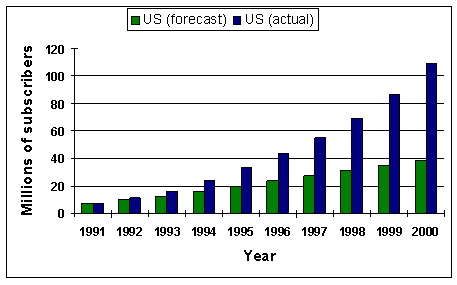
Figure 9. Market
predictions (in 1991) versus actual number of terrestrial cellular network
subscribers in the
. The following discussion focuses on the two “big LEO” systems that were actually deployed: Iridium and Globalstar[1].
Iridium System
An (unverified)
anecdote says that the idea for Iridium was created in 1985 when the wife of a
Motorola engineer complained about the lack of cellular telephone coverage
during a
a) The
space segment which includes the LEO
satellites and related control facilities. The nominal number of satellites is
66 (6 satellites each in 11 orbital planes), while the actual number of
satellites launched was 79, including on-orbit spares and replacements of
failed satellites. The
b) The
ground stations (gateways) which
link the satellites to terrestrial communications systems. The main Iridium
North American Gateway is located in
c) The Iridium subscriber equipment (phones and pagers) which provide mobile access to the satellite system and terrestrial wireless systems. A dual mode that allows users to access either a compatible cellular telephone network or Iridium was added after it became apparent that Iridium could not operate in complete isolation of terrestrial cellular systems.
d) The terrestrial wireless interprotocol roaming infrastructure. Iridium is designed to provide cellular like service in situations where terrestrial cellular service is unavailable, or areas where the PSTN is not well developed.[8] The interprotocol roaming infrastructure allows use of Iridium phones and pagers when the user is within terrestrial network coverage.
Originally, the system was envisioned to have seventy-seven satellites in low Earth orbit working as a digitally-switched communications network in space. The name of the system was inspired by the chemical element Iridium, which has the atomic number 77. The name was kept, even after the constellation was scaled back to 66 satellites[9]. Iridium was the frontrunner of a new class of systems, fueling considerable enthusiasm in the marketplace in the mid-1990s.[10] This optimism also led to a very positive outlook for the commercial launch market as late as 1998.
Three major
contracts were awarded for development and building of the system: The Space
Systems Contract (between Iridium LLC and Motorola) in the amount of $3.45
billion for the design, development, production and delivery in orbit of the
space segment. The Space Systems Contract provided for 47 milestones with
scheduled completion dates ranging from
“After 11 years of hard work, we are proud
to announce that we are open for business. Iridium will open up the world of business,
commerce, disaster relief and humanitarian assistance with our
first-of-its-kind global communications service… The potential uses of Iridium
products are boundless.”
Excerpt
from Iridium press release,
The current status of Iridium can be seen at the official company website: www.iridium.com
Iridium History[11]
|
1985: |
Karen Bertiger (a real estate
broker) complains to her husband Bary (a Motorola
engineer) that she couldn’t get her cell phone to connect to a client in the |
|
1986: |
Small R&D group formed within Motorola’s Strategic Electronics Division |
|
1987: |
Start of conceptual design at Motorola’s facilities in |
|
June 1990: |
Motorola publicly unveils the idea of a global personal
communications system called “Iridium” with simultaneous press conferences in
|
|
Dec. 1990: |
FCC filing for construction permit and frequency allocation |
|
June 1991: |
Incorporation of Iridium LLC, a wholly owned subsidiary of Motorola |
|
1992 |
Provisional spectrum allocation by the FCC pending approval |
|
1993 |
Iridium private offering of $800 million in common stock, Motorola buys $300 million, the remainder is purchased by various strategic partners such as Sprint Corp., Kyocera, Vebacom (Germany), Lockheed and Raytheon |
|
1994: |
Second round of equity financing is conducted, total capitalization reaches $1.6 billion |
|
Sept. 1994: |
Market research by D.S. Howard & Associates, asserts that professional business travelers would have “little interest”, but results are not published. |
|
Jan. 1995: |
FCC license received from the U.S. Government |
|
1995-1997 |
Detailed design and satellite manufacturing mainly at
Motorola’s Satellite Communications Group facilities in |
|
1997: |
Iridium IPO on Nasdaq - $240 million raised at $20 per share |
|
|
First satellite launch (5 satellites with a Delta II rocket) |
|
July 1997 |
Iridium sells $1.45 billion in bonds with interest rates ranging from 10.88 to 14 percent |
|
Dec. 1997: |
Manufactured and deployed 46 out of 66 satellites |
|
May 1998: |
Full satellite constellation in orbit, stock peaks at $68 7/8 with Iridium’s total market capitalization near $10 billion |
|
June 1998 |
Iridium launches a $140 million advertising campaign, “Freedom to Communicate” to create brand awareness and stimulate interest |
|
|
Originally planned start of operations |
|
|
Actual start of operation (telephony only) |
|
|
Start of commercial paging service |
|
End of 1998: |
Technical problems with 23 satellites of the constellation |
|
|
Iridium obtains new bank credits for $1.95 billion |
|
|
Iridium reports having sold about 6000-8000 phones, and actually has about 3000 paying subscribers, with fourth quarter revenues of $186,000 |
|
|
Iridium reports having 6,009 voice subscribers and $535,000 in accrued revenues |
|
March 1999 |
Iridium Chief Financial Officer resigns |
|
|
Iridium announces that it won’t meet subscriber targets, stock price declines by $4.063 per share to close at $10.438 (-28%) |
|
May 1999 |
Iridium announces 10,294 first quarter subscribers |
|
June 1999 |
Prices of phones and service reduced, 15% of staff laid off |
|
|
Iridium defaults on its debt |
|
Aug.13, 1999: |
NASDAQ suspends trading Iridium stock. Having debt over $4 billion, Iridium files for bankruptcy under Chapter 11 |
|
Sept. 1999 |
Consulting firm Alvarez & Marsal hired to develop restructuring plan |
|
March 2000: |
Iridium has 50,000 subscribers, plans to terminate service by March 17 and subsequently deorbit the satellite constellation |
Iridium Financial
Data
|
Total system cost: |
$5.7 billion |
|
Annual operational cost: |
$500 million - $1 billion (including satellite replenishment and interest payments) |
|
Financed amount: |
$4.4 billion |
|
Handheld terminal price: |
Between $2,200 and $3,400 retail (before June 1999), $1,500 (after June 1999) |
|
Airtime charge: |
$2-7 per minute (before June 1999), $1.5-3 per minute (after June 1999) |
|
Estimated break even |
500,000-600,000 subscribers |
Iridium Technical
Data
|
Ground segment |
|
|
- Number of gateways: |
12 |
|
- Control station: |
1 (plus 1 for backup) |
|
Space segment |
|
|
- Constellation type: |
Polar |
|
- Number of satellites: |
66 (+ 6 on-orbit spares) |
|
- Number of orbital planes: |
6 |
|
- Orbital altitude: |
780 km |
|
- Inclination angle: |
86.4o |
|
- Minimum elevation angle: |
8.2o |
|
- Satellite in-orbit mass: |
689 kg |
|
- Radio-frequency (RF) power: |
400 W |
|
- Life cycle: |
5 years |
|
- Launch vehicles |
Delta II ( |
|
Communications segment |
|
|
- User uplink and downlink bandwidth: |
1621.35-1626.5 MHz |
|
- Telephony and modem data rate: |
2.4 kb/s |
|
- Satellite capacity: |
1,100 duplex channels |
|
- Total system capacity: |
72,600 duplex channels |
|
- Link margin: |
16 dB |
|
- Number of inter-satellite links (ISL) per satellite: |
4 |
|
- ISL frequency bandwidth: |
23.18-23.38 GHz |
|
- Feeder link frequency bandwidth: |
29.1-29.3 GHz (uplink), 19.4-19.6 GHz (downlink) |
|
- Onboard Switching |
Yes |
|
User Terminals |
|
|
- Mass: |
400 g (circa 0.8 pounds) |
|
- Antenna length: |
15 cm (phone overall length 7 inches~20 cm) |
|
- Talk time: |
2 h |
|
- Standby time: |
20 h |
|
- Peak transmit power: |
7 W |
|
- Mean transmit power: |
0.6 W |
|
- Antenna gain: |
2 dBi |
|
- G/T: |
23 dB/K |
Notes:
· The polar constellation is formed by 6 orbital planes with 11 satellites per plane. The orbital planes are co-axial at the polar axis, separated from each other at an angle of nearly 30 degrees.
· Inclination angle is the angle between the orbital plane and the equatorial plane.
· Minimum elevation angle is the minimum angle between the user’s line-of-sight of the satellite and the local horizon.
· A graphical representation of an Iridium satellite is shown in Figure 10.
· The name Iridium is derived from the chemical element “Iridium” which has an atomic number of 77. The original architecture of Iridium had 77 satellites, but later the altitude was raised, leading to a 66-satellite constellation.
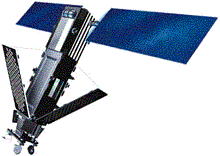

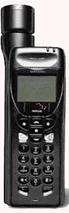
Figure 10. (left) Individual Iridium satellite in deployed on-orbit configuration
(right) Motorola and Kyocera Iridium handheld satellite telephones
Follow-up Story[12]
Although beyond
the scope of this case study, it is interested to know about the follow-up
story of the Iridium bankruptcy. The deorbiting of the constellation did not
happen after all. In December 2000,
Iridium Satellite LLC acquired Iridium LLC at a price of $25 million (approximately
$6.5 million in cash and an unsecured note in the approximate amount of $18.5
million). In the same month, Iridium Satellite LLC (the new company) signed a
contract with the U.S. Defense Department in the amount of $72 million for
military communications services using Iridium satellites. The two-year
contract included options to extend the deal until 2007. In 2001, Gino Picasso,
the CEO of Iridium Satellite LLC, said he hoped to generate $90 to $100 million
in annual revenue by the end of 2002, enough to cover operating expenses. In
2002, Picasso claimed that the current fleet of satellites was performing well
and expected to last until at least 2010. As a sign of re-vitalized business,
Iridium was planning replacement of the current constellation with a new
generation of spacecraft. It appears that some of the recent political events,
in the aftermath of
A number of class action lawsuits are pending in court, filed by various unsecured creditors and investors of Iridium LLC[14]. These suits seek to recover losses from Motorola, claiming that Iridium was set up as a pure “investment vehicle” company to reduce Motorola’s own risks in this venture while developing new technologies for its own benefit and defrauding the investing public. It is alleged that Motorola was – at the same time – Iridium LLC’s main shareholder, but also it’s main contractor, which prevented “arm’s length” negotiations between Iridium and Motorola and created an inherent conflict of interest. Some of this litigation is ongoing as of the writing of this system’s study.
Globalstar System[15]
The Globalstar
system was designed to bring affordable cellular-type voice and data
communications to the entire globe. In this sense it was a direct competitor to
Iridium. Globalstar was a partnership of a number of companies. Loral and
Qualcomm served as general partners, and 10 other companies served as limited
partners. Similar to the Iridium system, Globalstar has satellites, gateways,
and user handsets as its major components. The major technical differences are
that Globalstar is based on CDMA, while Iridium uses a hybrid MF-TDMA scheme.
Furthermore, Globalstar does not use intersatellite links like Iridium. This
simplifies the on-orbit satellites, but requires more gateways on the ground to
ensure good coverage. Globalstar’s satellites are essentially flying repeaters in a “bent-pipe” architecture. While Globalstar appeared to
be a lower cost, more flexible system, it ultimately met a similar fate than
Iridium. The effect that the preceding Iridium failure had on Globalstar is
summarized in a
Globalstar History
|
June 1991 |
FCC filing for construction permit and frequency allocation |
|
Jan. 1995: |
FCC license received |
|
Feb. 1998: |
First satellite launch (4 satellites with a Delta II rocket) |
|
Sept. 1998: |
Loss of 12 satellites during a Zenith (Ukrainian/Russian rocket) launch failure |
|
Oct. 1999: |
Start of pre-operational service with 32 satellites and 9 gateways |
|
End of 1999: |
40,000 handsets shipped to distributors |
|
March 2000 |
Start of commercial service with full satellite constellation and 38 gateways |
|
Feb. 2002 |
Having a debt of $3.34 billion, Globalstar files for chapter 11 bankruptcy protection.[17] |
Globalstar Financial
Data
|
Total system cost: |
$3.3 billion (excluding gateways) |
|
Financed amount: |
$3.8 billion (fully financed) – Loral owned 45% - other
investors included |
|
Handheld terminal price: |
$1,000-$1,500 |
|
Airtime charge: |
$1-3 per minute, trial period promotions of $0.49 per
minute ( |
|
Estimated break-even |
1,000,000 subscribers |
Globalstar Technical
Data
|
Ground segment |
|
|
- Number of gateways: |
50 |
|
- Control station: |
2 ground operation control centers + 2 satellite operation control centers |
|
Space segment |
|
|
- Constellation type: |
|
|
- Number of satellites: |
48 |
|
- Number of orbital planes: |
8 |
|
- Orbital altitude: |
1414 km |
|
- Inclination angle: |
52o |
|
- Minimum elevation angle: |
10o |
|
- satellite in-orbit mass: |
450 kg |
|
- Radio-frequency (RF) power: |
380 W |
|
- Life cycle: |
7.5 years |
|
- Launch vehicles |
Delta II,
Zenith-2 (Russia), Soyuz (Russia) |
|
Communication segment |
|
|
- User uplink and downlink bandwidth: |
1610-1626.5 MHz (uplink), 2483.5-2500 MHz (downlink) |
|
- Telephony data rate: |
2.4 kb/s |
|
- Satellite capacity: |
2,500 duplex channels |
|
- System capacity: |
120,000 duplex channels |
|
- Link margin: |
6 dB |
|
- Number of inter-satellite links (ISL) per satellite: |
0 |
|
- ISL frequency bandwidth: |
N/A |
|
- Feeder link frequency bandwidth: |
5091-5250 MHz (uplink), 6875-7055 MHz (downlink) |
|
- Onboard Switching |
No |
|
User Terminals |
|
|
- Mass: |
370 g (11 ounces) |
|
- Talk time: |
3.5 h |
|
- Standby time: |
9 h |
|
- Peak transmit power: |
400 mW |
|
- Minimum transmit power: |
50 mW |
|
- Antenna gain: |
2.6 dBi |
A representation of an individual Globalstar satellite is shown in Figure 11.
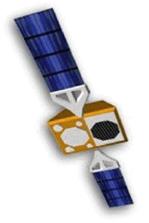
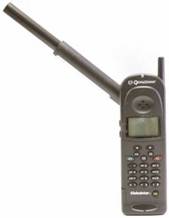
Figure 11. (left) Individual Globalstar satellite in deployed on-orbit configuration, (right) Globalstar end user terminal (“satellite telephone”)
Follow-up Story
In early 1999, Globalstar expected a subscriber base of around 500,000 by the end of 2000 and an ultimate subscriber base of 7.5 million. After it filed for chapter 11 bankruptcy protection in mid-February 2002, Globalstar has undergone restructuring and is still in business today.
For the current status of the company, please visit www.globalstar.com.
Successes and Failures[18]
Because Iridium was the first commercial “big” LEO satellite constellation to be built, most of the discussion has focused on this particular system. The story of Iridium is unique and yet representative of its genre. The following paragraphs briefly summarize the successes and failures that Iridium has experienced. In this, the authors attempt to present a balanced view.
Technical challenges
Iridium was successful in deploying and operating an extremely complex engineering system. Motorola, as prime contractor, completed the project on time and on budget and within specifications. It met the project deadline and achieved the technical requirements, despite some startup difficulties with dropped calls and voice quality during initial operations in 1998 and 1999. It was the first space project involving mass-manufacturing and mass-launching of large quantities of spacecraft in a short time period, i.e. 72 satellites were deployed on 15 launches from three countries in 12 months and 12 days. This was unprecedented and has not been repeated since then. Although a 2-15% failure rate for satellite deployment was normal, Motorola had a perfect record in initial satellite deployment. It took Lockheed Martin 28 days to manufacture a single spacecraft during peak production. Because ten satellites were assembled simultaneously at any moment, a satellite rolled off the production line every 4 and a half days. At that time the industry standard for satellite manufacturing was 12-18 months. Iridium also assembled and installed 12 gateways in 11 countries in 18 months.
Iridium pioneered the industry by being the first to implement many cutting-edge technologies in space. It was the world’s first global wireless digital (packetized) communication system. It overcame the time lag associated with GEO communication by staying in low orbits as discussed earlier. Iridium is also the first space system to utilize intersatellite links in LEO, thus avoiding unnecessary signal traffic through the atmosphere with the associated signal degradation. The onboard processing enables the system to have minimum reliance on the ground infrastructure – handing off calls from one satellite to another - which therefore improves its level of autonomy, especially over the oceans where permanent ground stations cannot be placed.
On the other hand, although utilizing new technologies, the system’s communications performance was not satisfactory to all customers in urban areas or during periods of high usage. The polar formation used by the constellation dictates that the diversity of the constellation is just one. This low diversity makes shadowing, the obstruction of transmission signals by land objects, a serious problem. The 16dB link margin designed into the system was not sufficient for the space signals to penetrate buildings without the use of ground repeaters. It has been reported that users of the Iridium handset must stand by windows or step outdoors to obtain a connection.[19] These limitations were not clear to all potential subscribers in the 1998-2000 timeframe. Nevertheless, the problem of requiring a clear line-of-sight to a satellite turned out to be a minimal limitation for users in rural areas.
As a result of the high system complexity and the relatively harsh environment in low Earth orbit, Iridium suffered a high failure rate. The system was architected to operate in a partially degraded mode. Within half a year after the final deployment, 23 satellites of the constellation exhibited various technical problems.
The design of the user handset experienced problems of its own. Weighing nearly a pound, the handset was inconvenient to carry around compared to terrestrial cellular phones in the late 1990s. The Iridium phones, however, where sleek and lightweight compared to the analog radiotelephones of the mid 1980’s. There have been some reports that the weight and size of the handset hurt Iridium’s popularity among potential users, even though they had responded enthusiastically to such a potential device in the early 1990s. There is no data to corroborate these statements.
Regulatory Challenges
Iridium overcame almost all hurdles in the regulatory arena to achieve what it wanted. It defeated an attempt by radio astronomers to prevent it from getting the 5.15 MHz bandwidth in the L band. The claim was that operations of Iridium would cause interference and pollute science measurements in neighboring bands (which did indeed happen). Substantial resistance to spectrum allocation in 1992 was also mounted by INMARSAT, a global satellite communications company owned by about 80 governments. INMARSAT, whose main service was and is emergency communications for ocean-going ships, waged an unsuccessful battle to prevent Iridium from obtaining an operating license.
Iridium also successfully obtained approval from key countries where gateways were strategically placed. These countries agreed to act as regional distributors of services that are responsible for acquiring regulatory approvals for each country in the region. By 1998, Iridium reached agreements with 90 priority countries that represented 85% of its business plan. This was enabled by its network of strategic partners and operating companies (Table 4). The gateway partners were supposed to share in the revenue generated by Iridium calls. Although a few countries chose not to participate, most of the world’s population was within Iridium’s service area.
|
Iridium Strategic Partners |
Iridium Operating Companies |
|
AIG Affiliated Companies Iridium Africa Corporation Iridium Sud America Corporation Iridium Middle East Corporation Lockheed Martin Corporation Iridium Canada, Inc. Iridium China (Hong Kong) Ltd. Iridium India Telecom Limited Iridium Italia S.p.A. Raytheon Company SK Telecom South Pacific Iridium Holdings Limited Sprint Iridium Inc. Thai Satellite Telecommunications Co., Ltd. Motorola, Inc. Nippon Iridium (Bermuda) Limited Vebacom Holdings, Inc. Pacific Asia Communications Ltd. |
Iridium Africa Services, (South Africa) Iridium Central America and Mexico Iridium China Iridium Communication Germany Iridium Eurasia (Moscow) Iridium India Telecom Limited Iridium Italia Iridium Korea Corporation Iridium Middle East Corporation
( Iridium North America Iridium Canada Nippon Iridium Corporation Pacific Iridium Telecom Corp. (Taiwan) Iridium Iridium South Pacific ( Iridium Brasil Iridium Cono Sur (Argentina, Bolivia, Chile,
Paraguay, Uruguay) Iridium Sud America North (Venezuela) |
Table 4. Iridium
strategic partners (left) and operating companies (right)
Iridium also acquired export permissions from the State Department and Commerce Department on establishing ground stations abroad and using foreign launch vehicles. Later in the decade, the use of foreign launch vehicles became an issue as international tensions and concerns over technology export mounted. This aspect will be further discussed in Unit 3.
Business Challenges
In the early 1990’s Motorola’s target market was the specialty/corporate segment with a projected one million subscribers by 2004. Later the professional traveler market was added with a potential subscriber base of five million subscribers in 2004. Significant resources were invested in market research. Despite some doubts on whether professional travelers would indeed be willing to pay the expected $3,000 for a satellite telephone and the $2-7 per minute service charge, Iridium succeeded in financing the expensive project through debt financing, private investment, and initial public offering. Approximately $5 billion was raised. The main competitive advantage compared to INMARSAT (the existing GEO-based satellite telephone provider) was the portability of the end user equipment. Soon after initialization of commercial service in November 1998, Iridium ran into financial problems as a result of failure in meeting the expected market size and number of paying subscribers.
While some
individuals claim to have predicted this outcome, it must be said that the vast
majority of technical experts and financial analysts were swept up in the
euphoria of the telecommunications sector in the 1995-1999 period. On
By the time
Iridium was conceived in late 1980s to early 1990s, terrestrial cellular phone
services were fragmented along national borders.
While the
concept of Iridium was in its incubation stage,
As a result of
this unanticipated competition, the actual subscriptions of Iridium fell far
short of the predictions. In order to secure bank loans in early 1999, the following
subscriber targets (“covenants”) were set for Iridium: 52,000 by
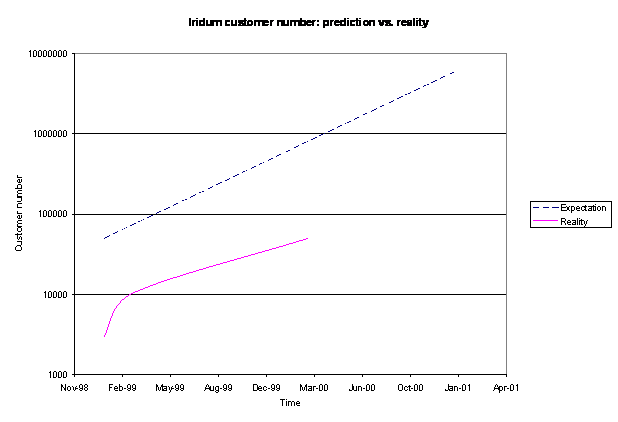
Figure 12. Iridium expected number of customers (predicted in 1991) versus
reality in 1998-2000.
Iridium also made a series of mistakes in marketing its product and failed to capture the initial market response. First, being too generic, the marketing failed to target a specific sector or distinguish Iridium from other wireless companies. The ad message did not clarify Iridium’s limits such as serious signal shadowing in urban areas. These limits were unpleasant surprises to customers. Although the advertisement generated more than one million inquiries, Iridium failed to turn them into real business by promptly following up on them. The commercial operation also suffered from delay in initial distribution of subscriber equipment. This was mainly caused by software development delays of the Motorola and Kyocera handsets. As a result of lack of extensive testing and debugging, Iridium’s reputation was hurt because of the initial technical problems experienced by customers.
Overall, Iridium achieved great success in the space-related technical challenges, in acquiring financing, and in acquiring licenses and regulatory approvals; moderate success in providing telecommunications services; and ultimate failure in capturing its intended market. Motorola’s estimated financial exposure to the bankruptcy of Iridium was $2.2 billion. The remaining losses were absorbed by the partner companies, various banks and the investing public.
Summary
In this unit, we briefly reviewed the historical background of communications satellites in general and of LEO communication satellite constellations in particular. Several key technical concepts of these systems have been introduced, including constellations, multiple access, and spot beams. The business case was discussed in terms of cost and revenue models. In 1991 there was an enormous amount of enthusiasm and hope for such systems. Indeed, the business case looked good in terms of the need for global wireless services. Substantial amounts of money were invested by Motorola and Loral in market research in the late 1980s and early 1990s. A global subscriber base for Iridium on the order of 3-6 million users appeared to be within reach.
We paid particular attention to Iridium and Globalstar, the two major LEO communication systems that have actually been launched. We have used Iridium as the sample for analyzing successes and failures of LEO systems, and come to realize that although largely successful in the technological and policy fields, the business case ultimately failed. Globalstar was the second system to be deployed, and albeit differences in its technical specification, it also had to file for bankruptcy. In the assignments connected to this unit you will do a critical analysis of both systems, try to understand the root causes of what occurred, negotiate post-bankruptcy scenarios and extract lessons learned for the design of future Engineering Systems with similar characteristics: large investment required, global reach, new technologies, break with existing paradigms.