
Jiawei Zhou received his B.S. in Engineering Mechanics from Tsinghua University, Beijing, China (2013). His interests include fundamental energy transport and their broader applications (thermoelectrics, energy storage, etc). In summer 2019, Jiawei completed his doctoral study. His doctoral research involved in first principle calculations for the thermal conductivity of single-crystal/alloyed bulk material.
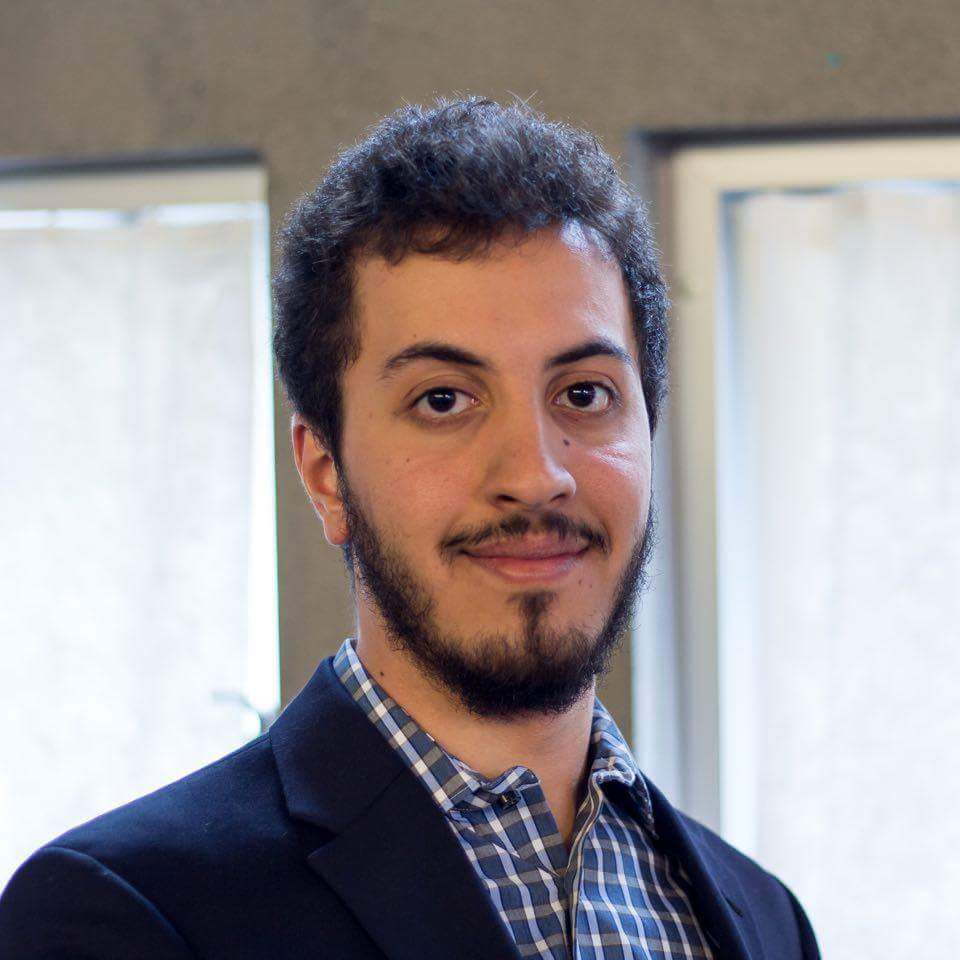
Abdulmohsen (Mohsen) Alowayed received his B.S. in Mechanical Engineering from MIT in 2018. He received a S.M. in Mechanical Engineering in the NanoEngineering group. His master research work focused on low-cost solar water purification.
Vazrik Chiloyan
Vazrik graduated from MIT in 2011 with a B.S. in Mechanical Engineering and in Physics with a minor in Math. He was an MIT Energy Initiative Fellow (b-TEC). His research in the group focused on improving the theoretical understanding of energy transport between surfaces separated by extremely small gaps in order to better bridge the theories of conduction and radiation.

Sam Huberman
Sam graduated from the University of Waterloo with a B.A.Sc in Mechanical Engineering in 2011. For his Masters in Mechanical Engineering at the University of Toronto, he used a combination of molecular dynamics simulations and lattice dynamics calculations to predict phonon properties in superlattices. His work at MIT used both computational and experimental approaches to gain further insight into nanoscale thermal transport.
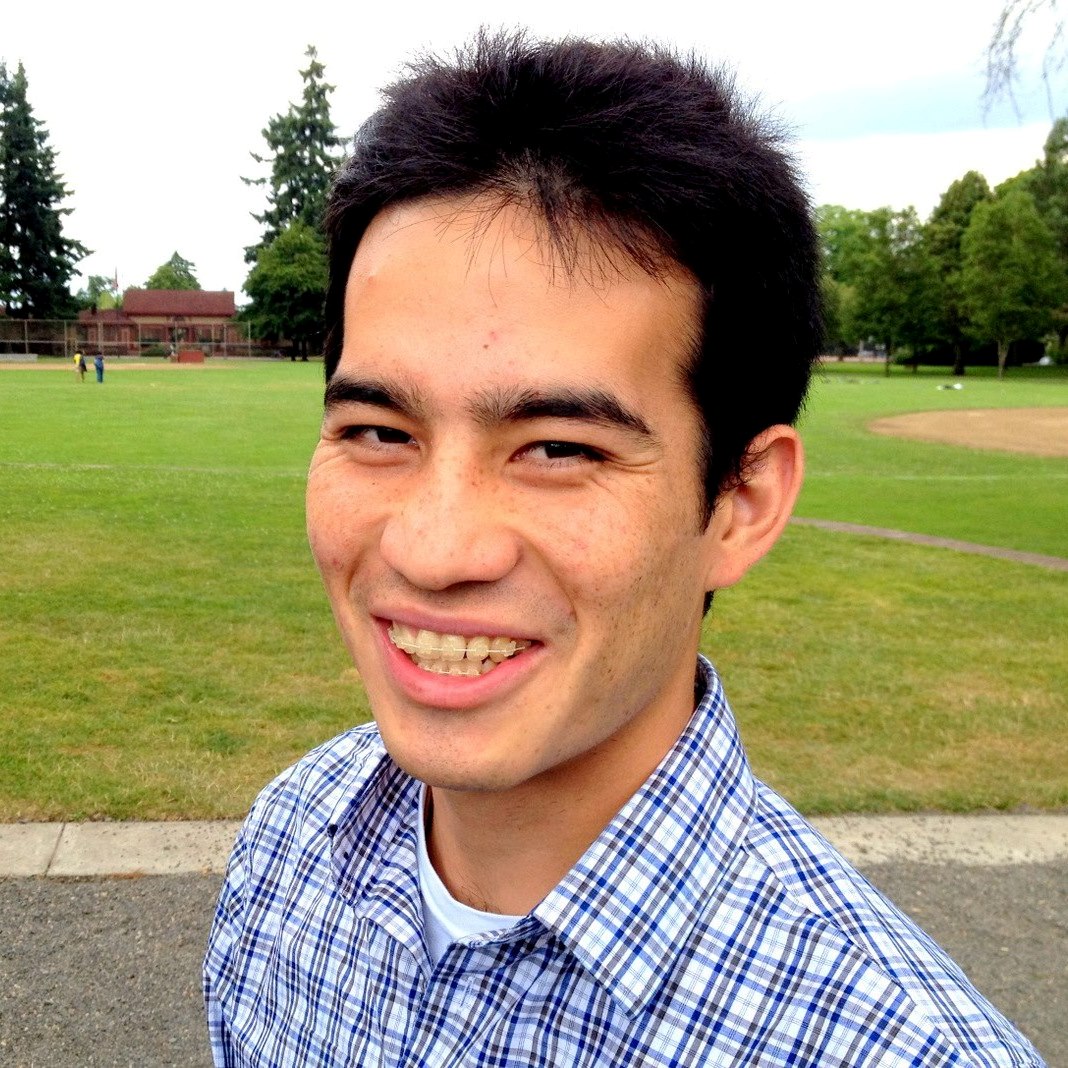
Lee graduated from the University of California, Berkeley with a B.S. in Mechanical Engineering in 2011 and earned a Ph.D. in Mechanical Engineering from MIT in 2017. His research at MIT focused on solar energy conversion, particularly solar thermal energy technologies.

Jonathan Mendoza
Jonathan earned his B.S. degree in mechanical engineering from MIT in 2011, and his Ph.D. from the Nanoengineering group in 2017. His Ph.D. research involved the investigation of phonon transport and scattering at impurities for the application of thermoelectric materials.
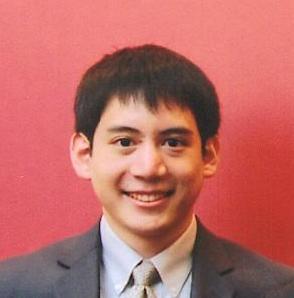
Jonathan Tong
Jonathan graduated from the University of Illinois at Urbana-Champaign with a B.S. degree in Mechanical Engineering in 2009. He received the Ph.D. from MIT Mechanical Engineering in 2016. His research focuses on the thermal characterization of nanomaterials, such as nanospheres and polymer nanofibers, using a bimorph AFM cantilever as a thermal sensor.
Lingping Zeng
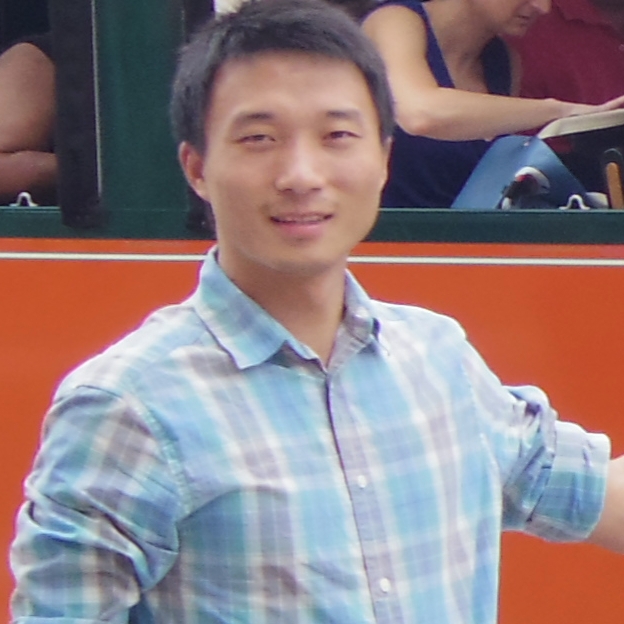
Lingping obtained his B.S. degree in the School of Energy and Power Engineering from Huazhong University of Science and Technology in 2010. He defended his doctoral thesis in 2016 and received a Ph.D from MIT Mechanical Engineering. His research is focused on phonon transport in nanostructured dielectric materials with applications for thermoelectric energy conversion technology.

Jenny Wang
Jenny graduated with a B.S. in Mechanical Engineering from Caltech in 2011 and a Master in Mechanical Engineering from MIT in 2015. She has been interested in renewable energy technologies since high school and worked on hydrogen storage and lithium ion battery projects as an undergraduate. Her current research focuses on heat conduction in soft materials.

Wei-Chun Hsu
Wei-Chun (Edi) Hsu received B.S. from National Taiwan University (NTU), and M.S. and Ph.D. from Massachusetts Institute of Technology (MIT). His researches focus on the opto-mechanical sensor using AFM cantilevers and opto-electronic devices including thin-film c-Si solar cells and near-field thermoradiative cells. After graduating from MIT, he joined KLA-Tencor as a research scientist to continue research on novel optical design for semiconductor industry.

Bolin Liao
Bolin defended his PhD thesis in March, 2016. His work in NanoEngineering group was focused on nanoscale energy carrier transport in thermoelectric materials. Starting in May, 2016, Bolin will join Prof. Ahmed Zewail's group in Caltech as a Kavli Nanoscience Institute Prize postdoctoral fellow.

Maria Luckyanova
Maria received a B.S. degree in Mechanical Engineering from MIT in 2008, and a Ph.D. in Mechanical Engineering in 2016. For her research she used pump and probe laser experiments to gain insight into nanoscale heat transport.

Daniel Kraemer
Daniel received his Diploma in process engineering at the Frankfurt University of Applied Sciences in Germany in 2003. In 2005 he received his B.S. in mechanical engineering from the Swiss Federal Institute of Technology in Zurich (ETH), Switzerland, where he also graduated with a M.S. in mechanical engineering in the Laboratory of Thermodynamics in Emerging Technologies in 2007. He subsequently joined the NanoEngineering Group conducting research in multiple fields ranging from solar power conversion, solid-state power conversion (thermoelectrics, thermionics, thermophotovoltaic) to thermally conductive polymers and polymer composites. He graduated with a Ph.D. in Mechanical Engineering in 2015. His thesis focused on the solar application of thermoelectric generators. He joins the startup company Modern Electron as a thermal/mechanical R&D engineer in the summer 2016.
Jianjian Wang
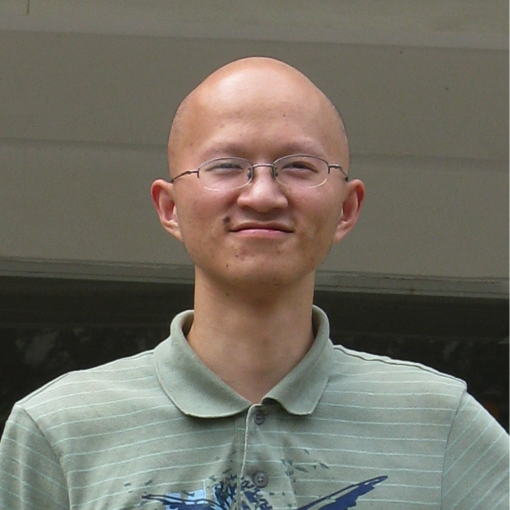
Jianjian earned his M.S degree (2011) and Ph.D. degree (2015) in Mechanical Engineering from MIT. He received his B.Eng. degree in Thermal Science and Energy Engineering from University of Science and Technology of China (USTC) in 2008. His research involved nanofluids heat conduction mechanisms, electrical and thermal conductivity regulation via phase transition, thermal charging of electrical double layer capacitors, and high thermal conductivity polymer composites. Jianjian is now working at Mitsubishi Electric Research Laboratories.

Poetro Lebdo Sambegoro
Poetro earned his Ph.D. from the NanoEngineering group in 2015. His research at MIT focused on near-field heat trasnfer. Poetro earned his Bachelors Degree in Mechanical Engineering from Institut Teknologi Bandung, Indonesia, in 2006. He is a recipient of the International Fulbright Science and Technology Award.

Matthew Branham
Matthew received his PhD from the NanoEngineering Lab in February 2015 with a focus on the fabrication of thin-film crystalline silicon solar cells with enhanced light-trapping structures. He now works as a mechanical design engineer at Tesla Motors near Reno, NV where he evaluates strategies for minimizing the energy required in the manufacture of lithium ion batteries.

Sangyeop Lee
Sangyeop Lee is currently an assistant professor at University of Pittsburgh. He received B.S. (2003) and M.S. (2005) from Korea Advanced Institute of Science and Technology, and his Ph.D. from MIT in 2015. While at MIT, Sangyeop studied transport of phonons and electrons in thermoelectric materials and two-dimensional materials using both first principles calculations and experimental characterizations. He is a recipient of Samsung Scholarship.
Kimberlee Collins
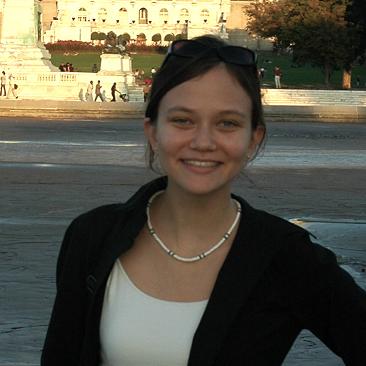
Kimberlee graduated with B.S. degrees in Mechanical Engineering and Physics (2008) and a M.S. degree (2010) and Ph.D. (2015) in Mechanical Engineering from MIT. Her research involved optical pump and probe, transient thermoreflectance measurements of nanomaterials, and the study of ballistic and interface phonon transport phenomena.

Kenneth McEnaney
Ken earned his Ph.D. in Mechanical Engineering in the fall of 2014. His research focused on segmented thermoelectric generators, solar thermoelectric generators, and heat transfer in aerogels. Ken earned his B.S. in Mechanical Engineering from Cornell University in 2002 and was working as a senior engineer at Boston Flight Sciences before coming to MIT. Upon graduating from MIT, Ken joined Creare, an engineering R&D services company.

Zhiting Tian
Zhiting Tian graduated from Tsinghua University, China (2007) with a B.E. in Engineering Physics and completed her M.S. in Mechanical Engineering at Binghamton University, NY (2009). She completed her Ph.D. in Mechanical Engineering at MIT in 2014, where her research focused on molecular dynamics simulations in thermoelectrics and thermal interface materials. She is a faculty member in Cornell University.

Anurag Bajpayee
Anurag Bajpayee completed his PhD in Mechanical Engineering with a minor in Management from MIT in 2012. His doctoral work on Directional Solvent Extraction water treatment was recognized by the Scientific American as a Top 10 World Changing Idea of 2012 and by the Forbes magazine as one of 5 game-changing projects. Anurag has co-authored 4 peer reviewed journal publications and is a co-inventor on 2 issued and 4 pending US and international patents. Bajpayee graduated with a BS degree in Mechanical Engineering, Summa cum laude from the University of Missouri in 2006 and received a Masters degree from MIT in 2008. At MIT he was a recipient of the Gorenberg Deshpande Fellowship for Technological Innovation and led the organization of the MIT Global Startup Workshop. Anurag has since founded Gradiant Corporation to commercialize new desalination and water treatment technologies.
Austin Minnich
Austin earned his B.S. degree in Engineering Science from UC Berkeley in 2006, an M.S. degree from MIT in 2008, and his Ph.D. from MIT in 2011. He is the recipient of of the Department of Defense and NSF Graduate Fellowships. While at MIT, Austin worked on experimental characterization of thermoelectrics. Currently Austin is an assistant professor of mechanical engineering at CalTech. His work focuses on understanding energy transport at the nanoscale using a variety of experimental and theoretical techniques, including an ultrafast pump-probe experiment.

Andy Muto
Andy Muto is a recipient of the National Science Foundation (NSF) Graduate Research Fellowship. He received his B.S. in mechanical engineering from Northeastern University in 2005, his M.S. degree from MIT in 2008, and his Ph.D. from MIT in 2011. His research focused on thermoelectric materials and the measurement of thermal and thermoelectric properties of nanotubes and nanowires. Andy joined Corning in the summer of 2011 as a Process Development Engineer on Corning's fusion draw machines which make flat glass substrates for LCD displays.

Tom Harris
Tom Harris is currently a Senior Member of Technical Staff at the Center for Integrated Nanotechnologies, located within Sandia National Laboratories. Tom received B.E. and M.S. degrees in mechanical engineering from Vanderbilt University in 2000 and 2003, respectively, and an S.M. degree in electrical engineering and a Ph.D. in mechanical engineering both from MIT in 2010. His Ph.D. work focused on correlating the electrical and thermal transport properties of individual nanoscale materials with their atomic structure using transmission electron microscopy. This work relied extensively on micro- and nanofabrication, highly sensitive electrical and thermal low-temperature measurements, and both manipulation and placement of single nanostructures. Tom's research interests include both measurement and modeling of carrier transport in low-dimensional structures, (specifically) inorganic nanowires, thin films, and carbon-based nanostructures, and the design, control, and fabrication of nanoscale electromechanical systems.

Sheng Shen
Sheng Shen received his Ph.D. from MIT in 2010 and will be an Assistant Professor in the Department of Mechanical Engineering at Carnegie Mellon University starting in 2011. In the interim he will pursue a postdoc in University of California at Berkeley with Professor Xiang Zhang. His research in the NanoEngineering Group at MIT focused on nanoscale thermal radiation, thermal and optical characterization of nanostructured materials, and solar energy conversion. Sheng has a B.S. and and M.S. from Huazhong University of Science and Technology in China.

Qing Hao
Qing Hao received his B.E. degree in Thermal Engineering from Tsinghua University, China, in 2001. He then obtained his M.S. degree from the University of Texas at Austin in 2004, and his Ph.D. degree from the Massachusetts Institute of Technology (MIT) in 2010, both in Mechanical Engineering. Under the supervision of Prof. Gang Chen, his Ph.D. thesis focused on developing nanostructured thermoelectric materials for applications in refrigeration and electric power generation. His work on high-performance nanostructured bismuth antimony telluride bulk alloys not only produced a co-first authored Science paper but also won him the 2008 R&D 100 Award as a team member. Currently, he is working on lithium ion batteries as a postdoctoral research associate in Prof. Gerbrand Ceder's group at MIT. His long-term research interest is nanoscale energy transport and its applications in advanced materials and nano-electronic devices.

Mike Kozlowski
Mike received his BS and MS from the Department of Mechanical Engineering at MIT in 2008 and 2010, respectively. During graduate school, he was a Warren M. Rohsenow and Tau Beta Pi Fellow, a recipient of the Wunsch Award for academic excellence, and was selected for a Department of Defense SMART Fellowship. For his Master's thesis, he designed a portable, home-scale power generation system for off-grid users in the developing world. He currently serves as VP of Products for his start-up, Lark Technologies, Inc., based in Silicon Valley.

Hohyun Lee
Hohyun Lee received his Ph.D in 2009 and is currently an assistant professor at Santa Clara University. His research focused on the transport phenomena in nanocomposites and the enhancement of the thermoelectric properties of SiGe nanocomposites. Hohyun has a B.S.(2003) in mechanical engineering from Seoul National University and an S.M.(2005) in mechanical engineering from MIT.

Asegun Henry
Asegun Henry received his Ph.D. from MIT in 2009 and will start as an assistant professor in the Woodruff school of mechanical engineering at Georgia Tech in 2011. In the interim, Asegun will pursue postdoctoral research on ab initio techniques, such as density functional theory, with Dr. David Singh at Oak Ridge National Labs. While in the nanoengineering group, his research focused on classical molecular dynamics simulations with an emphasis on the development of innovative analysis techiques. Asegun also holds a BS degree in mechanical engineering from Florida A & M University and a MS degree in mechanical engineering from MIT.

Lu Hu
Lu Hu received his Ph.D. in 2008 and is currently working for ExxonMobil Upstream Research Company. His research with the NanoEngineering group focused on thermophotovoltaic devices, photon absorption in photovoltaic cells, selective surfaces for solar thermal applications, and other thermal radiation problems. Lu has a B.S. degree in mechanical engineering from University of Science and Technology of China. and a M.S. in mechanical engineering from Purdue University.

Vincent
Berube
Vincent Berube received his Ph.D. in 2008 and is currently working for McKinsey and Company. His research at MIT focused on nanoscale thermodynamics and kinetics of hydrogen adsorption. Vince has a B.S. in Physics from Universite Laval (2003).

Aaron Schmidt
Aaron has a B.S. (2002), M.S. (2004), and Ph.D. (2008) in mechanical engineering from MIT. He is a recipient of the Warren M. Rohsenow Fellowship from the Mechanical Engineering Department at MIT, and graduate research fellowships from the NSF and Department of Defense. His Ph.D. research was on the development of ultrafast optical methods for characterizing thermal transport in solids, liquids and nanostructures. Aaron will be joining the faculty at Boston University after a collaboration with the Masdar Institute of Science and Technology (MIST) in Abu Dhabi and a post-doc at the University of Michigan.

Arvind
Narayanaswamy
Arvind received his Ph.D. in 2007 and is currently an assistant professor at Columbia University. Arvind has a B.S. from the Indian Institute of Technology in Madras (1997) and an M.S. from the University of Delaware (1999). He worked at Microstrategy, Inc. from 1999-2001 before joining the NanoEngineering Group in January 2001. Arvind's research interests include:
- Thermal radiation transport in nanoscale structures
- Near field effects due to surface polaritons
- Spectrally selective emitters
- Modeling thermal radiation phenomena using dyadic Green's function methods
- Experimental investigation of near field phenomena.

Dye-Zone (Zony)
Chen
Zony Chen graduated with a Ph.D. in the summer of 2007. His research focused on surface polaritons and their application to nano-optics and nanoscale thin film thermal conductivity. Zony is currently working for McKinsey & Company.

Erik Skow
Erik is a Lieutenant in the United Stated Coast Guard. He received a masters degree in 2007 for his work on the thermal conductivity of stretched polymers.
Chris Dames
Chris Dames earned his Ph.D. in 2006. His research concerned thermal properties and applications of nanotubes and nanowires. Chris published work on both theoretical properties of nanowires [1,2] and experimental measurements of their properties [3,4]. He is currently an assistant professor at the University of California, Riverside.

Jack Ma
Jack Ma graduated with an M.S. in 2006. His masters research focused on the experimental characterization of nanofluids.

Ronggui Yang graduated with a Ph.D. in 2005. His research was primarily focused on the theoretical modeling of phonon transport in nanotructures. Ronggui is currently an assistant professor at the University of Colorado at Boulder.

Fardad Hashemi
Fardad Hashemi received his Ph.D. in 2005. His thesis was on the development of the nanotweezers.

Jim Cybulski received an M.S. in 2004 for his work on roll-up structures for electromagnetic metamaterials. He then spent a year at Intel before going to Stanford to pursue his Ph.D.

Bao Yang graduated in 2004 with a Ph.D. Bao did research on phonon transport and thermoelectrics. He is currently an assistant professor of mechanical engineering at the University of Maryland

Ashish Shah
Ashish Shah graduated with an M.S. in 2003. His thesis was on the development of nano-gap structures for thermophotovoltaics.

Jianping Fu
Jianping Fu received his M.S. in 2003. He is currently pursuing his Ph.D. in the Micro/Nanofluidic BioMEMS Group at MIT.
Diana Borca-Tasciuc graduated with a Ph.D. in 2005. Her research was focused on the thermal properties of nanocomposites. She joined Rensselaer Polytechnic Institute's mechanical engineering department as an assistant professor in 2006.

Theodorian Borca-Tasciuc received his Ph.D. in 2000, focusing on nanoscale heat transfer and energy conversion. He joined the Rensselaer faculty as an assistant professor of mechanical engineering in 2001.

Weili Liu received his Ph.D. in 2003. His thesis was on the thermal properties of superlattices and thin films. Weili is currently a postdoctoral research associate in the Nano-Device Laboratory at the University of California, Riverside.

David Song
David Song received his Ph.D. from the Mechanical Engineering Department at UCLA in June 2003. His thesis was on phonon heat conduction in nano and micro-porous thin films.